Industry Platform

Agricultural & Off-Highway Wire Harnesses

Sealed cable assemblies for tractors, harvesters, implements and precision-ag equipment — heavy-wall TXL/SXL wire, Deutsch-terminated, IP67/IP69K washdown-rated and built to CAN J1939 and ISOBUS for a -40°C to +105°C off-highway life.

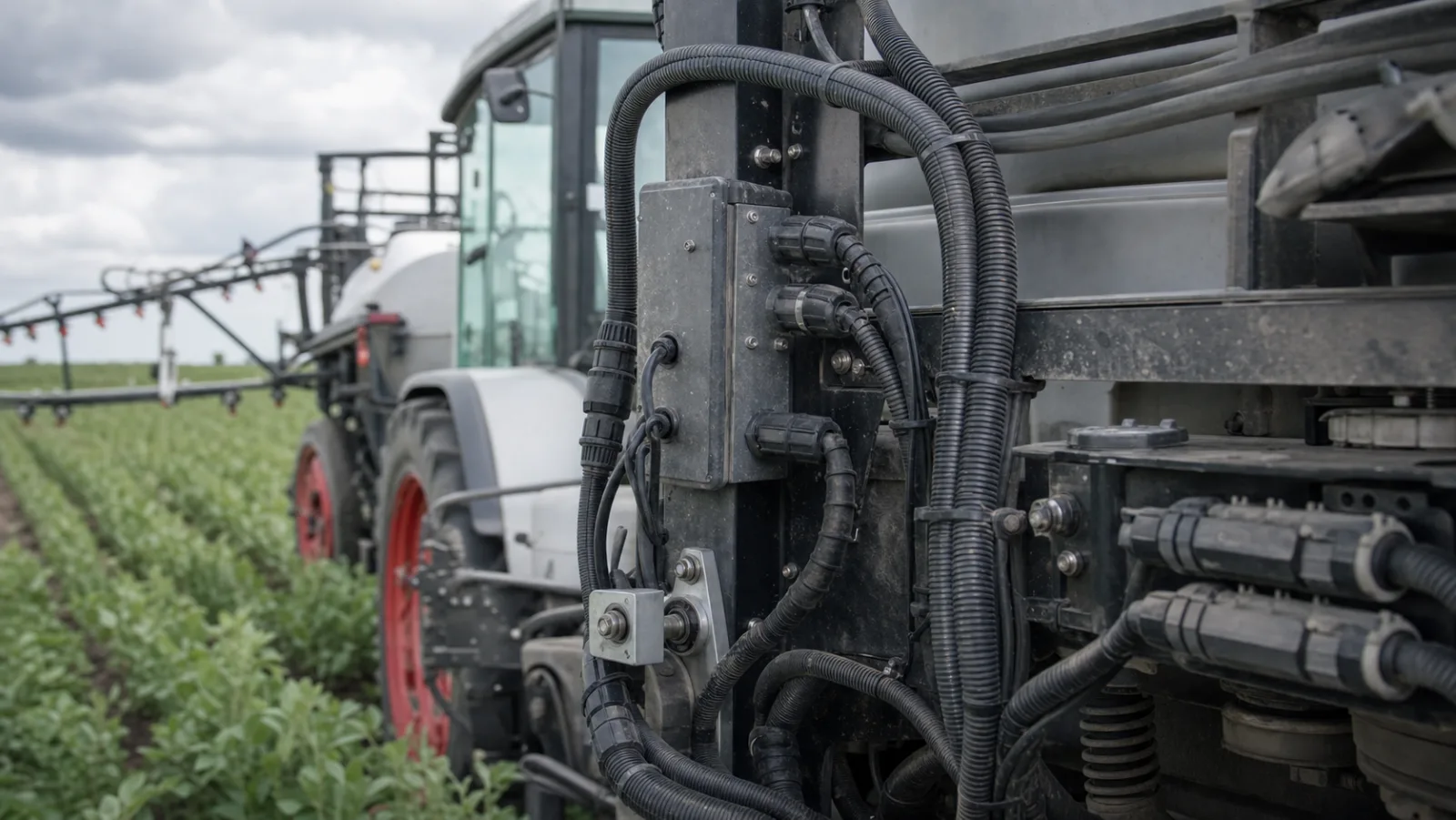
Agricultural off-highway wire harness assembly
Washdown SealedIP69K
Temperature-40 to 105°C
First-Pass YieldHigh
Samples7–10 Days

Application Context

What makes an agricultural wire harness different

An agricultural harness lives in one of the harshest electrical environments there is. A tractor or harvester works through dust, mud, stalk debris, fertilizer and crop chemicals, swings between -40°C cold-start and +105°C engine-bay heat, vibrates continuously, and gets pressure-washed between fields. General-purpose PVC wire and unsealed connectors crack, corrode and let water past their seals in that world — so off-highway harnesses use heavy-wall high-temperature, abrasion-resistant cable, sealed Deutsch connector assemblies and waterproof, IP67/IP69K-rated construction from the start.

Across a machine the wiring changes job at every stage: engine, transmission and lighting harnesses on the chassis; hydraulic-valve and operator-control looms in the cab; implement and hitch harnesses carrying power and data out to the seeder, sprayer or baler; and shielded leads for GPS/GNSS guidance, rate controllers and yield sensors. We build these to the ISOBUS (ISO 11783) and CAN J1939 bus requirements so mixed-brand fleets interoperate, and as pre-terminated, tested heavy-equipment harnesses your team bolts on instead of building in the field.

Applications

Agricultural applications we wire

Sealed, vibration-tolerant cable assemblies for every system on the machine and its implements.

Tractors & Harvesters

Engine, transmission, lighting and operator-cab harnesses for tractors, combines and self-propelled harvesters. Built with abrasion-resistant TXL/SXL wire and convoluted tubing so they survive constant vibration, flexing and contaminant exposure on the powertrain and chassis.

  • Heavy-wall TXL/SXL primary wire
  • Convoluted tubing routing
  • Sealed Deutsch DT/DTP power
  • -40°C to +105°C engine-bay rated

Implements & ISOBUS

Implement, hitch and trailing-tool harnesses that carry power and data between tractor and seeder, sprayer, baler or planter. Wired to the ISOBUS (ISO 11783) standard so any compliant implement plugs into any compliant tractor terminal.

  • ISOBUS (ISO 11783) build-to
  • Sealed implement bus connectors
  • Twisted-pair CAN segments
  • IP67 hitch-area sealing

Precision-Ag GPS, Guidance & Sensors

Cable assemblies for GPS/GNSS receivers, auto-steer controllers, rate controllers, section-control valves and yield/flow sensors. Shielded constructions protect guidance and sensor signals from the electrical noise of the surrounding machine.

  • Shielded twisted pair for signal
  • CAN J1939 / ISOBUS data
  • EMI-rejecting GPS/GNSS leads
  • Sealed M12 sensor terminations

Hydraulic, Engine & Lighting Harnesses

Solenoid, sensor, lamp and operator-control harnesses for hydraulic valve banks, engine management, work lighting and cab controls. Routed to keep contaminated, high-vibration zones isolated from clean cab and electronics circuits.

  • Hydraulic solenoid + sensor wiring
  • LED work-light & lamp harnesses
  • Cab & operator-control looms
  • Strain-relieved sealed overmolds

Engineering Challenges

Review risk before production

01

Heat & Vibration

Material selection and process controls for -40°C to +105°C off-highway service, continuous engine, hydraulic and ground-induced vibration, and rubbing against frames and stalk debris.

02

Sealing & Washdown

Sealed interface selection validated for IP67 immersion and IP69K high-pressure, high-temperature washdown so seals hold up to routine pressure-cleaning between fields.

03

Connector Reliability

Sealed Deutsch, Superseal and Metri-Pack review, in-house crimp termination and alternatives for cost and lead-time risk, so contacts survive mud, moisture and vibration without field re-crimping.

04

Bus Interoperability & Testing

CAN J1939 and ISOBUS (ISO 11783) segments, correct termination, and 100% continuity testing planned so mixed-brand fleets interoperate reliably.

Technical Capabilities

Agricultural-grade technical capabilities

IPC/WHMA-A-620 workmanship with heavy-wall TXL/SXL wire and sealed connectors, validated for IP69K washdown and -40°C to +105°C off-highway service.

SealingIP67 / IP69K
Temperature Range-40°C to +105°C
Data BusCAN J1939 / ISOBUS
ProtectionAbrasion / UV / Chemical
First-Pass YieldHigh
Sample Lead Time7–10 Days
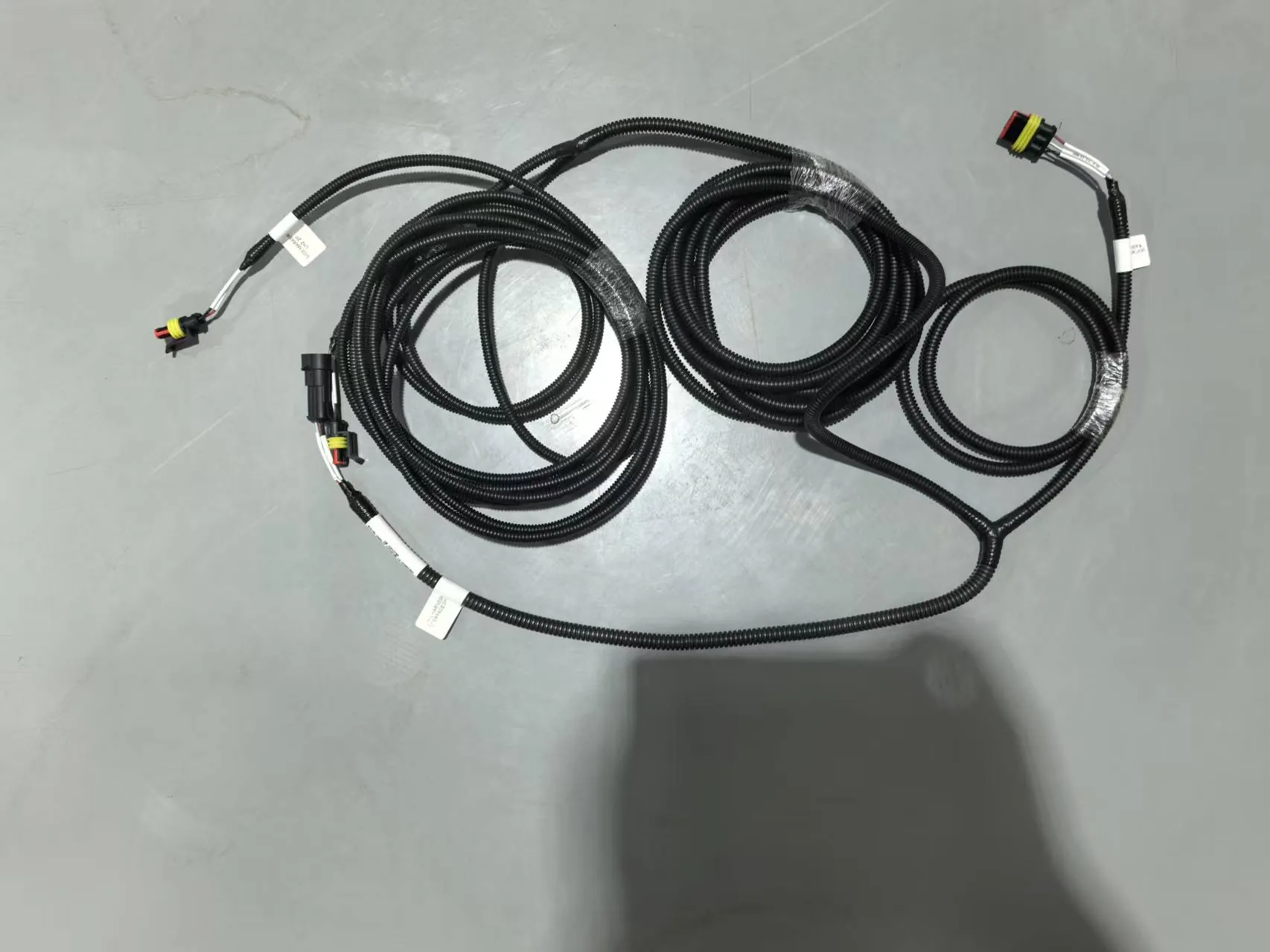
Agricultural off-highway wire harness assembly

Manufacturing Process

A controlled build, drawing to shipment

01Drawing / BOM Review
02Connector Sourcing
03Cutting & Stripping
04Crimping / Assembly
05In-process Inspection
06Electrical Test
07Final Inspection
08Packaging & Export

Quality & Testing

Documentation for OEM review

Every agricultural harness gets continuity and circuit-mapping verification, with sealed-connector and washdown-seal checks where the application calls for it — all documented for lot-level traceability before it ships.

Material ApprovalProcess ControlCrimp Pull-ForceContinuity TestSeal VerificationFinal InspectionLot TraceabilityCorrective Action

Why WHP

Why choose our agricultural wire harness services

Sealed, bus-compliant cable assemblies that survive the field and pass washdown.

Off-Highway-Grade Materials

Heavy-wall TXL/SXL wire, chemical-resistant XLPE insulation and convoluted protection engineered for fertilizer, chemical, UV, dust and vibration exposure — not repurposed general-purpose hook-up wire.

CAN J1939 & ISOBUS Build-To

Harnesses built to SAE J1939 and ISO 11783 (ISOBUS) so guidance, rate-control and implement data move reliably between tractor terminal and trailing tool across mixed-brand fleets.

IP67 & IP69K Sealing

Sealed Deutsch, Superseal and Metri-Pack interfaces validated for IP67 immersion and IP69K high-pressure, high-temperature washdown — built for machines that are pressure-cleaned between fields.

IPC/WHMA-A-620 Workmanship

Every assembly is built and inspected to IPC/WHMA-A-620 crimp, splice and assembly criteria under our ISO 9001 quality system, with 100% continuity testing before it ships.

Agricultural equipment standards

Built to the off-highway data-bus and workmanship standards OEM and aftermarket equipment programs require, under our ISO 9001 quality system.

ISOBUSISO 11783 Build-To
J1939SAE CAN Build-To
IP69KWashdown Sealed
ISO 9001 Certificate

FAQ

Agricultural wire harness FAQ

What wire and insulation do you use for agricultural harnesses?
We build with heavy-wall TXL and SXL automotive/off-highway primary wire — cross-linked polyethylene (XLPE) insulation rated -40°C to +105°C that resists fertilizer, agricultural chemicals, diesel and oil. Conductors are sized for current and voltage drop, with convoluted tubing or braided sleeving added for abrasion, UV and contaminant protection on exposed runs.
Do you build to ISOBUS and CAN J1939?
Yes. We manufacture harnesses to the ISOBUS (ISO 11783) implement-bus standard and to SAE J1939 for the engine/chassis CAN network. That means twisted-pair CAN segments, correct termination, and sealed implement connectors so any compliant implement plugs into any compliant tractor terminal, and guidance, rate-control and diagnostic data move reliably between machine and tool.
Which connectors do you terminate for farm and off-highway equipment?
We factory-terminate sealed Deutsch DT, DTM and DTP, AMP Superseal and Delphi/Aptiv Metri-Pack connectors, plus sealed M12 connectors for precision-ag sensors. All contacts are crimped and tested in-house, so terminations hold up to mud, moisture and vibration without field re-crimping.
What ingress protection do your agricultural harnesses meet?
Our sealed connector systems are validated to IP67 (temporary immersion) and IP69K (high-pressure, high-temperature washdown). IP69K matters in agriculture because machines are routinely pressure-washed between fields and crops, and a harness that only meets IP67 can let water past its seals under a washdown lance.
Are these harnesses built for vibration and abrasion?
Yes. Off-highway machines run continuous engine, hydraulic and ground-induced vibration, plus rubbing against frames and stalk debris. We use flex-tolerant TXL/SXL conductors, strain-relieved sealed overmolds, locking connectors and convoluted/braided protection on every exposed run, then route clean cab and electronics circuits away from contaminated high-vibration zones.
What temperature range do your agricultural cables handle?
Standard construction is rated for a -40°C to +105°C operating range, covering cold-climate cold-start through engine-bay and hydraulic-system heat. Insulation, jacketing and connector seals are all selected to hold up across that full off-highway range.
What certifications and workmanship standards do you follow?
We manufacture under an ISO 9001 quality system and build to IPC/WHMA-A-620 crimp, splice and assembly workmanship criteria. Harnesses are built to the SAE J1939 and ISO 11783 (ISOBUS) requirements your equipment program specifies — these are standards we build to, validated by 100% continuity testing on every assembly.
What are your MOQ and lead times for agricultural programs?
We support prototypes from small quantities with 7–10 day sample lead times, scaling to production batches for OEM and aftermarket programs. This lets you validate a harness on the actual machine — fit, routing, sealing and connector engagement — before committing to volume.
OEM Program Entry

Review Your Agricultural Harness Requirement

Share drawings, BOM, photos, or early-stage requirements. Our engineering team will review manufacturability, connector risks, sealing class, testing needs, and production requirements before manufacturing starts.

We will review

  • 01Design Feasibility
  • 02Component Availability
  • 03Cost Drivers
  • 04Validation Requirements

Related Capabilities

Related cable solutions

Custom cable assembly and harness services that pair with agricultural programs.

Case Studies

Related case studies

Real, anonymized programs we delivered in this industry — the actual challenge, solution, and numbers.