120 Ohm CAN Harness RFQ Review

CAN Bus Cable Assemblyfor Noise-Sensitive Networks

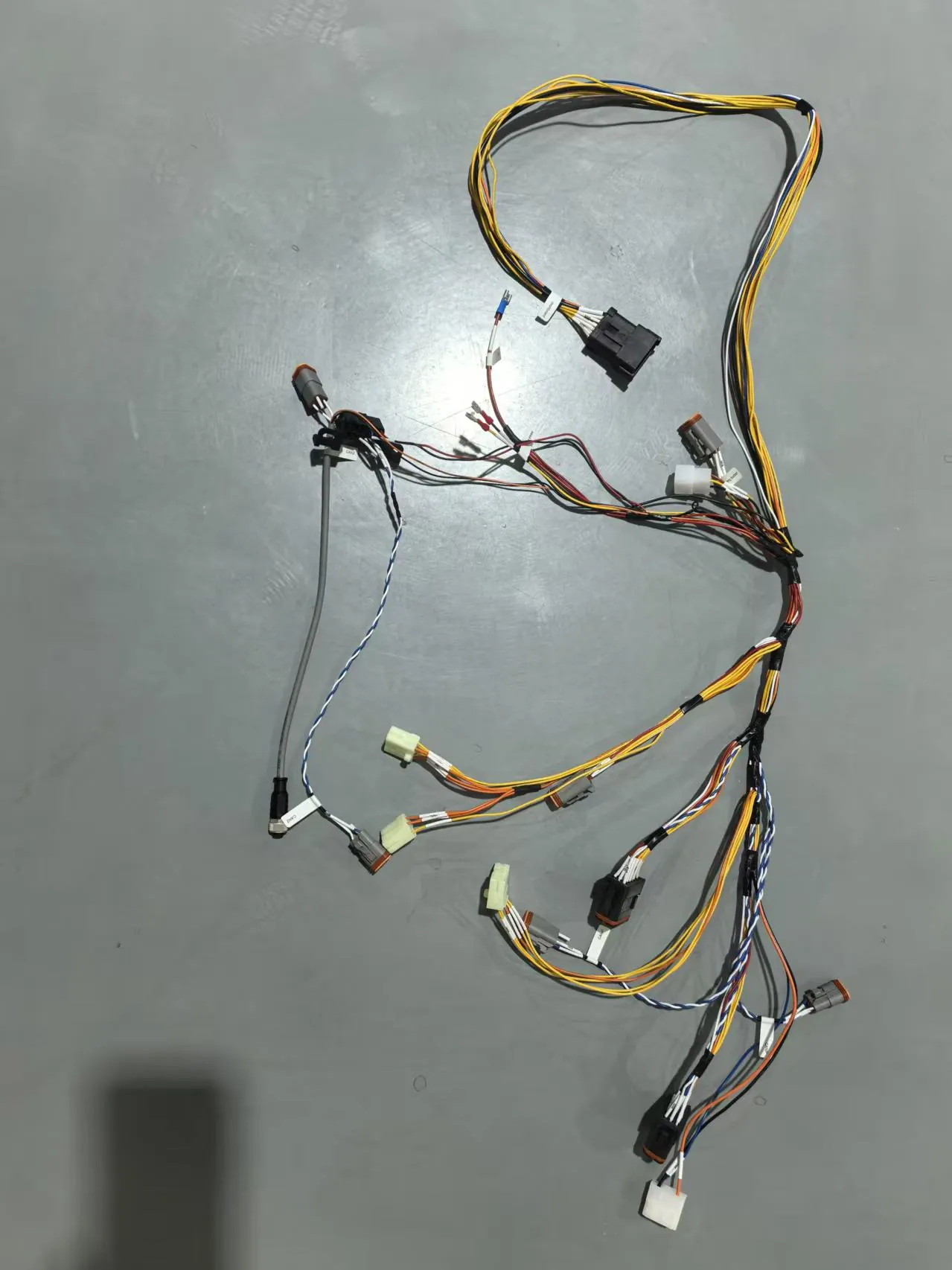
CAN bus cable assembly is a controlled communication harness that must preserve 120 ohm differential behavior, polarity, shield continuity, connector fit, and routing discipline after it leaves the test bench. We review baud rate, bus length, stub length, cable construction, connector backshell, jacket, labels, and 100% electrical test scope before quoting, so a buyer comparing three suppliers can see where network risk hides behind a low unit price.

120 ohm cable and topology reviewCAN_H/CAN_L polarity and shield test planningIPC-A-620 / UL-758 / ISO 11898 context
120 ohm
Network Target Review
100%
Continuity and Polarity Test
7-10
Day Sample Target
IPC-A-620
Workmanship Context

TL;DR

  • Use this service for CAN bus, J1939, CANopen, NMEA 2000, and industrial twisted-pair harness builds.
  • RFQ review checks 120 ohm cable, CAN_H/CAN_L polarity, shield termination, connector fit, and route risk.
  • Send baud rate, bus length, stub lengths, node count, connector part numbers, environment, and test scope.
  • Production lots can include 100% continuity, polarity, shield continuity, labels, visual inspection, and sample-level impedance review.

CAN Bus Cable Assembly Capabilities

The page targets transactional RFQs where a buyer needs a build-to-print cable supplier, not another generic CAN bus explainer.

120 ohm twisted-pair cable review

CAN bus cable assembly is a cable build for Controller Area Network communication where the physical layer depends on controlled pair geometry. We review nominal 120 ohm cable selection, conductor symmetry, twist consistency, insulation, OD, jacket, and connector compatibility before sample release.

Nominal 120 ohm differential cable review
CAN_H and CAN_L polarity control
Unshielded or shielded twisted pair

Shielding and grounding decisions

Shielded twisted pair is a cable construction that uses foil, braid, drain wire, or combined shielding to reduce electromagnetic noise. We define where the shield bonds, whether 360-degree backshell termination is practical, and whether shield continuity should be tested on every assembly.

Foil, braid, or foil plus braid options
Drain wire and shell-ground review
Shield continuity test when specified

Automotive and mobile-equipment harnesses

J1939 cable harnesses and vehicle CAN branches often need sealed connectors, abrasion protection, color or circuit labels, and IATF 16949-style traceability. We review Deutsch, M12, sealed rectangular, bulkhead, and customer-specified connector systems against the cable OD and terminal range.

J1939 and vehicle CAN branches
Sealed connector compatibility review
Label and revision-control records

Industrial automation network leads

Industrial CANopen and machine-control leads must survive VFD noise, cabinet routing, coolant, drag-chain motion, or field replacement. We separate static cabinet cables from moving-axis or washdown assemblies because jacket, bend radius, and shield strategy change the production risk.

CANopen and machine-control cables
Static or high-flex jacket review
Oil, coolant, and washdown notes

Overmolded and waterproof CAN builds

A waterproof CAN cable assembly is a sealed communication harness where overmold, gasket, cable OD, and shield transition must be validated together. We pair post-mold electrical testing with visual and label inspection so sealing work does not hide a wiring or grounding defect.

IP67 target reviewed by connector family
Overmolded exits and strain relief
Post-mold pinout and shield checks

Documented release testing

ISO 11898 is a standards family for CAN physical-layer behavior, but factory release still needs a practical test record. We align continuity, shorts, polarity, insulation resistance, shield continuity, sample-level impedance checks, and optional communication checks with the drawing risk.

100% open/short and polarity testing
Sample-level impedance review
FAI and lot test report options
Real Project Snapshot

An anonymized case bank example used to anchor signal-sensitive cable release discipline.

Industry

thermal-imaging

Region

Belgium

Year

2020-2021

Challenge

A European thermal imaging OEM experienced a production halt after 1296 defective units out of 2000 AWG#40 CABLINE-VS 1:1 assemblies failed from high impedance. The failure traced to specification definition and testing method mismatch, not a simple operator error.

Anonymized from a real project. Specific buyer identifiers withheld; numbers quoted verbatim from project records.

Where CAN Bus Cable Assemblies Fit

Best for OEM programs where communication stability depends on cable construction, connector release, and repeatable test evidence.

Automotive and EV harness branches

CAN bus, J1939, battery-management, dashboard, charging, and body-control branches where signal pairs may route near motors, relays, DC-DC converters, or high-current wiring.

Industrial automation equipment

CANopen, controller, sensor, and actuator leads for PLC cabinets, packaging machines, inspection systems, conveyors, and machine skids that need repeatable labels and fast installation.

Heavy equipment and off-road vehicles

Rugged CAN cable assemblies for hydraulic controllers, engine modules, display clusters, and field sensors where vibration, dust, and service replacement affect connector choice.

Marine and NMEA 2000 networks

Boat and marine equipment cables that need controlled twisted-pair construction, sealed connectors, corrosion-aware materials, and clear branch identification.

Robotics and mobile platforms

CAN communication harnesses for AMRs, AGVs, robot joints, grippers, battery packs, and moving axes where bend radius and clamp placement change long-term reliability.

Test fixtures and development systems

Short-run engineering cables, adapter pigtails, breakout leads, and diagnostic harnesses used before a production network architecture is frozen.

CAN Bus Cable Assembly Capability Table

Network typesCAN bus, CANopen, J1939, NMEA 2000-style branches, customer-specified CAN variants
Cable constructionNominal 120 ohm twisted pair, shielded twisted pair, hybrid power plus CAN, jacketed multi-core
Connector optionsM12, Deutsch, sealed rectangular, circular, board pigtail, bulkhead, open-end, and specified OEM connectors
Conductor range22 AWG, 24 AWG, and nearby metric equivalents common; final gauge by drawing and route
Shielding optionsUnshielded, foil, braid, foil plus braid, drain wire, shell bond, and backshell review
Environment reviewStatic cabinet, mobile equipment, outdoor, washdown, drag-chain, oil-exposed, and vehicle routing
Sample lead time7-10 working days target after drawing approval and connector availability confirmation
MOQ guidance50 pcs target for many custom builds; smaller prototype quantities reviewed by connector MOQ
Testing100% continuity, shorts, CAN_H/CAN_L polarity, visual, label, and shield continuity when specified
Qualification optionsSample-level impedance review, insulation resistance, pull-force, post-mold electrical test, and communication check
Standards contextISO 11898 physical-layer context, IPC-A-620 workmanship, UL-758 wire review, IATF 16949-style traceability
DocumentsFAI, test report, connector datasheets, alternate BOM notes, label file, packing specification
CAN Bus Cable Assembly

Why Source CAN Bus Cable Assemblies from WellPCB?

A CAN harness supplier should protect the physical layer, the connector release, and the production record before price is treated as final.

RFQ review covers network assumptions

We ask for baud rate, approximate bus length, stub length, node count, routing environment, and connector part numbers because those details decide whether a 120 ohm twisted-pair assembly has enough margin.

Shielding is treated as a design choice

We do not treat shielded cable as an automatic upgrade. For short quiet branches, unshielded twisted pair may be the better cost and routing choice; for VFD-heavy machinery or EV-adjacent wiring, shield termination must be designed and tested.

Real Project Snapshot

A European thermal imaging OEM had 1296 defective units out of 2000 on AWG#40 CABLINE-VS 1:1 100mm length micro-coax assemblies because specification definition and testing method did not match. We halted production, rebuilt the evidence package, and supplied 1296 replacement units. The lesson for CAN buyers is direct: signal-sensitive cables need the test method locked before production.

Prototype-to-production evidence stays connected

The approved drawing revision, connector datasheets, cable construction, label rule, shield method, and 100% electrical test plan are retained for repeat orders so engineering approval does not drift during purchasing release.

Standards and Supplier Qualification References

CAN bus cable assembly programs combine protocol context with cable workmanship controls. The page uses public references for CAN bus and ISO 11898, then maps factory release checks to IPC-A-620, UL-758, and IATF 16949-style traceability when the buyer requires those records.

Factory Engineering Review

WellPCB Wire Harness Engineering Team

Senior factory engineers supporting automotive, industrial automation, robotics, and mobile-equipment cable assembly RFQs

10+ years supporting custom wire harness and cable assembly RFQs
China and Philippines production options for sample and production releases
Documented connector sourcing, test planning, and supplier qualification support

Need a CAN Bus Cable Assembly Quote?

Send the drawing, CAN variant, baud rate, connector part numbers, cable length, routing environment, quantity, and test scope. We will return cable construction feedback, connector-risk notes, MOQ, sample timing, and a production test plan.

Send This With Your RFQ

Drawing, wire list, schematic, or marked sample photos

CAN variant, baud rate, node count, bus length, and stub lengths

Connector part numbers, mating equipment, backshell, and sealing target

Cable construction preference: unshielded, foil, braid, high-flex, or overmolded

Quantity, sample target date, annual forecast, test records, labels, and packing rules

What You Get Back

Cable construction and connector-fit risk notes

MOQ, sample lead time, production lead time, and price breaks

Shielding, routing, bend radius, and overmold comments

Test plan, FAI scope, connector datasheet package, and alternate BOM notes

Buyer Questions Before RFQ

Commercial and engineering answers for teams comparing CAN bus cable assembly suppliers.

I need 200 CAN bus cable assemblies for a vehicle prototype. Is that too small?

No. A 200-piece prototype or pilot build is a normal fit when the connector MOQ and cable availability are clear. We usually start by reviewing the 120 ohm cable target, CAN_H/CAN_L polarity, branch length, connector part numbers, labels, and required test record. If a connector has a high factory MOQ, we quote that constraint separately instead of hiding it in the unit price. Sample timing commonly targets 7-10 working days after drawing approval and available component confirmation.

Should I choose shielded or unshielded CAN bus cable?

Choose shielded CAN bus cable when routing passes near VFDs, motors, relays, high-current EV wiring, long parallel power runs, or outdoor equipment with uncertain grounding. Unshielded twisted pair can be the better choice for short, quiet cabinet or in-vehicle branches because it is smaller, lower cost, and easier to route. The decision should name the noise source, shield bond method, and whether shield continuity is tested. ISO 11898 explains the CAN physical-layer background, but the RFQ must translate that into cable construction and inspection requirements.

Can you quote before our full drawing is released under NDA?

Yes, if the commercial and technical constraints are separated clearly. Our case bank includes a North American 3D vision and industrial measurement OEM that required a 3-month vetting phase before drawings could be shared; after NDA execution, the released RFQ included 1x20 Pin Samtec connector, 1x10 Pin Samtec connector, 100mm cable length, and a 4-week lead time. For CAN cable work, the early screen can still confirm connector families, cable risk, expected MOQ, and test evidence.

What tests should I require for a production CAN cable assembly?

A practical baseline is 100% continuity, shorts, CAN_H/CAN_L polarity, visual workmanship, labels, and shield continuity when the drawing includes a shield. For higher-risk programs, add sample-level impedance review, insulation resistance, post-mold electrical testing, and a communication check using the expected baud rate. IPC-A-620 gives cable workmanship context, while UL-758 is useful when wire style and insulation are part of supplier review.

When does an overmolded CAN bus cable make sense?

Overmolding makes sense when the connector exit sees frequent handling, washdown, outdoor exposure, vibration, or tight strain-relief requirements. It adds tooling and validation work, so it is not the lowest-cost choice for every 50-piece prototype. The overmold compound, cable jacket, connector geometry, shield transition, and post-mold test plan must be reviewed together. For IP67 targets, the seal only counts when the mating connector, gasket, cable OD, and assembly process are compatible.

What files should I send for the fastest CAN cable quote?

Send the drawing, BOM, connector part numbers, pinout, cable length, baud rate, expected bus and stub lengths, routing environment, shield requirement, quantity, sample deadline, annual forecast, and test report requirement. Photos of the installation path help when the harness passes through a moving axis, a metal enclosure, or a sealed connector exit. Clear RFQ inputs let us return price, MOQ, lead time, cable risk notes, and test assumptions without multiple clarification loops.