Medical Devices

Medical Device Wire Harnesses& Cable Assemblies

Biocompatible, sterilization-tolerant cable assemblies for patient monitoring, imaging micro-coax, surgical instruments and lab equipment — built to USP Class VI / ISO 10993 materials and IPC/WHMA-A-620 Class 3 workmanship, with an ISO 13485-ready supply chain.

USP VI
Biocompatible
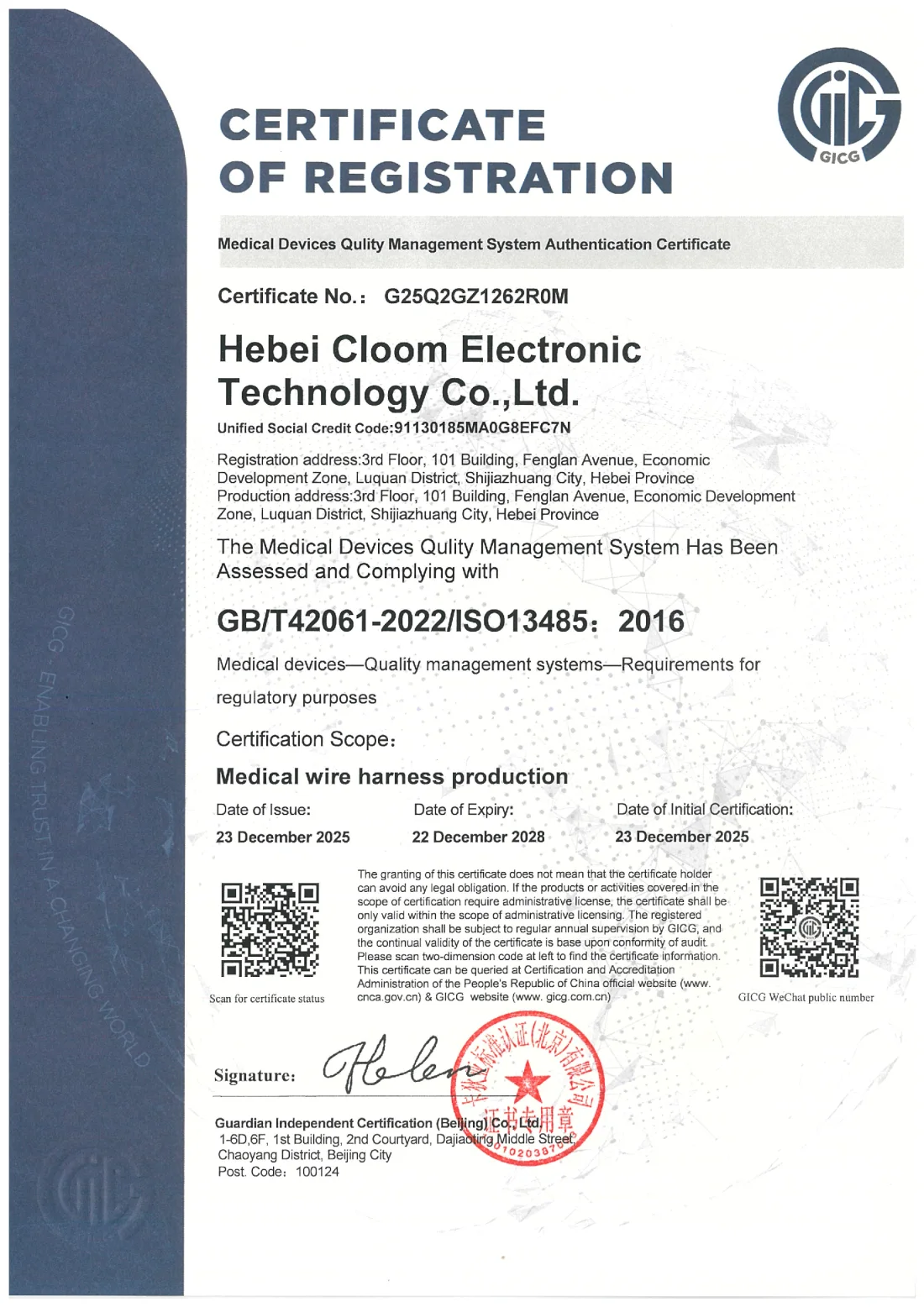
ISO 13485
Supply Chain Ready
99.8%
First-Pass Yield
7–10 Days
Samples
Overview

What makes a medical wire harness different

A medical-device cable assembly is held to a different bar than industrial wiring. It may touch a patient, carry low-millivolt physiological signals next to switching electronics, survive hundreds of autoclave, EtO or gamma reprocessing cycles, and route fine-gauge 30–42 AWG conductors — or a dense bundle of micro-coaxes — through a handheld probe. The material, the documentation and the test plan all have to match the device risk, not a catalog default. That is why our quoting starts from patient-contact classification, cleaning chemistry and sterilization method before a single conductor is selected. For a custom build, see our custom medical cable assembly service.

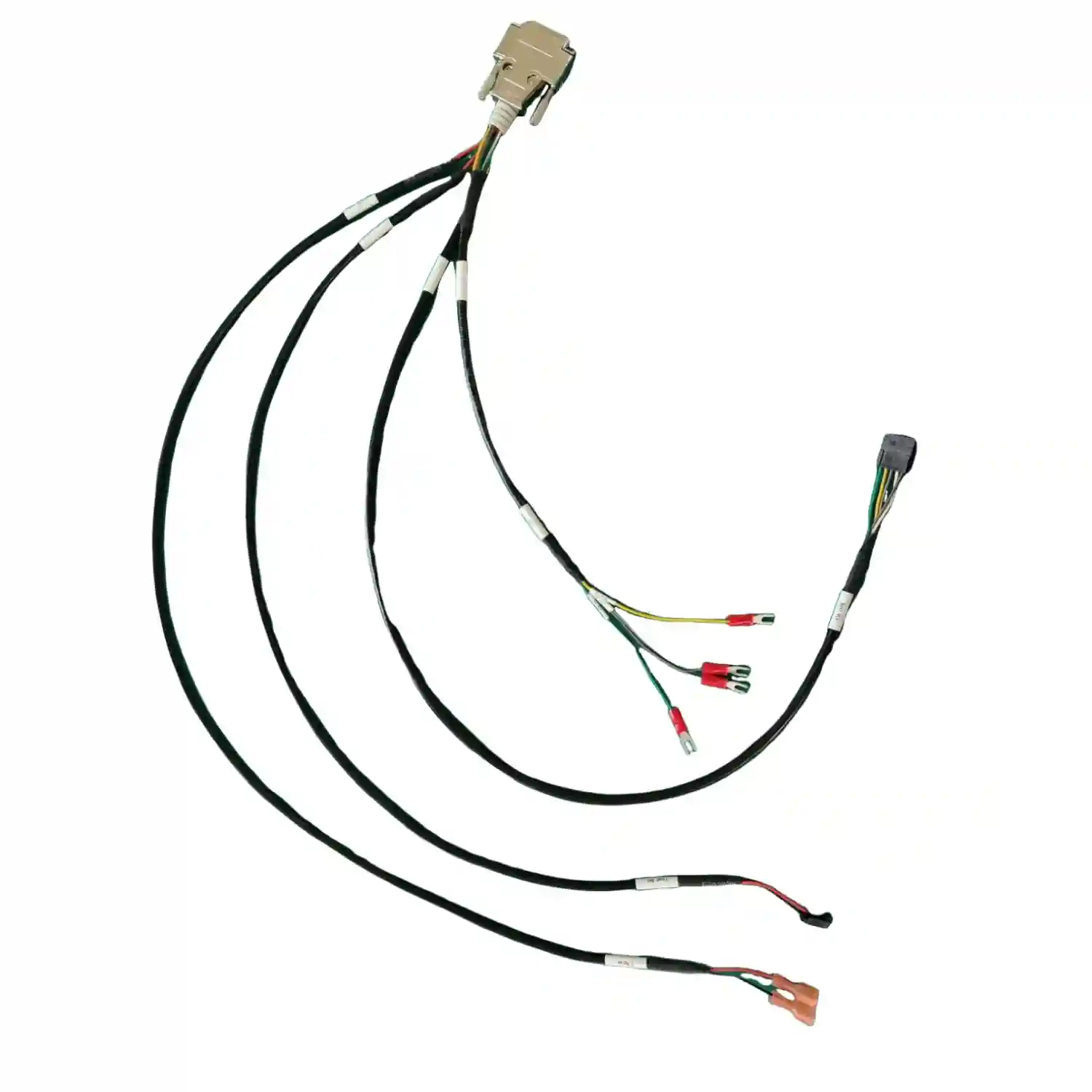
Across a medical system the wiring changes job at every stage: biocompatible patient leads on a bedside monitor, high-density micro-coaxial cable assemblies inside an ultrasound or endoscopic probe, high-flex harnesses in robotic surgical arms, and shielded cable assemblies that keep diagnostic signals clean. Connector exits are sealed with overmolded strain relief using LEMO-style, ODU and circular medical connectors. We build all of these to USP Class VI / ISO 10993 materials and IPC/WHMA-A-620 Class 3 workmanship, under our held ISO 9001 system and an ISO 13485-ready supply chain.

Applications

Medical applications we wire

Biocompatible, sterilization-tolerant cable assemblies for every stage of a medical device

Patient Monitoring Systems

Lead sets and internal harnesses for ECG, EEG, SpO₂ and multi-parameter bedside monitors. Fine-gauge conductors, low-noise shielding and biocompatible jackets keep low-millivolt physiological signals clean while surviving daily wipe-down and constant flexing.

30–42 AWG signal conductors
Low EMI/RFI shielding
Patient-contact biocompatible jackets

Imaging & Ultrasound

Micro-coaxial cable bundles for ultrasound transducers, endoscopic and intravascular imaging where dozens to hundreds of 40–46 AWG coaxes route into a single handheld probe with tight impedance and flex-life control.

High-density micro-coax bundles
Controlled impedance
High flex-cycle service

Surgical & Robotic Instruments

High-flex cable assemblies for robotic surgery arms, electrosurgical handpieces and endoscopes. Built to tolerate repeated articulation plus autoclave, EtO or gamma sterilization between procedures.

Sterilization-tolerant materials
Overmolded strain relief
Tight repeated-flex life

Diagnostic & Lab Equipment

Internal and external wiring for analyzers, centrifuges, sample-processing and lab-automation systems. Chemical-resistant jackets, connector retention and route control keep instruments serviceable in cleanroom-adjacent environments.

Chemical-resistant jackets
Precision signal integrity
Serviceable connector retention

Wearable & Portable Devices

Miniature assemblies for wearable monitors, infusion pumps and portable diagnostics where space is tight and standard industrial constructions are too bulky. Fine-pitch terminations and thin-wall silicone/TPU jackets keep the device light and flexible.

Fine-pitch miniature terminations
Thin-wall silicone / TPU
Skin-safe flexible builds

Cart & Console Interconnects

Cable sets for medical carts, mobile workstations and console-to-module interconnects that need manageable cable dress, field durability and controlled packaging for distribution and service.

Branch and multi-drop harnesses
Field-durable strain relief
Controlled labeling & packaging
Construction

Built medical-grade, layer by layer

Conductors

Fine-gauge 30–42 AWG tinned copper, micro-coaxial cores and fine-stranded power conductors — sized for low-signal integrity and the tight flex life handheld medical devices demand.

Insulation

Thin-wall medical-grade insulation with controlled dielectric and impedance for micro-coax bundles, selected for sterilization tolerance and repeated flexing without cracking.

Jacket

Biocompatible jackets — medical-grade PVC, silicone and TPE/TPU — built to USP Class VI and ISO 10993 material requirements, resisting IPA, quats and bleach-based wipe-down chemistry.

Connectors

LEMO-style push-pull, ODU, Fischer and circular medical connectors, overmolded with custom strain-relief boots to seal the cable exit and survive repeated handling and cleaning.

Medical-grade technical capabilities

Biocompatible USP Class VI / ISO 10993 materials and IPC-A-620 Class 3 workmanship, validated for sterilization and fine-gauge medical service.

Conductor Gauge42–24 AWG
SterilizationAutoclave, EtO, Gamma
MaterialsUSP Class VI / ISO 10993
WorkmanshipIPC-A-620 Class 3
First-Pass Yield99.8%
Sample Lead Time7–10 Days
Medical device cable assembly

Why choose our medical cable assembly services

ISO 13485-ready supply chain with biocompatible materials and full documentation support

ISO 13485 Supply Chain Ready

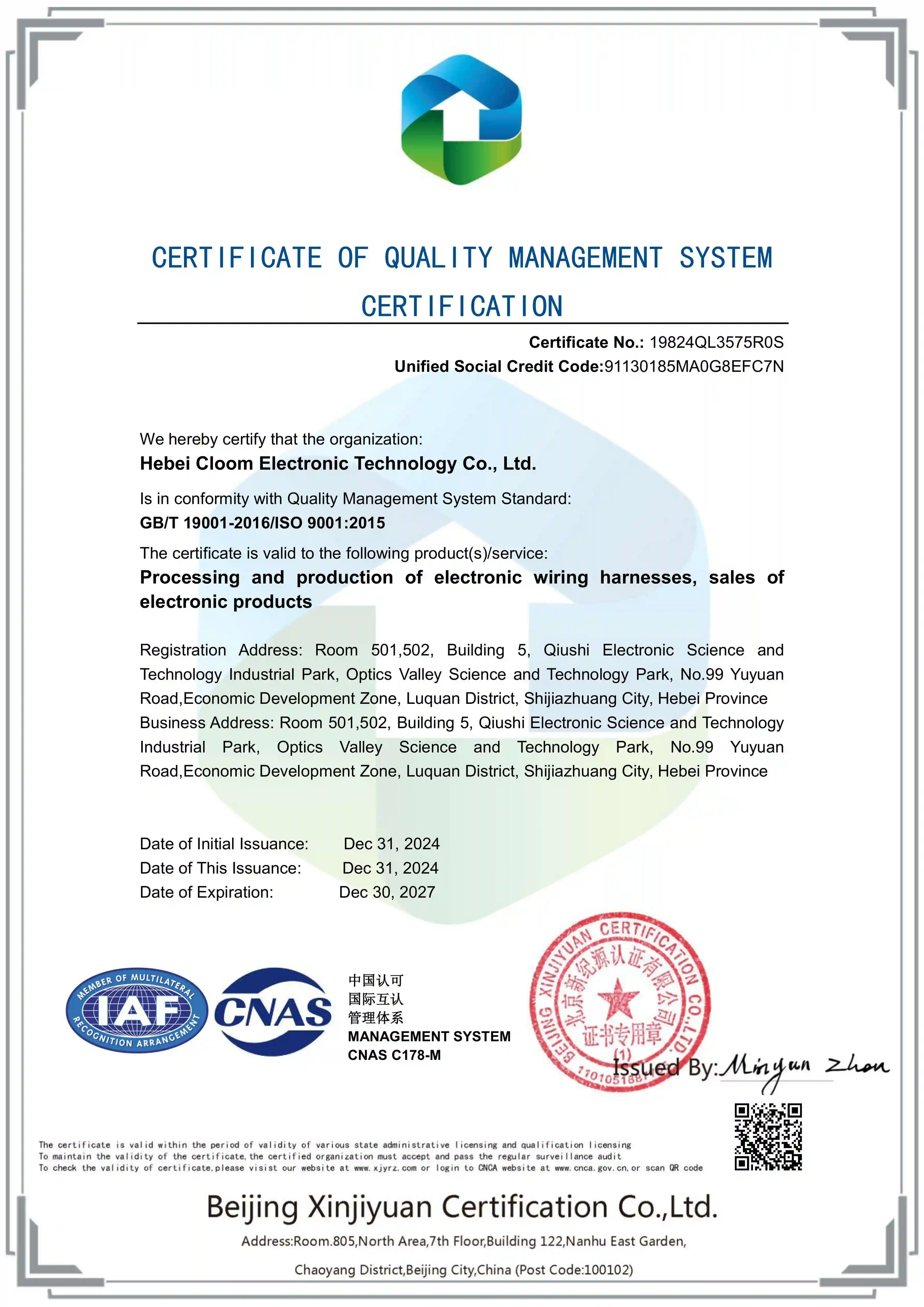
Our supply chain is prepared for ISO 13485 compliance, with the traceability and quality documentation medical-device buyers expect. Production runs under our held ISO 9001 quality system and IPC/WHMA-A-620 workmanship.

Biocompatible Materials (Build-To)

Access to medical-grade TPE, silicone, TPU and PVC compounds selected to meet USP Class VI and ISO 10993 biocompatibility requirements, defined against your patient-contact classification at RFQ.

Built to IEC 60601-1 & IPC-A-620 Class 3

Assemblies are manufactured to IEC 60601-1 medical electrical safety inputs and IPC/WHMA-A-620 Class 3 workmanship — the highest-reliability acceptance class — when the device program calls for it.

Sterilization-Tolerant Construction

Materials and overmolds validated against autoclave, EtO and gamma exposure so the assembly holds up through repeated reprocessing instead of degrading between procedures.

Medical industry standards

We build to the quality, safety and workmanship standards medical-device buyers require — under our held ISO 9001 system and an ISO 13485-ready supply chain.

ISO 13485
Supply Chain Ready
IEC 60601-1
Build-To Safety Inputs
Class 3
IPC/WHMA-A-620 Workmanship
FAQ

Medical cable assembly FAQ

What conductor gauges and materials do you use for medical cable assemblies?

We build with fine-gauge conductors from 42 AWG up to 24 AWG, including micro-coaxial bundles for imaging probes. Jackets use medical-grade PVC, silicone and TPE/TPU, selected to meet USP Class VI and ISO 10993 biocompatibility requirements against your patient-contact classification. Materials and construction are confirmed at RFQ, not assumed.

Are your medical cable assemblies sterilization-tolerant?

Yes. We build to autoclave, EtO (ethylene oxide) and gamma sterilization profiles. The right jacket, insulation and overmold material depends on which method and how many reprocessing cycles the device sees, so send the sterilization method with the RFQ and we match the construction to it.

Do you make micro-coaxial cable bundles for ultrasound and imaging?

Yes. We assemble high-density micro-coax bundles in the 40–46 AWG range for ultrasound transducers, endoscopic and intravascular imaging, with controlled impedance and tight flex-life. See our dedicated micro-coaxial cable assembly service for the miniature geometries imaging modules require.

Which connectors do you terminate for medical devices?

We terminate LEMO-style push-pull, ODU, Fischer and circular medical connectors, and overmold the cable exit with custom strain-relief boots for sealing and repeated-handling durability. Connector family is matched to the electrical, mechanical and cleaning requirements rather than defaulting to a generic industrial part.

Are you ISO 13485 certified?

Our supply chain is ISO 13485 ready, meaning we provide the traceability and documentation medical-device programs expect and build to ISO 13485 quality requirements. Production runs under our held ISO 9001 quality management system and IPC/WHMA-A-620 workmanship. Define the supplier-control expectation for your program at RFQ so the right documentation scope is quoted.

What standards do you build medical cable assemblies to?

We manufacture to IEC 60601-1 medical electrical safety inputs and IPC/WHMA-A-620 Class 3 workmanship — the highest-reliability acceptance class — with biocompatible materials per USP Class VI / ISO 10993, under our ISO 9001 system. Final scope depends on the device, risk class and validation plan.

What testing is typical for a medical cable assembly?

Most programs start with 100% continuity and polarity verification. Depending on device risk, teams add insulation resistance, hipot (dielectric withstand), pull-force, connector-retention or customer-specific fixture testing. We target 99.8% first-pass yield and can provide lot- or unit-level records to match the program.

What lead time and volumes do you support?

Engineering samples typically ship in 7–10 business days when parts and tooling are available, scaling from prototypes to recurring production programs. Prototypes are built with production-intent work instructions so fit, cleaning resistance and routing are validated before pilot or volume release.
Ready for your medical device cable project?

Biocompatible, sterilization-tolerant cable assemblies with IPC/WHMA-A-620 Class 3 workmanship and 7–10 day samples. Talk to our medical specialists.