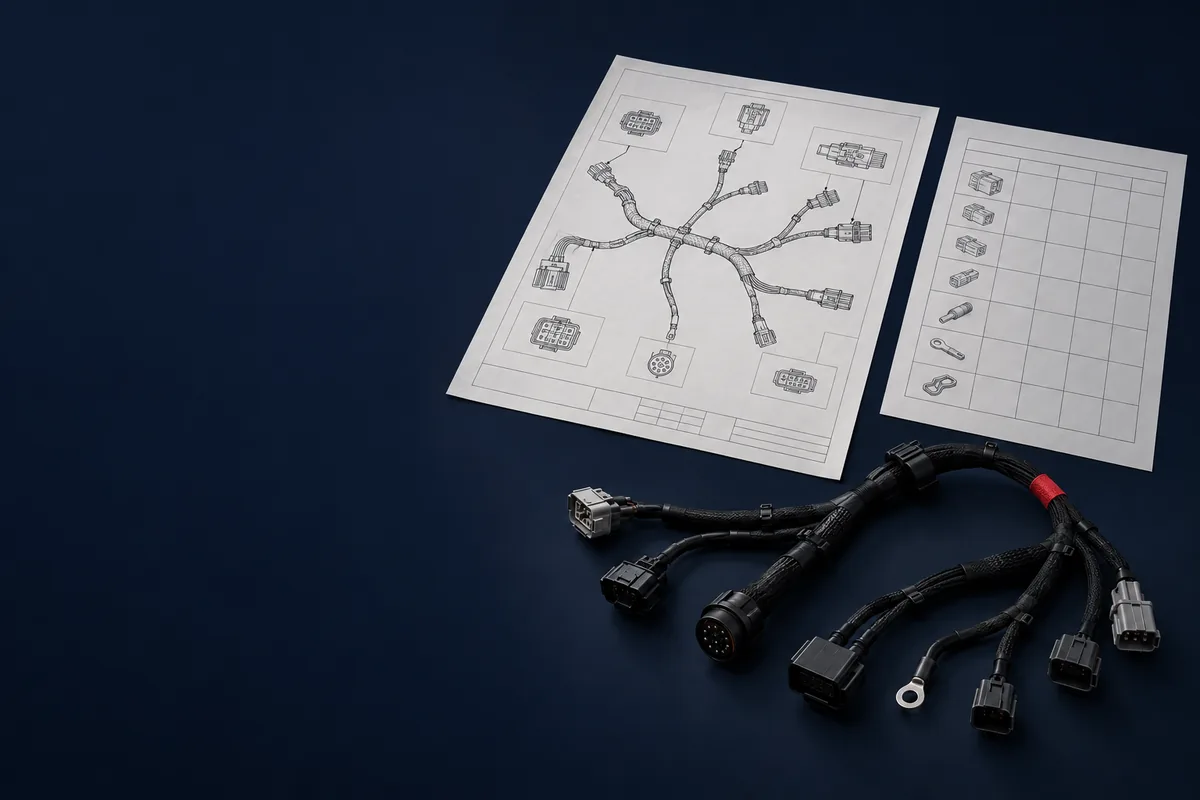
Building wire harnesses in-house feels like control. Outsourcing feels like risk. The reality is more nuanced than either instinct suggests. This guide walks through an eight-factor decision framework, total-cost-of-ownership analysis, and a step-by-step transition plan for procurement teams managing recurring harness spend.
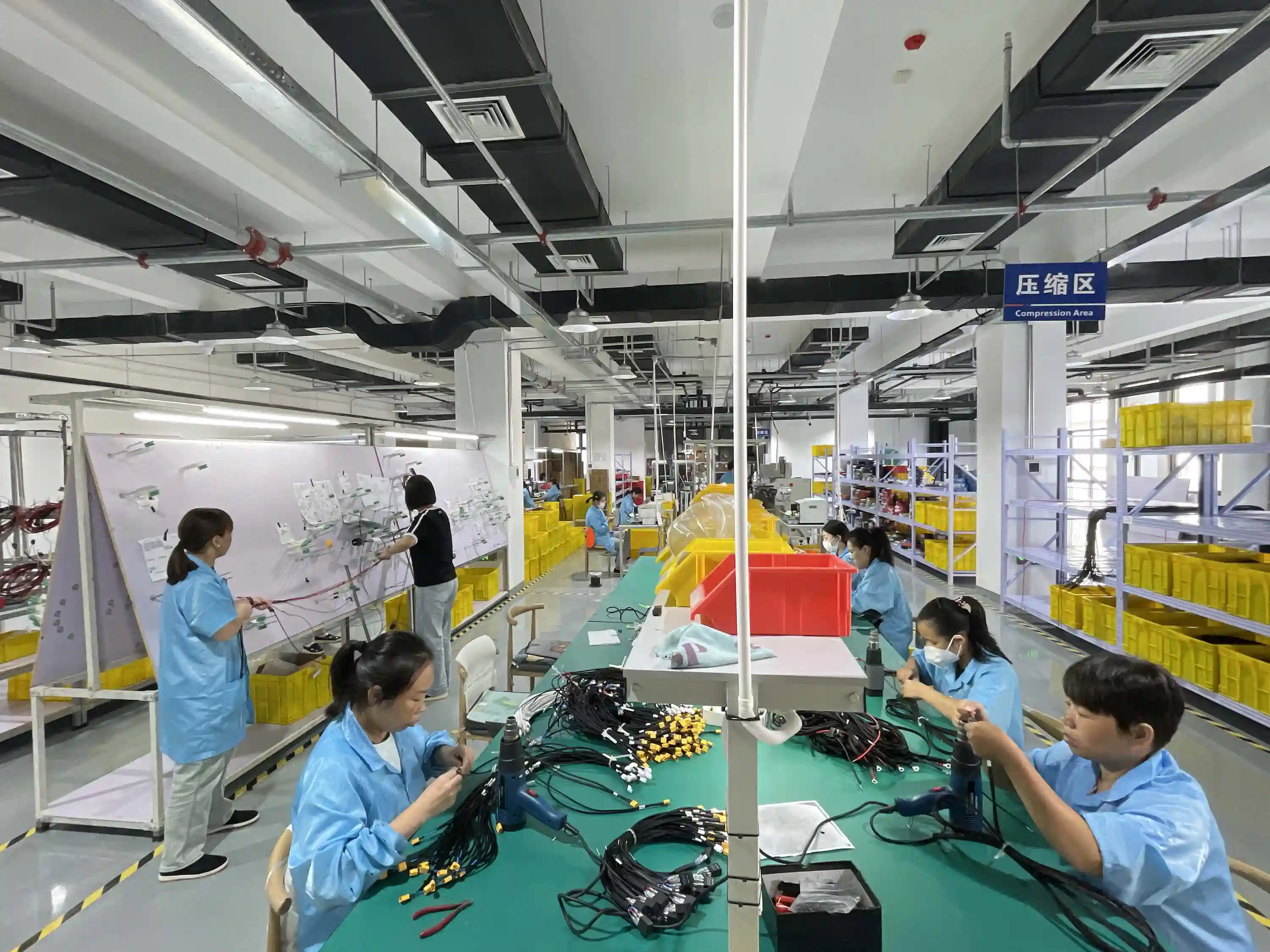
Every year, OEM procurement teams face the same high-stakes question: should we manufacture our wire harnesses in-house, or outsource to a contract manufacturer? The answer is rarely obvious, and getting it wrong costs more than most executives realize.
Companies that keep production in-house may underestimate true costs, forgetting to account for equipment depreciation, floor space opportunity cost, and the management overhead of running what amounts to a mini-factory within their factory. On the other hand, companies that outsource without proper preparation face a different set of problems: first-article failures, communication gaps, and the uncomfortable discovery that their documentation was never detailed enough for an external manufacturer to build from.
This guide will give you the framework to make this decision with data, not gut instinct. Whatever your annual harness spend, the same 8 factors determine which model works best for your operation.
1. Why This Decision Matters More Than You Think
A low-cost harness failure can disable expensive equipment. A make-or-buy decision should account for quality, capacity, and continuity risks alongside unit cost.
EV adoption, industrial automation, and connected devices can affect harness demand. Assess supplier capacity, lead times, and local staffing availability using current program data.
2. The 8-Factor Decision Framework
Use these 8 factors to score your situation. For each factor, rate whether in-house or outsourcing has the advantage in your specific context. Weight the factors according to their impact on your program before choosing a model.
Factor 1: Volume & Demand Variability
Steady, high-volume production (repeat builds of the same harness) favors in-house if you already have the equipment. Variable demand, seasonal spikes, or growing product lines favor outsourcing because contract manufacturers absorb demand fluctuations across their customer base.
Factor 2: Quality Requirements & Certifications
If your application requires IATF 16949, ISO 13485, or IPC/WHMA-A-620 Class 3 workmanship, build a current internal budget for audits, training, process documentation, equipment, and qualified personnel. Compare that documented total with supplier quotations instead of relying on a generic annual estimate.
Factor 3: Scalability Requirements
Rapid scaling requires trained operators, equipment, materials, and floor space. Compare an internal ramp plan with the outsourcing partner's documented capacity and proposed schedule.
Factor 4: IP Sensitivity
If your harness design reveals proprietary system architecture (common in industrial, medical devices, and autonomous vehicles), keeping production in-house reduces IP exposure. However, NDAs and strategic supplier selection can reduce IP exposure. The question is whether your IP is truly in the harness, or in the system it connects.
Factor 5: Lead Time Sensitivity
In-house delivery depends on available materials and capacity. Outsourced delivery also includes supplier scheduling and transport. If your product has emergency replacement needs or rapid design iteration cycles, having at least some in-house capability reduces lead time risk.
Factor 6: Capital & Floor Space Availability
A wire harness assembly line needs dedicated floor space sized to the process with proper lighting, ESD protection, and ventilation. If your facility is already space-constrained, or if that floor space could generate more revenue producing your core product, outsourcing frees up capacity for higher-value activities.
Factor 7: Workforce Availability
Wire harness assembly is skilled manual labor. Finding, training, and retaining operators takes time and faces ongoing attrition in tight labor markets. Contract manufacturers maintain trained workforces as their core business. If you struggle to staff your production floor, outsourcing may help address capacity constraints.
Factor 8: Technical Complexity
Simple harnesses (few wires and basic terminals) are easy to build in-house. Complex harnesses with high-voltage circuits, shielded cables, overmolded connectors, or multi-branch configurations require specialized equipment and expertise that may justify external sourcing.
3. Total Cost of Ownership: The Numbers Nobody Tells You
Most build-vs-buy analyses compare in-house material + labor cost against the outsourced unit price. This dramatically understates the true cost of in-house production. Here is the full TCO picture:
| Cost Category | In-House (Often Forgotten) | Outsourced (Included in Price) |
|---|---|---|
| Direct Materials | $X per unit (smaller volume = higher cost) | Bundled in unit price (bulk discount) |
| Direct Labor | Current fully burdened local rate | Included in supplier quotation |
| Equipment Depreciation | Current equipment and depreciation budget | Bundled in unit price |
| Floor Space | Current facility opportunity cost | Included in supplier pricing; assess inventory space separately |
| Quality System | Current audit and QMS budget | Bundled (manufacturer maintains) |
| Training & Attrition | Current hiring and training budget | Bundled (manufacturer's problem) |
| Scrap & Rework | Use measured scrap and rework costs | Agree responsibility and recovery terms |
| Management Overhead | Use internal supervision requirements | Use planned supplier-management requirements |
| Shipping & Logistics | Internal transfer (low) | Current freight and handling quotation |
The Hidden Cost Trap
When comparing in-house vs outsourced costs, most companies compare their direct material + direct labor against the outsourced unit price. This is not a fair comparison. The outsourced price includes overhead, profit margin, and quality systems. Your in-house "cost" must include the same categories to be meaningful. Use the TCO table above as your checklist.
4. In-House vs Outsourcing: Head-to-Head Comparison
| Criteria | In-House | Outsourced | Winner |
|---|---|---|---|
| Unit Cost (Lower Volume) | Higher (low volume = high overhead) | Lower (economies of scale) | Outsource |
| Unit Cost (Higher Volume) | Competitive (volume absorbs overhead) | Competitive | Tie |
| Lead Time | Depends on material and capacity availability | Depends on supplier schedule and logistics | In-House |
| Design Changes | Immediate (same building) | Depends on change scope and approval process | In-House |
| Quality Consistency | Depends on your QMS maturity | Verify workmanship controls and training | Outsource |
| Scalability | Depends on staffing and equipment | Depends on available supplier capacity | Outsource |
| IP Protection | Full control | NDA-dependent | In-House |
| Capital Required | Equipment, floor space, staffing, validation, and maintenance | Program-specific tooling and NRE | Outsource |
5. The Hybrid Model: When Both Is the Answer
Many successful OEMs use a hybrid approach that captures the best of both models. Here is how to split production intelligently:
Keep In-House
- Prototypes & first articles — small runs for design validation
- Emergency replacements — field service harnesses needed same-day
- Proprietary harnesses — where IP must remain within your facility
- Quality benchmarking — build samples to verify supplier quality
Outsource
- Production volumes — repeat runs suited to supplier capacity
- Complex assemblies — overmolding, shielding, multi-branch
- Production with specified quality-system requirements — medical, automotive, industrial
- Commodity harnesses — power cables, standard interconnects
6. How to Transition from In-House to Outsourced Production
If you have decided to outsource, do not move everything at once. A phased transition with an agreed schedule reduces risk and gives your team time to build supplier management skills.
Document Everything
Create complete RFQ documentation packages for every harness you plan to outsource. Include drawings, BOMs, test specifications, critical-to-quality (CTQ) dimensions, and workmanship standards. Allow time to resolve documentation gaps before supplier release.
Qualify Suppliers
Send RFQ packages to pre-screened manufacturers. Evaluate based on certifications, capacity, technical capability, and communication responsiveness. Select finalists for sample production and assess supply-continuity risk before committing.
First Article Inspection
Agree representative first article quantities with each finalist. Inspect using IPC-620 criteria. Compare supplier samples to your best in-house production. Investigate first article defects to distinguish supplier capability issues from documentation gaps.
Pilot Production Run
Start with your simplest, highest-volume harness. Order a full production batch (quantity agreed for the pilot plan) and run it through your incoming quality inspection and production line in parallel with your in-house build. Measure defect rates, fit, and performance side by side.
Full Transfer
Once pilot production meets quality targets, transfer remaining harness part numbers in controlled batches. Maintain agreed safety stock during the transition. Reallocate freed-up floor space and personnel to higher-value activities.
7. Red Flags: When Outsourcing Is at Risk
Outsourcing is not a magic solution. Watch for these warning signs that indicate you are not ready or that your chosen approach needs adjustment:
Incomplete Documentation
Incomplete drawings, BOMs, or test specifications increase the risk of first article failures. Resolve missing or ambiguous requirements before supplier release.
Choosing on Price Alone
A low quotation can omit material, testing, or training costs. Request a cost breakdown and compare the assumptions against the released specification.
No Quality Feedback Loop
If your incoming inspection process cannot detect harness defects, quality problems can escape to the customer. Establish clear test protocols and require the manufacturer to provide test data with every shipment.
Single-Source Dependency
Assess dependence on a single supplier and establish a qualified backup or other continuity plan for business-critical harnesses.
Unrealistic Lead Time Expectations
Use supplier-confirmed production and transit schedules in planning. For offshore sourcing, include customs, freight variability, and incoming inspection.
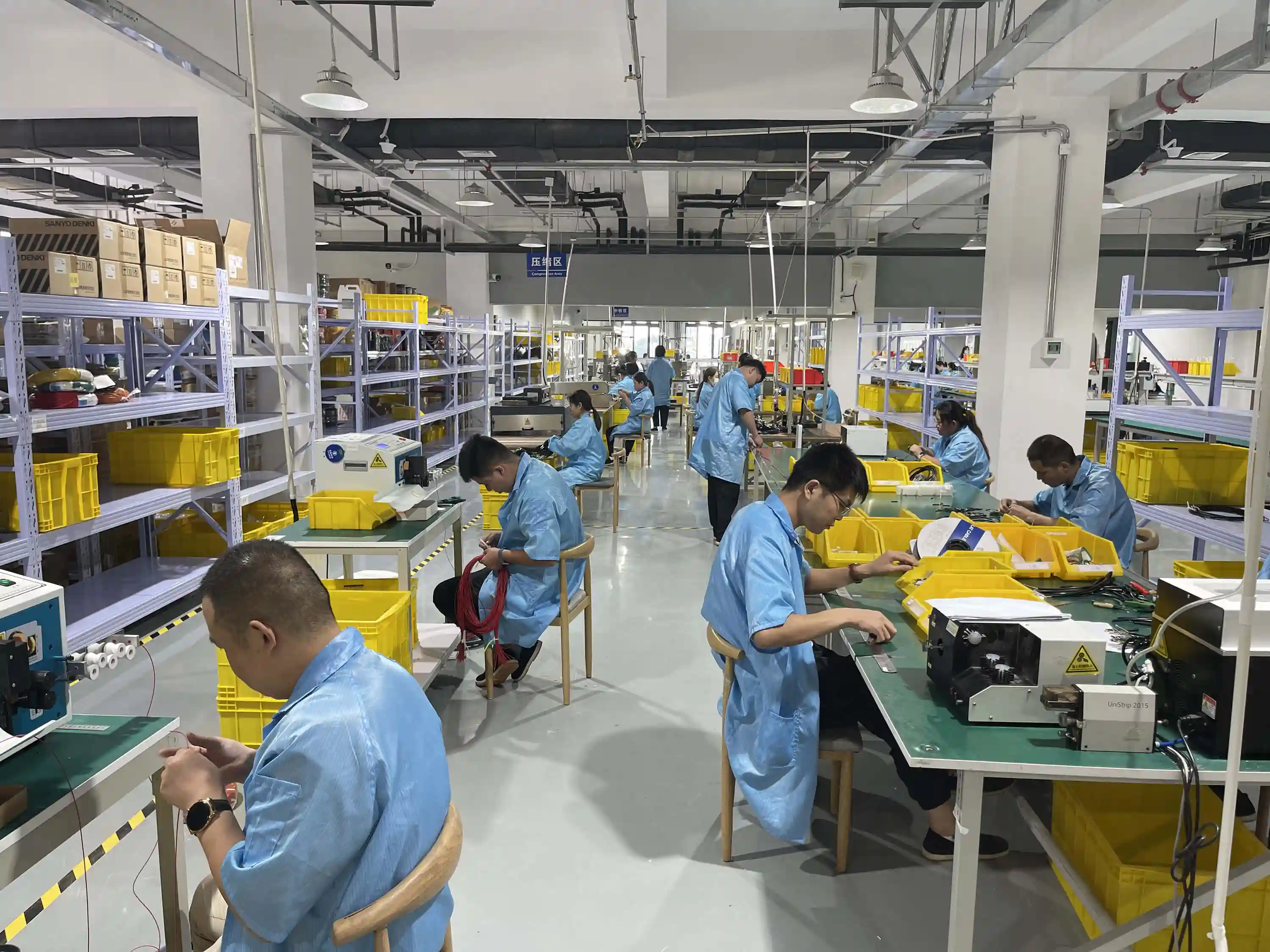
A professional wire harness production facility with dedicated assembly stations, quality testing equipment, and trained operators.
8. Frequently Asked Questions
When should I outsource wire harness manufacturing instead of building in-house?
Consider outsourcing when harness assembly is outside your core capability, when internal capacity is constrained, or when the design needs specialized equipment. Compare documented total cost, quality performance, and delivery risk for both options.
How much does it cost to set up in-house wire harness manufacturing?
Setup cost depends on the released product mix, automation level, applicator inventory, test scope, local labor, facility cost, calibration, and material stock. Obtain current equipment and tooling quotations, then build a program-specific total-cost model before comparing in-house production with outsourcing.
What are the biggest risks of outsourcing wire harness production?
Risks include quality inconsistency, intellectual property exposure, documentation gaps, and delivery delays. Review supplier workmanship controls, confidentiality arrangements, specifications, and confirmed lead times before transferring production.
How do I calculate total cost of ownership for wire harness make vs buy?
TCO for in-house includes direct materials, fully burdened labor, equipment depreciation, maintenance and calibration, floor space, quality control staff, scrap/rework costs, and training. For outsourcing, TCO includes unit price, shipping, incoming inspection, supplier management time, tooling/NRE, and inventory carrying costs. Excluding overhead and opportunity costs can understate the in-house total.
Can I outsource some wire harness production and keep some in-house?
Yes—a hybrid model can be useful. Keep prototypes and ultra-low-volume runs in-house for speed and design iteration, while outsourcing production volumes for cost efficiency. The key is establishing clear criteria for which harnesses stay internal versus external.
Ready to Explore Outsourcing Your Wire Harness Production?
Request a quotation based on your drawing, BOM, inspection requirements, and production forecast. Agree minimum order quantities, first article scope, and pricing with the supplier.