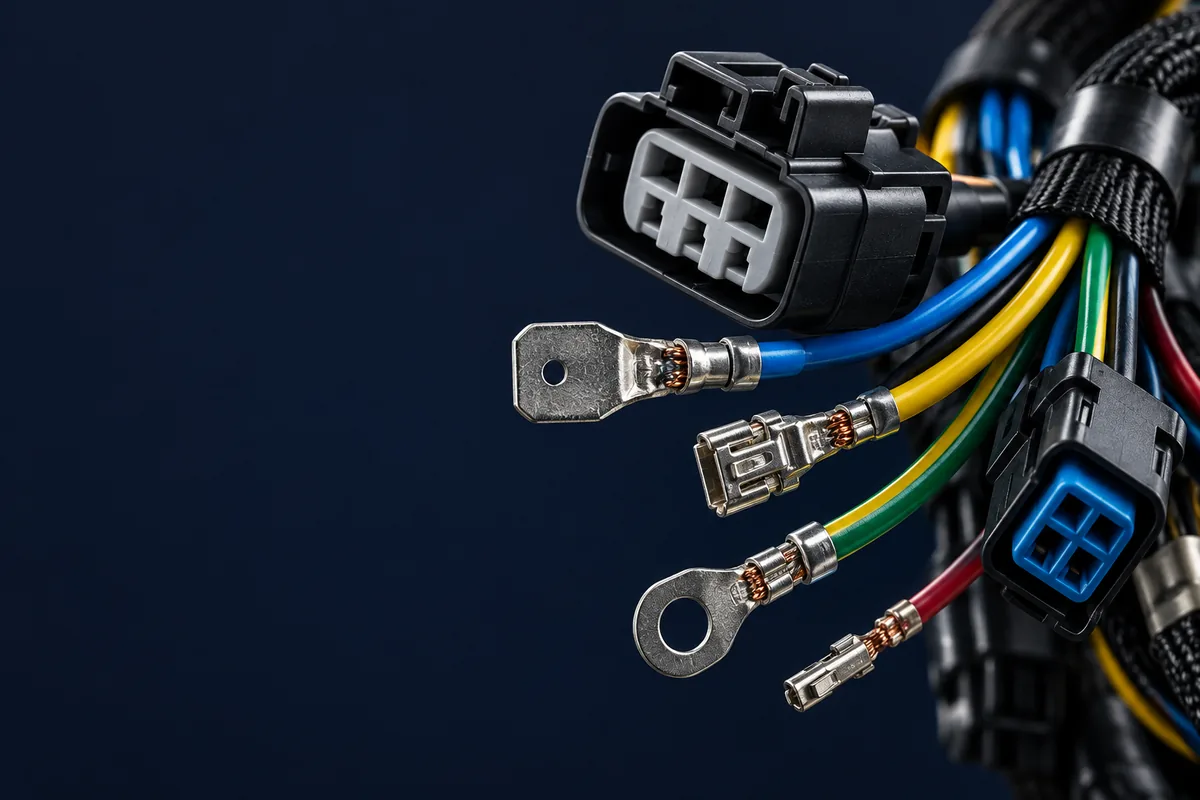
Supplier Qualification Snapshot — Top 5 Wire Harness Certifications
Supplier-qualification example showing how certification evidence supports sourcing decisions.
Industry: industrial and agricultural machinery | Scope: supplier qualification and capability updates
Scenario: A machinery OEM evaluating wire harness suppliers needed current evidence of manufacturing capacity, certification coverage, and regional supply-chain options.
Challenge: Technical decision-makers need concise, relevant updates that connect certifications and factory capabilities to their sourcing and risk-control priorities.
Solution: Provide focused qualification updates covering certification scope, audit evidence, the Philippines manufacturing footprint, and tariff-resilient supply-chain options aligned with the OEM's international sourcing priorities.
Result: The OEM receives a current, decision-ready supplier profile that can be used for technical reviews, audits, and future RFQ qualification.
Qualification evidence: certification records, audit-ready process controls, regional factory options, and current capability updates
When I talk to new customers, one of the first things they ask is "What certifications do you have?" It's a smart question—but most people don't actually understand what these certifications mean or which ones they actually need. Requiring IATF 16949 for simple consumer electronics is overkill, and skipping UL certification for products going into the US market is a disaster waiting to happen.
In supplier qualification, certifications are like insurance: the right coverage protects you, but the wrong coverage is just wasted money. This guide will help you understand what each certification actually means and, more importantly, which ones your specific project requires.
Why Wire Harness Certifications Actually Matter
Certifications aren't just fancy plaques on the wall. They represent verified systems for ensuring consistent quality, safety, and reliability. Here's what they actually provide:
What Certifications Provide
- ✓ Third-party verification of quality systems
- ✓ Documented processes and procedures
- ✓ Regular audits and continuous improvement
- ✓ Traceability and accountability
- ✓ Reduced risk for buyers
What Certifications Don't Provide
- ✗ Guarantee of zero defects
- ✗ Automatic product certification
- ✗ Proof of technical capability
- ✗ Replacement for incoming inspection
- ✗ Legal compliance in all markets
Quick Reference: All 5 Certifications at a Glance
| Certification | Focus Area | Required For | Difficulty |
|---|---|---|---|
| ISO 9001 | Quality Management System | All professional manufacturing | ★★☆☆☆ |
| IATF 16949 | Automotive Quality | OEM automotive supply chain | ★★★★★ |
| UL | Electrical Safety | Products sold in North America | ★★★☆☆ |
| IPC/WHMA-A-620 | Workmanship Standard | Quality-conscious customers | ★★★☆☆ |
| ISO 13485 | Medical Device QMS | Medical device manufacturers | ★★★★☆ |
1 ISO 9001: The Foundation of Quality Management
ISO 9001 is the baseline certification that every serious wire harness manufacturer should have. It's not specific to wire harnesses—it applies to any manufacturing operation. Think of it as proof that a company has basic quality management systems in place.
What ISO 9001 Covers
Core Requirements
- • Quality policy and objectives
- • Document and record control
- • Management responsibility
- • Resource management
- • Product realization processes
- • Measurement and analysis
- • Continuous improvement
What It Means for You
- • Documented procedures exist
- • Trained personnel in place
- • Traceability is maintained
- • Customer feedback is tracked
- • Corrective actions are documented
- • Regular internal audits occur
- • External audits verify compliance
⚠️ Reality Check
ISO 9001 is a minimum requirement, not a differentiator. Any legitimate manufacturer should have it. If a supplier doesn't have ISO 9001, that's a red flag—not because the certification is magical, but because it shows they haven't invested in basic quality infrastructure.
2 IATF 16949: The Automotive Industry Standard
IATF 16949 is the quality management system standard for the automotive industry . It incorporates ISO 9001 requirements but adds automotive-specific requirements that make it significantly more demanding.
What Makes IATF 16949 Different
| Requirement | What It Means | Why It Matters |
|---|---|---|
| APQP | Advanced Product Quality Planning | Structured development process |
| PPAP | Production Part Approval Process | Formal approval before production |
| FMEA | Failure Mode & Effects Analysis | Proactive risk identification |
| MSA | Measurement System Analysis | Validated measurement accuracy |
| SPC | Statistical Process Control | Real-time process monitoring |
| 8D Problem Solving | 8 Disciplines methodology | Structured corrective action |
Who Actually Needs IATF 16949?
Yes, You Need It
- ✓ Supplying to OEM automakers (Ford, GM, Toyota, VW, etc.)
- ✓ Supplying to Tier 1 automotive suppliers
- ✓ Safety-critical automotive components
Probably Overkill
- ✗ Aftermarket automotive parts
- ✗ Non-automotive applications
- ✗ Prototype/development work
3 UL Certification: Electrical Safety Assurance
UL (Underwriters Laboratories) certification is all about electrical safety. Unlike ISO certifications that focus on management systems, UL certification is about the product itself—proving that your wire harness won't catch fire or electrocute someone.
Relevant UL Standards for Wire Harnesses
| Standard | Description | Application |
|---|---|---|
| UL 508A | Industrial Control Panels | Panel wiring, machine controls |
| UL 758 | Appliance Wiring Material | Internal appliance wiring |
| UL 1581 | Reference Standard for Wires/Cables | General wire testing methods |
| UL 2238 | Wire & Cable Assemblies | Complete cable assemblies |
The UL Certification Process
Product Testing
Sample products undergo extensive testing for electrical safety, flammability, and durability.
Factory Inspection
UL inspects the manufacturing facility to verify production processes match tested samples.
Ongoing Surveillance
UL conducts unannounced factory inspections to ensure continued compliance.
Market Surveillance
UL purchases products from the market to verify they still meet requirements.
⚠️ Legal Requirements
In the US and Canada, many products legally require UL certification (or equivalent NRTL listing) before they can be sold. Selling non-certified electrical products can result in massive liability if something goes wrong. Don't skip this one.
4 IPC/WHMA-A-620: The Workmanship Bible
IPC/WHMA-A-620 is different from the other certifications—it's not a management system or safety certification. It's an acceptability standard that defines what "good" workmanship looks like. Learn more about this in our wire harness testing guide .
The Three Class Levels
| Class | Description | Example Applications |
|---|---|---|
| Class 1 | General Electronic Products - Function is primary requirement | Consumer electronics, appliances |
| Class 2 | Dedicated Service - Extended life, uninterrupted service | Industrial, communications, automotive |
| Class 3 | High Performance - Must function when required | industrial, medical, industrial |
What A-620 Covers
Crimping
- • Crimp height requirements
- • Bellmouth specifications
- • Insulation grip criteria
- • Wire brush length
Soldering
- • Solder coverage
- • Wetting requirements
- • Cold solder criteria
- • Flux residue limits
Assembly
- • Wire routing
- • Strain relief
- • Labeling/marking
- • Connector termination
5 ISO 13485: Medical Device Quality Management
ISO 13485 is the quality management standard specifically for medical device manufacturing . It's similar to ISO 9001 but with additional requirements specific to medical device regulatory requirements and patient safety.
Key Differences from ISO 9001
| Aspect | ISO 9001 | ISO 13485 |
|---|---|---|
| Risk Management | Risk-based thinking | Full risk management per ISO 14971 |
| Traceability | Where appropriate | Mandatory for all materials |
| Design Control | General requirements | Detailed design history file |
| Document Retention | Defined by organization | Regulatory defined (often 10+ years) |
| Supplier Control | Evaluation based | Extended supplier agreements |
Regulatory Connection
ISO 13485 certification supports compliance with FDA 21 CFR Part 820 (USA), EU MDR (Europe), and other global medical device regulations. While not legally required, most notified bodies expect it as a baseline for medical device manufacturers.
Which Certifications Do You Actually Need?
Here's a practical decision framework based on your application:
| Your Application | ISO 9001 | IATF 16949 | UL | A-620 | ISO 13485 |
|---|---|---|---|---|---|
| Consumer Electronics | ✓ | — | ✓ | Nice | — |
| OEM Automotive | ✓ | ✓ | Maybe | ✓ | — |
| Medical Devices | ✓ | — | ✓ | ✓ | ✓ |
| Industrial Equipment | ✓ | — | ✓ | ✓ | — |
| industrial | ✓ | — | Maybe | ✓ | — |
| Robotics/Automation | ✓ | — | ✓ | ✓ | — |
✓ = Required or strongly recommended | Nice = Good to have | Maybe = Depends on specific requirements | — = Not applicable
How to Verify Supplier Certifications
Certifications can be faked. Here's how to verify they're real:
1. Request the Certificate
Ask for a copy of the actual certificate, not just a claim. Verify the certificate is current (not expired) and covers the scope of work you need.
2. Verify with the Registrar
Contact the certification body listed on the certificate to confirm it's valid. Many registrars have online databases you can search.
3. Check the Scope
A certificate might be valid but not cover your specific product. Verify the certification scope includes wire harness/cable assembly manufacturing.
4. Verify the Location
If a company has multiple facilities, verify that the facility making YOUR product is the one that's certified, not just their headquarters.
Verification Resources
- ISO Certifications: Check with the registrar or use IAF CertSearch database
- IATF 16949: IATF maintains an official database at iatfglobaloversight.org
- UL Listings: Search UL's Product iQ database at UL Product iQ public database
- IPC Training: IPC maintains trainer certification records
The Cost of Skipping Certifications
Using non-certified suppliers can look like a way to save money. Here are typical examples of what can go wrong:
Missing UL Certification
A company imported power cables without UL certification. One failed and caused a small fire. Result: product recall, $2M settlement, and loss of major retail accounts. The "savings" from cheaper cables cost them over $5M.
Missing IATF 16949
A Tier 2 supplier used a non-IATF certified wire harness source. When the OEM audited the supply chain, they found the gap and demanded immediate re-sourcing. The Tier 2 lost the contract.
Missing ISO 13485
A medical device company used a non-13485 certified supplier for a "non-critical" component. During FDA audit, they couldn't demonstrate adequate supplier controls. Result: warning letter and delayed product launch.
Conclusion: Match Certifications to Risk
The right certification requirements depend on your specific application and risk tolerance. At minimum, require ISO 9001 from any professional manufacturer. Beyond that, match certifications to your industry requirements and the consequences of failure.
When evaluating a potential wire harness manufacturer , ask the right questions about their certifications—and verify the answers. Your product's quality and safety depend on it.
Frequently Asked Questions
What are the top wire harness certifications?
The most relevant are IPC/WHMA-A-620 for workmanship, ISO 9001 for quality management, IATF 16949 for automotive, UL recognition for safety, and ISO 13485 for medical. Together they cover workmanship, process control, and industry-specific compliance.
Which wire harness certification is most important?
IPC/WHMA-A-620 is the foundational one because it defines the accept/reject criteria for crimps, splices, and connectors. Most other certifications assume the manufacturer already builds to a recognized workmanship standard like A-620.
Do I need an IATF 16949 supplier?
For automotive production, yes — IATF 16949 is effectively mandatory across the automotive supply chain. For non-automotive work, ISO 9001 plus IPC/WHMA-A-620 is usually sufficient.
What does UL certification mean for a wire harness?
UL recognition indicates that the components and construction meet defined safety requirements and have been evaluated by Underwriters Laboratories. It is often required for harnesses used in equipment sold into North American markets.
Is ISO 9001 enough on its own?
ISO 9001 establishes a sound quality management system but is industry-neutral. For regulated applications you also need the domain-specific certification — IATF 16949, ISO 13485, or UL — layered on top.
How do I verify that a certification is genuine?
Ask for the certificate number and issuing registrar, then confirm it directly — for example, checking a UL file in the UL Product iQ database or contacting the registrar listed on an ISO certificate.