What automotive wire do you use in engine and body harnesses?
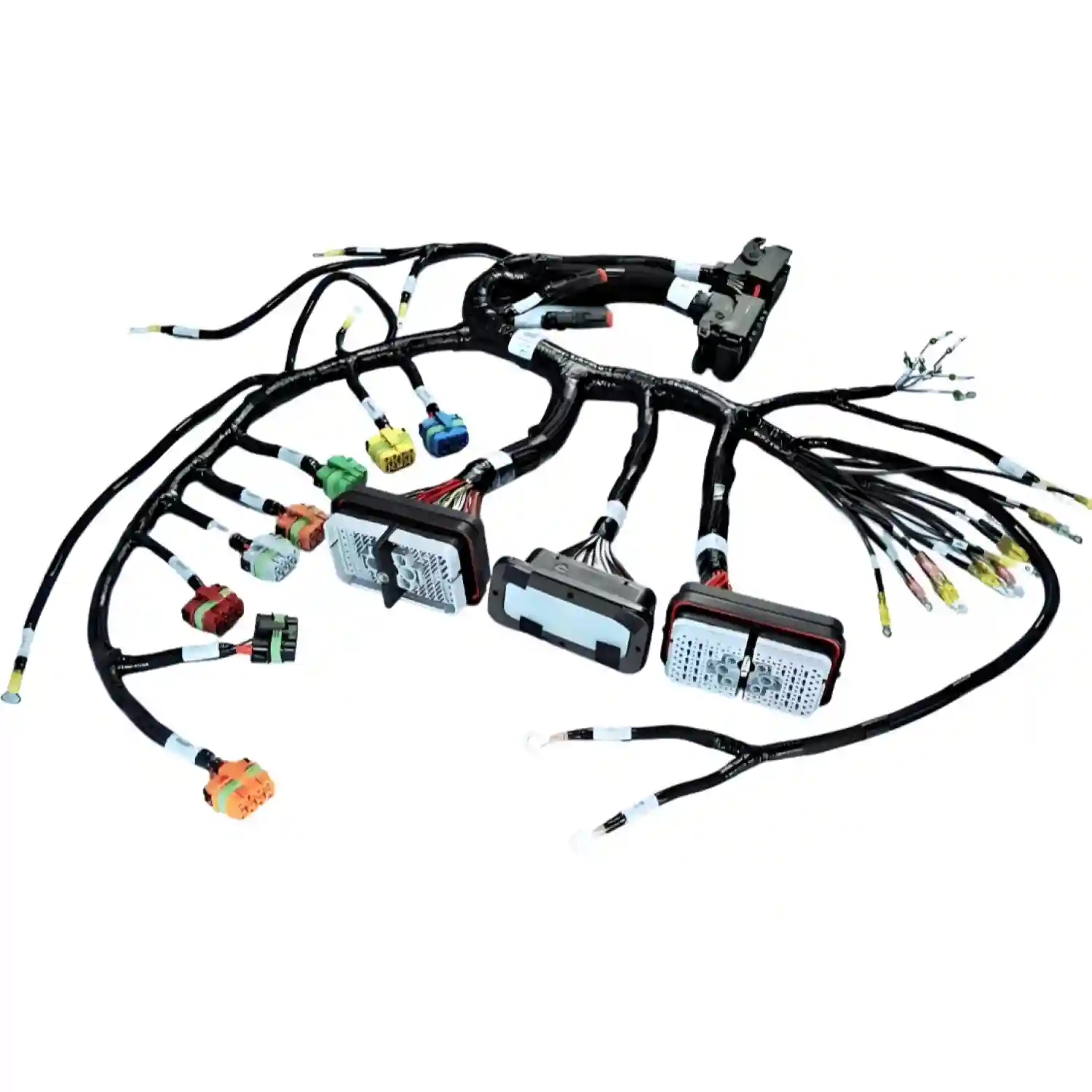
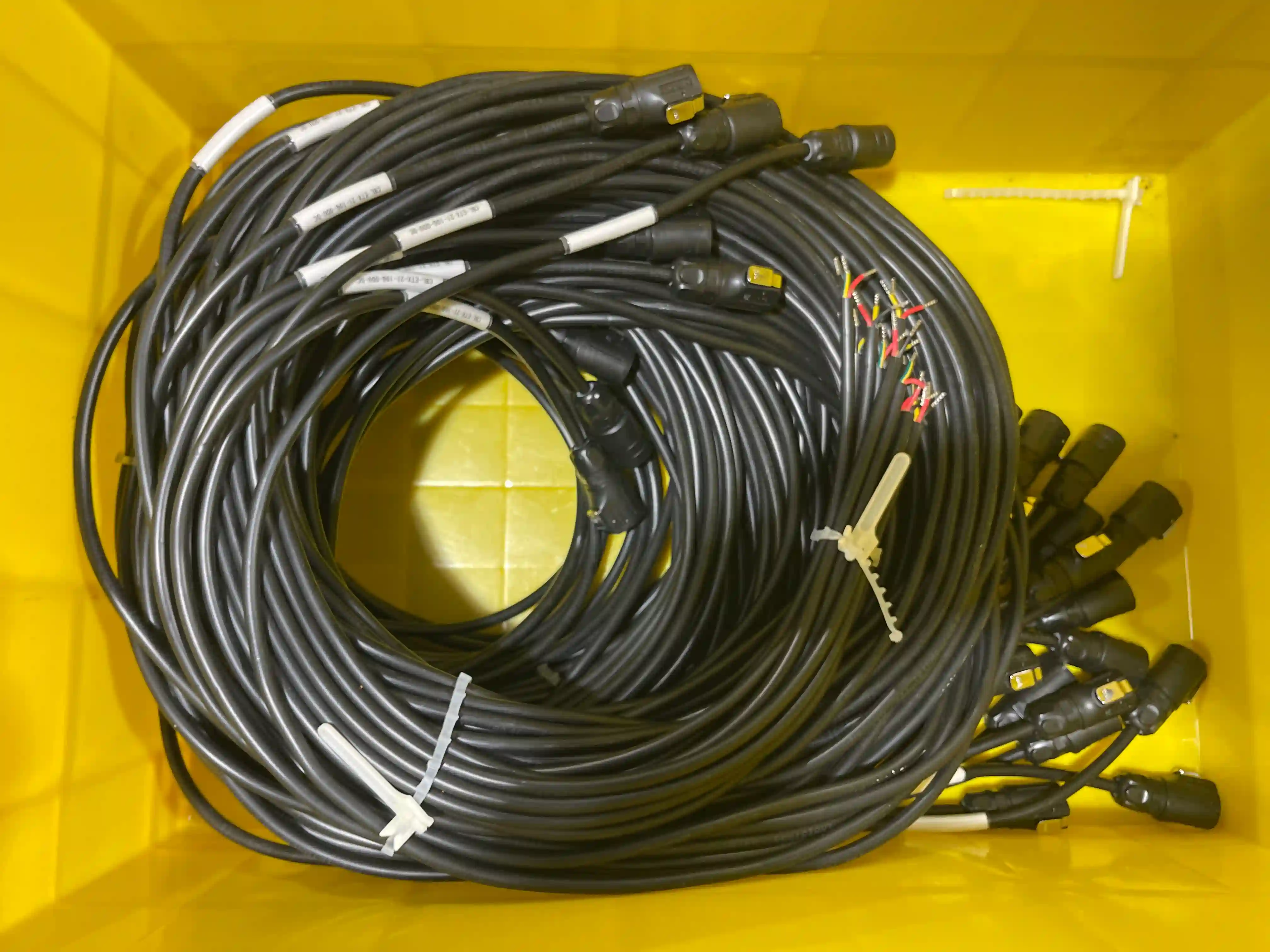
We build with automotive primary wire — cross-linked TXL, GXL and SXL types for under-hood and powertrain runs, and FLR2X / FLRY thin-wall wire for body, interior and lighting circuits. Insulation is cross-linked PE or PVC rated -40°C to +125°C, chosen for the temperature, abrasion and fluid (oil, fuel, coolant) exposure at each location.
Are your EV harnesses rated for high-voltage battery systems?
Yes. We build orange shielded high-voltage cable assemblies for EV battery packs, inverters, traction motors and on-board chargers rated for system voltages up to 1000V DC. Constructions include HVIL (high-voltage interlock loop) continuity, EMI shielding with 360° grounding, and the creepage/clearance spacing a high-voltage architecture requires.
Which connectors do you terminate for automotive programs?
We terminate sealed automotive connector systems including TE Deutsch DT/DTM, Molex MX150/CMC, Sumitomo, Yazaki and Aptiv, with IP67/IP69K sealing for under-hood, chassis and wash-down exposure. Terminals are crimped and validated to USCAR-2 / LV214 connector requirements and tested in-house.
Do you support CAN, CAN-FD, LIN and automotive Ethernet?
Yes. We build vehicle-network harnesses for CAN and CAN-FD (120 ohm twisted pair), LIN body and lighting networks, and automotive Ethernet links for ADAS and infotainment. We control impedance, twist and shielding so camera and sensor data stays clean across the vehicle.
What standards do your automotive harnesses meet?
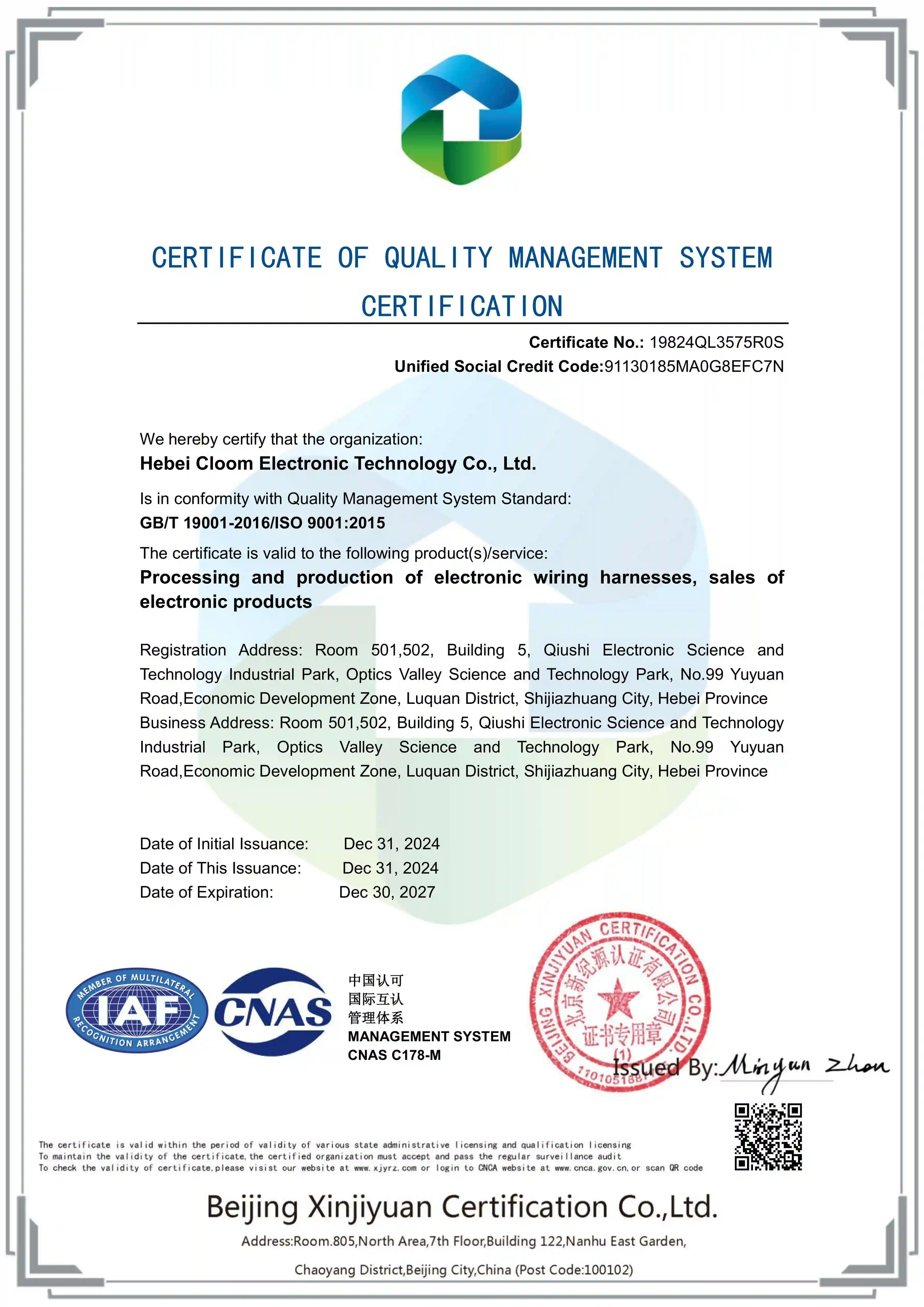
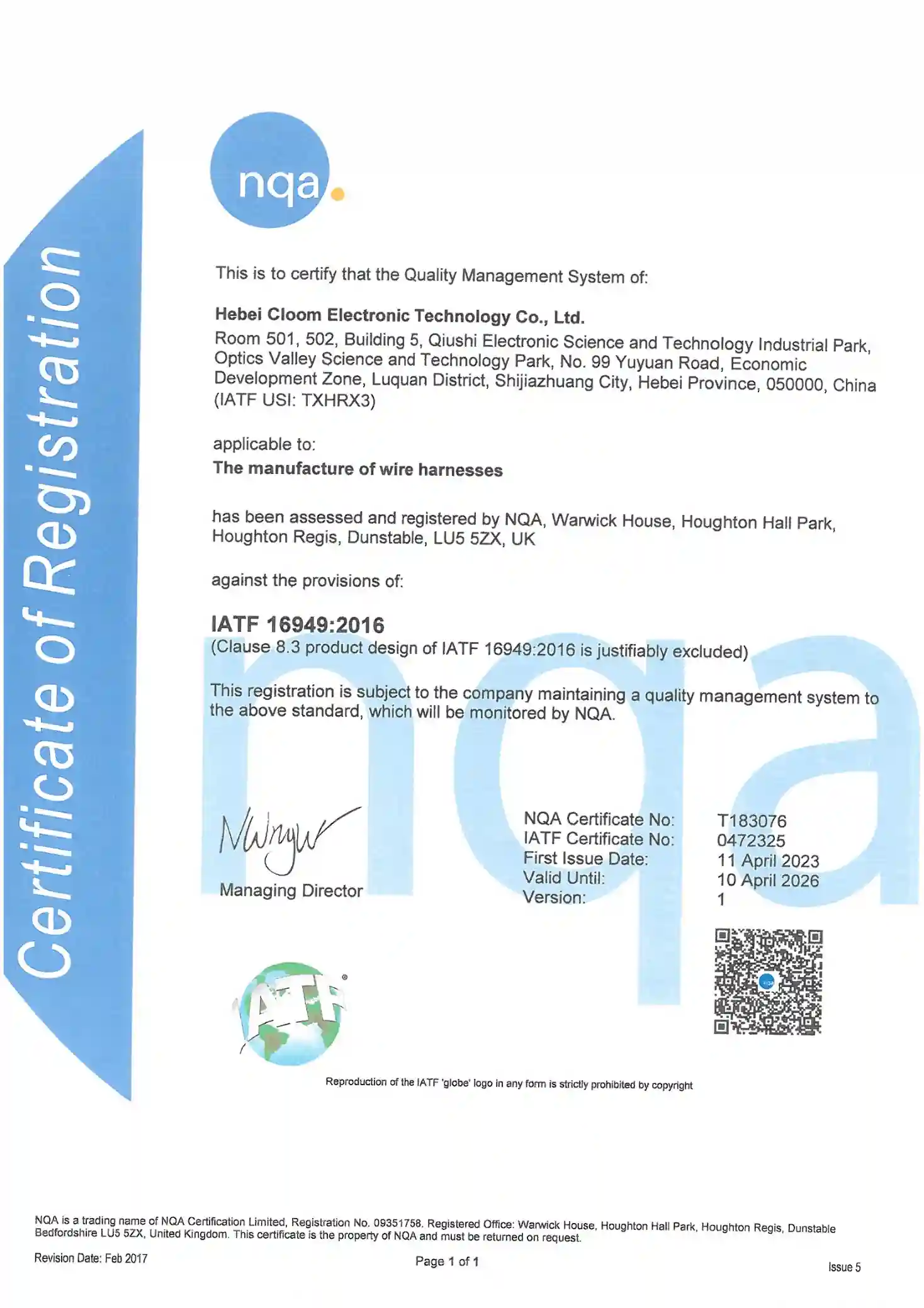
Harnesses are manufactured to IATF 16949 process discipline and IPC/WHMA-A-620 Class 2/3 workmanship, with connectors validated to USCAR-2 / LV214 requirements — all under our ISO 9001 quality system. We hold ISO 9001 and IPC/WHMA-A-620; other standards are applied as the build-to requirement for your program.
How do you protect harnesses from under-hood heat and abrasion?
Under-hood and powertrain harnesses use cross-linked insulation rated to +125°C, abrasion- and fluid-resistant over-jackets, and convoluted-tubing plus tape protection at chafe points. Sealed connectors keep oil, fuel, coolant and moisture out of the contact interface.
Can you handle both ICE and EV vehicle programs?
Yes. We build engine/powertrain, body, interior, lighting, chassis and braking (ABS/wheel-speed) harnesses for internal-combustion vehicles, and orange HV, battery, BMS and HVIL assemblies for electric and hybrid platforms — including commercial EV truck harness families.
What is your lead time and MOQ for automotive harnesses?
We support prototypes from low piece counts with 7–10 day sample lead times, scaling to production batches once a harness is validated on the vehicle. We give DFM feedback on your drawings — connector selection, conductor sizing, sealing class and routing — to optimize manufacturability and cost.