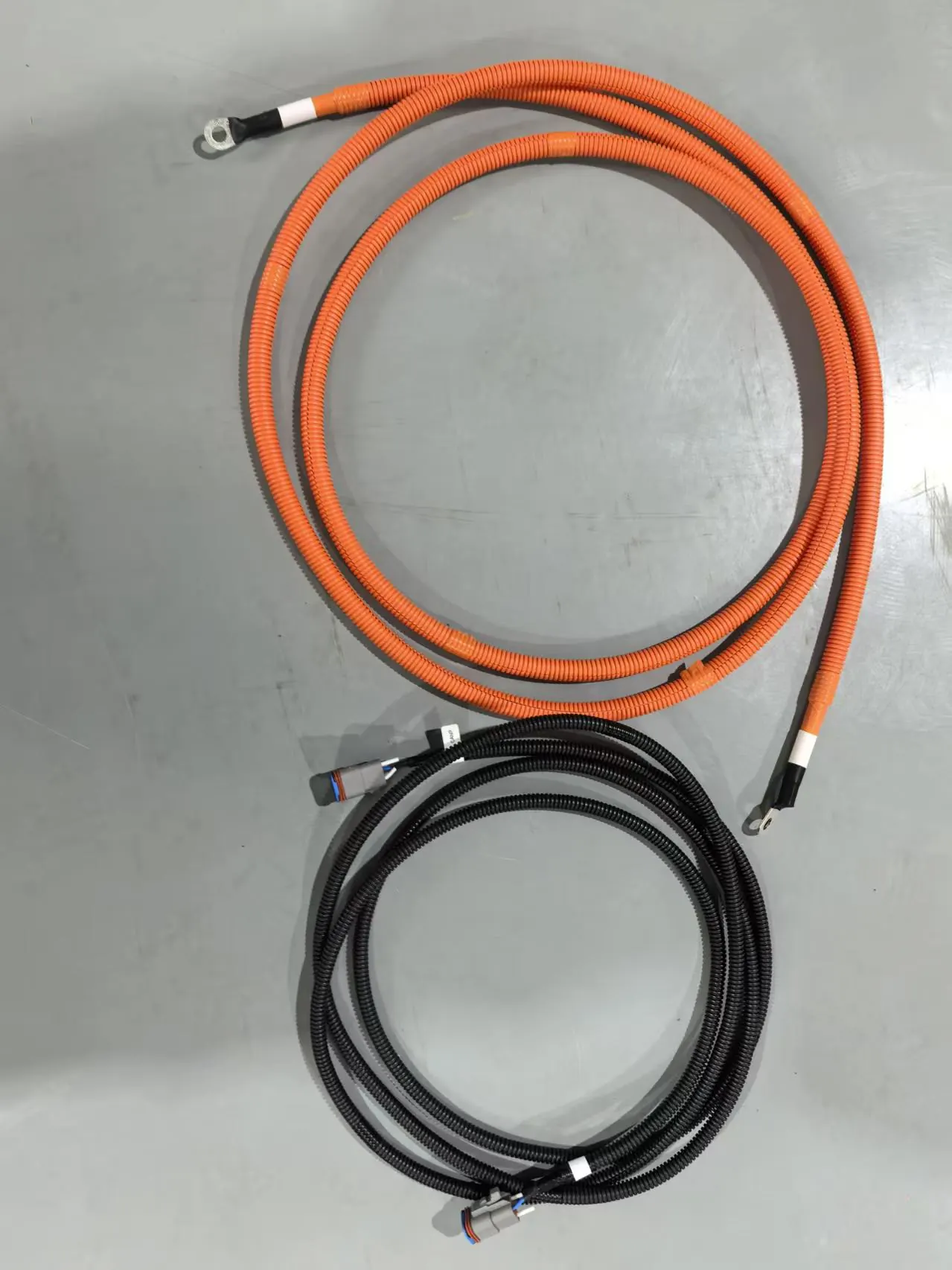
Custom High VoltageCable Assembly
We build high voltage cable assemblies for EV platforms, energy storage, charging equipment, rail systems, and industrial power electronics, with shielding, orange safety identification, and 100% electrical validation matched to your actual operating environment.

High-voltage assemblies built for safety, routing control, and production repeatability
High voltage cable failures usually come from the interfaces: poor shield termination, damaged insulation, incorrect connector clocking, insufficient strain relief, or assembly steps that do not scale cleanly from prototype to production. Our process is designed around those risks.
600V to 1500V DC Assemblies
Custom high voltage cable assemblies for 600V, 800V, 1000V, and 1500V systems, with insulation systems selected around your operating voltage, current load, and installation envelope.
- 600V to 1500V DC
- Up to 350A typical
- Single-core and multi-core builds
Shielded EMC-Controlled Construction
Braided, foil, and hybrid shielding options reduce radiated noise and support cleaner power delivery around inverters, chargers, drives, and high-current switching systems.
- Foil, braid, or combo shield
- 360-degree shield termination
- HV power + signal breakout support
Orange HV Safety Identification
We build with orange jacketing, clear circuit marking, and keyed connector systems for projects that require visible high-voltage identification and safer field service handling.
- Orange safety jackets
- Laser or label identification
- HVIL-compatible designs
Heat and Vibration Resistance
Material stacks are chosen for under-hood, charging, rail, and industrial environments where thermal cycling, abrasion, vibration, and fluid exposure drive early failures.
- XLPE, silicone, TPE options
- -40 C to +150 C
- Abrasion sleeves available
High-Current Termination Control
Large-gauge conductor processing includes calibrated strip lengths, crimp force control, pull-force checks, and sealing methods matched to connector family and cable size.
- 8 AWG to 4/0 AWG typical
- Closed-barrel and compression lugs
- Crimp height verification
100% Electrical Validation
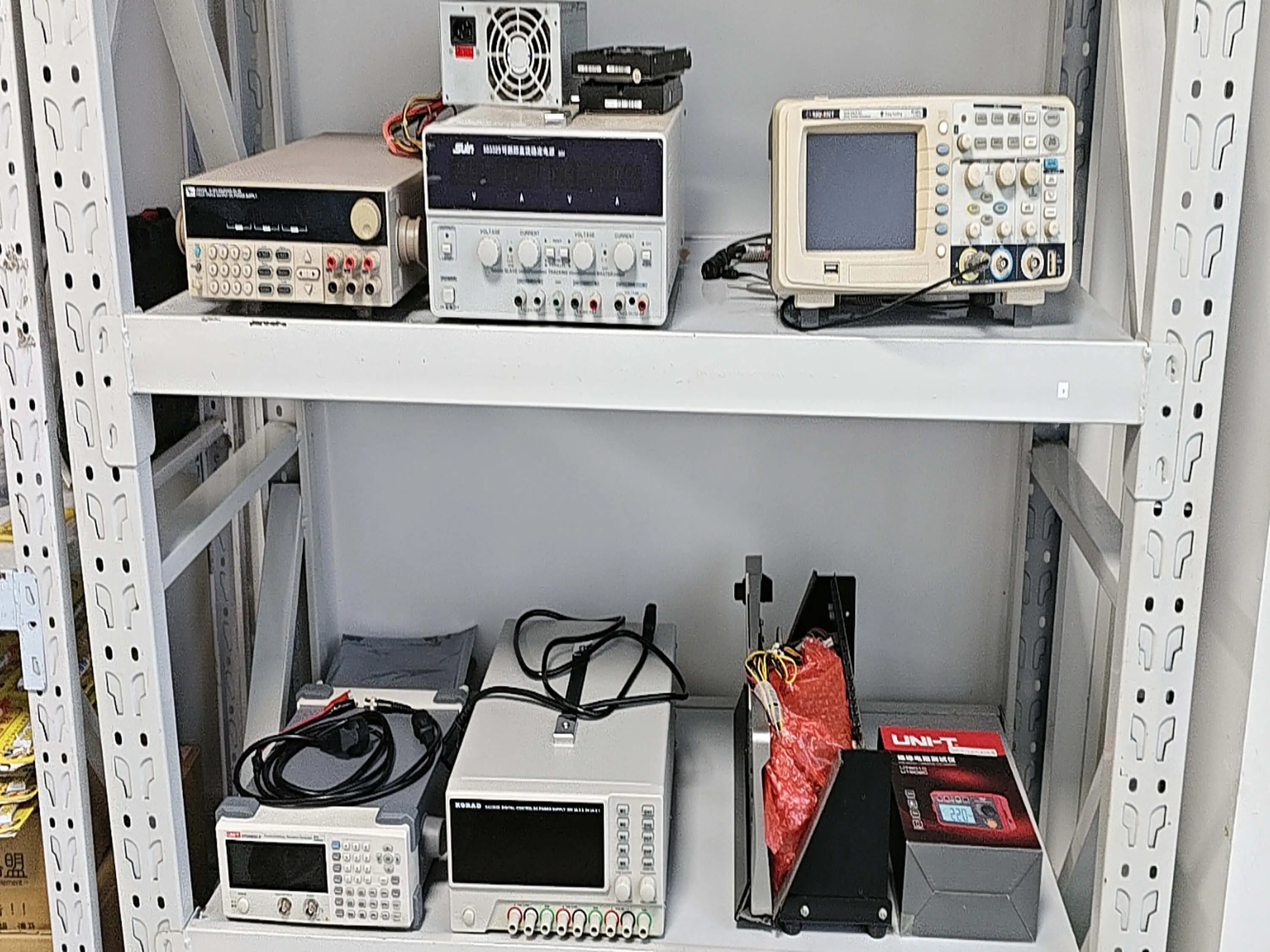
Each lot can be validated with continuity, polarity, insulation resistance, and hi-pot testing, plus application-specific checks for shield integrity, interlock circuits, and connector retention.
- Continuity and polarity
- Insulation resistance
- Hi-pot and visual inspection
Used where voltage, current, and service conditions make ordinary power cables fail early
Electric Vehicle Power Distribution
Battery disconnects, inverter feeds, charger harnesses, HVAC compressor power cables, and HV jumper assemblies for 400V and 800V vehicle platforms.
Energy Storage Systems
Cabinet-to-cabinet and module-to-busbar cable assemblies for stationary battery systems where current capacity, insulation coordination, and serviceability are critical.
DC Fast Charging Equipment
High-current power leads and internal charger interconnects built for repeated thermal cycling, outdoor exposure, and connector sealing requirements.
Rail and Heavy Equipment
High-voltage cable assemblies for traction, auxiliary power, and onboard conversion systems that need ruggedized jacketing, shielding, and long-term vibration resistance.
Industrial Drives and Power Cabinets
Custom power cables for servo drives, inverter cabinets, motor controls, and power distribution equipment where routing, bend radius, and EMC control matter.
Test Systems and Power Electronics
Prototype and production assemblies for high-voltage test benches, power conversion equipment, and engineering rigs that require quick iteration and documented inspection.

Why procurement teams use a dedicated HV build flow
High-voltage programs typically need clearer review gates than general cable assemblies because connector systems, insulation margins, shielding, and test criteria all carry higher downstream risk.
Typical design envelope
Final specification depends on conductor size, current loading, ambient temperature, routing path, connector family, and shield architecture. We review those tradeoffs before quoting production.
| Voltage Classes | 600V, 800V, 1000V, 1500V DC custom assemblies |
|---|---|
| Current Capacity | Up to 350A typical depending on conductor size and temperature rise target |
| Conductor Range | 8 AWG to 4/0 AWG common, custom beyond on request |
| Insulation Materials | XLPE, silicone rubber, TPE, PVC, dual-wall heat shrink systems |
| Shielding Options | Unshielded, foil, braid, foil plus braid, segmented shield designs |
| Temperature Range | -40 C to +150 C depending on cable construction |
| Connector Styles | HV keyed connectors, compression lugs, studs, busbar transitions, sealed circular systems |
| Protection Features | Orange jacket, shielding, conduit, abrasion sleeve, overmold, strain relief |
| Quality Standards | IPC/WHMA-A-620 workmanship with customer-specific inspection criteria |
| Verification | Continuity, polarity, insulation resistance, hi-pot, pull-force, visual traceability |
From RFQ to lot release with fewer avoidable HV surprises
The process below is built to catch misalignment early, especially around connector system selection, installation constraints, and test criteria that are often missed in generic cable RFQs.
Electrical Risk Review
We review voltage class, conductor sizing, current profile, connector family, creepage and clearance constraints, and service environment before releasing a build plan.
Material and Connector Matching
Cable insulation, shielding, boots, terminals, and backshells are selected to match thermal demand, bend radius, sealing expectations, and the mating hardware in your system.
Prototype Build and Fit Check
First articles are built for routing validation, connector clocking review, and installation checks before volume release, reducing costly redesign after tooling is committed.
Controlled Termination and Shield Handling
Large-gauge stripping, lug crimping, shield termination, and sealing are completed with controlled process parameters so the finished cable behaves consistently in production.
Electrical and Mechanical Validation
Assemblies are checked for polarity, continuity, insulation resistance, hi-pot performance, and mechanical workmanship, with retention or dimensional checks added when required.
Lot Traceability and Delivery
Finished cables are labeled by part number and lot, packaged to protect terminals and insulation systems, and released with inspection records that support production purchasing teams.
Questions buyers ask before moving an HV build
These are the issues that usually decide whether a project can move quickly into sample approval or stalls in repeated engineering clarifications.
Adjacent services buyers usually compare
If your RFQ includes battery packs, environmental sealing, or complete vehicle harness scope, these pages will help you choose the right production path before quoting.
Battery Cable Assembly
For battery pack leads, BMS harnesses, and battery-system-specific interconnects, see our dedicated battery cable assembly service.
View pageOvermolded Cable Assembly
When your high-voltage cable also needs sealed exits, molded strain relief, or integrated connector protection, overmolding can improve durability.
View pageAutomotive Wire Harness Solutions
If the program extends beyond single HV power leads into complete vehicle routing, our automotive harness team handles broader vehicle harness builds.
View pageSend the cable details that drive an accurate HV quote
Include your voltage class, conductor size, mating connector information, shielding requirement, cable length, routing environment, and annual demand. Drawings, sample photos, or an existing BOM help speed up review.