Cable Assembly

FPC Cable Manufacturers for Custom Fine-Pitch Interconnects

We support buyers who need finished FPC and FFC interconnect assemblies, not generic catalog jumpers. From display tails and board-to-board folds to reinforced, shielded, and ZIF-mated builds, we review pitch, contact orientation, stiffener layout, and handling risk before quotation.

Custom FPC and FFC fine-pitch cable assembly
Min Pitch Support0.3 mm
Conductors Available80+
Electrical Verification100%
Typical Samples7-12 Days

Application Context

Finished FPC / FFC interconnects, not catalog jumpers

We support buyers who need finished FPC and FFC interconnect assemblies for compact electronics, display modules, and moving interconnects — not generic catalog jumpers. From display tails and board-to-board folds to reinforced, shielded, and ZIF-mated builds, we review pitch, contact orientation, stiffener layout, and handling risk before quotation so the first sample matches the connector and stack-up already designed into the hardware.

Fine-pitch flexible interconnects usually fail at insertion or repeated handling rather than in the nominal conductor path, so stiffeners, pull tabs, fold geometry, and packaging discipline matter as much as the conductor count. Where display noise or mixed-signal routing creates risk, we can support shielded constructions and grounding strategy review, and when a program needs the flexible section to transition into discrete wire leads or a larger harness, we can review that broader package — including micro-coaxial, LVDS display, and medical connector assemblies — instead of forcing you to manage a separate supplier for every transition.

Applications

Where Buyers Use Custom FPC Cables

The programs where a purpose-built FPC or FFC assembly is more reliable than forcing a standard jumper into a custom product

LCD, OLED, and HMI Display Modules

Display assemblies often need custom tail length, fold direction, insertion reinforcement, and shielding consideration so the cable fits the enclosure and survives repeated service access.

  • Custom tail length
  • Fold direction control
  • Insertion reinforcement

Medical Handheld and Diagnostic Devices

Compact medical electronics use FPC interconnects where low mass, tight routing, and stable assembly handling matter more than commodity cable pricing.

  • Low-mass construction
  • Tight-routing layouts
  • Stable assembly handling

Automotive Human-Machine Interfaces

Clusters, infotainment interfaces, touch modules, and interior electronics use fine-pitch flexible interconnects where packaging, temperature exposure, and connector retention all need buyer review before approval.

  • Packaging-fit review
  • Temperature exposure
  • Connector retention

Printers, Scanners, and Motion Systems

Moving assemblies require attention to bend zone placement, reinforcement, and repeat handling risk. We support application review before a buyer commits to a production FPC source.

  • Bend-zone placement
  • Reinforcement features
  • Repeat-handling review

Industrial Controls and Compact Embedded Systems

HMI panels, sensor modules, and embedded control products often need custom FFC or FPC lengths to fit tight packaging while preserving orderly routing and service access.

  • Custom FFC / FPC lengths
  • Orderly routing
  • Service access

Consumer Electronics and Accessory Modules

Space-constrained products benefit from custom FPC interconnects that match the real stack-up, connector orientation, and packaging plan instead of relying on best-fit standard lengths.

  • Stack-up matching
  • Connector orientation
  • Packaging plan

Engineering Challenges

Review risk before the sample is released

01

Mating Connector Match

Contact side, locking style, stiffener dimensions, and insertion geometry decide whether an FPC works or becomes scrap. We review the real ZIF/LIF connector and assembly condition before release.

02

Fine-Pitch Handling & Insertion

Fine-pitch interconnects fail at insertion and repeated handling, not the nominal conductor path. We plan stiffeners, pull tabs, and localized reinforcement where the build needs mechanical support.

03

Incomplete RFQ Detail

FPC RFQs are often missing orientation, reinforcement, packaging, and handling rules. We help close those gaps so approvals are based on the real build rather than a vague description.

04

Fold, Bend & Shielding Planning

Display noise and mixed-signal routing can destabilize a layout that looks fine on paper. We review shield and ground strategy, fold geometry, and controlled bend zones before quoting.

Technical Capabilities

Typical FPC / FFC Specification Range

Pitch Range0.3 mm, 0.5 mm, 1.0 mm, and 1.25 mm common options
Conductor Count4 to 80+ conductors depending on pitch and stack-up
Contact OrientationType A, Type B, top-contact, and bottom-contact review before quote
Base MaterialsPolyimide and polyester-based FPC / FFC constructions by application
ReinforcementStiffeners, pull tabs, tape reinforcement, and localized support features
ShieldingShielded and EMI-conscious constructions where signal environment requires it
Termination StyleDirect ZIF/LIF insertion, connectorized tails, and selected hybrid transitions
Electrical ChecksContinuity, polarity, short detection, and inspection matched to part risk
PackagingTray, bag, separator, and handling controls for fine-pitch shipment protection
Sample Lead TimeTypical prototypes in 7 to 12 working days after requirement lock
MOQPrototype-friendly sampling through scheduled production releases
RFQ InputsPitch, conductor count, contact side, length, mating connector, and environment
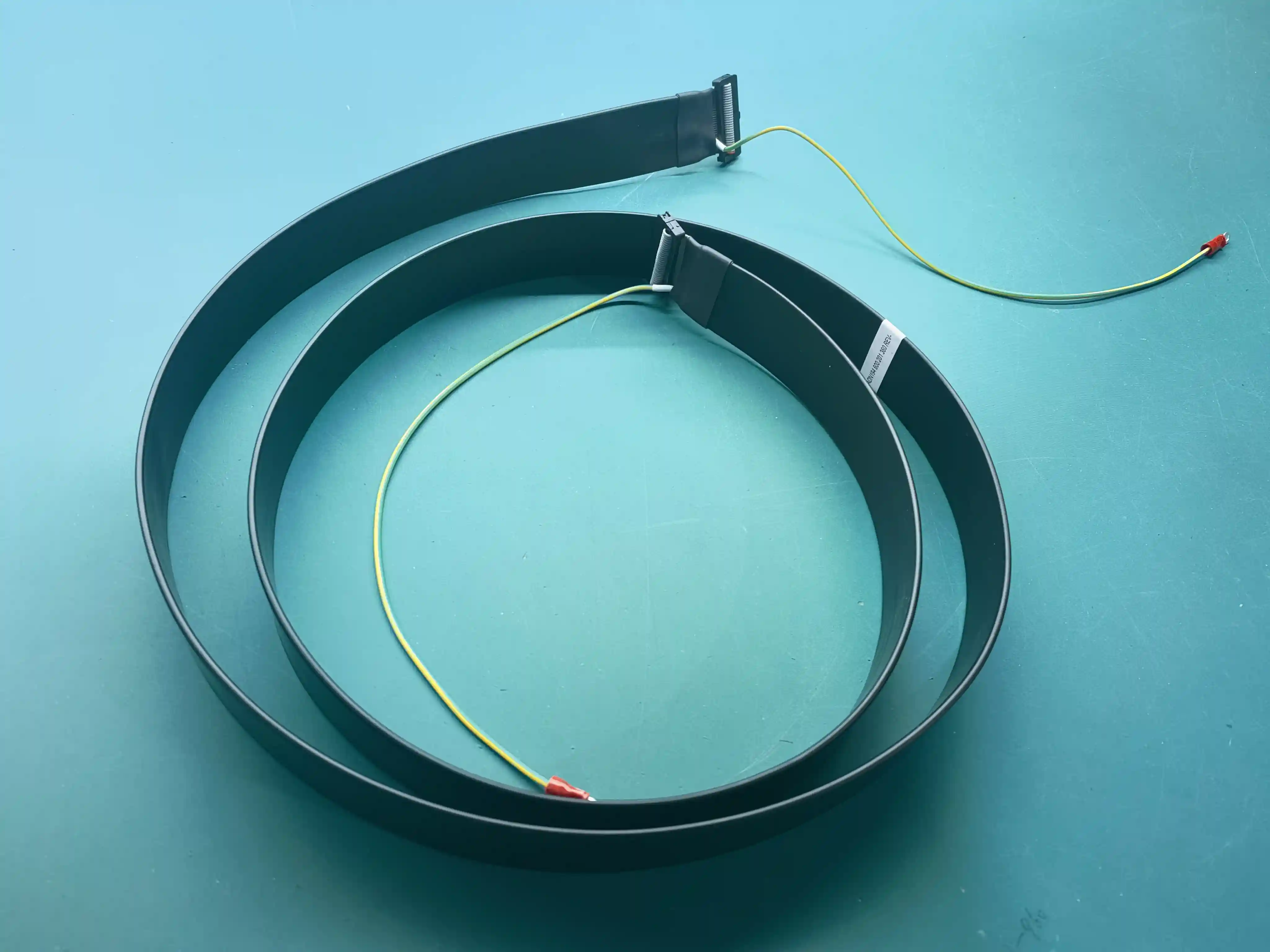
FPC / FFC electrical verification and inspection

Manufacturing Process

A controlled build, drawing to shipment

01Drawing / BOM Review
02Connector Sourcing
03Cutting & Stripping
04Crimping / Assembly
05In-process Inspection
06Electrical Test
07Final Inspection
08Packaging & Export

Quality & Testing

Verification before every FPC shipment

Every FPC/FFC assembly gets continuity, polarity, and short detection with inspection matched to part risk, plus stiffener and reinforcement checks and fine-pitch packaging controls, so the product arrives usable — not just electrically correct.

Continuity TestPolarity CheckShort DetectionVisual InspectionReinforcement CheckPackaging VerificationSample ApprovalDocumentation

Why WHP

Why Buyers Use Us for FPC Cable Programs

We focus on manufacturable FPC interconnect assemblies with the commercial detail procurement teams need before approval

We Quote the Actual Mating Condition

The difference between a working FPC cable and scrap often comes down to contact side, locking style, stiffener dimensions, and insertion geometry. We review the real connector and assembly condition before release.

Procurement-Friendly Requirement Review

FPC RFQs are often incomplete. We help buyers close the gaps around orientation, packaging, reinforcement, and handling risk so internal approvals are based on the real build rather than a vague description.

Prototype-to-Production Continuity

The same supplier should support first samples, fit checks, and recurring production after engineering approval. That continuity reduces hidden requalification work when the project transitions from design to purchasing.

Support Beyond Basic Flat Jumpers

Many programs need reinforcement, shielding, or transition features that a standard catalog FFC cannot solve. We focus on those custom conditions where a manufacturer review adds value before the PO is issued.

Handling and Packaging Discipline

Fine-pitch FPC assemblies can be damaged during packout, transport, or line-side handling. We define practical packaging and identification rules so the product arrives usable, not just electrically correct.

Related Wire Harness Integration When Needed

If your product combines FPC sections with connectors, wire leads, or larger harness branches, we can review that broader interconnect package instead of forcing you to manage separate suppliers for every transition.

FAQ

Buyer Questions Before RFQ

What information should I send for an accurate FPC cable quote?
Send pitch, conductor count, length, contact side, mating connector details, quantity, and any drawing or sample photo that shows the installed condition. Those details matter more than a generic "FPC cable" label.
How is custom FPC sourcing different from ordering a standard FFC jumper?
Custom FPC sourcing usually includes orientation review, stiffener layout, fold geometry, handling risk, and packaging rules. A standard jumper may fit the pitch but still fail at insertion, routing, or long-term use in the product.
Can you support prototypes before mass production?
Yes. We support engineering samples, pilot builds, and recurring production so the approved FPC assembly can move into purchasing without changing suppliers or resetting the documentation package.

OEM Program Entry

Need a Quote From an FPC Cable Manufacturer?

Send your pitch, conductor count, connector details, drawing, and quantity forecast. Our team will review the assembly condition and reply with pricing, lead time, and practical risk notes before you release the next sourcing step.

We will review

  • 01Design Feasibility
  • 02Component Availability
  • 03Cost Drivers
  • 04Validation Requirements

Related Capabilities

Related cable assembly services

Custom interconnect builds that pair with fine-pitch FPC and FFC programs.

Before You Send

What to include in your FPC RFQ

Mating connector review before quotePrototype and production planning upfrontHandling, packaging, and test scope defined early

Send This With Your FPC RFQ

  • Pitch, conductor count, total length, and contact orientation requirements
  • Mating connector details, drawing, sample photos, or stack-up screenshots
  • Quantity, sample timing, environment, and any reinforcement or packaging rules

What You Get Back

  • Requirement-gap feedback before release
  • Quoted sample lead time, production lead time, and MOQ
  • Recommended reinforcement, handling, and test plan

Representative Project

Representative project type (illustrative)

Representative project type we handle, shown for illustration. Not a specific named customer.

mining · Global · Recent

Scenario. A mining equipment integrator sought a supplier for custom low-to-moderate volume wiring harnesses, with projected significant volume scaling over a three-year horizon.
Challenge. The client needed a supplier capable of handling initial low-volume prototype runs while supporting a rapid scale-up to high volumes, all while competing against their existing vendor base.
Solution. Provided a competitive quotation for the initial low-volume order with a 4-week lead time, demonstrating manufacturing flexibility for low-volume starts and outlining capacity planning for future volume scaling.
Result. Successfully entered the vendor evaluation shortlist, with the client initiating parallel inquiries for additional projects and planning a factory audit to finalize the long-term partnership.
20 sets initial order4-week lead timeForecast: 50 sets in 2026Forecast: 500 sets in 2027Forecast: 1000 sets in 2027