Technical Guide
Wire Harness Tape Wrapping:
Types, Methods & Selection Guide for Engineers
Two engineers specified tape for the same engine-bay routing. One saved $0.08 per unit with PVC tape and faced $340,000 in rework from melted, delaminated tape at 125°C. The other spent $0.19 more with LV 312 T-3 cloth tape and had zero failures over three production years. This guide covers every dimension of harness tape selection: types, wrapping methods, LV 312 automotive standards, and an application selection matrix.
temperature range covered by harness tapes
cost premium of Class C cloth vs PVC tape
standard overlap for half-lap wrapping
common tape width range for harness work
- 1. Why Wire Harnesses Need Tape Wrapping
- 2. Types of Harness Tapes: Properties and Trade-offs
- 3. Tape Wrapping Methods: Spiral, Half-Lap, and More
- 4. Key Tape Specifications and What They Mean
- 5. Automotive Standard LV 312: Temperature and Abrasion Classes
- 6. Application Selection Matrix
- 7. Tape Width vs Bundle Diameter Rules
- 8. Frequently Asked Questions
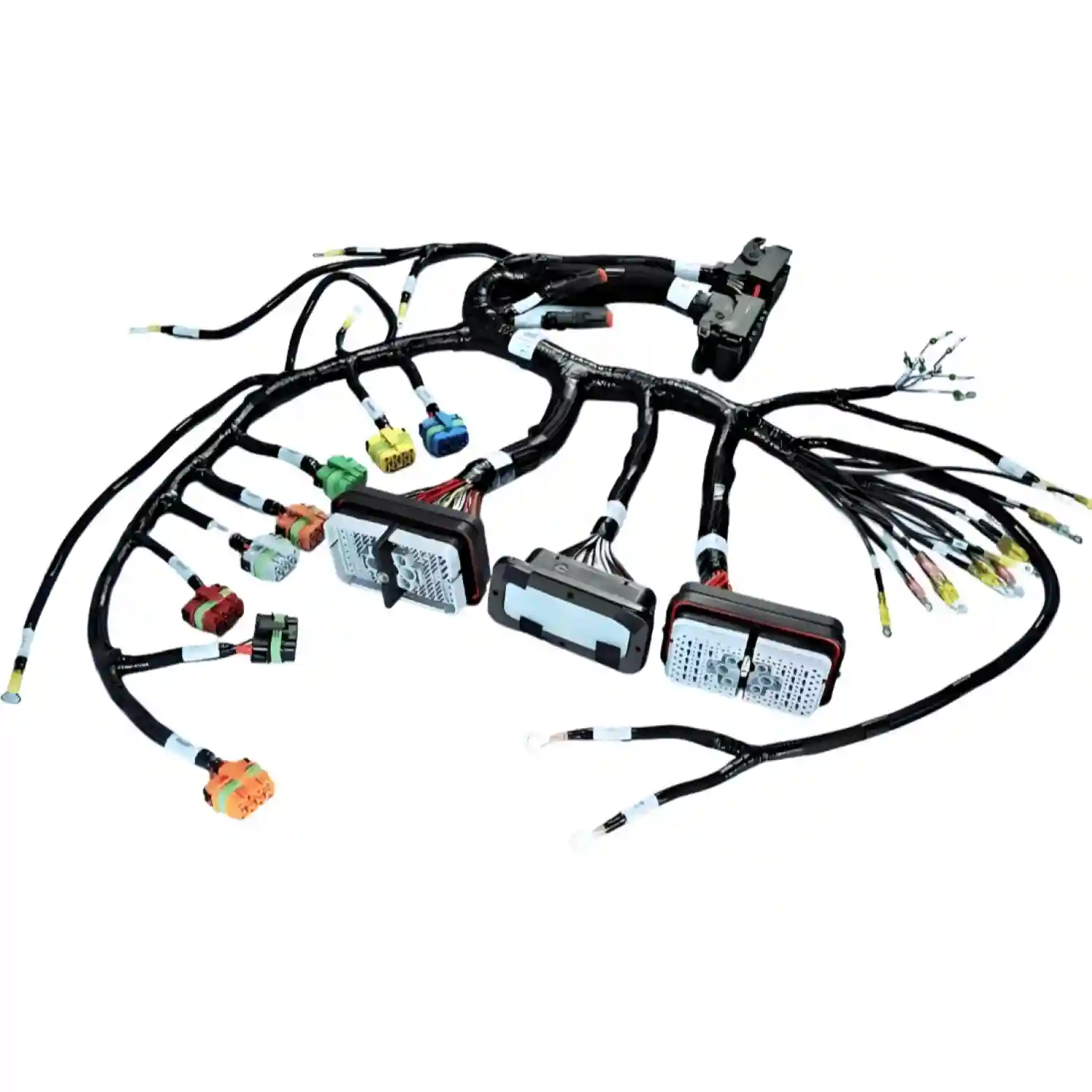
Automotive wire harness with multiple tape-wrapped sub-bundles showing cloth and PVC tape application in production
Automotive wire harness with tape-wrapped sub-bundles — tape selection directly affects long-term reliability in vibration and thermal environments
Tape is the least glamorous specification on a wire harness drawing — and the most commonly under-specified. Procurement teams see it as a commodity. Engineers copy it from a previous drawing without checking whether the application conditions match. The result is harnesses that fail for reasons that never appear in electrical testing: abrasion on sheet metal edges, tape melt-off in high-temperature zones, rattle noise from inadequately damped bundles.
The automotive industry took tape specification seriously enough to create LV 312, a German OEM-mandated qualification standard that classifies harness tapes by temperature class and abrasion resistance. BMW, Mercedes-Benz, Volkswagen Group, and Stellantis all reference LV 312 in harness engineering specifications.
This guide covers every dimension of harness tape selection relevant to wire harness design engineers and procurement teams: tape types, wrapping methods, the LV 312 temperature and abrasion classes, and an application-specific selection matrix.
1. Why Wire Harnesses Need Tape Wrapping
Tape wrapping serves four distinct functions in a wire harness: abrasion and mechanical protection, bundling and shape retention, noise damping, and environmental sealing. Most engineers think primarily about abrasion protection, but understanding all four explains why different zones of the same harness often require different tape types.
A single harness section often needs to satisfy multiple functions simultaneously — abrasion protection and noise damping in a door sill route, for example. When a single tape type cannot satisfy all requirements, the standard approach is a two-layer system: a foam or fleece inner layer for damping, overwrapped with cloth tape for abrasion protection.
Protects wire insulation from contact with body sheet metal edges, brackets, and grommets. Without tape, PVC insulation abrades through in under 500 hours at contact points in automotive vibration environments.
Consolidates individual conductors into a defined bundle cross-section for routing and assembly. Tape tension during wrapping controls final bundle OD and prevents individual wires from spreading during harness installation.
Foam and fleece tapes absorb vibration energy and reduce rattle noise against body panels. In automotive NVH engineering, damping tape in door cavities can reduce rattle events by 60–80% vs undamped bundles.
Tightly wrapped tape reduces fluid ingress into bundle cross-sections at conduit entry points. In underbody routing exposed to water spray, pressure-sensitive cloth tape with no-gaps spiral wrap provides meaningful moisture resistance at lower cost than overmolded sections.
2. Types of Harness Tapes: Properties and Trade-offs
Six tape types cover the majority of wire harness applications. Each has a distinct backing material, adhesive system, and set of mechanical properties that make it suited to specific zones and environments.
PVC tape is the most common tape type specified on harness drawings — and the most commonly misapplied. PVC tape softens at temperatures above 85–90°C sustained, losing adhesion and allowing tape ends to lift and unwrap. In engine compartment applications with sustained temperatures of 100–125°C, PVC tape must not be specified regardless of cost pressure.
Table
| Tape Type | Max Temp (Continuous) | Abrasion Class (LV 312) | Noise Damping | Primary Use | Relative Cost |
|---|---|---|---|---|---|
| PVC tape | 85–105°C | Class A–B | Low | General bundling, interior routing | 1× |
| Woven cloth / fabric | 105–150°C | Class B–C | Medium | Engine bay, high-abrasion zones | 3–5× |
| Foam tape (PE/PU) | 70–90°C | Class A | High | Door cavities, NVH-critical zones, inner layer | 2–3× |
| Fleece / felt tape | 105–125°C | Class A–B | Very High | Luxury vehicle NVH, instrument panel routing | 4–7× |
| Paper / cellulose | 80–100°C | Class A | Low | Lightweight body routing, temporary protection | 0.8× |
| Glass fiber tape | 155–200°C | Class C | Low | Exhaust-adjacent zones, extreme heat | 6–10× |
3. Tape Wrapping Methods: Spiral, Half-Lap, and More
The wrapping pattern determines how much tape is used, how many effective protection layers are applied, and how the harness behaves under bending. Four methods cover all standard harness applications.
Half-lap is the de facto standard for automotive harnesses. At 50% overlap, the effective helix angle is approximately 54°, which allows the harness to bend without tape gaps opening up. Spiral wrap with zero overlap creates gaps when the harness bends beyond the tape pitch radius — the wire insulation becomes exposed at the gap.
For half-lap on a 19mm-wide tape at 50% overlap on a 25mm-diameter bundle: tape consumption ≈ 8.3 wraps per meter. Add 10–15% for branching points, tape starts, and production waste.
Table
| Method | Overlap | Effective Layers | Tape Consumption | Best For |
|---|---|---|---|---|
| Spiral / single-layer | 0–10% | 1 | 1× | General bundling, flexible sections, cost-sensitive runs |
| Half-lap | 50% | 2 | 2× | High-abrasion zones, LV 312 Class B/C requirements |
| Full-lap / cross-wrap | 66% | 3 | 3× | Maximum protection, chafing points, sharp edges |
| Longitudinal / cigarette | N/A (lengthwise) | 1 | 0.5–0.7× | Branching points, short transition sections |
4. Key Tape Specifications and What They Mean
Tape data sheets report five key properties. Each maps to a real-world failure mode when the value is insufficient for the application.
Adhesion force deserves more attention than it typically receives. A tape with 2 N/cm peel strength wraps adequately during production but lifts at 85°C after six months in service. The LV 312 standard tests adhesion after thermal aging, UV exposure, and fluid immersion — not just at room temperature. Always specify the aged adhesion value, not just the initial room-temperature value.
Table
| Property | What It Measures | Typical Range | Failure If Insufficient |
|---|---|---|---|
| Temperature class | Max continuous service temp (adhesive + backing) | 85°C–200°C | Tape softens, adhesive flows, tape unwraps |
| Abrasion resistance | Cycles to wire insulation breach under dynamic rubbing | LV 312 Class A–C | Wire insulation wears through at contact points |
| Adhesion force (peel) | Force to peel tape from wire insulation (N/cm) | 1–15 N/cm | Tape lifts, ends peel back, coverage gaps form |
| Elongation at break | How much tape stretches before tearing (%) | 10–300% | Tape tears at branching points or tight bends |
| Noise damping value | Vibration energy absorbed (dB reduction) | 0–15 dB | Harness rattle against body panels, NVH failures |
5. Automotive Standard LV 312: Temperature and Abrasion Classes
LV 312 is the German automotive industry standard for harness protection materials, developed by the VDA and mandated across German OEMs and their global supply chains. It classifies harness tapes along two axes: temperature class and abrasion resistance class.
LV 312 abrasion cycles are measured on a standardized test rig where the tape-wrapped harness rubs against a mandrel under defined load and displacement. Class A tapes survive 100–1,000 cycles before the underlying wire insulation is breached. Class C tapes survive 3,000+ cycles.
When an automotive drawing calls out a tape specification using LV 312 designations (e.g., T-3/B = 125°C temperature class, medium abrasion resistance), it is specifying a performance requirement — not a specific product. Any tape from any supplier that passes LV 312 T-3/B qualification testing can be used interchangeably.
Quote
Text: LV 312 is the most useful thing the German automotive industry did for harness engineers worldwide. Even if your customer doesn't reference it directly, using T-class and abrasion class designations creates an unambiguous performance requirement that any compliant supplier can meet. It turns 'use good tape' into an auditable specification.
Author: Hommer Zhao
Role: Engineering Director
6. Application Selection Matrix
The matrix below maps common wire harness routing zones to the recommended tape type, wrapping method, and LV 312 designation. This covers the major application categories encountered in automotive, industrial, and medical harness manufacturing.
Table
| Application Zone | Tape Type | Method | LV 312 | Key Requirement |
|---|---|---|---|---|
| Passenger cabin, interior | PVC or cloth | Half-lap | T-1/A–B | Low temp, abrasion against plastic trim |
| Door cavity / sill | Foam + cloth overwrap | Half-lap each layer | T-1/A + T-1/B | NVH damping + abrasion from sheet metal |
| Engine compartment | Woven cloth (polyester) | Half-lap | T-3/B–C | 125°C sustained + fluid resistance + abrasion |
| Exhaust / turbo adjacent | Glass fiber tape | Half-lap | T-4/C | 150°C+ continuous; silicone adhesive required |
| Underbody / wheel well | Cloth (water-resistant adhesive) | Full-lap | T-2/C | Stone impact, water spray, road grime |
| Industrial control panel | PVC tape | Half-lap | T-1/A | Bundling + light abrasion; ambient temp ≤70°C |
| [Medical device](/industries/medical) cable | Cloth (USP Class VI adhesive) | Half-lap | T-1/B | Biocompatible adhesive; sterilization resistance |
| Marine (above waterline) | UV-resistant PVC or cloth | Full-lap | T-2/B | UV aging resistance, salt spray, moisture |
7. Tape Width vs Bundle Diameter Rules
Tape width selection is more constrained than it appears. Using too-narrow tape on a large bundle creates an unworkably steep helix angle that slows production and results in inconsistent overlap. Using too-wide tape on a small bundle creates excessive buildup at branching points.
Select tape width so that the half-lap helix angle falls between 45° and 60°. Below 45°, coverage becomes poor at bends. Above 60°, wrapping speed drops and consistency is harder to maintain manually.
Branching points require special attention: tape must wrap at least 20mm onto each branch and back onto the main bundle. Using wider tape at branching points, or applying an additional strip of longitudinal tape as a bridging layer, prevents the common failure where branch tapes peel back from the split point during harness installation.
Table
| Bundle Diameter | Recommended Tape Width | Wraps per 100mm (Half-Lap) | Notes |
|---|---|---|---|
| <8 mm | 6–9 mm | 14–17 | Small sub-harnesses, individual branch legs |
| 8–20 mm | 15–19 mm | 8–11 | Most common automotive sub-bundle range |
| 20–40 mm | 19–25 mm | 6–9 | Main harness runs, trunk-to-body connections |
| >40 mm | 25–50 mm | 4–7 | Large trunk cables, HV battery pack harnesses |
8. Frequently Asked Questions
Frequently Asked Questions
What is the difference between spiral wrap and half-lap tape wrapping for wire harnesses?
Spiral wrap applies tape at approximately 54° helix angle with zero or minimal overlap, creating a single layer that uses less tape and allows some flexibility between wraps. Half-lap applies each wrap so it covers 50% of the previous wrap, creating two effective protection layers. Half-lap uses roughly twice the tape of spiral wrap but delivers significantly higher abrasion resistance. For any harness section that flexes during service, half-lap is required to prevent coverage gaps at bend points.
What tape standard does the automotive industry use for wire harness qualification?
The primary automotive tape qualification standard is LV 312, developed by the VDA and mandated by BMW, Mercedes-Benz, Volkswagen Group, and other European OEMs. LV 312 classifies tapes by temperature class (T-1 at 85°C through T-4 at 150°C) and abrasion resistance class (A for low, B for medium, C for high). When a drawing calls out tape type without a specific brand, always reference the LV 312 class designation to ensure performance equivalency across suppliers.
My wire harness passes through an engine compartment that reaches 125°C. Which tape type should I use?
Specify woven polyester fabric tape with LV 312 T-3 or T-4 temperature rating. Standard PVC tape has a maximum continuous service temperature of 85–105°C and will soften and lose adhesion at 125°C. Glass fiber tape rated to 155°C+ is appropriate for zones near exhaust components. The adhesive system matters equally — silicone adhesive outperforms acrylic adhesive above 120°C. Always specify both backing material temperature class and adhesive system temperature rating when ordering tape for under-hood applications.
How do I calculate how much tape I need for a given harness section?
For half-lap (50% overlap) on a 25mm-diameter bundle with 19mm-wide tape: tape consumption ≈ 8.3 wraps per meter of harness. Multiply by tape width to get total tape length. Add 10–15% for branching points, tape starts, and production waste. Most production teams use pre-calculated tape consumption tables by bundle diameter and tape width. Accurate estimation matters because woven cloth tape at $0.08–0.15 per meter is a meaningful material cost driver at production volumes above 1,000 units.
Can I use foam tape alone for noise damping in an automotive harness, or does it need to be combined with another tape?
Foam tape alone is typically insufficient for automotive applications requiring both noise damping and abrasion protection. The standard approach is a primary foam or fleece layer for damping, followed by a cloth tape overwrap for abrasion protection. LV 312 requires combined noise damping and abrasion testing for tapes used in contact zones — a foam-only specification will fail the abrasion portion of this test.
What is the minimum tape width recommended for a 30mm diameter harness bundle?
19mm-wide tape is the practical minimum for a 30mm bundle in half-lap wrapping. Using 12mm tape creates a very steep helix angle, makes consistent overlap difficult, and significantly slows production. Standard widths for automotive harnesses are 15mm and 19mm for most sub-harnesses, with 25mm or 50mm tape for major runs exceeding 40mm diameter. Over-narrow tape also causes quality issues at branching points where coverage consistency is critical per IPC/WHMA-A-620 inspection criteria.
Which tape type is best for wire harnesses in marine and offshore environments?
Self-amalgamating silicone tape creates a waterproof, seamless seal with no adhesive that degrades in salt water — it is the premier choice for marine applications. For harnesses not requiring hermetic sealing, UV-resistant cloth tape provides abrasion protection and meets ABYC E-11 marine wiring standards. Avoid standard PVC tape in marine environments below the waterline — acrylic adhesive absorbs moisture and the tape unwraps over time.
Frequently Asked Questions
What is the difference between spiral wrap and half-lap tape wrapping for wire harnesses?
Spiral wrap applies tape at approximately 54° with zero overlap, creating a single protection layer. Half-lap applies each wrap covering 50% of the previous wrap, creating two effective layers. Half-lap uses twice the tape but delivers significantly higher abrasion resistance and prevents coverage gaps at bend points.
What tape standard does the automotive industry use for wire harness qualification?
LV 312, developed by the German VDA and mandated by BMW, Mercedes-Benz, Volkswagen Group, and other European OEMs. It classifies tapes by temperature class (T-1 at 85°C through T-4 at 150°C) and abrasion resistance class (A, B, or C).
My wire harness passes through an engine compartment that reaches 125°C. Which tape should I use?
Specify woven polyester fabric tape with LV 312 T-3 or T-4 temperature rating. Standard PVC tape softens and loses adhesion above 85–105°C. Always specify both backing temperature class and adhesive system temperature rating for under-hood applications.
Cta
Title: Need Help Specifying the Right Tape for Your Wire Harness?
We manufacture wire harnesses using LV 312-qualified tapes for all application zones — from interior PVC tape to T-4/C glass fiber tape for extreme-temperature routing. Share your routing zone temperatures and abrasion environment and we will specify the correct tape type.
Primarybutton: Request a Free Quote
Secondarybutton: View Our Capabilities