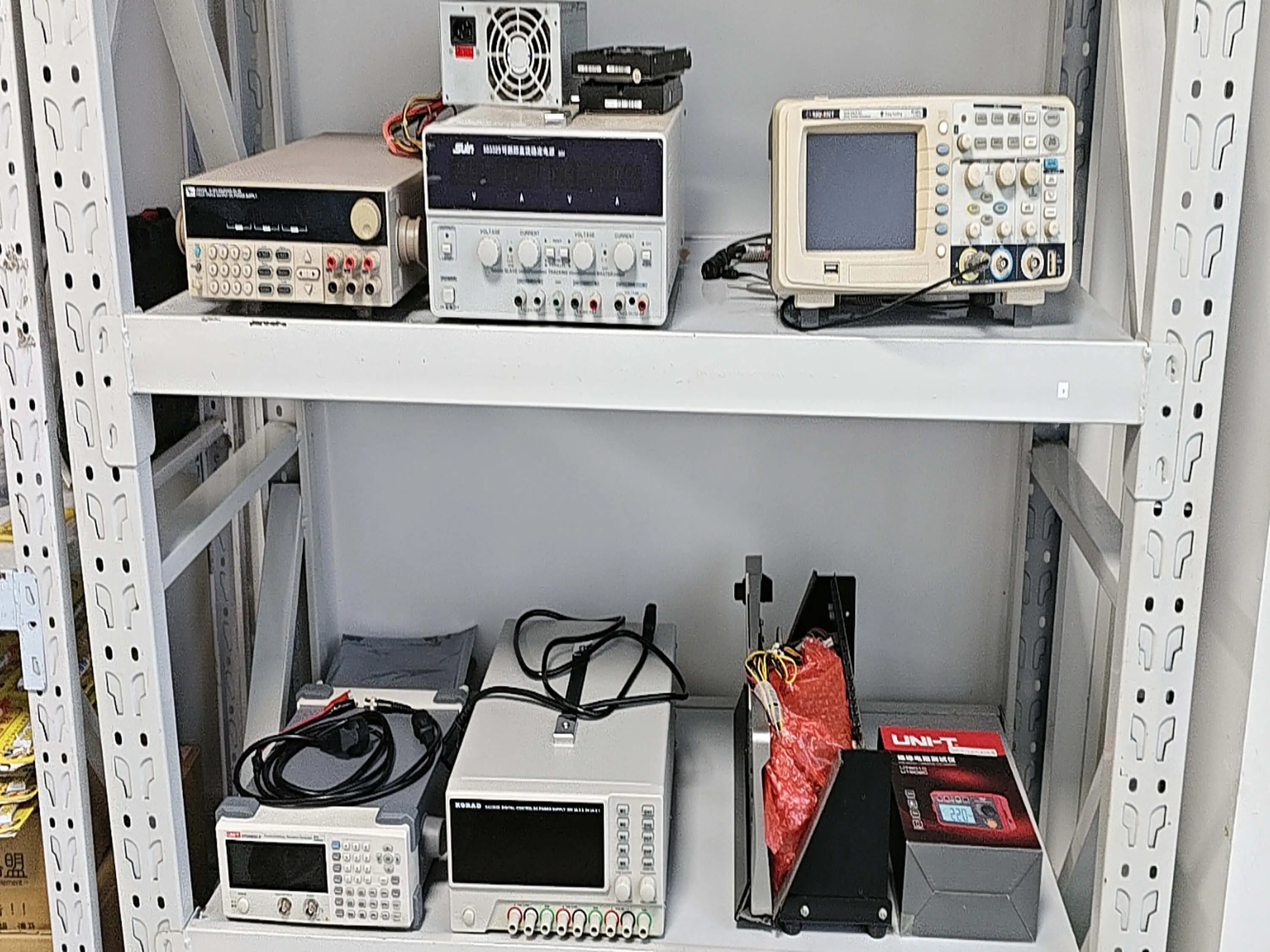
ICT TestingService
ICT testing is where many cable assembly RFQs stop being theoretical and start becoming production-ready. We review your drawing, BOM, net list, fixture logic, pass/fail limits, and documentation burden before quote so buyers know exactly how continuity, resistance, hipot, insulation checks, and traceability will be controlled before shipment.
ICT Testing Service Scope
Built for buyers who need clear pass/fail logic before they release production quantities
Net List, Pin Map, and Fixture Review Before Quote
We do not price ICT as a vague add-on. Engineering reviews your net list, connector orientation, expected resistance limits, fixture interface, and failure-report expectations before quotation so the test scope is aligned to the real assembly risk.
Continuity, Resistance, Hipot, and Insulation Options
ICT programs can include continuity and miswire detection as the baseline, then add resistance windows, insulation resistance, or hipot where voltage class, sealing risk, or customer compliance requires it. The point is to match test burden to buyer risk, not to run theater.
Documented Release Records for Receiving and Audit Teams
If your customer receiving team, OEM quality group, or regulated project needs proof, we can align the release package to lot traveler, unit record, fixture ID, revision, and certificate needs before production starts.
An anonymized example from our case bank that mirrors how this scope gets executed in production.
Industry
automotive
Region
Nepal
Year
2026-Q1
Scenario
During the production of pre-production wire harness samples for an EV motorcycle project, material shortages threatened the delivery schedule.
Challenge
Specific tape and wire color materials were temporarily unavailable, risking delays for the 31-unit pre-production sample run. The customer needed the samples urgently for testing but had strict specifications for the final product.
Solution
Proposed temporary material substitutions (alternative tape and wire colors) specifically for the sample run. Clearly communicated the deviation and secured engineering approval from the customer's team, while committing to sourcing the exact original materials for the upcoming mass production.
Result
Sample production proceeded on schedule without delays. The customer accepted the deviations for the samples, with a clear agreement that the initial batch of 400 units and the annual volume of 2,500 units would strictly adhere to the original specifications.
Concrete Numbers
Anonymized from a real project. Specific buyer identifiers withheld; numbers quoted verbatim from project records.
Where ICT Testing Service Fits Best
Buyer scenarios where electrical verification prevents downstream schedule loss
Multi-Branch Industrial and Control Harnesses
Complex branch routing and connector mix-ups are expensive to discover during machine build. ICT catches opens, shorts, and swapped circuits before the harness reaches the installation team.
Automotive, EV, and Safety-Critical Cable Sets
Programs with higher field-failure risk often combine continuity with resistance, insulation, or hipot windows so procurement has objective release evidence instead of visual inspection alone.
OEM Programs That Need Audit-Friendly Records
When buyer quality teams need lot traceability, fixture identification, and repeatable pass/fail logic across prototype through production, ICT turns testing into a controlled manufacturing step rather than a last-minute check.
Technical Scope

Why Buyers Source ICT Testing From WellPCB
Because the cost of an undefined test plan usually appears after the PO is released
Problem-Aware Quotation
We quote against fixture effort, record depth, and acceptance criteria instead of hiding test cost inside a generic production line item.
Engineering Review Before Sampling
Missing net-list logic, connector ambiguity, and report expectations are flagged before the first sample so buyers compare suppliers on the same scope.
Risk-Based Test Planning
Not every harness needs the same burden. We match ICT, resistance, and dielectric checks to voltage class, installation consequence, and buyer documentation needs.
Procurement-Ready Release Records
The output is not just a pass light on the tester. It is a release package your receiving, quality, and program teams can actually use.
Relevant Standards and Reference Bodies
These references help buyers compare workmanship expectations, electrical-safety context, and documented quality systems before approving a testing supplier.
IPC (electronics)
Useful background when buyers compare cable-assembly workmanship and inspection expectations.
UL (safety organization)
Helpful reference when a project requires dielectric, insulation, or product-safety context.
ISO 9000
Relevant when procurement checks how suppliers document quality systems and release records.
Need a Quote for an ICT Testing Service Program?
Send your drawing, BOM, net list, quantity, and the test report your buyer or quality team expects. Our engineers will review the electrical verification scope and reply with pricing, lead time, fixture notes, and documentation recommendations for the next procurement step.
Send This With Your ICT RFQ
Drawing, BOM, net list, connector callouts, and revision level
Target quantity, sample timing, and required lead time
Resistance limits, hipot or insulation requirements, and report format expectations
What You Get Back
Engineering feedback on test scope and fixture burden
Quoted sample lead time, production lead time, and MOQ
Recommended verification matrix and documentation package
Buyer Questions Before RFQ
The details that decide whether an ICT quote is comparable and installation-ready.
What should I send to quote an ICT testing service accurately?
Send the drawing, BOM, net list, quantity, revision level, and the report package your team expects at shipment. If resistance windows, hipot, insulation resistance, or customer-specific fixture logic are required, include those rules in the first RFQ.
Can you support prototype builds before recurring production?
Yes. We can define the ICT logic during sample builds, validate the fixture approach, and then carry the approved matrix into pilot and recurring production once the release package is locked.