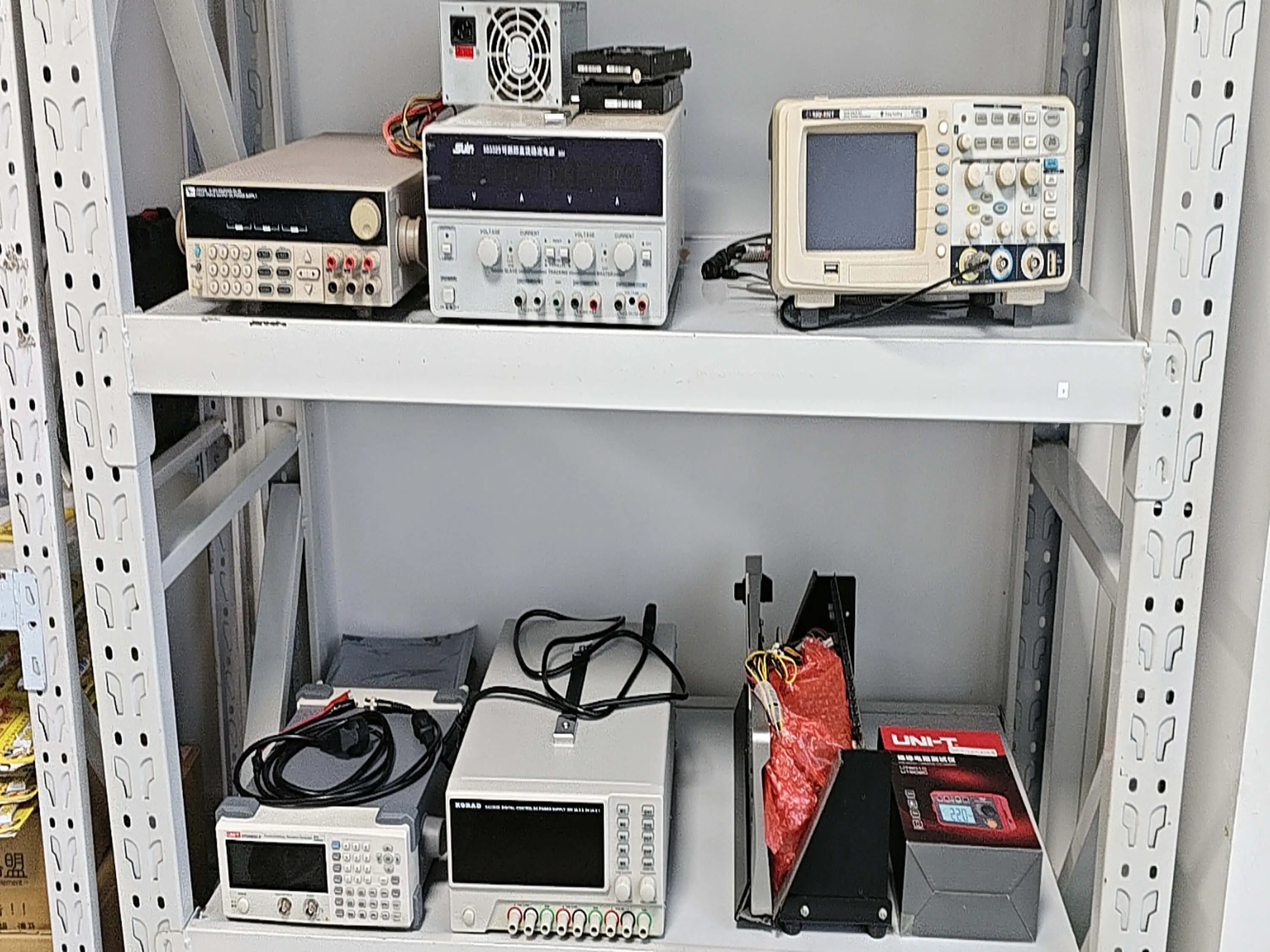
Wire Harness TesterProgram Support
A wire harness tester is not just a bench tool. It is the control point that decides whether your receiving team installs a clean lot or spends days chasing swapped pins, missed seals, and undocumented rework. We help OEM buyers define tester logic, mating fixtures, pass-fail limits, and release records before samples and production builds begin.
Wire Harness Tester Scope
Built for buyers who need fixture-ready verification instead of vague final inspection promises.
Tester Logic Defined Before Quote Approval
We review your drawing, net list, mating side, resistance window, and report expectation before quotation so the tester scope matches the real harness risk instead of being treated as a hidden line item after PO release.
Continuity, Polarity, Resistance, and Hipot Control
Some programs need continuity only. Others need selected resistance windows, insulation resistance, or hipot to protect an EV, industrial, or medical installation from hidden defects. We align the tester burden to the application consequence.
Golden Sample, Fixture, and Report Stability
A tester only reduces risk when the approved sample, fixture interface, and report format stay stable through pilot and recurring production. We carry that control into release documentation so procurement, receiving, and quality teams are working from the same definition.
An anonymized example from our case bank that mirrors how this scope gets executed in production.
Industry
industrial-equipment
Region
Australia
Year
2025
Scenario
An Australian industrial equipment manufacturer completed a year-long testing phase of custom wire harness samples and provided specific dimensional feedback.
Challenge
The field testing revealed a specific mismatch: the conduit size on a primary harness model was 15mm, which did not meet the client's assembly requirements.
Solution
Our engineering team immediately reviewed the 15mm conduit specification feedback, collaborated with the client's engineers to define the correct dimensions, and prepared a revised quote for the updated samples and the 200-piece bulk order.
Result
Turned a potential project rejection into a collaborative design refinement, advancing the project to the next sample iteration and securing an expanded scope of inquiry for new product lines.
Concrete Numbers
Anonymized from a real project. Specific buyer identifiers withheld; numbers quoted verbatim from project records.
Where Buyers Need Wire Harness Tester Discipline
Commercial programs where one escaped wiring defect costs more than the test setup.
Industrial Control and Multi-Branch Harnesses
Machine builders and panel integrators use tester-driven verification to catch swapped pins, branch mix-ups, and polarity errors before commissioning windows are lost.
EV, Battery, and Safety-Critical Cable Sets
Battery, charging, and safety-related assemblies often add resistance or dielectric checks so the approved tester covers more than basic continuity.
OEM Programs With Audit or Receiving Documentation
When your customer expects reportable pass-fail data, revision-linked records, or a stable fixture definition, tester planning becomes part of the procurement requirement, not a factory afterthought.
Technical Scope

Why Buyers Source Tester Planning From WellPCB
Because undefined tester logic usually turns into installation delays, not savings.
Problem-Aware Quotation
We quote against actual fixture effort, acceptance limits, and report depth instead of hiding tester cost inside generic production overhead.
Engineering Review Before Sampling
Ambiguous connector orientation, missing resistance windows, and incomplete test logic are flagged before first samples are built.
Production-Ready Fixture Thinking
The objective is not just a passing prototype. It is a tester definition that can survive pilot builds, recurring releases, and receiving audits.
Buyer-Usable Release Records
We align output with the documents procurement and quality teams actually use, including fixture references, revision control, and report format expectations.
Relevant Standards and Reference Bodies
These references help buyers compare workmanship expectations, electrical-safety context, and documented quality systems before approving a tester plan or supplier.
IPC (electronics)
Useful background when buyers compare cable-assembly workmanship and inspection expectations.
UL (safety organization)
Helpful reference when a project requires dielectric, insulation, or product-safety context.
ISO 9000
Relevant when procurement checks how suppliers document quality systems and release records.
Need a Quote for a Wire Harness Tester Program?
Send your drawing, BOM, net list, quantity, and the test report your buyer or quality team expects. Our engineers will review fixture logic and reply with pricing, lead time, tester notes, and documentation recommendations for the next procurement step.
Send This With Your Tester RFQ
Drawing, BOM, net list, connector callouts, and revision level
Quantity, sample timing, and required production lead time
Resistance limits, hipot needs, and report format expectations
What You Get Back
Engineering feedback on tester scope and fixture burden
Quoted sample lead time, production lead time, and MOQ
Recommended verification matrix and document package
Buyer Questions Before RFQ
The details that decide whether a wire harness tester quote is comparable and production-ready.
What should I send to quote a wire harness tester program accurately?
Send the drawing, BOM, net list, quantity, revision level, and the report package your team expects at shipment. If resistance windows, hipot, insulation resistance, or customer-specific fixture logic are required, include those rules in the first RFQ.
Can you support prototype builds before recurring production?
Yes. We can define tester logic during sample builds, validate the fixture approach, and then carry the approved matrix into pilot and recurring production once the release package is locked.
Are you selling a standalone tester machine?
This page is for fixture planning and production verification support tied to harness manufacturing, not for an off-the-shelf universal bench tester. If your program needs a dedicated mating interface or report logic, include that with the RFQ.