Cable Assembly

Cable Assemblies Manufacturers for OEM Buyers and Integrators

If you are comparing cable assemblies manufacturers, the real question is not who can crimp a connector. It is which supplier can control drawings, BOM changes, tooling, testing, packaging, and recurring releases without turning your program into a quality or schedule problem. We support prototype through production programs for industrial, medical, automotive, and equipment OEM buyers who need a stable manufacturing partner.

Cable Assemblies Manufacturers
Typical Samples7-10 Days
Electrical Testing100%
Max Conductors240+
Quality SystemsISO / IATF

Application Context

Where Buyers Commonly Need a Manufacturing Partner

Programs where supplier control matters more than simply finding the lowest unit price

Industrial Equipment and Automation. Machine builders and control-system integrators need cable assemblies that match panel routing, sensors, motors, HMIs, and field installation constraints without recurring pinout errors.

Medical and Laboratory Devices. Medical cable programs need documentation, stable materials, connector consistency, and disciplined testing because failures affect uptime, service calls, and regulated records.

Automotive and EV Subsystems. Automotive-style programs need revision control, traceability, PPAP-style support, and repeatable workmanship across pilot and recurring production lots.

Robotics and Motion Systems. Moving applications need a manufacturer who reviews flex life, strain relief, routing, shielding, and connector retention rather than only quoting the BOM mechanically.

Power, Battery, and High-Current Equipment. Power assemblies require attention to conductor sizing, lug termination, insulation, test criteria, and shipping protection because installation mistakes carry real safety and warranty cost.

OEM Branded Products and Service Parts. If the assembly ships under your part number or brand, the supplier must handle private labeling, documentation control, and repeat release planning just as carefully as the build itself.

What We Control

What Serious Cable Assembly Manufacturers Must Control

The points that usually decide whether a supplier is useful for purchasing and engineering teams or only good for simple catalog builds

Build-to-Print Cable Assembly Programs

We manufacture from customer drawings, pinout tables, BOMs, approved alternates, and packaging instructions rather than trying to force your product into a standard catalog format. That matters when the assembly becomes part of your shipped machine, vehicle, or medical device.

  • Drawing and revision review before quote
  • BOM, AVL, and approved alternate control
  • Labeling, packout, and kit rules by customer program

Prototype Through Production Support

Many cable assemblies manufacturers can quote prototypes or high volume, but not both with controlled documentation. We support sample builds, pilot lots, and recurring production so the approved assembly does not need to be requalified with a second supplier later.

  • Prototype-friendly sample quantities
  • Pilot build release planning
  • Recurring production and scheduled shipments

Connector, Wire, and Process Matching

The supplier should understand more than part numbers. We review wire gauge, bend stress, shielding, sealing, connector family fit, crimp tooling, and test requirements so the finished cable assembly fits the real application rather than only the spreadsheet.

  • Connector family and wire-range review
  • Shielding, strain relief, and sealing options
  • Crimp tooling and process suitability checks

Traceable Quality and Test Discipline

Commercial buyers need documented output, not verbal promises. Our cable assembly workflow includes traveler control, in-process inspection, 100% electrical verification, and optional customer-specific records for regulated or OEM release programs.

  • Continuity, shorts, opens, and polarity checks
  • Lot traceability and inspection records
  • Optional pull-force, hipot, and IR test scope

Supply Chain Risk Review Before Release

A cable assembly quote is incomplete if it ignores connector allocation, terminal lead time, obsolete parts, or custom tooling exposure. We flag those risks before PO release so buyers can choose the right sourcing model instead of learning too late from line-down delays.

  • Lifecycle and allocation review where relevant
  • Turnkey, consigned, or hybrid material planning
  • Tooling and MOQ visibility before approval

Commercial Packaging for Receiving and Installation

Cable assemblies manufacturers are judged after shipment too. We define bagging, labeling, carton marking, service-kit grouping, and shipment protection so the product arrives ready for receiving inspection and line-side use instead of generating repack work.

  • Barcode and part-number labeling options
  • Installation-kit or service-part packout
  • Transit protection matched to harness risk

Sourcing Risk

Sourcing risk to review before you release the PO

01

Judging a supplier on unit price alone

The larger cost usually comes from rework, missed lead time, or undocumented substitutions — not the quoted piece price. A useful comparison looks at drawing, BOM, tooling, testing, and release control.

02

Requalifying when volume scales

When a low-cost factory cannot repeat the build engineering already approved, the assembly gets requalified with a second supplier. Keeping sample, pilot, and production in one controlled workflow removes that failure mode.

03

BOM drift and unapproved substitutions

Building without revision, AVL, and approved-alternate control lets parts change quietly between lots. Drawing and BOM review before quote keeps the shipped assembly matching the released design.

04

Connector allocation and tooling exposure

A quote that ignores terminal lead time, obsolete parts, or custom tooling turns into a line-down risk later. Those exposures are flagged before PO release so the sourcing model is chosen on purpose.

Technical Capabilities

Typical Commercial Scope We Support

ProductsCustom cable assemblies, wire harnesses, power leads, overmolded and connectorized builds
Wire Range30 AWG to 4/0 AWG by application and terminal system
Conductor CountSingle leads through 240+ conductor harness assemblies
Build TypesPrototype, pilot, low-volume, and recurring production releases
Sourcing ModelsTurnkey, consigned, or hybrid material supply
Testing100% continuity and pinout; optional resistance, hipot, IR, and pull-force audits
DocumentationTraveler, test report, CoC, label spec, and selected OEM release documents
PackagingBulk, kit, service-part, barcode, and customer-specific carton marking
Lead TimeSamples often in 7 to 10 working days after requirement lock
Quality ReferencesISO 9001 workflows and automotive-style controls where required
Input FilesDrawing, BOM, pin map, test plan, forecast, and packaging instructions
Commercial FitBest for OEM buyers who need stable supply, not one-off retail cable orders
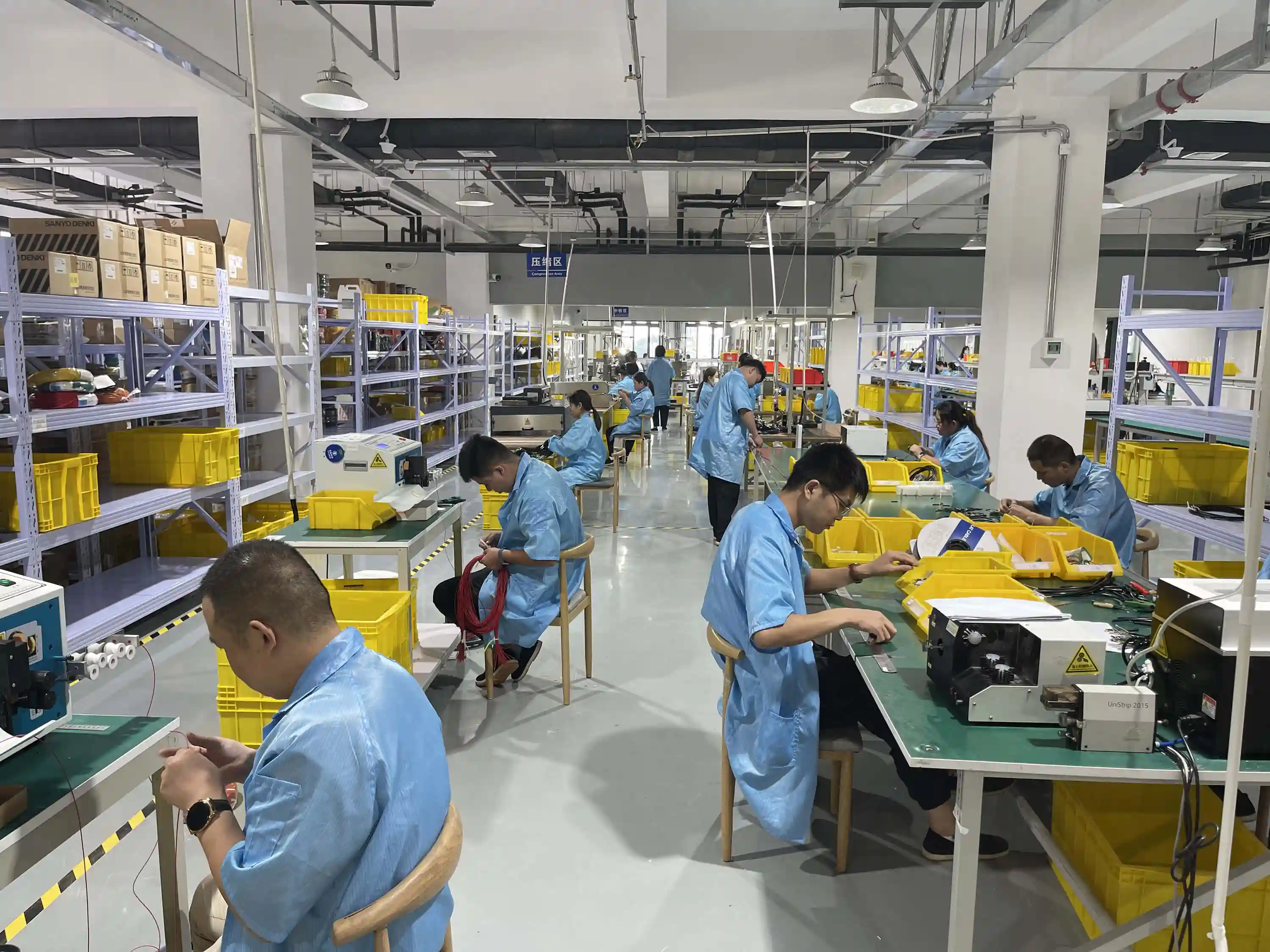
Cable Assemblies Manufacturers

Manufacturing Process

A controlled build, drawing to shipment

01Drawing / BOM Review
02Connector Sourcing
03Cutting & Stripping
04Crimping / Assembly
05In-process Inspection
06Electrical Test
07Final Inspection
08Packaging & Export

Quality & Testing

Testing and documentation matched to program risk

Every assembly gets 100% continuity and pinout verification, with shorts, opens, and polarity checks. Resistance, hi-pot, IR, and pull-force audits are added where the product and receiving process call for them, and lot traceability, test reports, and CoC documents are prepared for OEM release.

Material ApprovalIn-Process InspectionContinuity & PinoutShorts / Opens / PolarityPull-Force AuditHi-Pot / IRFinal InspectionLot TraceabilityTest Report / CoC

Why WHP

Why Buyers Shortlist Us Among Cable Assembly Manufacturers

We focus on reducing sourcing risk before the order is released, not only after a problem appears in production

We Review the Program, Not Just the Quote Sheet

An accurate cable assembly quote depends on revision status, mating condition, test burden, and packaging requirements. We review those details up front so pricing and lead time reflect the real job.

We Support the Hand-Off From Engineering to Purchasing

Many delays start when prototype knowledge never makes it into the production release. We help translate first-sample decisions into controlled BOM, labeling, testing, and packout rules purchasing teams can actually buy against.

We Can Scale Without Changing the Supplier Logic

Using one manufacturer for sample, pilot, and production reduces requalification work and removes the common failure mode where a low-cost factory cannot repeat the build that engineering already approved.

We Handle Mixed Cable and Harness Requirements

Many products combine discrete wire, connectorized cable, shielding, sealing, or power sections in one package. We support that mixed scope so the buyer does not need multiple partial suppliers.

We Quote With Supply Risk in View

Lead time, MOQ, tooling, and connector allocation are part of the buying decision. We surface those risks early so your team can choose an informed sourcing path instead of reacting after the PO is placed.

We Keep Testing and Documentation Practical

Buyers need test coverage that matches the product and the receiving process. We align the test matrix and documentation package to program risk rather than overcomplicating every order or leaving critical gaps.

Quality references

ISO 9001 workflows and automotive-style controls applied where the program requires them.

ISO 9001Workflows
IATFAutomotive-Style Controls

FAQ

Buyer Questions Before Selecting a Manufacturer

How do I compare cable assemblies manufacturers beyond unit price?
Compare whether the supplier controls drawings, BOM revisions, tooling, testing, packaging, and recurring releases. Unit price matters, but the bigger cost usually comes from rework, missed lead time, or undocumented substitutions.
What should I send for an accurate manufacturing quote?
Send the drawing, BOM, pinout, annual or lot quantity, target timing, and any test or labeling requirement. If the assembly interfaces with a machine or enclosure, include photos or mating details so the supplier can review the actual build condition.
Can one manufacturer support both prototypes and production releases?
Yes, and that is usually the safer path. It keeps the approved sample, work instructions, testing scope, and packaging logic inside one controlled workflow instead of forcing a second supplier to reinterpret the project.

OEM Program Entry

Need to Compare Cable Assembly Manufacturers With Real Data?

Send your drawing package, quantity, timeline, and testing requirements. We will review the program and reply with pricing, lead time, and practical risk notes you can use to evaluate the next sourcing step.

We will review

  • 01Design Feasibility
  • 02Component Availability
  • 03Cost Drivers
  • 04Validation Requirements

Related Capabilities

Related cable assembly services

Manufacturing services that pair with a cable assemblies sourcing program.

For Buyers

Send This When Comparing Manufacturers

Send a complete package once and get a comparable, decision-ready answer back.

Drawing and BOM review before quotePrototype-to-production continuityTesting, labeling, and packout defined before release

Send This When Comparing Manufacturers

  • Drawing, BOM, connector references, pinout, and target quantity or forecast
  • Application details, environment, test requirements, and any sample photos
  • Revision level, packaging rules, labels, and required delivery timing

What You Get Back

  • Quote with sample and production lead-time visibility
  • Risk notes covering tooling, sourcing, and documentation gaps
  • Recommended test scope, packaging approach, and next-step plan

Representative Project

Representative project type (illustrative)

Representative project type we handle, shown for illustration. Not a specific named customer.

industrial-automation · Canada · 2025-2026

Scenario

A North American 3D vision and industrial measurement OEM required strict intellectual property protection before engaging with a contract manufacturer for custom cable assemblies.

Challenge

The customer's procurement process involved a multi-tier approval system and a strict NDA requirement, causing a 3-month vetting period where technical specifications could not be shared, delaying the quoting process.

Solution

Promptly executed the NDA, provided comprehensive company background and capability data to pass the customer's HQ and Supply Chain Manager vetting, and rapidly generated a detailed quote for the custom harness once specs were released.

Result

Successfully passed the stringent vendor qualification process, secured the signed NDA, and received the formal inquiry with detailed drawings, quoting a 4-week lead time for the custom assembly.

3-month vetting phase1x20 Pin Samtec connector1x10 Pin Samtec connector100mm cable length4-week lead time

References

Relevant Public References

These public references help buyers align around workmanship, quality-system language, and contract-manufacturing terminology while comparing cable assembly suppliers.