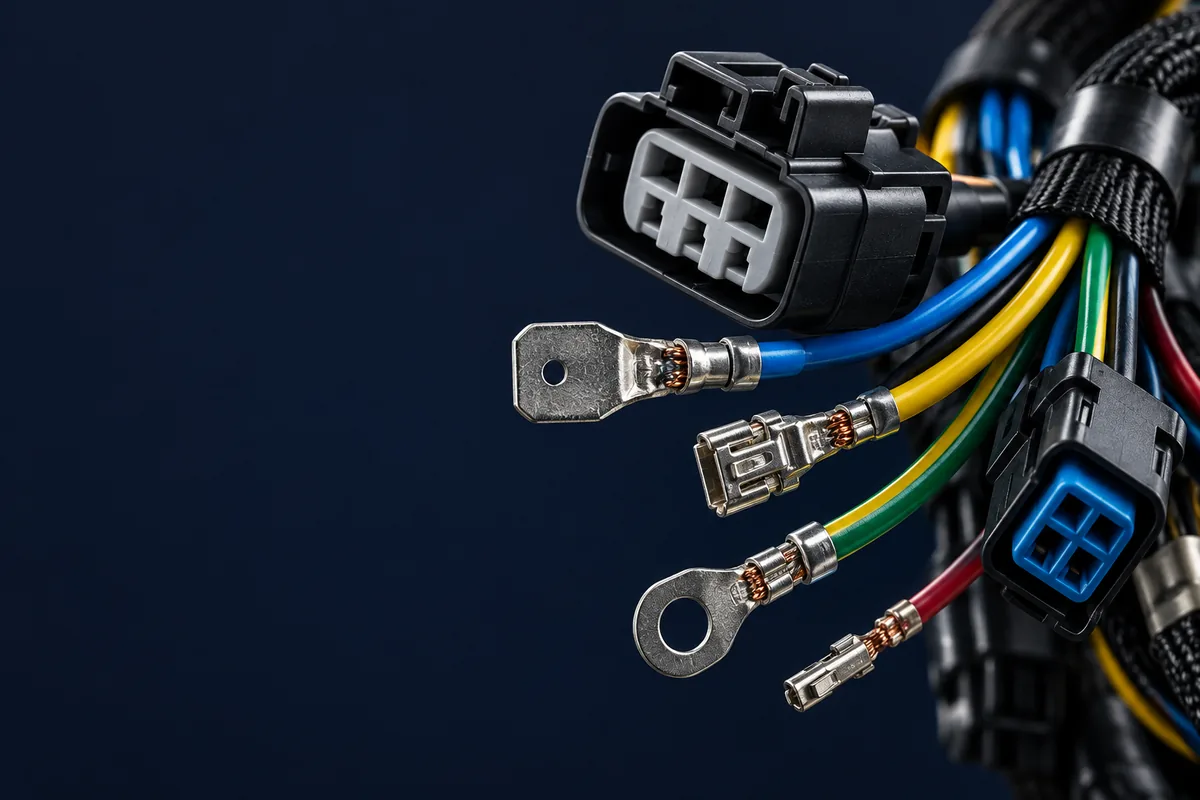
In 2025-Q3 to 2026-Q1, a US marine OEM evaluated a new supplier for custom wire harnesses and audio systems through 6 separate RFQs and a 64-email technical thread. The challenge was not a single splice drawing; the buyer needed a sealed harness supplier that could hold a 1-2 day response time, support a weekly delivery requirement, mitigate tariff risk, and stay cost-competitive against incumbents while multiple business units reviewed the program.
A sealed splice marine wire harness is a cable or wire harness assembly where branch joins, inline conductor joins, or repair points are electrically joined, inspected, sealed, and strain-relieved before exposure to splash, condensation, vibration, and salt-air handling. For OEM engineers and sourcing managers already comparing suppliers, the useful question is how to specify the splice stack so the harness can pass inspection, repeat weekly, and avoid hidden moisture paths.
TL;DR
- Freeze splice method, sleeve overlap, wire style, and test sequence before the first marine sample.
- Use IPC-A-620 workmanship criteria and UL-758 wire evidence as release references.
- Adhesive heat shrink helps sealing only after the splice passes pull and visual checks.
- Weekly delivery programs need buffer stock rules for connectors, terminals, and heat-shrink tubing.
- Do not call a splice waterproof unless connector seals, jacket OD, and inspection records support it.
Why Marine Sealed Splices Fail
A sealed splice is a joined conductor point protected from moisture, abrasion, and movement after the electrical connection is verified. In marine harness work, the failure usually starts at the boundary between the rigid splice barrel or weld and the flexible wire bundle. If the branch angle is too sharp, the sleeve overlap is too short, or the adhesive does not flow around the insulation step, water can track along the conductor even when the outside of the sleeve looks clean.
Adhesive-lined heat shrink is a tubing system that recovers under heat and flows sealant into small gaps around a splice, branch exit, or jacket transition. It is not a repair for poor crimp height, damaged insulation, wrong wire gauge mix, or a connector seal that does not fit the cable outside diameter. The splice must be electrically and mechanically acceptable before the operator closes it under the sealing layer.
A marine wire harness is a harness designed for boats, deck equipment, audio systems, pumps, lighting, propulsion auxiliaries, or control modules exposed to moisture, vibration, temperature swings, and corrosion risk. That environment changes the sourcing decision. The supplier has to control wire material, terminal plating, sleeve material, label durability, branch support, and delivery cadence rather than treating the harness as a simple continuity-tested cable.
On marine harness RFQs, the mistake I watch for is a beautiful sealed sleeve hiding an unverified joint. We want the splice inspected first, then sealed, then tested again after recovery. That sequence matters more than the brand name printed on the tubing.
— Hommer Zhao
The standards language should be visible in the drawing package. IPC-A-620 gives acceptance logic for cable and wire harness workmanship, including conductor damage, crimping, insulation condition, and final assembly quality. UL-758 wire-style evidence helps confirm appliance wiring material construction, insulation ratings, and traceability. When the program needs a supplier quality-system reference, IATF 16949 style change control is useful even when the end product is marine rather than automotive.
RFQ Inputs That Prevent Hidden Sealing Risk
The buyer should send the drawing, BOM, wire list, connector part numbers, terminal part numbers, splice locations, wire gauge mix, branch current, jacket material, label map, quantity, sample date, annual forecast, and receiving-test expectation. Photos of the boat routing path help when the splice sits near a bilge zone, deck fitting, speaker cavity, pump lead, or removable service panel.
For a related service scope, compare the drawing with our sealed splice wire harness capability page. If the whole assembly must handle spray, immersion targets, or outdoor routing, review waterproof cable assembly constraints before accepting an IP67 or IP68 claim. For branch sleeves and repair harnesses, our heat shrink tubing wire harness page covers sleeve ratio and recovered diameter decisions.
Do not leave "marine grade" as the specification. State the wire style, insulation temperature, conductor plating, terminal plating, connector seal family, sleeve ratio, sleeve overlap, recovered inner diameter, branch support method, and test method. If the supplier proposes an alternate connector or tubing because of lead time, that alternate should be approved against mating fit, cavity geometry, seal compression, current rating, temperature range, and revision control before samples are released.
Splice Method Comparison for Marine Harnesses
The splice method should match conductor count, gauge mix, branch current, production volume, repairability, and inspection access. The table below gives practical selection logic for OEM buyers before a purchase order is issued.
| Method | Best Fit | Factory Control Point | Marine Risk | Release Evidence |
|---|---|---|---|---|
| Crimp sleeve splice | 2-4 conductor joins, common branch circuits, service kits | Crimp height, wire insertion, pull check, sleeve overlap | Wrong barrel size can cut strands or leave voids under heat shrink | IPC-A-620 visual check, pull data, post-shrink continuity test |
| Ultrasonic splice | Higher-volume branch joins and compact harness bundles | Weld energy, nest size, strand condition, operator setup | Over-weld can damage strands; under-weld creates resistance drift | Weld sample, dimensional check, resistance or continuity record |
| Solder sleeve | Low-volume repairs, shield drains, controlled technician work | Heat profile, solder flow, insulation clearance, strain support | Wicking can create a stiff fatigue point near vibration | Visual photo, pull exposure review, electrical test record |
| Terminal block or junction | Serviceable boat modules and panel wiring | Torque, ferrule choice, label clarity, enclosure sealing | Bulkier package; enclosure seal becomes part of the harness design | Torque log, label map, continuity test, enclosure fit photo |
| Factory overmolded branch | High-volume sealed branches with stable geometry | Tooling, compound compatibility, cable OD, mold pressure | Tooling cost and revision changes can slow NPI | First article, dimensional report, post-mold electrical test |
For marine audio and accessory harnesses, crimp sleeve and adhesive heat shrink are often the practical starting point because they support engineering changes during qualification. Overmolding becomes attractive when volume is high, the branch geometry is stable, and the buyer wants a tamper-resistant sealed transition. The supplier should not push tooling before the connector list, branch angles, and weekly delivery plan are stable.
Inspection Sequence Before the Seal Closes
The safest production sequence is join, inspect, seal, inspect again, then test. Before heat shrink recovery, the operator should confirm conductor insertion, crimp or weld condition, insulation damage, strand breakout, sleeve position, label orientation, and branch angle. After recovery, inspection should confirm adhesive witness, full sleeve recovery, no burn marks, no trapped sharp edge, and no sleeve movement after cooling.
For weekly marine delivery, inspection records should be tied to lot number, material batch, operator or workcell, and drawing revision. A weekly shipment can be electrically correct and still fail receiving if labels are inconsistent, packing bends sealed branches below the minimum bend radius, or a tubing alternate was used without buyer approval. The work instruction should show photos for acceptable and reject conditions so the receiving team can compare real parts quickly.
A 64-email qualification thread sounds commercial, but most of the risk is technical. Each answer about connector alternates, sleeve material, packing, and buffer stock becomes part of the production control plan if the buyer expects weekly delivery.
— Hommer Zhao
When the harness includes shielded audio or communication pairs, keep the splice plan separate from the shield termination plan. Shield drain handling, foil foldback, braid trim, and grounding points can create intermittent noise if they are hidden under the same sleeve without inspection. For communication-heavy boat modules, also review our CAN bus cable selection guide before changing cable construction or shield termination.
Material and Corrosion Control
Marine harness sealing is only as strong as the full material stack. Tinned copper conductors can improve oxidation resistance in many wet or salt-air assemblies. Terminal plating should be chosen for the mating connector system and expected exposure. The heat-shrink adhesive must be compatible with insulation material and branch geometry, and the recovered sleeve should not create a hard hinge right where the harness exits a clip, conduit, or connector boot.
For branch splices, define sleeve overlap in millimeters rather than relying on operator judgment. A typical RFQ should call out splice centerline, minimum overlap beyond the exposed joint, recovered ID, shrink ratio, and allowed sleeve color or transparency. Clear tubing can help inspection in prototypes; black adhesive-lined tubing may be preferred in production for UV exposure or cosmetic consistency. The right choice depends on the inspection plan, not only the environment.
Salt-air exposure also changes packing. Sealed splices should not be compressed under cable ties during shipment, and cartons should avoid forcing a branch bend immediately at the recovered sleeve edge. If the harness is part of a marine equipment kit, include connector caps, bagging rules, label position, and carton orientation in the release package. For application context, the marine wire harness industry page summarizes the routing and corrosion assumptions buyers often miss during RFQ.
Weekly Delivery Sourcing Gates
The case-bank marine OEM required weekly delivery, so the supplier decision could not stop at sample quality. Connector availability, terminal MOQ, heat-shrink lead time, alternate approval, and tariff exposure had to be visible before production. A sealed splice program can miss deliveries because of a connector or terminal shortage even when the splice process itself is stable.
Use three sourcing gates. First, lock the approved manufacturer part numbers for connectors, terminals, wire, tubing, labels, and packing materials. Second, list buyer-approved alternates with the specific conditions that allow substitution. Third, define buffer stock by part family, not only finished harness quantity. For a weekly shipment program, holding extra heat shrink does not help if the sealed connector family is the constrained item.
For the marine RFQ, our response target was 1-2 days because technical delay becomes commercial delay. If an alternate connector saves cost but changes seal compression, we treat it as an engineering change, not a purchasing shortcut.
— Hommer Zhao
Cost comparison should separate unit price, tooling, test fixture, packing, buffer stock, and expedite assumptions. A low unit price can become more expensive if the supplier cannot reserve connector inventory, respond to drawing questions quickly, or hold the same heat-shrink stack across repeat orders. If the program is still in prototype, review wire harness prototyping controls before approving a volume release.
Buyer Release Checklist
Before releasing a sealed splice marine harness, the buyer should be able to answer yes to these controls:
- The drawing identifies every splice location, branch angle, wire gauge mix, and allowed joining method.
- The BOM lists wire, terminal, connector, heat-shrink, label, and packing part numbers with revision control.
- The work instruction requires inspection before the splice is hidden by adhesive heat shrink.
- The final test plan includes 100% continuity and polarity checks, plus insulation resistance or hipot when the circuit requires it.
- The supplier can provide IPC-A-620 workmanship evidence and UL-758 wire-style or material evidence when requested.
- Approved alternates are documented before a weekly delivery schedule is promised.
- Packing prevents branch sleeves from being bent sharply, crushed, or tied directly at the recovered sleeve edge.
If any item is missing, the problem should be corrected before the first production purchase order. Sealing a weak or undefined splice makes later failure analysis slower because the evidence is hidden under tubing, adhesive, labels, and handling marks.
Frequently Asked Questions
What is a sealed splice wire harness for marine equipment?
A sealed splice wire harness for marine equipment is a harness where inline or branch conductor joins are electrically joined, inspected, protected with adhesive heat shrink or another sealing method, and tested before shipment. The RFQ should define the splice method, sleeve overlap in millimeters, wire gauge mix, IPC-A-620 workmanship expectation, and 100% continuity test requirement.
Is adhesive heat shrink enough to make a splice waterproof?
No. Adhesive heat shrink helps seal a splice after recovery, but waterproof performance depends on the splice quality, insulation compatibility, sleeve overlap, connector seals, cable outside diameter, branch support, and test criteria. For IP67 or IP68 claims, the buyer should require evidence beyond visual appearance, including post-seal electrical testing and material traceability.
Which standard should buyers cite for sealed splice workmanship?
Use IPC-A-620 for cable and wire harness workmanship acceptance, then pair it with UL-758 wire-style evidence when insulation rating and material traceability matter. If the supplier runs automotive-style change control, IATF 16949 language can help define approval gates, but the drawing still needs measurable splice and sealing requirements.
How should a weekly delivery marine harness program handle connector shortages?
List approved connectors, terminals, tubing, and labels before production, then define buffer stock for constrained part families. A weekly delivery requirement needs more than finished-goods inventory. The supplier should show lead time, MOQ, alternate approval rules, and response timing, especially when the qualification already includes 6 RFQs or many engineering questions.
Should marine splices use crimp sleeves or ultrasonic welding?
Crimp sleeves fit many 2-4 conductor joins, repair harnesses, and lower-volume branches because tooling is flexible and inspection is straightforward. Ultrasonic welding can be better for compact, repeatable, higher-volume joins. The choice should be based on gauge mix, branch current, pull requirement, available inspection access, and IPC-A-620 acceptance evidence.
What test records should come with sealed splice marine harness samples?
Ask for a first-article record, continuity and polarity results, pull or mechanical evidence where specified, material traceability for wire and tubing, photos of pre-seal and post-seal conditions, and a packing photo. For higher-risk circuits, add insulation resistance or hipot limits, then tie each record to lot number and drawing revision.
Next Step
A sealed splice marine harness should be quoted as a controlled production process, not as a hidden joint under tubing. Send the drawing, BOM, wire list, connector callouts, splice locations, sample target, weekly forecast, and test-record requirement so the supplier can review joining method, heat-shrink stack, connector risk, and delivery controls before sample release.
Need a controlled sealed splice harness review? Send your drawings and weekly delivery target to our engineering team.