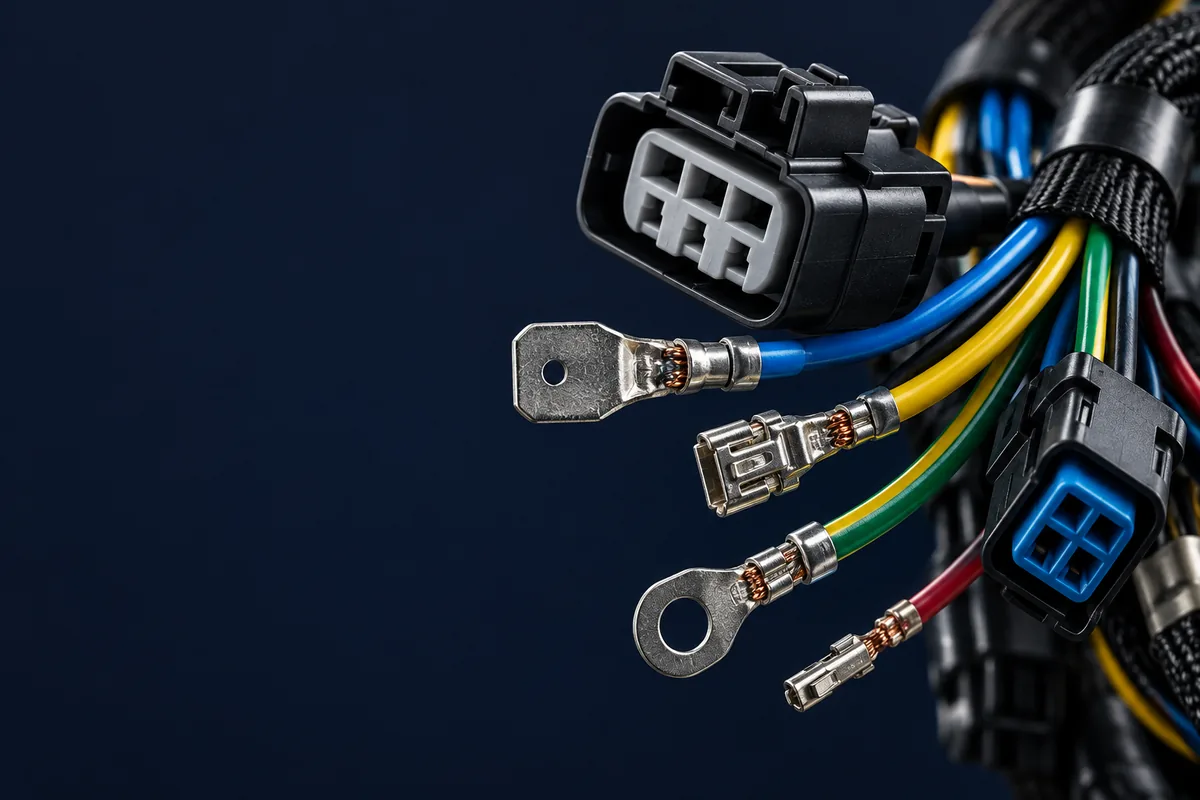
Custom wire harnesses with Molex connectors may use housing color as an identification or appearance requirement. A controlled service plan defines the approved color standard, permitted replacement or dyeing method, inspection evidence, and electrical retest before any serviced assembly is released.
Molex connector rework is a controlled correction process that replaces, repins, redyes, reinspects, or rebuilds a connector area after a wire harness deviation is found. For engineers and OEM buyers already comparing suppliers or deciding whether to accept a rework proposal, the question is simple: can the supplier recover the batch without hiding risk, damaging terminals, or breaking traceability?
Our team writes this from a senior factory-engineering role with more than 10 years supporting wire harness and cable assembly programs for electrical supply, automotive, industrial automation, robotics, medical, and marine customers. The guidance below is based on controlled connector service, connector sourcing, crimp evidence review, and ISO/IATF-style supplier quality controls used across repeat production orders.
TL;DR
- Rework is acceptable only when the failure mode is bounded and testable.
- Color deviations still need revision, sample, and inspection control.
- Use IPC-A-620, UL-758, and IATF 16949-style change discipline together.
- Ask for before/after photos, lot records, and 100% electrical retest.
- Reject rework when terminal damage, seal damage, or unknown pinout risk remains.
Why Connector Rework Needs Control
A wire harness deviation is a documented difference between the approved drawing, BOM, sample, or inspection limit and the part actually built. Some deviations are cosmetic. Some change fit, sealing, polarity, retention, or service life. Connector housing color sits between those categories: it can be an aesthetic requirement, a keying aid, a service identification feature, or part of an installation mistake-proofing plan.
A Molex connector is an electromechanical interface made from a housing, terminals, seals, locks, and mating geometry that connects the harness to another device or module. If the housing is wrong, the issue may look easy to fix, but rework can create new risks: terminal back-out, bent lances, nicked insulation, weak secondary locks, seal compression changes, or mismatched cavity maps.
A custom dyeing specification is a controlled color requirement for a connector housing or accessory, usually defined by approved sample, color code, customer drawing note, or visual boundary sample. Treat it as a controlled feature when color helps operators identify voltage, branch function, production version, left/right orientation, or field replacement path.
Housing color is visible, but the less obvious risk during connector replacement is terminal disturbance. A serviced harness should not be released until it passes visual review, retention checks, and electrical retest against the active drawing.
— Hommer Zhao
For a standards backbone, use public references carefully. IPC-A-620 provides acceptance logic for cable and wire harness workmanship, including terminals, insulation condition, locking features, and final assembly defects. UL-758 supports wire construction evidence where appliance wiring material is part of the harness. IATF 16949 gives a useful automotive-quality model for change control, containment, corrective action, and repeatability even when the project is not automotive.
When Rework Is Acceptable
Rework is acceptable when the supplier can define the defect, isolate the affected lot, correct the connector area without weakening the harness, and prove the corrected units meet the same release criteria as new production. A rework plan should name the defect, quantity, serial or lot range, responsible process, inspection method, retest method, and approval authority.
For connector color work, define the affected scope and the approved action: replace the housing, use an authorized dyeing process, or rebuild the connector area, then verify the custom color requirement during inspection. This is more useful than an open-ended "we will fix it" answer because the buyer can review the process and release evidence in advance.
Use rework only when the correction does not damage the controlled features around it. Depinning and repinning a Molex connector may be reasonable if the terminal locking lance, insulation support, seal, and cavity map stay intact. Cutting off the connector and adding a splice may be unacceptable when the drawing forbids splices, the harness length is tight, or the application needs continuous insulation support.
If the program is still in NPI, connect the rework decision to the drawing release path. Our wire harness drawing revision control guide explains why active revision, deviation list, and purchase order notes must match before production release. If the correction requires harness assembly fixture changes, compare it with the release checks in our first article inspection guide.
| Deviation Type | Typical Rework Option | Release Evidence | Buyer Decision Rule |
|---|---|---|---|
| Housing color mismatch | Replace housing, approved redye, or rebuild connector end | Approved color sample, photos, 100% visual check | Accept only if color function and terminal integrity are verified |
| Wrong cavity position | Depin and repin with controlled tool and cavity map | 100% continuity, pinout, retention, and polarity test | Accept only if terminals and seals show no damage |
| Terminal crimp outside limit | Cut back and reterminate if length margin allows | Crimp height, pull force, visual record per IPC-A-620 | Reject if length, strain relief, or conductor strands are compromised |
| Secondary lock not seated | Inspect, seat, and verify terminal retention | Lock engagement photo and retention check | Accept if no terminal movement or latch damage is found |
| Seal or cavity plug missing | Install correct seal or rebuild connector | Seal part verification and ingress-related inspection | Reject if the seal was stretched, cut, or contaminated |
| Label or branch ID wrong | Relabel under controlled work instruction | 100% label text, position, and durability check | Accept if field service identification remains unambiguous |
Buyer Approval Gates Before Rework Starts
The buyer should not approve connector rework from a short email alone. Ask the supplier for a written rework traveler or deviation request. It should state the affected PO, drawing revision, connector part number, terminal part number, wire gauge range, lot quantity, root cause, proposed correction, inspection method, and retest criteria.
First, confirm scope control. The supplier should identify the assemblies authorized for service and keep them separate from released inventory. Counts for received, serviced, scrapped, and released units must reconcile so every serialized or lot-controlled assembly remains traceable.
Second, request a first reworked sample. One corrected unit should be inspected before the entire batch is rebuilt. The sample should include clear photos of the Molex housing, terminal seating, latch position, wire entry, label, and any color boundary sample. For color deviations, keep the approved color sample next to the reworked connector in the photo so the comparison is visible.
Third, lock retest requirements. At minimum, connector-area rework should trigger 100% continuity and pinout testing. Add pull or retention checks when terminals were removed or recrimped. Add insulation resistance or hipot when the harness design already required it. For sealed connectors, add seal inspection and any project-specific ingress validation defined in the drawing.
A rework traveler should read like a production route, not an apology. The operator needs tool limits, inspection points, and stop rules before touching the first connector.
— Hommer Zhao
Fourth, decide who approves release. For cosmetic-only color recovery, supplier quality plus buyer engineering may be enough. For pinout, terminal, seal, or safety-related recovery, require buyer engineering approval before shipment. If the harness is part of a vehicle, marine power system, medical device, or industrial control cabinet, the risk owner should be named rather than assumed.
Factory Rework Process for Molex Connectors
A disciplined rework flow starts with lot identification. The factory checks the PO, drawing revision, BOM, connector family, and customer deviation notice. Then it marks affected units, records the count, and prevents mixed shipment. The rework bench should have only the correct connector housings, terminals, seals, cavity plugs, tools, and approved color reference.
Depinning requires the correct extraction tool and operator training. Universal picks can damage locking lances and terminals. After removal, inspect each terminal for bent tangs, plating scratches, conductor movement, and insulation support. If damage is found, do not reuse the terminal. Recrimping is cleaner than trying to rescue a damaged contact.
For color rework, define whether the housing will be replaced or redyed. Replacement is usually cleaner when the connector family supports terminal removal without damage. Redyeing may be possible for some custom color programs, but it must not attack resin, markings, seals, or dimensional fit. The approved route depends on connector material, color tolerance, mating function, and the buyer's aesthetic boundary sample.
Reassembly should follow the original pinout and cavity view. This is where many connector recoveries fail: the operator reads the drawing from the mating face while the work instruction shows the wire-entry face. Add a cavity map to the traveler and make the view direction explicit. For Molex systems with terminal position assurance or connector position assurance parts, the lock must be checked after seating.
Final inspection should include visual review, color comparison, terminal seating, secondary lock position, wire order, label position, continuity, pinout, and any electrical tests already required by the product. For related supplier capability, see our Molex cable assembly service and wire harness rework service.
How to Prevent the Same Deviation
The goal is not only to complete the approved service work. The production process should also control custom connector color through incoming inspection, boundary samples, lot traceability, and in-process verification so subsequent builds follow the same acceptance standard.
Start with incoming material control. If the connector housing is custom-dyed, the incoming checklist should include part number, resin or housing family, color sample comparison, lot label, and quantity. For color-sensitive programs, store one approved boundary sample at incoming inspection and one at the assembly line. Do not rely on memory or screen photos.
Add a first-piece signoff at the connector station. The first harness from each setup should be checked against the drawing, cavity map, color sample, and label requirement before the line continues. If a supplier builds 200 units before noticing the wrong shade or wrong housing, the inspection gate is placed too late.
Use change control for alternates. If a Molex housing, terminal, seal, or color process changes, the supplier should ask for written approval before production. An alternate with the same mating fit can still change color, latch force, terminal retention, or wire compatibility. For procurement teams handling branded connectors across multiple suppliers, our wire harness component sourcing guide gives a practical way to document approved alternates.
Custom connector color is a specification, not decoration, when it prevents wrong installation or field service confusion. Once color carries function, it belongs in incoming inspection and first-piece approval.
— Hommer Zhao
Supplier Questions Before You Approve Rework
Ask these questions before approving a connector recovery plan:
- How many units are affected, and how did you isolate the lot?
- Which Molex housing, terminal, seal, and lock part numbers are involved?
- Will terminals be reused, recrimped, or replaced?
- What tool will be used for depinning, and who is qualified to use it?
- Which IPC-A-620 workmanship checks apply after rework?
- Will every reworked unit receive continuity, pinout, and visual inspection?
- What process change prevents the same color or connector deviation on the next PO?
The answers should be specific. "We will check carefully" is not enough. A buyer should see quantities, tool names, inspection points, and release records. If the supplier cannot define the affected lot or cannot prove terminal integrity after depinning, stop the recovery and request a rebuild plan instead.
Frequently Asked Questions
Can Molex connector rework be accepted on production wire harnesses?
Yes, if the authorized quantity is controlled and the correction is proven. Require IPC-A-620 visual checks, 100% continuity and pinout testing, and written buyer approval when terminals, seals, or cavity assignments are touched.
Is a connector color deviation only cosmetic?
Not always. Connector color may identify voltage, branch function, revision, or service path. If color is part of the drawing or approved sample, treat it as a controlled feature. A custom dyeing specification needs incoming inspection, first-piece approval, and photo evidence before shipment.
What tests should follow depinning and repinning?
After depinning and repinning, require 100% continuity, pinout, polarity, terminal seating, and lock inspection. Add pull or retention checks when terminals were removed. If the harness also has UL-758 wire evidence or hipot requirements, the reworked lot should meet the same release limits as new production.
When should a buyer reject rework and demand a rebuild?
Reject rework when terminal lances are bent, seals are cut, insulation is nicked, harness length is no longer within tolerance, or the supplier cannot isolate the affected lot. If more than one critical feature is uncertain, rebuilding the connector end or full harness is safer than approving a weak recovery.
Does IATF 16949 apply to non-automotive connector rework?
IATF 16949 may not be contractually required outside automotive, but its habits are useful: scope control, root-cause review, corrective action, change approval, and record retention. For industrial or electrical-supply harnesses, those controls make connector service repeatable and auditable.
What should be included in a connector rework report?
Include PO number, drawing revision, affected quantity, connector part numbers, root cause, rework method, operator or station record, before/after photos, color sample comparison, continuity and pinout results, and final release approval. The report should connect every reworked unit back to the controlled lot.
Bottom Line for OEM Buyers
Molex connector rework can protect schedule and trust when the defect is bounded, the recovery route is controlled, and every reworked harness is tested against the original release criteria. The buyer should approve the method before the supplier touches the lot, then use the corrective action to strengthen incoming inspection and first-piece control.
If you need help reviewing a connector deviation, send your drawing, Molex part numbers, quantity, photos, and target delivery date through our contact page. We will check whether rework, rebuild, or replacement is the right path before quoting.