Automotive and mobile equipment harnesses
Sealed splices, branch exits, sensor leads, battery cables, and field-service pigtails where vibration, splash, and harness routing can expose weak joints.
Cable Assembly
Heat shrink tubing wire harness assembly is a custom harness build where sleeve material, recovered diameter, adhesive flow, splice geometry, label position, bend radius, and post-shrink testing are reviewed before sampling. The useful difference is not the tubing itself; it is the RFQ-stage check that prevents a sealed branch, connector exit, or repaired lead from passing visual inspection while hiding a weak crimp, wrong sleeve size, or sourcing risk.
Application Context
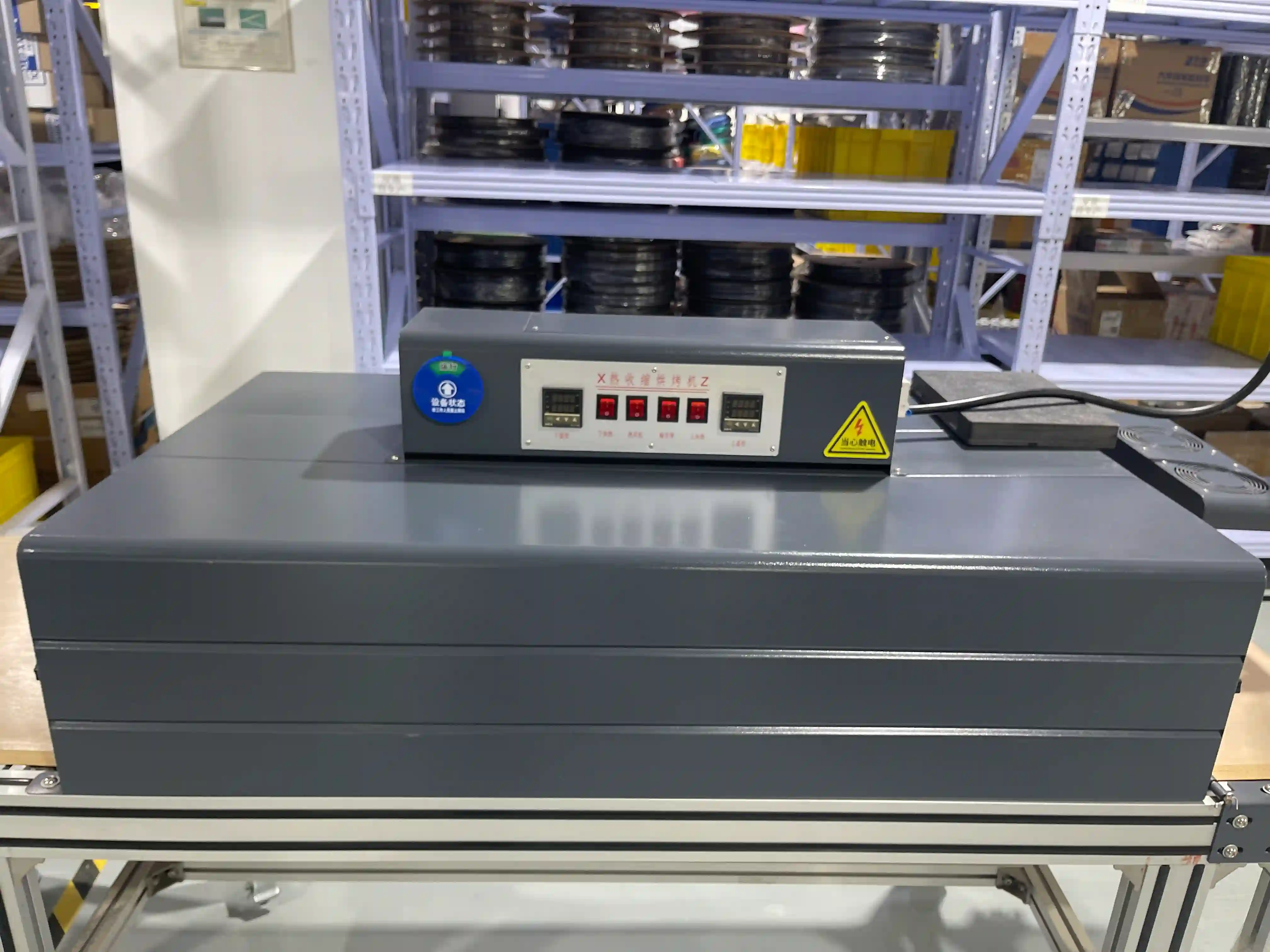
This service covers adhesive-lined heat shrink, sealed splices, labels, and harness strain relief. Heat shrink tubing is a polymer sleeve that contracts around wires, splices, terminals, or cable jackets when heat is applied. On a production harness the sleeve is the easy part — the useful work is deciding shrink ratio (2:1, 3:1, or 4:1), recovered inner diameter, adhesive liner, and bend location so the sleeve seals a joint without turning it into a hard stress point. That review is what stops a sealed branch or repaired lead from passing visual inspection while hiding a weak crimp, wrong sleeve size, or sourcing risk.
Sealing is bounded by the whole interface, not the tubing alone. Adhesive-lined heat shrink helps at a splice or jacket transition, but ingress-rated expectations also depend on compatible connector seals, cable OD, and test criteria — so a waterproof wire harness is scoped around the mating interface, a strain relief cable assembly may need a boot, gland, or molded transition instead of tubing at the connector exit, and a high-temperature cable assembly is driven by insulation material. Enclosure-ready builds that release tubing, labels, glands, and 100% final test as one unit belong in box build cable assembly.
TL;DR
Applications
Best for assemblies where sealing, identification, bend control, and serviceability matter more than decorative covering.
Sealed splices, branch exits, sensor leads, battery cables, and field-service pigtails where vibration, splash, and harness routing can expose weak joints.
PLC, HMI, M8/M12 sensor, pressure sensor, motor, and panel harnesses that need readable labels, clean breakouts, and documented electrical testing.
Tinned-copper leads, pump cables, lighting harnesses, and deck-equipment wiring where adhesive-lined sleeves can help block moisture at branch or splice points.
Robot, AMR, AGV, and machine-vision cables where sleeve length, bend point, and clamp location must be reviewed so protection does not create a fatigue point.
Short-run samples, repair leads, and engineering harness changes where heat shrink provides a lower-tooling option than overmolded boots while the design is still changing.
Ring-terminal, Anderson-style, high-current, and equipment power leads where color coding, insulation coverage, strain relief, and terminal orientation require inspection.
Engineering Challenges
A sleeve that looks right in the BOM can fail after recovery when the splice barrel, insulation step, shield foldback, or branch angle builds a larger stack than expected. Recovered ID and overlap are reviewed before sampling.
Adhesive-lined sleeves have to flow and seal at a splice, jacket, or branch exit without over-stiffening the joint — and sealing claims are tied to the whole connector interface, not the tubing alone.
Choosing between a sleeve, boot, gland, or overmold at each exit so protection controls bend and pull load instead of creating a fatigue point where the harness routes or flexes.
A named connector, terminal, or sleeve with a long lead time or high MOQ can dominate the schedule; sourcing risk is separated from tubing risk at RFQ so a buyer-approved alternate can be proposed early.
Technical Capabilities
Scope, materials, quality references, testing, and RFQ inputs for a heat shrink tubing wire harness program.
Manufacturing Process
Quality & Testing
Every heat shrink harness release can include 100% continuity, shorts, and polarity testing, plus sleeve-position, visual-recovery, and adhesive-flow checks, with pull-force sampling, FAI, CoC, and lot test reports when the drawing calls for it.
Why WHP
The quote should expose sleeve fit, splice stack-up, connector sourcing, and inspection evidence before the purchase order is issued.
A sleeve that looks correct in the BOM can fail after recovery if the splice barrel, insulation step, shield foldback, or branch angle creates a larger stack than expected. We review recovered ID and overlap before sampling.
Adhesive-lined heat shrink helps at a splice or jacket transition, but IP67-style expectations require compatible connector seals, cable OD, gaskets, process control, and test criteria. We state the boundary instead of treating tubing as a universal waterproofing fix.
This representative case showed why sourcing transparency matters: a specified component carried a long lead time and the originally specified connector was evaluated against a qualified alternate. For heat shrink harnesses, we apply the same discipline to tubing, terminals, connectors, labels, and approved alternates.
Heat shrink is often better than overmolding for low-volume prototypes, repairable harnesses, and changing drawings. Overmolding can be better for high-volume sealed exits or frequent handling, but it adds tooling, validation, and revision-control cost.
Heat shrink tubing harnesses combine material selection with wire-harness workmanship controls, documented so buyers can compare supplier claims during qualification.
FAQ
OEM Program Entry
Send your drawing, BOM, sleeve requirements, connector part numbers, quantities, sample date, and test-report needs. We will return heat shrink fit notes, sourcing risk, MOQ, price, lead time, and inspection plan.
Related Capabilities
Use these pages when heat shrink is part of a wider material, sealing, or strain-relief decision.
Capabilities
Built for buyers who need a sealed harness release plan, not a generic tubing recommendation.
Heat shrink tubing is a polymer sleeve that contracts around wires, splices, terminals, or cable jackets when heat is applied. We review 2:1, 3:1, and 4:1 ratios, recovered inner diameter, wall thickness, adhesive liner, jacket compatibility, and bend location so the sleeve seals the joint without creating a hard stress point.
A sealed splice harness is a wire harness that protects an inline or branch splice with adhesive heat shrink after the crimp or join is verified. We check splice barrel size, wire gauge mix, insulation step, sleeve overlap, branch angle, and post-shrink visual criteria before production release.
Strain relief is a mechanical feature that reduces bending and pull load at a connector, terminal, grommet, or cable exit. Heat shrink can be the right answer for low-tooling builds, while molded boots or glands are better when the exit sees repeated flexing, washdown, or heavy pull load.
A heat shrink label is a printable sleeve used for permanent circuit, connector, or harness identification. We define label text, font size, orientation, distance from connector, heat exposure, and scan or visual requirements so labels remain readable after shrinking and packaging.
Heat shrink protection cannot rescue a build if the named connector, terminal, or sleeve is unavailable. We separate tubing risk from connector risk during quotation and document approved alternates with datasheets when the buyer allows equivalent parts.
IPC-A-620 gives cable and wire harness workmanship language, while UL-758 is useful when wire style and insulation are part of supplier review. Our release plan can include continuity, shorts, polarity, label position, visual sleeve recovery, adhesive squeeze-out, pull-force sampling, and lot test reports.
Representative Project
Representative project type we handle, shown for illustration. Not a specific named customer.
An industrial buyer brings a Heat Shrink Tubing Wire Harness program where a connector or component on the original bill of materials carries a long lead time or limited availability.
A specified part can dominate the schedule when its lead time or minimum order quantity does not match the program timeline, putting the whole release at risk.
We flag the constrained part during RFQ review and, where the form, fit, and mating interface allow it, propose a buyer-approved alternate with transparent cost and MOQ notes — the buyer keeps the final decision.
With the sourcing risk surfaced early and an approved alternate path available, the program stays on its intended schedule instead of stalling on a single part.
Working Together
Commercial and engineering answers for buyers comparing heat shrink tubing wire harness suppliers.
References
Heat shrink tubing harnesses combine material selection with wire-harness workmanship controls. These public references help buyers compare supplier claims without relying on bot-blocking standards pages.
Factory Review
Wire harness manufacturing engineer