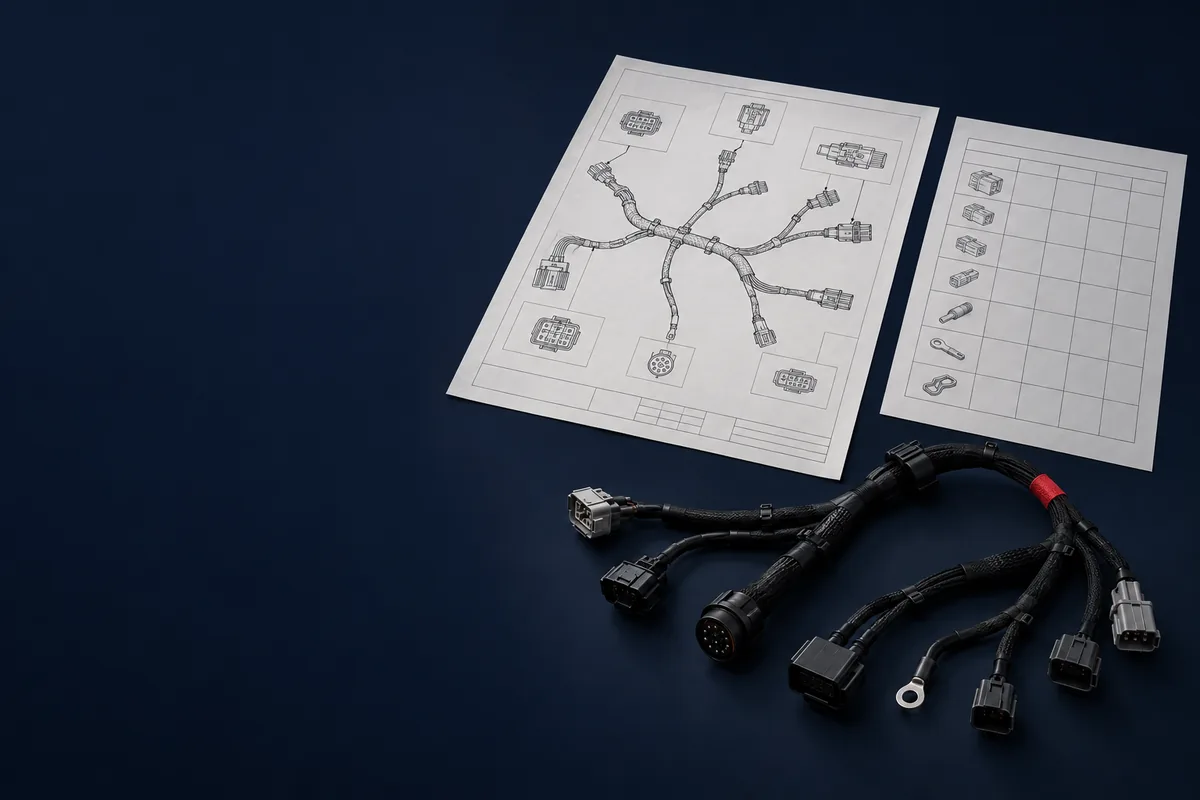
In 2022-Q1 to 2022-Q2, a South African industrial machinery integrator needed high-volume wire harness assemblies using a specific Bulgin PM Loom connector. South China lockdowns tightened connector supply, the buyer considered moving harness manufacturing in-house, and the practical answer became Split-delivery execution across 100-200 piece order ranges while remaining connector stock was tracked.
A connector shortage mitigation plan is a buyer-approved sourcing and release method that keeps wire harness builds moving without silently changing the connector, terminal, seal, crimp tooling, or test evidence. For engineers already at RFQ or sample-release stage, the goal is not to find any available connector. The goal is to protect fit, electrical rating, sealing, and inspection criteria while schedule pressure is high.
TL;DR
- Freeze the critical connector list before RFQ pricing, not after sample approval.
- Use split delivery only when part numbers and quantities are visible to the buyer.
- Approve alternates against cavity, seal, terminal, current, and tooling evidence.
- Keep IPC-A-620 crimp criteria and UL-758 wire evidence attached to every substitution.
- Reject silent swaps; require a deviation record before production release.
Why Connector Shortages Break Harness Programs
A wire harness RFQ is a sourcing package that defines wire, terminals, connectors, routing, labels, test rules, and packaging before a supplier quotes cost and lead time. Connector risk sits at the center because one missing housing can block an otherwise complete build. A 40-circuit harness with 39 available circuits is still a non-shippable assembly.
A connector shortage is a supply constraint where the specified housing, insert, backshell, seal, or terminal cannot support the requested delivery date or quantity. The shortage may come from allocation, long factory lead time, distributor stock errors, obsolete series, custom color resin, or import delays. In a harness program, the effect is immediate: cutting, crimping, continuity test, and final packing cannot finish until the mating interface is controlled.
An approved alternate connector is a replacement component accepted by engineering, quality, and purchasing after checking mechanical fit, electrical rating, material, terminal compatibility, tooling, and inspection evidence. The word "approved" matters. A purchasing team can find a physically similar connector in one afternoon, but a supplier should not install it until the buyer signs the deviation or drawing update.
When a connector is constrained, the first question is not price. It is whether the terminal, seal, cavity layout, and mating lock can be verified without changing the buyer's interface. One unapproved 2 mm keying difference can waste the whole build.
— Hommer Zhao
The standards backbone should stay visible during shortage handling. IPC-A-620 gives workmanship expectations for cable and wire harness assemblies, including crimp acceptance logic that should not be weakened during a rush. UL-758 wire style evidence is also relevant when the alternate path changes lead wire, insulation system, or rated temperature. For automotive-style programs, IATF 16949 thinking supports controlled supplier changes even when the buyer does not formally require automotive certification.
Map Connector Risk Before You Ask for Price
The RFQ should separate common parts from schedule-critical parts. A standard 18 AWG wire color can often be substituted with buyer approval and relabeling. A sealed circular connector with a specific keyway cannot be treated the same way. Before quoting, create a connector risk map with five fields: exact part number, authorized source, current stock, factory lead time, and approved backup path.
This step belongs before sample ordering. If the shortage is discovered after crimp applicators, labels, and test fixtures are prepared, the alternate may trigger a second sample loop. For sealed assemblies, even a small housing change can affect boot fit, backshell threads, potting cavity size, or overmold tooling. Review the related requirements in a wire harness RFQ checklist before letting the quote become a purchase order.
| Risk Item | What to Check | Buyer Decision Gate | Evidence to Keep |
|---|---|---|---|
| Connector housing | Part number, keying, cavity count, latch style | Approve exact source or alternate housing | Datasheet, photo, mating sample, drawing markup |
| Terminal contact | Wire range, plating, crimp barrel geometry | Approve applicator and pull-test plan | Crimp height, pull force, cross-section when required |
| Seal or grommet | Wire OD range, material, IP target | Approve sealing test scope | Seal compression notes and leak or immersion result |
| Backshell or strain relief | Thread, cable OD clamp range, bend clearance | Approve mechanical retention method | Assembly torque and pull retention record |
| Distributor stock | Date code, lot, minimum order, allocation terms | Approve split delivery or buffer buy | Stock screenshot, PO line, received quantity log |
| Test fixture | Mating connector availability and pin map | Approve adapter fixture if needed | Continuity test report and fixture revision |
Use Split Delivery Without Losing Control
Split delivery is a controlled shipment strategy where available connector stock supports an urgent partial release while the balance waits for incoming material. It works only when quantities, serial or batch labels, and remaining delivery dates are transparent. In the South Africa case, the buyer needed production continuity more than one perfect shipment date, so the assemblies were released in phases instead of holding every harness until the last connector arrived.
A useful split-delivery plan has three numbers: usable connector stock in hand, harnesses that can ship immediately, and confirmed balance date. If stock supports 60 assemblies out of a 160-piece need, the supplier should state that plainly. Do not hide the split inside a vague lead-time range. The buyer needs to decide whether partial shipment protects their line or creates extra receiving work.
For 100-200 piece order ranges, split delivery is often better than an uncontrolled redesign. We can release the assemblies supported by verified stock, then keep the same connector evidence for the balance instead of forcing a risky alternate.
— Hommer Zhao
The method is especially useful for industrial equipment harnesses, marine panels, and low-volume machinery builds where the buyer can install partial lots. It is weaker for tightly sequenced automotive launches or medical device builds that require a single validated configuration. If your program cannot tolerate split lots, specify that in the RFQ and request either a buffer-stock purchase or a formally approved alternate. For service capabilities around specific connector families, review Bulgin connector cable assembly before you lock the sourcing plan.
How to Approve an Alternate Connector
Alternate approval should be written like a mini engineering change. The supplier proposes the alternate, but the buyer owns the acceptance. A good review compares the original and proposed connector by interface, rating, material, terminal, tooling, and test impact. If any row is unknown, the alternate is not ready for production.
Start with mating fit. Confirm the alternate connects to the customer's existing device, sensor, panel, or mating harness without trimming keys or modifying locks. Then check current and voltage ratings against the harness load. Review operating temperature, flame behavior, and environmental sealing. A shortage response that solves lead time while lowering the IP target from IP67 to splash-resistant is not a true substitute.
The crimp system deserves its own gate. A terminal with the same wire range may still need a different applicator, crimp height, insulation support setting, or pull-force target. Keep the crimp evidence tied to crimp pull test requirements, and do not let the alternate bypass first-article inspection. If the alternate changes wire OD or seal compression, add a short waterproofing check using the same logic described in the wire harness waterproofing IP rating guide.
What the Supplier Should Communicate Weekly
Connector shortages damage trust when the supplier waits until the due date to explain the problem. A better rhythm is a weekly risk note once constrained parts appear. The note should list open connector lines, confirmed receipts, missing quantities, proposed alternates, and decisions needed from the buyer. Keep it short enough for purchasing to forward internally.
In our factory reviews, the best shortage notes are built from receiving data, not optimistic supplier promises. "Distributor expects stock soon" is not useful. "80 housings received, 40 terminals short, 120 housings confirmed for May 28, buyer approval needed for alternate seal by May 15" is actionable. That format lets the buyer make production decisions while the harness supplier continues cutting, crimping, labeling, and test preparation where possible.
A shortage update should include quantities and decisions, not adjectives. If the buyer sees 80 received, 40 short, and one approval gate, they can plan. If they see 'material delayed,' they cannot.
— Hommer Zhao
For longer programs, connect shortage notes to your lead-time assumptions. Harness lead time is not only assembly labor; it includes connector sourcing, wire purchase, applicator setup, first article, continuity test, packaging, and export scheduling. Compare your shortage plan with the broader wire harness lead time guide before promising recovery dates to your own production team.
Testing Evidence After a Shortage Decision
Every shortage decision should leave a test trail. Exact-part split delivery usually needs standard continuity, polarity, visual, crimp, and label checks. Alternate connector approval may need extra mating confirmation, pull retention, seal inspection, Hi-Pot where relevant, and a revised test fixture record. The scope depends on what changed.
For a sealed industrial cable, we normally expect 100% continuity testing and visual confirmation of seal seating. If the connector alternate changes the mating interface or backshell, add a mechanical fit check using a real mating sample. If the terminal system changes, capture crimp height and pull-force evidence before production. Where cable marking, UL wire style, or insulation class changes, keep the purchase and receiving records with the job folder.
A cable test fixture is a controlled device that verifies the harness pinout, continuity, shorts, and sometimes insulation resistance against the approved wiring map. If a connector shortage forces an adapter fixture, label the fixture revision and keep it separate from the original program fixture. The testing page at wire harness testing service shows the evidence buyers should expect before shipment.
Decision Framework: Wait, Split, Alternate, or Redesign
Use four options, in this order. First, wait if the confirmed stock date is inside the buyer's schedule buffer. Second, split delivery if verified stock can keep the buyer's line moving without configuration confusion. Third, approve an alternate when the interface, electrical rating, sealing, and crimp process are proven. Fourth, redesign only when the original connector is obsolete, repeatedly allocated, or incompatible with the real operating environment.
The wrong decision is usually driven by calendar panic. A rushed alternate may create more downtime than a two-week split shipment. A redesign may be justified for a five-year product family, but excessive for a 100-piece service batch. Tie the decision to order quantity, installed base, validation cost, and field replacement risk.
Frequently Asked Questions
How should a buyer handle a connector shortage during a wire harness RFQ?
Ask the supplier to separate exact stock, incoming stock, and alternate options before sample approval. For a 100-200 piece order range, request a split-delivery plan, connector evidence, and approval gates tied to IPC-A-620 crimp checks and UL-758 wire documentation.
Is split delivery safer than approving an alternate connector?
Split delivery is safer when verified stock can support urgent assemblies and the remaining date is confirmed. An alternate is better only when mating fit, rating, terminal tooling, and sealing evidence are proven. For sealed harnesses, one unverified alternate can trigger IP or crimp failures.
What evidence should come with an alternate connector proposal?
Require the original and alternate part numbers, datasheets, mating sample photos, terminal wire range, crimp height target, pull-force record, seal compatibility, and continuity test plan. If the connector changes a fixture, keep the fixture revision with the job record.
Can a harness supplier buy from brokers during allocation?
Broker sourcing can be used only with buyer approval and incoming inspection. For critical connectors, require lot traceability, photos, date codes where available, and a functional mating check. Counterfeit or wrong-key connectors can scrap 100% of a finished harness batch.
Which standards matter when connector substitutions are made?
Use IPC-A-620 for cable and harness workmanship expectations, UL-758 for appliance wiring material evidence when wire style changes, and IATF 16949-style change control for automotive or long-lifecycle programs. The substitution record should state exactly what changed.
When should a buyer redesign instead of waiting for connectors?
Redesign when the connector is obsolete, repeatedly allocated, fails the environmental target, or blocks a multi-year program. For a one-time 100-200 piece build, split delivery or a controlled alternate often costs less than new validation, tooling, and test fixture work.
Bottom Line for OEM Buyers
Connector shortage mitigation is not a purchasing shortcut. It is an engineering-controlled release plan that protects the mating interface, crimp system, seal performance, and test record while schedule pressure is real. Start the risk map during RFQ, keep split delivery transparent, and approve alternates only with written evidence.
If your wire harness program has a constrained connector, send the drawing, BOM, target quantity, and required delivery date through the contact page. We will mark exact-stock, split-delivery, and alternate-approval paths before quoting production timing.