Engine Starting Harnesses& High-Current Battery Cable
Custom starting cables and battery-to-starter harnesses for diesel gensets, off-highway, marine and industrial engines — welding-grade copper from 4 AWG to 4/0 AWG, crimp-and-solder lugs, built to SAE J1127/J1128 and IPC/WHMA-A-620.
What makes an engine starting harness different
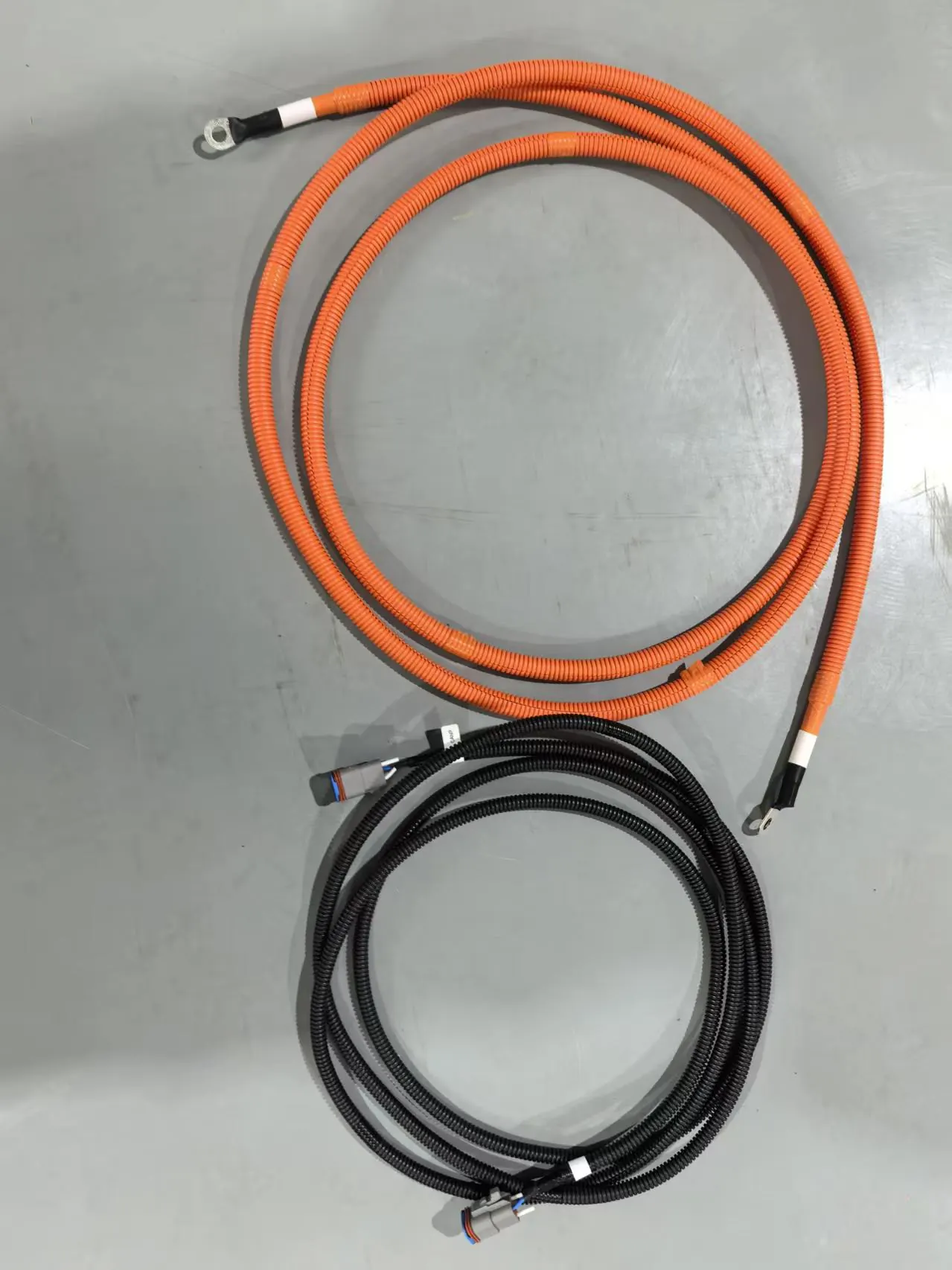
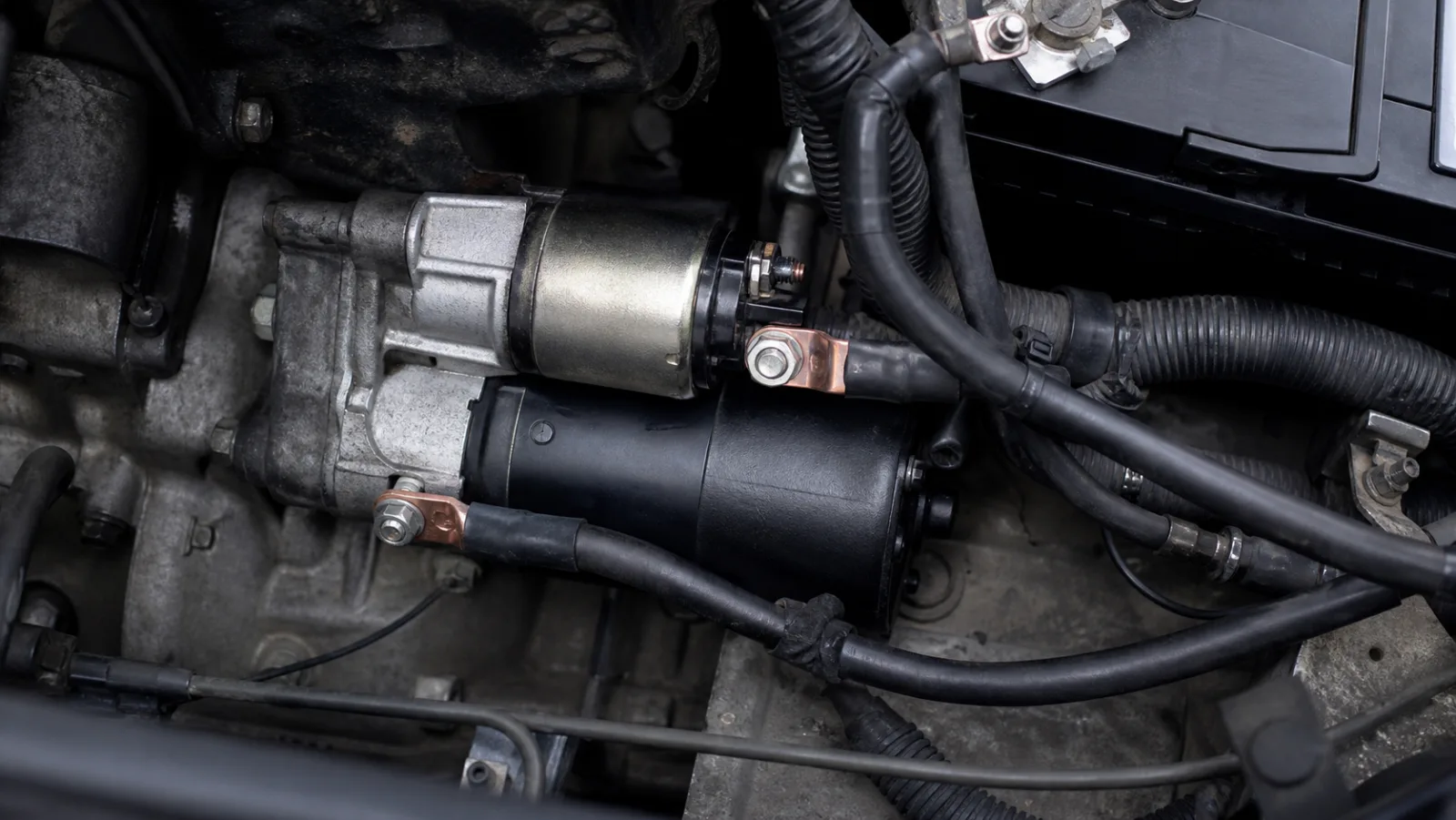
An engine starting harness is the highest-current circuit on the machine. When the starter motor cranks a large diesel, it pulls a brief but enormous current surge, and every millivolt of voltage drop across the cable is energy the starter never sees. That is why a starting harness is not ordinary hook-up wire: it is built from heavy-gauge welding-grade flexible copper — typically 4 AWG to 4/0 AWG battery cable and larger — with lugs that are both crimped and soldered so the connection itself never becomes the bottleneck.
These assemblies live in punishing places: a vibrating diesel genset, an off-highway engine bay full of oil and dust, a marine engine room soaked in salt air, or a stationary battery bank that must be serviced for years. So we use heavy-wall EPDM or XLPE insulation rated to +125°C, tinned copper for corrosive duty, sealed ring terminals and heat-shrink, and Anderson SB power connectors where banks need to be broken and remade in the field. For sealed, fluid-exposed builds we also offer waterproof cable assemblies and full heavy-equipment wire harnesses — every starting cable built to SAE J1127/J1128 and IPC/WHMA-A-620 under our ISO 9001 quality system.
Engine starting systems we wire
High-current starting and battery cable for the engines that have to start under load
Diesel Genset Starting
High-current starting cables and battery-to-starter harnesses for standby and prime-power diesel generator sets. Welding-grade flexible copper and crimped-and-soldered lugs carry the cranking surge with minimal voltage drop so the engine fires on the first attempt, every time.
Heavy-Duty & Off-Highway Engines
Rugged starter and battery cabling for construction, mining, agricultural and off-highway diesel engines that face constant vibration, oil, dust and heat. Heavy-wall abrasion- and oil-resistant insulation survives the engine-bay environment.
Marine Engine Starting
Corrosion-resistant engine starting and battery cables for marine propulsion, auxiliary and emergency generator engines. Tinned fine-stranded copper resists salt and humidity over years of service in the bilge and engine room.
Industrial Stationary Engines & Battery Banks
Battery bank interconnects and starting cables for stationary industrial engines, pump and compressor drivers, and large UPS / battery-bank assemblies. Anderson SB connectors and sealed ring terminals make banks serviceable without re-crimping in the field.
Built for cranking current, layer by layer
Conductors
High-current welding-grade flexible copper, 4 AWG up to 4/0 AWG and larger. Fine-stranded for flex life and routing around the engine, with tinned copper available for marine and corrosive service.
Insulation
Heavy-wall abrasion-, oil- and heat-resistant insulation in EPDM or XLPE, rated for continuous engine-bay temperatures up to +125°C and cold-bend down to -40°C.
Jacket & Protection
Thick-wall jacketing plus heat-shrink, with abrasion and oil resistance designed to take vibration, chafe and fluid exposure across a long engine service life.
Terminations & Connectors
Crimped and soldered copper lugs, sealed ring terminals with heat-shrink boots, and Anderson SB power connectors for serviceable, low-resistance battery and starter connections.
High-current technical capabilities
Welding-grade copper construction built to SAE J1127/J1128 battery-cable requirements and IPC/WHMA-A-620 workmanship, under our ISO 9001 quality system.

Why choose our engine starting harness services
Starting cables engineered so the engine fires on the first crank, then keep doing it for years
High-Current Engineering
Cranking circuits are sized for ampacity and voltage drop, not guessed. We select conductor gauge from 4 AWG to 4/0 AWG and larger so the starter sees full battery voltage under load.
Built to SAE J1127/J1128 & IPC/WHMA-A-620
Battery and starting cable built to SAE J1127 / J1128 battery cable requirements, assembled to IPC/WHMA-A-620 Class workmanship under our ISO 9001 quality system.
Crimp-and-Solder Lug Reliability
High-current lugs are both crimped and soldered, then sealed with heat-shrink — the connection that fails on a cheap starter cable is the one we over-build.
100% Electrical Test
Every starting harness gets continuity and low-resistance checks before it ships, so the cranking path is verified rather than assumed.
Engine starting cable standards
Battery and starting cable built to the SAE battery-cable specs and IPC/WHMA-A-620 workmanship that OEMs and integrators require.
Engine starting harness FAQ
What conductor sizes do you offer for engine starting cables?
We build high-current starting and battery cables from 4 AWG up to 4/0 AWG, with larger sizes available for battery-bank interconnects and high-displacement diesel engines. Conductors are welding-grade fine-stranded copper for flexibility and a long flex life, with tinned copper for marine and corrosive environments.
What insulation and temperature rating do your starting harnesses use?
Engine starting cables use heavy-wall, abrasion-, oil- and heat-resistant insulation — typically EPDM or XLPE — rated for continuous service from -40°C up to +105–125°C. That covers the vibration, fluids and heat of a diesel engine bay or a marine engine room.
How are the lugs and terminals attached?
High-current copper lugs are both crimped and soldered for a low-resistance, mechanically secure joint, then sealed with adhesive-lined heat-shrink. We also supply sealed ring terminals and Anderson SB power connectors so battery banks and starters stay serviceable without field re-crimping.
Which standards do your battery and starting cables meet?
Battery and starting cable is built to SAE J1127 and SAE J1128 battery cable requirements, and assemblies are built to IPC/WHMA-A-620 workmanship under our ISO 9001 quality system. Specific customer or class requirements (Class 1/2/3) are confirmed at the drawing stage.
Can you make battery bank interconnects and Anderson SB harnesses?
Yes. We build battery-bank interconnect cables and Anderson SB connectorized harnesses for industrial stationary engines, large UPS / battery banks and off-grid power systems. Anderson SB connectors let crews break and remake high-current connections quickly during service.
Are your cables suitable for marine engine starting?
Yes. For marine propulsion, auxiliary and emergency-generator engines we use tinned fine-stranded copper and sealed, corrosion-resistant terminations so the cranking circuit survives salt, humidity and the bilge environment over many years of service.
What is your sample lead time and minimum order?
We support prototypes from small quantities with 7–10 day sample lead times, scaling to production batches that are negotiable by program. This lets you validate a starting harness on the real engine before committing to volume.
Do you offer engineering support for starting harness design?
We do not sell standalone design services, but our engineers provide DFM feedback on your drawings — conductor sizing for cranking current and voltage drop, lug and connector selection, strain relief and labeling — to optimize manufacturability, reliability and cost.
Ready for your engine starting harness project?
Welding-grade battery cable, crimp-and-solder lugs and 100% electrical test, with 7–10 day samples. Talk to our high-current specialists.
Related cable solutions
Custom cable assembly and harness services that pair with engine starting programs.
Battery Cable
High-current 4 AWG–4/0 AWG starter and battery cabling with crimped-and-soldered lugs.
Explore →Anderson Power Connectors
Anderson SB connectorized harnesses for serviceable high-current battery banks.
Explore →High-Voltage Cable
High-voltage and high-current cable assemblies with shielded constructions.
Explore →Heavy-Equipment Harness
Rugged sealed harnesses for off-highway, diesel and industrial engine platforms.
Explore →