Industry Platform

Defense & Military Wire Harnesses & Cable Assemblies

Mission-critical wire harnesses engineered for ground combat vehicles, naval systems, avionics, UAV/UGV and C4ISR — M22759 wire, D38999 connectors, MIL-STD-1553 databus and EMI/EMP/TEMPEST shielding, built to MIL-STD-810 and SAE AS50881.

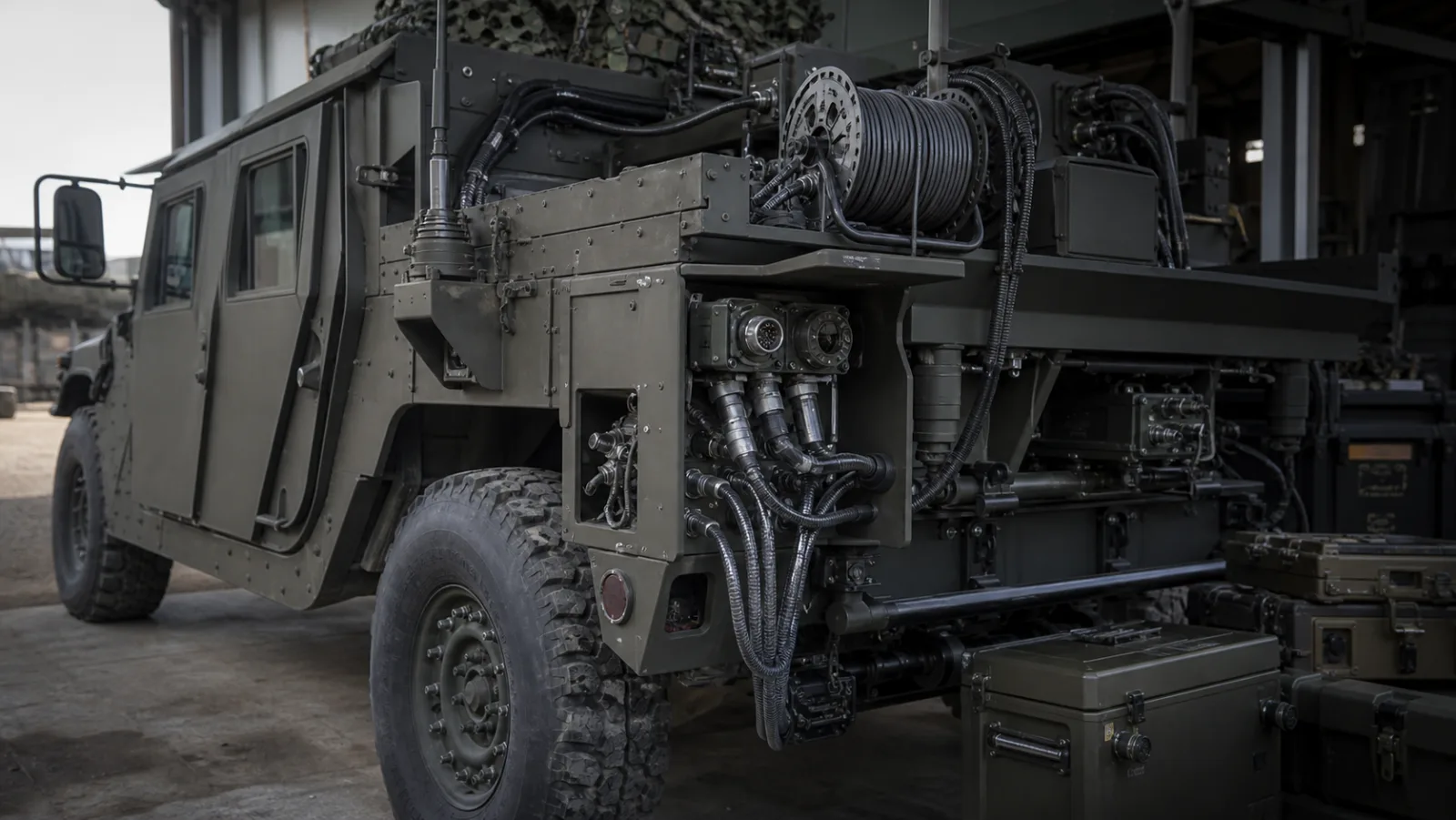
Defense and military wire harness manufacturing
Wire Rating+260°C
ConnectorsD38999
First-Pass YieldHigh
Samples7–10 Days

Application Context

What makes a defense wire harness different

A defense and military wire harness has to do its job when nothing else gets a second chance — inside an armored vehicle taking ballistic shock, a fighter pulling sustained Gs, a radar array on a destroyer's mast, or a UAV operating at altitude. That means aerospace-grade M22759 PTFE/ETFE wire rated up to +260°C, MIL-DTL-27500 shielded multicore for clean signal, and connectors like D38999 and MIL-DTL-5015 with environmental backshells — not repurposed commercial cable. Every construction is built to SAE AS50881 wiring practices and IPC/WHMA-A-620 Class 3 workmanship, then validated against MIL-STD-810 environmental profiles for shock, vibration, thermal shock, humidity, salt fog and altitude.

Across a platform the harness changes job at every node: ruggedized power and weapons-station wiring in ground combat vehicles, MIL-STD-1553 / ARINC 429 / CAN databus integration for C4ISR and avionics, corrosion-resistant runs aboard ship, and EMI/EMP- and TEMPEST-controlled shielding for comms, radar and fire-control. We pair foil + braid + overall shielding with banded backshell grounding for electromagnetic hardening, and reach for shielded cable assemblies, high-temperature cable assemblies and coaxial assemblies wherever the mission demands. Quality runs under our ISO 9001 system and is built to AS9100 aerospace quality requirements, with full lot traceability and 100% electrical test on every unit.

Applications

Defense & military applications we wire

Purpose-built harnesses for every domain of modern defense systems.

Ground Combat & Tactical Vehicles

Ruggedized power, signal and weapons-station harnesses for main battle tanks, infantry fighting vehicles, MRAPs and tactical wheeled platforms. Built to ride out ballistic shock, thermal extremes and continuous off-road vibration without intermittents.

  • MIL-STD-810 shock & vibration profiles
  • D38999 / MIL-DTL-5015 circular connectors
  • MIL-STD-1553 & CAN databus integration
  • EMI/EMP-hardened shielded construction

Naval & Shipboard Systems

Corrosion-resistant cable assemblies for shipboard power distribution, combat-system racks, radar and sonar installations, and submarine electronics. Constructed to survive salt fog, condensation and shock loads aboard surface vessels and subs.

  • Shock & vibration qualified builds
  • Salt-fog & humidity resistant materials
  • MIL-DTL-27500 shielded multicore cable
  • Banded backshell grounding terminations

Military Avionics, UAV & UGV

Lightweight, high-reliability harnesses for cockpit avionics, mission computers, sensor pods, soldier-worn systems and unmanned air/ground vehicles. M22759 PTFE/ETFE wire keeps weight and bulk down while holding rating at altitude.

  • M22759 PTFE / ETFE lightweight wire
  • ARINC 429 & ARINC 600 interconnect
  • High-altitude pressure-rated builds
  • Soldier-worn / UAV/UGV form factors

C4ISR, Comms, Radar & Fire-Control

RF, databus and control cable assemblies for tactical radios, satellite terminals, radar arrays, electronic-warfare suites, weapons and fire-control systems. Controlled impedance and layered shielding keep signals clean and TEMPEST-aware.

  • Foil + braid + overall TEMPEST shielding
  • Controlled-impedance coaxial assemblies
  • RS-485 / ARINC 429 data links
  • Field-deployable quick-disconnects

Engineering Challenges

Review risk before production

01

Extreme Environments

Construction validated against MIL-STD-810 profiles — shock, vibration, thermal shock, humidity, salt fog and altitude — so a harness survives desert, arctic, shipboard and high-altitude service alike.

02

EMI/EMP & TEMPEST Shielding

Foil, braid and overall shield architectures with banded backshell grounding for EMI-hardened, EMP-hardened and TEMPEST-aware C4ISR, radar and fire-control wiring.

03

Databus Integration

MIL-STD-1553 dual-redundant, ARINC 429, CAN and RS-485 links with controlled-impedance, properly shielded and terminated stubs and couplers so the bus meets its electrical requirements.

04

Testing & Traceability

100% electrical test with continuity, Hi-Pot and crimp pull-force validation, plus lot-level material traceability and certificates of conformance planned to the program quality level.

Technical Capabilities

Military-grade technical capabilities

M22759 / MIL-DTL-27500 construction with D38999 connectors and EMI/EMP/TEMPEST shielding, built to SAE AS50881 and validated against MIL-STD-810 environmental profiles.

Wire ConstructionM22759 / MIL-DTL-27500
Operating TemperatureUp to +260°C
ConnectorsD38999 / MIL-DTL-5015
DatabusMIL-STD-1553 / ARINC 429
ShieldingEMI / EMP / TEMPEST
First-Pass YieldHigh
Defense and military wire harness manufacturing

Manufacturing Process

A controlled build, drawing to shipment

01Drawing / BOM Review
02Connector Sourcing
03Cutting & Stripping
04Crimping / Assembly
05In-process Inspection
06Electrical Test
07Final Inspection
08Packaging & Export

Quality & Testing

Documentation for program review

Every defense harness gets 100% electrical test — continuity and dielectric-withstand (Hi-Pot) checks with crimp pull-force validation — and full lot-level material traceability with certificates of conformance before it ships.

Material ApprovalProcess ControlCrimp Pull-ForceContinuity TestHi-Pot / DielectricFinal InspectionLot TraceabilityCertificate of ConformanceCorrective Action

Why WHP

Why defense contractors choose our wire harness services

Mil-spec manufacturing discipline, full material traceability and 100% electrical test.

Mil-Spec Manufacturing Discipline

Harnesses built to SAE AS50881 wiring practices and IPC/WHMA-A-620 Class 3 workmanship, with M22759 wire and D38999 connectors processed on calibrated, force-monitored tooling — not commercial cable-shop shortcuts.

Extreme-Environment Engineering

Construction validated against MIL-STD-810 environmental profiles — shock, vibration, thermal shock, humidity, salt fog and altitude — so a harness survives desert, arctic, shipboard and high-altitude service alike.

EMI/EMP & TEMPEST Shielding

Foil, braid and overall shield architectures with banded backshell grounding for electromagnetic-interference, EMP-hardened and TEMPEST-aware C4ISR, radar and fire-control wiring.

Full Traceability & Documentation

Lot-level material traceability from wire to finished assembly, with certificates of conformance and 100% electrical test records — manufactured to AS9100 quality requirements under our ISO 9001 system.

Defense & military standards we build to

Our defense harnesses are manufactured to the specifications procurement teams require for reliability, traceability and environmental endurance.

ISO 9001Quality Management
A-620IPC/WHMA Class 3
AS50881Wiring Practices
MIL-STD-810Environmental

FAQ

Defense wire harness FAQ

What wire and cable do you use for defense and military harnesses?
We build with M22759 (MIL-W-22759) PTFE- and ETFE-insulated aerospace wire and MIL-DTL-27500 shielded multicore cable. These constructions hold dielectric strength and mechanical integrity across a -65°C to +260°C range, at altitude, and under fuel, hydraulic-fluid and abrasion exposure where general-purpose wire degrades.
Which connectors and backshells do you terminate?
We terminate D38999 (MIL-DTL-38999) circular connectors, MIL-DTL-5015 connectors and ARINC interconnect, paired with environmental backshells, banding platforms and strain relief. Terminations are crimped on calibrated, force-monitored tooling and grounded/bonded for shielded, sealed defense assemblies.
Can you integrate MIL-STD-1553, ARINC 429 and CAN databuses?
Yes. We build harnesses to integrate MIL-STD-1553 dual-redundant databus, ARINC 429, CAN and RS-485 links, with controlled-impedance and properly shielded/terminated stubs and couplers so the bus meets its electrical requirements in the platform.
How do you handle EMI/EMP and TEMPEST requirements?
We construct foil + braid + overall shield architectures with banded backshell grounding and 360-degree shield termination for EMI/EMP-hardened and TEMPEST-aware wiring. Shielding approach is tailored to the platform requirement for C4ISR, radar, electronic-warfare and fire-control systems.
What standards do you build defense harnesses to?
We manufacture to SAE AS50881 aerospace wiring practices and MIL-STD-810 environmental requirements, with IPC/WHMA-A-620 Class 3 workmanship. Quality is run under our ISO 9001 system and built to AS9100 aerospace quality requirements. We build to these specifications rather than claiming third-party qualification of the end item.
Are your harnesses tested before they ship?
Yes — every harness gets 100% electrical test, including continuity and dielectric-withstand (Hi-Pot) checks, with crimp pull-force validation. We do not batch-sample. Environmental qualification testing to MIL-STD-810 profiles is available on request, with results documented in the delivery package.
What operating temperature and environment can the assemblies handle?
M22759 wire constructions are rated up to +260°C, and assemblies are built for high-altitude, salt-fog, humidity, shock and sustained-vibration service per MIL-STD-810 environmental profiles. Sealing, conduit and heat-shrink boots are specified to match the platform environment, from ground vehicles to shipboard and airborne systems.
What is your lead time and quantity range for defense programs?
We support prototype quantities for engineering and qualification builds, scaling to low-rate and full-rate production. Prototype harnesses typically ship in 7–10 days, with production lead times driven by connector availability and volume. Certificates of conformance and full test records accompany every delivery.
OEM Program Entry

Review Your Defense Wire Harness Requirement

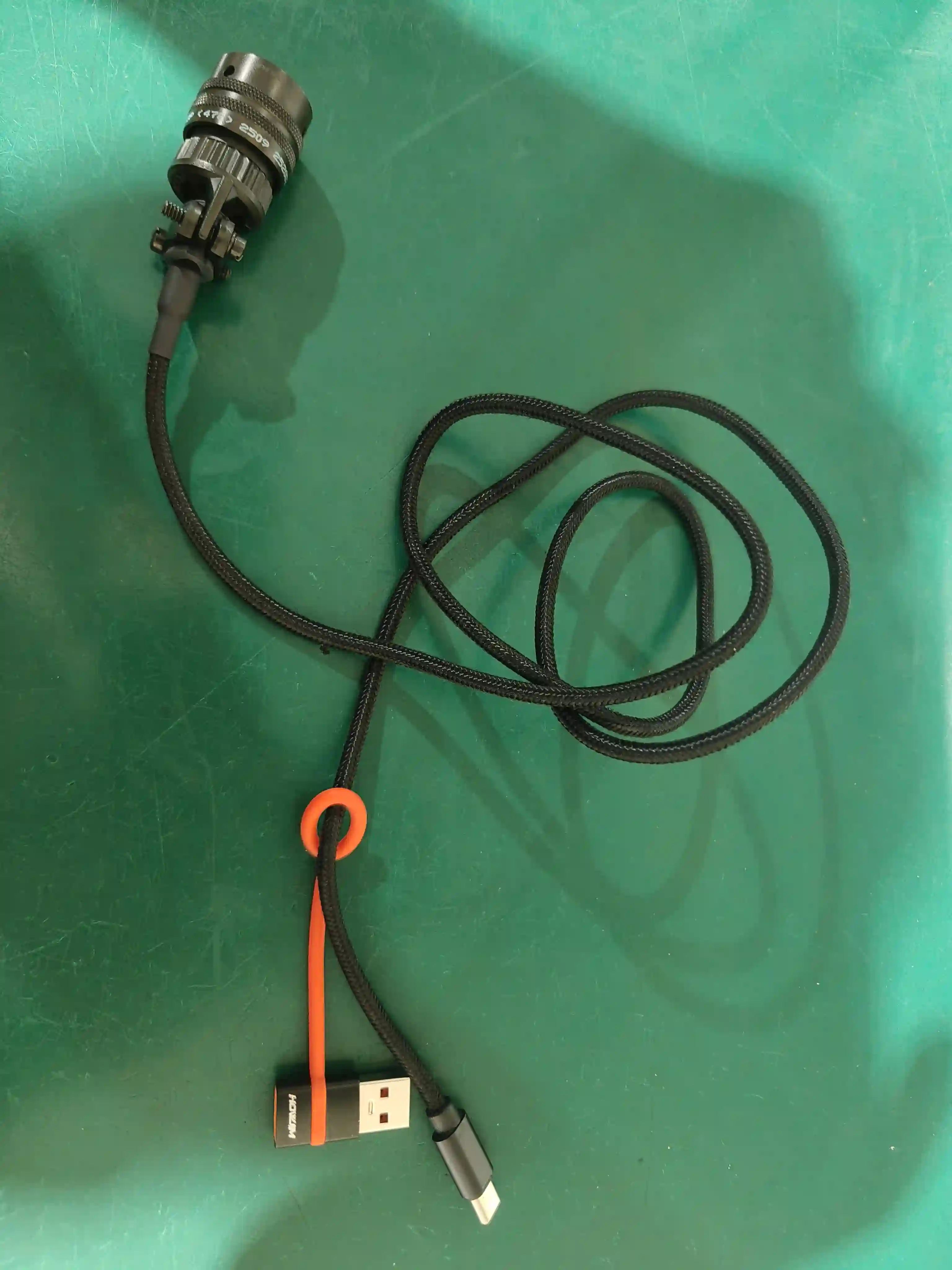
Share drawings, BOM, photos, or early-stage requirements. Our engineering team will review manufacturability, connector and backshell selection, shielding approach, testing needs, and production requirements before manufacturing starts.

We will review

  • 01Design Feasibility
  • 02Component Availability
  • 03Cost Drivers
  • 04Validation Requirements

Related Capabilities

Related cable solutions

Custom cable assembly and harness services that pair with defense and military programs.

Case Studies

Related case studies

Real, anonymized programs we delivered in this industry — the actual challenge, solution, and numbers.