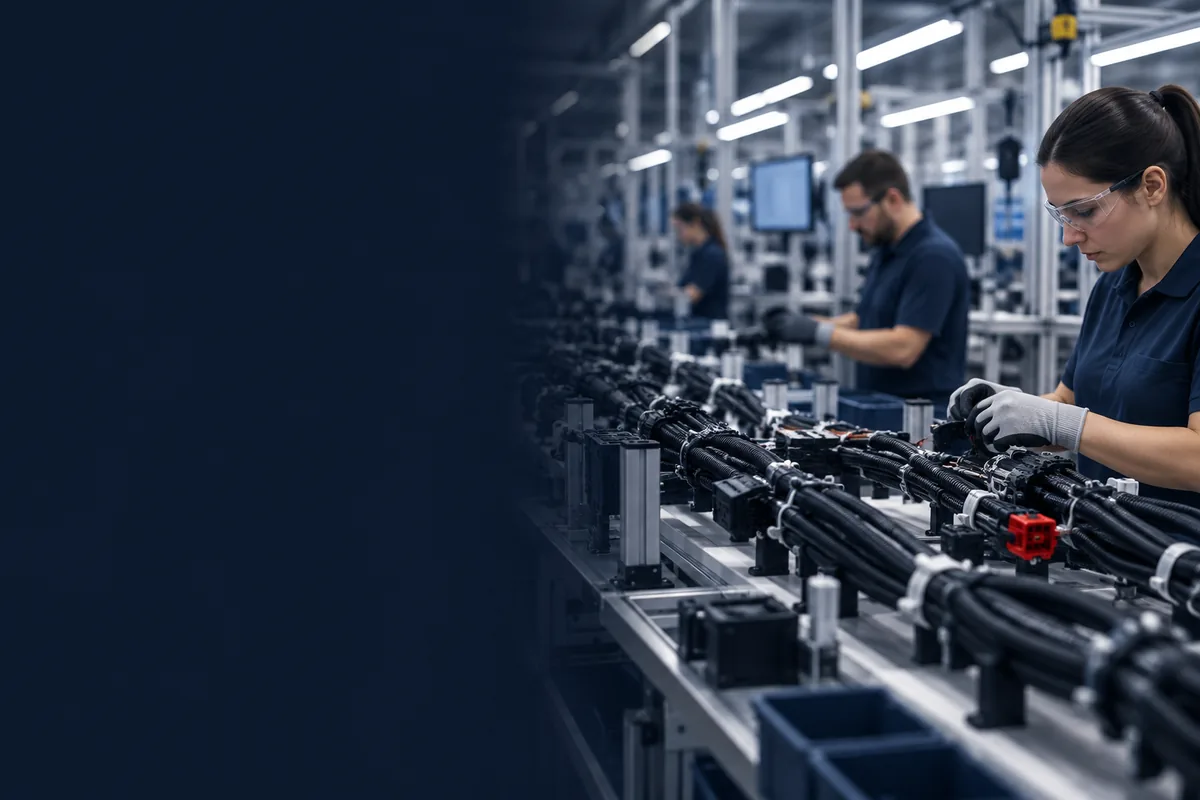
Selecting a medical wire harness manufacturer isn't like choosing a supplier for consumer electronics. One wrong choice could mean FDA warning letters, costly recalls, or worse—patient harm. Here is a practical checklist for evaluating medical suppliers.
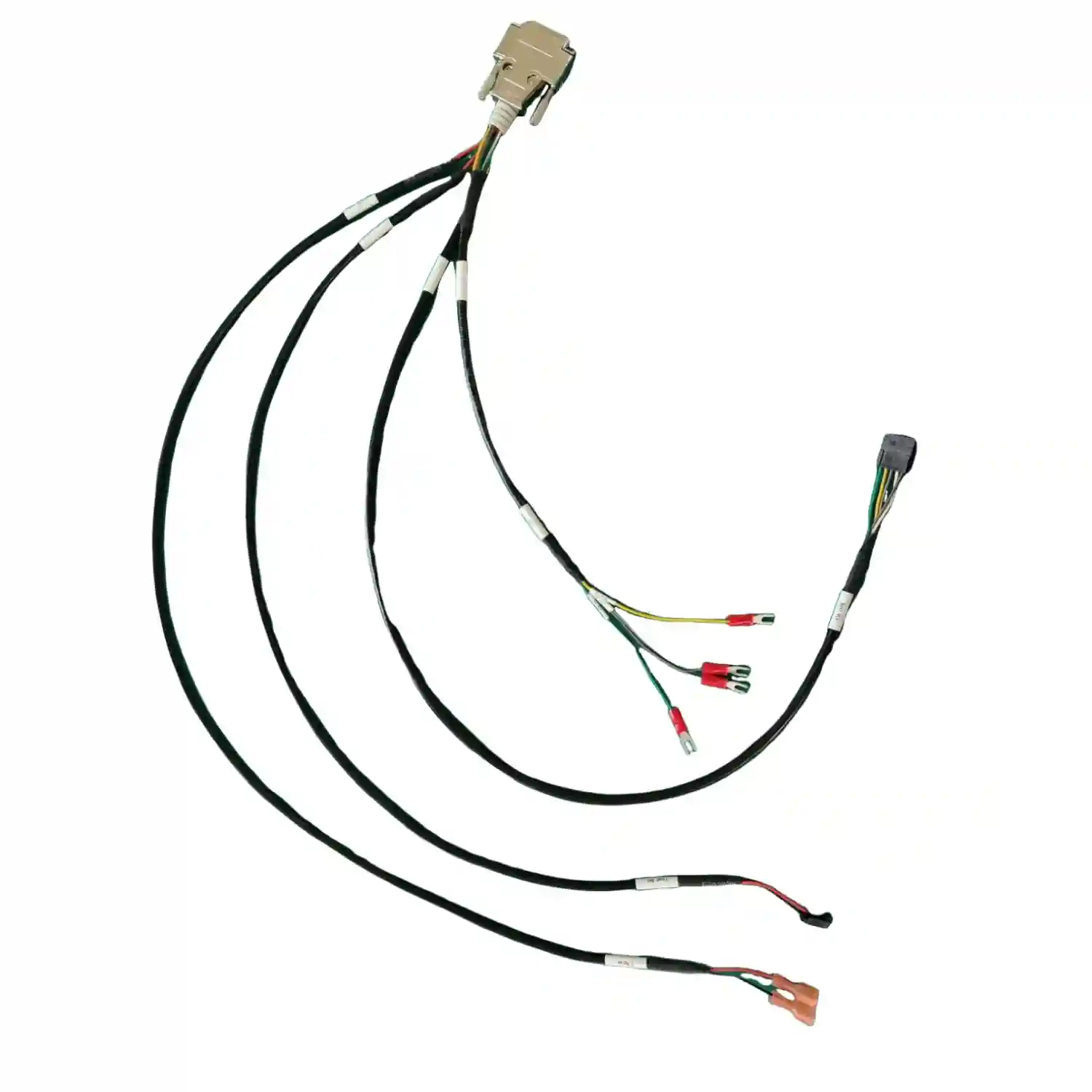
Medical wire harnesses demand rigorous quality standards that separate qualified manufacturers from general-purpose suppliers
Medical device programs require suppliers who can demonstrate application-appropriate quality controls. Evaluate documented capability rather than relying on market growth claims or a general claim of medical experience.
Capability varies widely between suppliers. The difference often comes down to seven critical factors that separate manufacturers who truly understand medical requirements from those just chasing the higher margins.
If you're new to wire harness sourcing in general, start with our comprehensive manufacturer selection guide. For medical-specific evaluation, keep reading—these seven factors could save your company from regulatory nightmares.
Quick Navigation: The 7 Critical Factors
1
ISO 13485 Certification: Verify Scope and Applicability
Let's start with the obvious one—though you'd be surprised how many procurement teams get this wrong. ISO 13485 isn't just another quality badge to hang on the wall. It's a comprehensive quality management system specifically designed for medical device manufacturing, covering everything from design controls to risk management.
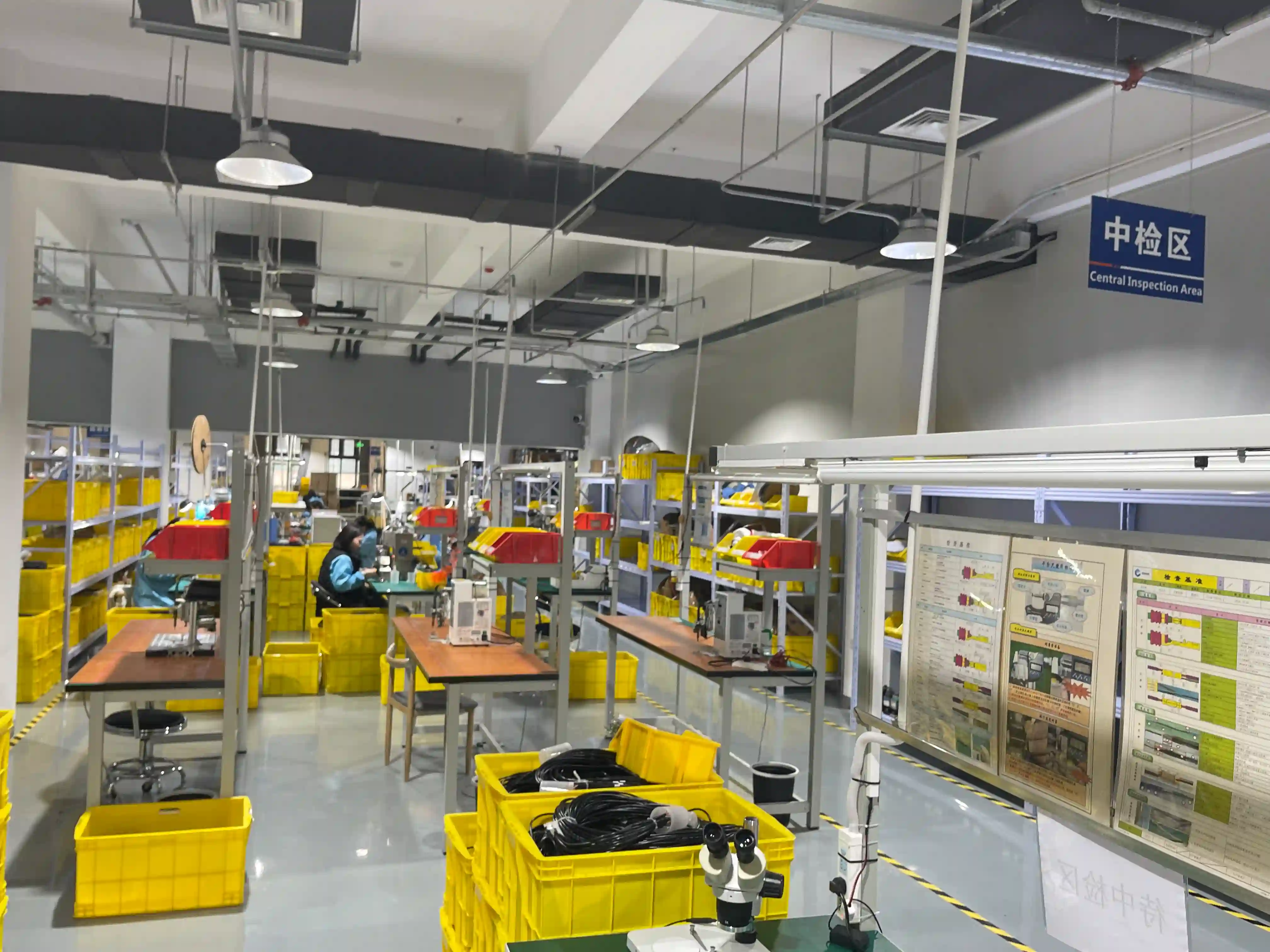
What to Verify:
| Verification Item | Red Flag | Green Flag |
|---|---|---|
| Certificate Validity | Expired or from unknown registrar | Current, accredited registrar (TÜV, BSI, SGS) |
| Scope Coverage | Doesn't include wire harness/cable assembly | Explicitly covers cable & harness manufacturing |
| Audit History | Won't share surveillance audit results | Transparent about findings and corrective actions |
| MDSAP Audit Scope | Cannot explain applicable market requirements | Documented audit scope where MDSAP applies |
Pro Tip
Use the registrar's online database to verify certificates. TÜV, BSI, and other major registrars have certificate lookup tools. If a certificate is not listed, contact the registrar to confirm its validity and scope. Also check if there are any ongoing "conditions" or "non-conformances" listed.
2
FDA Registration & Regulatory Compliance
If you're selling medical devices in the US market, your supply chain matters to the FDA. While wire harness manufacturers aren't always required to register as device manufacturers themselves, the regulatory implications flow throughout your supply chain. Understanding where your supplier stands—and how they support your compliance—is critical.
21 CFR Part 820 Knowledge
Does the manufacturer understand the applicable FDA Quality Management System Regulation (QMSR)? The revised 21 CFR Part 820 took effect on February 2, 2026, incorporating ISO 13485:2016 by reference. FDA QMSR overview
- Applicable design and development records
- Medical device file and manufacturing documentation support
- Traceable production and acceptance records
FDA Establishment Registration
Where the supplier activity triggers FDA registration requirements:
- Annual registration updated
- Listed in FDA's public database
- Review inspection findings and corrective-action status
| Device Class | Risk Level | Supplier Requirements | Example Applications |
|---|---|---|---|
| Class I | Low | QMS and supplier controls appropriate to the device | Hospital beds, exam lights |
| Class II | Moderate | Applicable design, production, and traceability controls | Infusion pumps, surgical drills, patient monitors |
| Class III | High | Risk-based validation and biological safety evidence as applicable | Pacemakers, implantable devices, life support |
For detailed information on quality testing methods that meet FDA requirements, see our wire harness quality testing guide. And for certification details, check our top certifications article.
3
Biocompatibility & Material Certifications
Will your wire harness contact patients? Evaluate direct and indirect contact under the applicable ISO 10993 biological evaluation framework; location in a sterile field alone does not define the full test program. This is where many general-purpose manufacturers fall flat.
Critical Material Considerations
| Material | Common Use | Biocompatibility Status | Key Certifications |
|---|---|---|---|
| Medical-Grade Silicone | Implantable leads, flexible cables | Evaluate exact grade and contact use | Applicable USP / ISO 10993 test evidence |
| PTFE (Teflon) | High-performance insulation | Evaluate exact grade and contact use | USP Class VI available |
| Medical TPU | Flexible jacketing | Grade-Dependent | Verify medical grade |
| Standard PVC | General insulation | Evaluate formulation and intended contact | Plasticizer concerns |
| FEP | Catheter cables | Evaluate exact grade and contact use | Application-specific ISO 10993 evidence |
How ISO 10993 Frames "Contact"
According to the ISO 10993 overview, the series evaluates the biocompatibility of medical devices to manage biological risk, and ISO 10993-1 sets out the general principles for evaluating biological safety within a risk management process. Two classifications decide which questions you should put to a harness supplier: what the device touches, and for how long.
| Classification | Categories listed in the source |
|---|---|
| Type of contact | Surface device (intact skin, mucosal membrane, or breached or compromised surface), external communicating device, implant device |
| Contact duration | Limited: 24 hours or less. Prolonged: more than 24 hours up to 30 days. Permanent: more than 30 days |
| Endpoints named | Cytotoxicity, sensitization, irritation, acute systemic toxicity, pyrogenicity, subchronic toxicity, genotoxicity, hemocompatibility, chronic toxicity, carcinogenicity, reproductive and developmental toxicity |
Individual parts cover individual tests, for example Part 5 for in vitro cytotoxicity, Part 10 for skin sensitization and Part 23 for irritation. Which endpoints apply to a given cable is decided by the device maker's biological evaluation, not by the harness supplier's catalogue, so ask for the evaluation plan and the supplier's material change-notification terms rather than a generic "biocompatible" claim.
What Good Suppliers Provide
- • Material certifications with lot numbers
- • RoHS and REACH compliance documentation
- • USP Class VI test reports when applicable
- • ISO 10993 cytotoxicity test results
- • Material change notification agreements
Red Flags to Watch For
- • "We can get whatever materials you need"
- • No documentation on material sources
- • Substituting materials without notification
- • Unable to provide CoC per shipment
- • Unfamiliar with USP or ISO 10993
4
Traceability & Documentation Systems
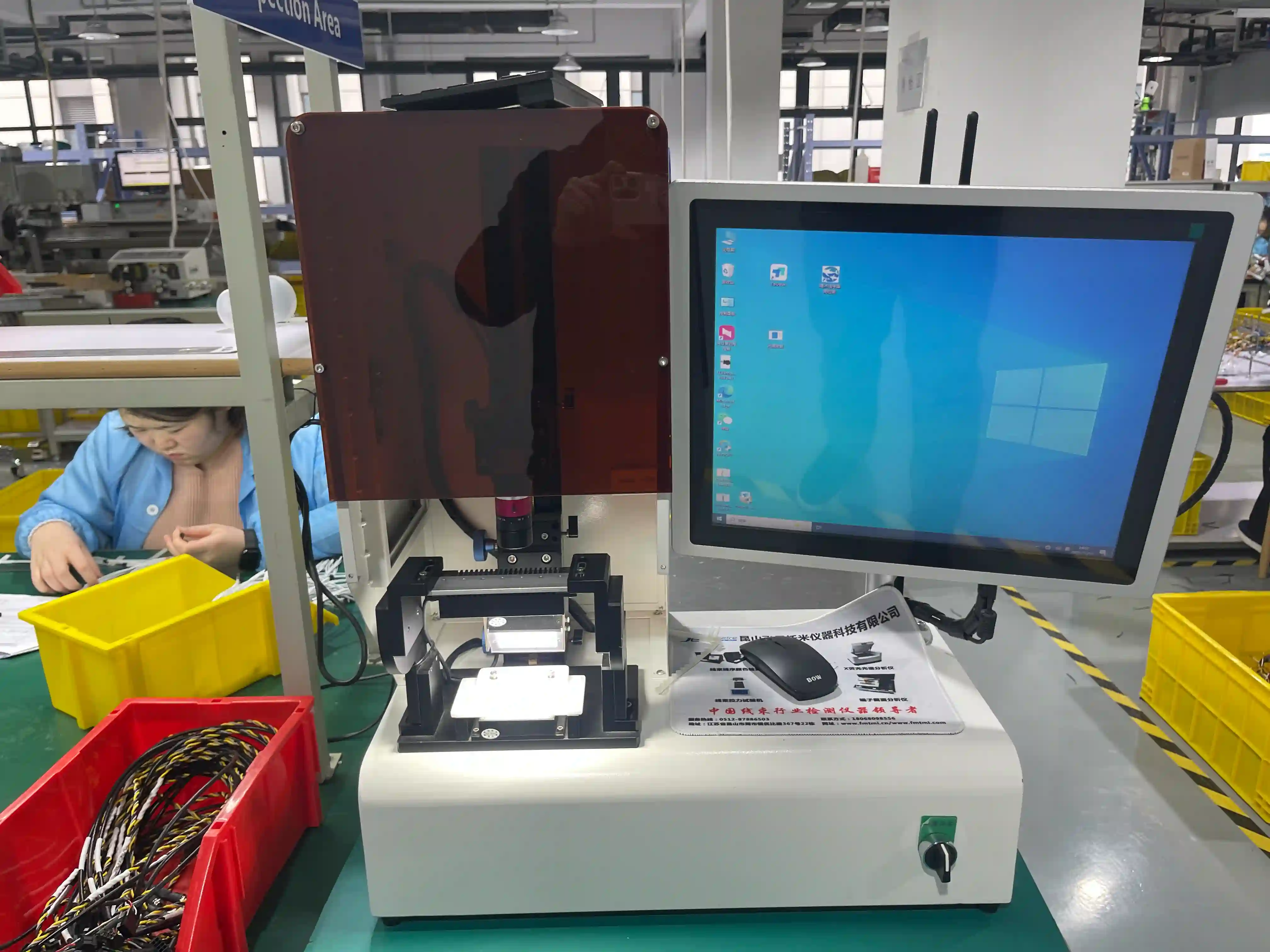
When the FDA comes knocking—or worse, when there's a field complaint—you need to trace every harness back to its component lots, production records, and test data. Define traceability depth under the applicable device requirements and supplier agreement. Yet many wire harness manufacturers treat traceability as an afterthought.
Complete Traceability Chain for Medical Harnesses
Where Device Identification Meets Your Supplier's Records
The Unique Device Identification system splits a device identifier into a device part (UDI-DI), which identifies the manufacturer and product, and a production part (UDI-PI), which may include the lot or serial number and the expiration date. A cable supplier does not assign a UDI to the finished device, but the lot and serial records it keeps are what let the device maker link a field complaint to the harness build behind it. Ask which identifier the supplier writes on each harness or carton and how it ties back to the records in steps 1 to 5 above.
Evaluating Traceability Capability
| Question to Ask | Basic Answer | Medical-Grade Answer |
|---|---|---|
| How do you track lot numbers? | Excel spreadsheets | MES/ERP system with barcode scanning |
| Can you trace a defect to operator? | By shift only | Individual operator ID logged per unit |
| Document retention period? | No documented retention rationale | Retention justified by device life, regulations, and agreement |
| Field complaint response time? | "We'll look into it" | Trace report within the agreed response window |
For more on testing requirements and documentation, see our comprehensive medical manufacturing guide.
5
Manufacturing Environment & Cleanroom Standards
Not every medical wire harness needs cleanroom assembly—but many do. And even those that don't require cleanroom conditions still need controlled environments that prevent contamination. The question isn't "do they have a cleanroom?" but "do they understand which products need what level of control?"

| ISO Class | Particles/m³ | Typical Medical Applications | Requirements |
|---|---|---|---|
| ISO Class 7 | 352,000 at ≥0.5 μm (older FED-STD-209E name: Class 10,000) | Applications requiring this classification | Define contamination and gowning controls separately |
| ISO Class 8 | 3,520,000 at ≥0.5 μm (older FED-STD-209E name: Class 100,000) | Applications requiring this classification | Define contamination and access controls separately |
| Controlled Area | Not classified | Diagnostic equipment, non-patient contact | ESD control, filtered air, housekeeping |
Reading the Class Numbers
The limits in the table are the ISO 14644-1 maximum counts per cubic metre as summarised in the cleanroom reference. Moving from ISO 7 to ISO 8 multiplies the allowed count of particles of 0.5 μm and larger by ten: 3,520,000 divided by 352,000 is 10. The older US FED-STD-209E names count per cubic foot, which is why ISO 7 is called Class 10,000: one cubic metre is about 35.3 cubic feet, and 352,000 divided by 35.3 is about 9,970 per cubic foot. The same conversion gives about 99,700 per cubic foot for ISO 8, matching Class 100,000.
A class number says how clean the air may be when the room is tested, not how the room is used. Ask for the classification report, the particle size the class was measured at, and the gowning and access rules that go with it. Classification does not tell you whether harness assembly, cutting or crimping happens inside the classified space.
Facility Questions
- • What ISO class is your cleanroom?
- • How often is it certified?
- • Who performs certification?
- • Can I see recent reports?
Personnel Questions
- • What's the gowning protocol?
- • How are operators trained?
- • Is there an access log?
- • Health screening procedures?
Monitoring Questions
- • Particle count monitoring?
- • Temperature/humidity control?
- • Pressure differential logged?
- • Alert systems in place?
6
Technical Expertise & Engineering Support
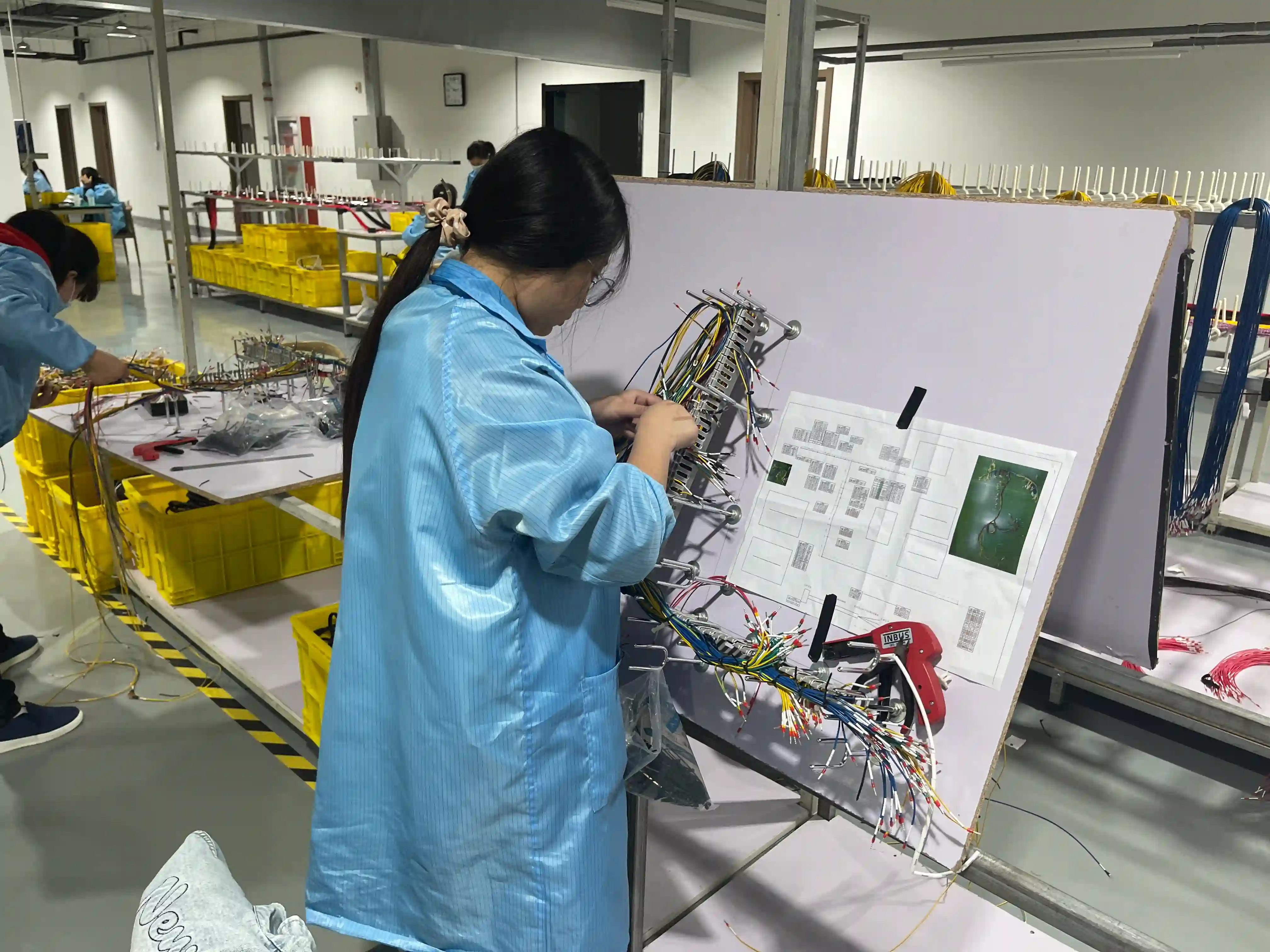
Medical wire harness manufacturing isn't just about following drawings—it's about understanding the application and contributing to design for manufacturability (DFM). The best manufacturers become partners in your development process, not just order-takers.
DFM Capability
A manufacturer with strong DFM capability should offer:
- Design review within an agreed response window
- Component alternatives for obsolete parts
- Cost reduction suggestions
- Reliability improvement recommendations
Prototyping Services
Medical development requires iterative prototyping:
- Prototype quantities matched to the validation plan
- Turnaround confirmed against material and test availability
- Engineering change support
- Test fixture development
Questions to Assess Engineering Capability
| Question | Why It Matters |
|---|---|
| Do you have dedicated engineers or shared resources? | Dedicated teams provide faster response and deeper knowledge |
| What CAD formats do you work with? | Compatibility reduces conversion errors and delays |
| Can you support IEC 60601 testing requirements? | Medical electrical safety expertise is specialized |
| How do you handle engineering changes post-validation? | Medical devices require formal change control |
Want to understand the full cable assembly process? Read our custom cable assembly process guide for a comprehensive walkthrough from design to production.
7
Production Capacity & Scalability
Medical device launches rarely go exactly as planned. You need a manufacturing partner who can handle validation runs and later production demand—without forcing you to requalify at a new facility.
| Manufacturer Type | Typical MOQ | Lead Time | Best For |
|---|---|---|---|
| Prototype Specialist | Confirm supplier minimum | Confirm project schedule | R&D, design validation |
| Low-Volume Medical | Confirm supplier minimum | Confirm project schedule | Class II devices, niche markets |
| Mid-Volume Medical | Confirm supplier minimum | Confirm project schedule | Growth-stage products |
| High-Volume Medical | Confirm supplier minimum | Confirm project schedule | Mature, high-demand products |
Capacity Assessment Checklist
- Current production capacity utilization
- Expansion capability without new capital
- Number of shifts available
- Workforce scalability plan
- Backup equipment availability
Scalability Warning Signs
- "We'll figure it out when volume increases"
- Single-shift operation only
- No documented capacity planning
- Over-reliance on single operators
- No inventory buffer strategy
Which Standard Answers Which Supplier Question
Medical sourcing questions become easier to ask when each is tied to the document that answers it. The facts below come from the public references linked in each row; they are a map for your questions, not a substitute for reading the standard your device program cites.
| Document | What it covers | What to ask the harness supplier |
|---|---|---|
| ISO 13485:2016 | Medical device quality management systems "for regulatory purposes"; third edition published 1 March 2016 after 1996 and 2003 editions. Its requirements include risk management and design control activities, traceability for implantable devices, corrective and preventive action, product cleanliness, personnel training and environment management. | Certificate scope that names cable or harness assembly, registrar, expiry date and audit status. The standard is voluntary and an organisation does not need to be making devices itself to be certified, so the scope wording matters. |
| IEC 60601-1 | General requirements for basic safety and essential performance of medical electrical equipment; third edition 2005, amendment 1 in 2012 and amendment 2 in 2020. Collateral standards (60601-1-x) and over 80 particular standards (60601-2-x) cover specific topics and equipment. | Which edition and which particular standard your equipment is assessed against, so the cable ratings, insulation and marking requested on the drawing come from the device file, not from supplier defaults. |
| ISO 10993 | Biological evaluation of medical devices within a risk management process; contact type (surface, external communicating, implant) and contact duration (limited, prolonged, permanent) frame the evaluation. | Material grade, lot certificates and a material change-notification agreement for every patient-contact or sterile-field cable. |
| ISO 14644-1 | Airborne particle classes; ISO 7 allows 352,000 particles per cubic metre at 0.5 μm and larger, ISO 8 allows 3,520,000. | Classification report, what was classified, and whether your harness is built inside that space. |
| UDI | Device identifier plus production identifier carrying lot or serial and expiry information. | Which lot or serial identifiers the supplier records for each harness and how they trace to component lots. |
Medical Wire Harness Manufacturer Comparison
Use this comparison framework to evaluate potential suppliers. Not every factor carries equal weight—prioritize based on your device classification and application.
| Factor | Weight (Class II) | Weight (Class III) | Evaluation Method |
|---|---|---|---|
| ISO 13485 Certification | Critical | Critical | Certificate verification + scope review |
| FDA/Regulatory Knowledge | High | Critical | Technical interview + audit |
| Biocompatibility Expertise | Medium | Critical | Material documentation review |
| Traceability Systems | High | Critical | System demo + sample trace |
| Cleanroom Capability | Medium | High | Certification review + facility tour |
| Engineering Support | High | High | DFM sample project |
| Capacity & Scalability | Medium | High | Capacity planning discussion |
5 Common Mistakes When Selecting Medical Wire Harness Manufacturers
Prioritizing Price Over Compliance
A lower quote does not offset failed customer audits or regulatory delays. Compare compliance evidence and process controls alongside price.
Skipping the On-Site Audit
Certificates and questionnaires only tell part of the story. An on-site audit reveals the real picture: actual practices, facility condition, and team competence.
Ignoring Change Control Capability
Medical devices require formal engineering change management. If your supplier can't handle ECOs systematically, you'll face validation nightmares.
Not Validating Medical Experience Claims
"We work with medical customers" could mean anything. Ask for specific device types, customer references (with permission), and years of experience in your device class.
Single-Sourcing Without a Backup Plan
Assess supply continuity risk and document suitable controls. A qualified backup supplier may be one option, but it is not a universal regulatory requirement.
Frequently Asked Questions
What certifications should a medical wire harness manufacturer have?
Evaluate ISO 13485 certification scope where required by the device program. Verify applicable product listings, IPC/WHMA-A-620 workmanship requirements and training, and any MDSAP audit scope. FDA registration depends on the activities performed; it is not a generic approval of every component supplier.
How long does it take to qualify a medical wire harness supplier?
Qualification timing depends on the risk assessment, document review, sample builds, testing, audit availability, corrective actions, and required validation. Agree milestone dates with the supplier and allow for unresolved findings before approval.
What's the difference between ISO 9001 and ISO 13485 for medical applications?
ISO 9001 addresses general quality management, while ISO 13485 addresses medical-device quality management for regulatory purposes. Assess applicable risk management, design controls, traceability, record retention, and sterile-device controls for the specific program. Do not apply a generic device-life-plus-years retention formula without checking the governing requirements.
Do all medical wire harness manufacturers need cleanroom facilities?
Not always. Cleanroom requirements depend on your specific application. Harnesses for non-patient contact equipment (like imaging machine internal wiring) may only need controlled environment manufacturing. However, if your harness contacts patients, enters sterile fields, or will be sterilized, the contamination-control plan should establish whether a cleanroom and a particular ISO class are needed. Always consult your regulatory pathway to determine environmental requirements.
Should I choose a domestic or overseas medical wire harness manufacturer?
Both can be excellent choices—the key is supplier capability, not location. Overseas manufacturers (especially in Asia) can offer cost advantages while maintaining ISO 13485 certification. Domestic suppliers may offer faster turnaround and easier communication. For medical applications, prioritize: proven medical experience, audit accessibility, regulatory compliance, and communication quality. Many companies use overseas for volume production and domestic for prototyping. Read our China vs Mexico sourcing guide for detailed comparison.
What should I expect to pay for medical-grade wire harness manufacturing?
Medical wire harnesses can carry additional costs for: documentation and traceability overhead, biocompatible material premiums, cleanroom processing when required, validation activities, and higher inspection standards. Expect NRE (non-recurring engineering) charges for test fixture development, first article inspection, and process validation documentation. Don't chase the lowest bidder—the real cost of a non-compliant supplier far exceeds any initial savings.
Does an ISO 13485 certificate mean the supplier can build my harness?
Not by itself. The standard is voluntary and an organisation does not need to be making medical devices to be certified, so read the certificate scope to confirm it covers cable or harness assembly, check the expiry date with the registrar, and review recent audit findings. The certificate shows a quality system exists; the programme-specific controls still have to be agreed and verified.
What is the difference between ISO 7 and Class 10,000?
They describe the same cleanliness level under two naming systems. ISO 14644-1 counts particles per cubic metre, where ISO 7 allows 352,000 at 0.5 μm and larger. The older FED-STD-209E counts per cubic foot, and 352,000 per cubic metre is about 9,970 per cubic foot, hence Class 10,000. ISO 8 and Class 100,000 correspond in the same way.
Who decides which ISO 10993 tests a cable needs?
The device maker decides through its biological evaluation, based on what the device touches and for how long: surface, external communicating or implant contact, and limited (up to 24 hours), prolonged (over 24 hours to 30 days) or permanent (over 30 days) duration. The harness supplier's role is to provide material grade and lot documentation and to notify you before changing materials.
Related Resources
Medical Wire Harness Manufacturing Guide
Complete guide to ISO 13485, FDA compliance, and medical manufacturing requirements.
Top 5 Wire Harness Certifications
Understanding ISO 9001, IATF 16949, ISO 13485, UL, and IPC certifications.
Quality Testing Methods
Comprehensive testing procedures from continuity to environmental stress.
10 Questions for Wire Harness Suppliers
Essential questions to ask before choosing any wire harness manufacturer.
Looking for a Medical-Compliant Wire Harness Partner?
Send your device application, drawings, validation needs, and documentation requirements for a supplier-scope review. Confirm the manufacturing entity, facility capabilities, and applicable certification evidence before qualification.