Top 10 Questions to Ask Your Wire Harness SupplierBefore Signing That PO
The questions you ask (and how suppliers answer them) reveal everything about whether you're dealing with a professional manufacturer or a disaster waiting to happen. Here's my battle-tested interview guide.
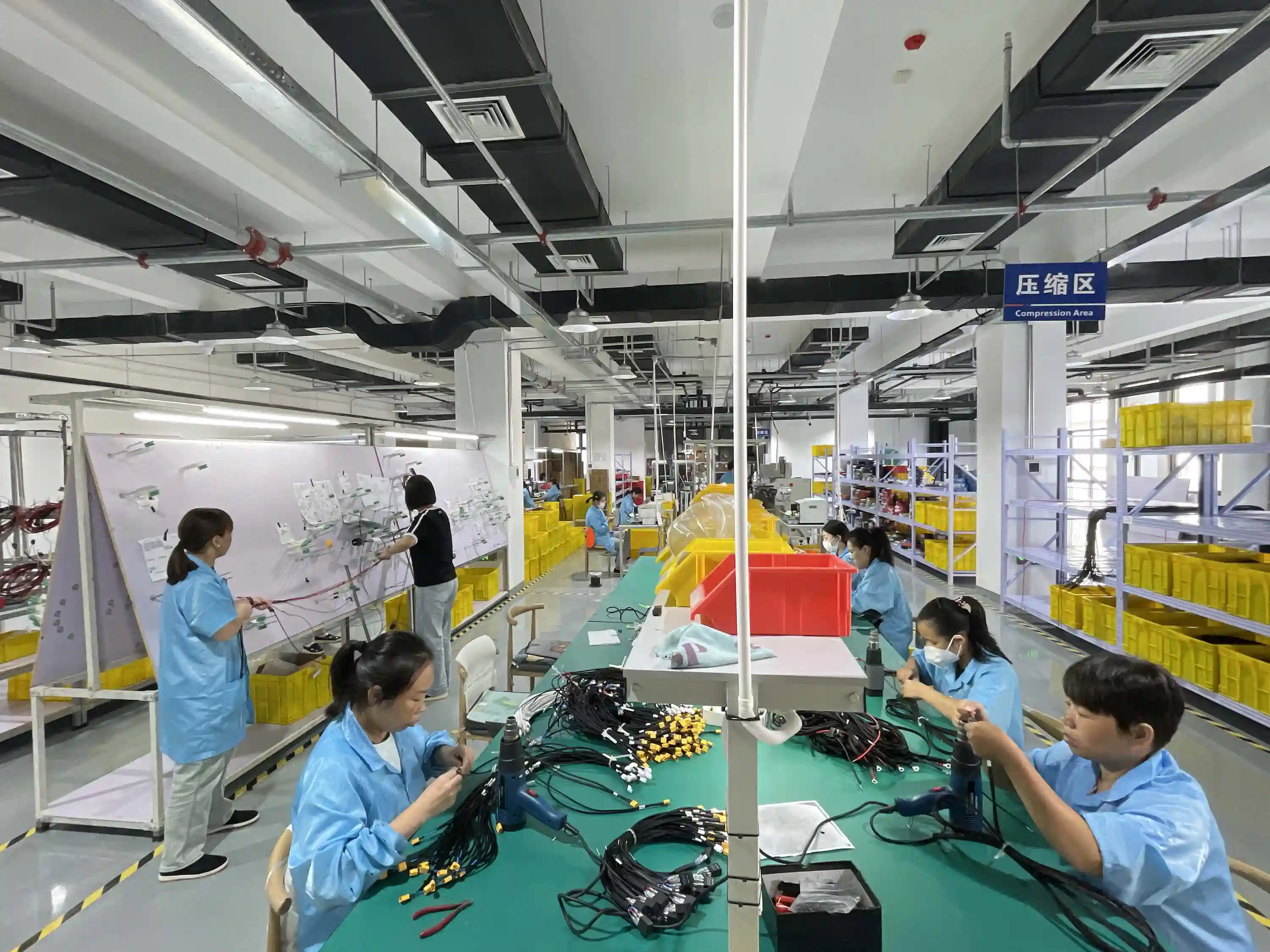
The right questions separate professional manufacturers from middlemen who'll cause you headaches
Here's something they don't teach in procurement school: the questions you ask during supplier evaluation are more important than the answers you receive. Why? Because how a supplier responds—their confidence, transparency, and depth of knowledge—tells you whether you're talking to professionals or pretenders.
After evaluating hundreds of wire harness suppliers over 15 years (and learning some painful lessons along the way), I've distilled my interview process down to 10 essential questions. Ask these before you sign that purchase order, and you'll avoid 90% of the sourcing disasters I've witnessed.
This guide pairs perfectly with our comprehensive How to Choose a Wire Harness Manufacturer article—consider this the practical interview portion of your supplier evaluation.
Quick Reference: The 10 Questions
| # | Question Topic | What It Reveals |
|---|---|---|
| 1 | Certifications & Audit Reports | Process maturity & transparency |
| 2 | Defect Rate & Quality Metrics | Data-driven culture |
| 3 | Production Process Walkthrough | Technical competence |
| 4 | Volume & Lead Times | Capacity & planning |
| 5 | Component Sourcing | Supply chain integrity |
| 6 | Engineering Change Support | Partnership mindset |
| 7 | Testing & Documentation | Quality assurance rigor |
| 8 | Customer References | Track record & reputation |
| 9 | Problem Resolution | Accountability |
| 10 | Pricing Structure | Cost transparency |
What Certifications Do You Hold, and Can I See the Audit Reports?
Why This Question Matters
Certifications aren't just badges—they represent documented processes, trained personnel, and continuous audits. But here's what most buyers don't know: certificates can be faked or expired, and some certification bodies are more rigorous than others.
What to Look For
- Valid ISO 9001:2015 at minimum
- IATF 16949 for automotive applications
- ISO 13485 for medical devices
- IPC/WHMA-A-620 trained operators
- UL listing for safety-critical products
Red Flags
- Certificate 'in process' or 'pending'
- Won't share audit reports or corrective actions
- Certification from unknown registrars
- Certificate dates don't match current year
Hommer's Take
I've seen 'ISO certified' factories where the certificate hung in the lobby while the production floor was chaos. Ask for the actual audit findings and how they addressed non-conformances. That tells you more than the certificate itself.
What's Your Defect Rate, and How Do You Track Quality Metrics?
Why This Question Matters
Quality data doesn't lie. A manufacturer who tracks PPM (parts per million) defects, first-pass yield, and customer complaints is a manufacturer who's serious about continuous improvement. One who doesn't track these metrics is flying blind.
What to Look For
- PPM rate below 500 (world-class is under 100)
- First-pass yield above 98%
- SPC (Statistical Process Control) charts
- Customer complaint tracking and resolution
- Defect Pareto analysis by failure mode
Red Flags
- Can't provide specific defect data
- 'We rarely have quality issues'
- No formal tracking system
- Defensive about sharing metrics
Hommer's Take
When I ask this question and get a blank stare, I know we're done. Any manufacturer worth their salt lives and breathes quality data. Our internal target is 150 PPM, and we review the numbers weekly with every department head.
Can You Walk Me Through Your Production Process Step by Step?
Why This Question Matters
Understanding how your harnesses will be built reveals potential quality risks and helps you assess whether the manufacturer truly understands wire harness production—or is just a trading company middleman.
What to Look For
- Clear explanation of cutting, stripping, crimping sequence
- In-process quality checkpoints
- Crimp force monitoring on critical terminals
- 100% electrical testing before shipment
- Assembly fixture boards for complex harnesses
Red Flags
- Vague or generic answers
- Can't explain their testing procedures
- No mention of in-process inspection
- Outsources critical operations
Hommer's Take
I once toured a 'manufacturer' who couldn't explain why crimp height mattered. Turns out they were subcontracting everything to three different shops. Know who's actually building your product.
What Volume Range Can You Handle, and What Are Your Lead Times?
Why This Question Matters
Capacity mismatch is one of the biggest sourcing failures. A shop optimized for 50-piece prototype runs may struggle with 50,000-unit orders. Conversely, a high-volume factory might not give your small orders attention.
What to Look For
- Separate lines for prototype vs. production
- Realistic lead time ranges (not just 'depends')
- Inventory programs for repeat orders
- Scalability plan for volume ramp-ups
- Historical on-time delivery rate
Red Flags
- Unrealistically short lead times
- No clear capacity numbers
- Same answer for 100 and 10,000 units
- Can't discuss previous volume projects
Hommer's Take
Lead times aren't just production time—60-70% is often material procurement. We stock common connectors from Molex and TE to shave weeks off standard lead times. Ask specifically what they keep in inventory.
Where Do You Source Your Components, and Who Are Your Approved Suppliers?
Why This Question Matters
Your harness is only as good as its components. A manufacturer using off-brand connectors to save pennies could cost you thousands in field failures. Supply chain transparency is non-negotiable.
What to Look For
- Authorized distributor relationships (Molex, TE, JST, Amphenol)
- Named wire suppliers (Belden, Alpha Wire, or equivalent)
- Incoming quality control procedures
- Component traceability systems
- AVL (Approved Vendor List) documentation
Red Flags
- Won't disclose suppliers
- 'Compatible' or 'equivalent' components without approval
- No incoming inspection process
- Sources from unverified brokers
Hommer's Take
I had a customer come to us after their previous supplier substituted 'equivalent' Molex housings. The fake connectors failed after 6 months in the field. 12,000 units recalled. Always verify the component supply chain.
How Do You Handle Engineering Changes and Design Support?
Why This Question Matters
Products evolve. Your Rev A harness won't be your final design. A good manufacturing partner helps improve your design, catches mistakes before production, and manages changes without chaos.
What to Look For
- DFM (Design for Manufacturability) review offered
- Formal ECO (Engineering Change Order) process
- Design suggestions to reduce cost
- 3D modeling or routing simulation capabilities
- Version control and documentation management
Red Flags
- No engineering staff on-site
- 'Just send us the drawing'
- Charges for every design question
- No change tracking system
Hommer's Take
We offer free DFM review on every project because catching issues at design costs pennies—catching them in production costs dollars. Last month, we saved a robotics customer $3.40 per unit just by suggesting a different connector orientation.
What Testing Do You Perform, and Can I Get Test Reports?
Why This Question Matters
Testing is where paper specifications meet reality. A manufacturer without proper test equipment is essentially shipping hopes and prayers. You need to know exactly what's tested and how.
What to Look For
- 100% continuity testing (no sampling)
- Hi-pot testing for safety applications
- Pull force testing per IPC/WHMA-A-620
- Test reports with timestamp and operator ID
- Automated test systems with data logging
Red Flags
- Sample testing only
- Manual multimeter checks instead of automated
- 'Passed' stamps without data
- No test reports available
Hommer's Take
Every harness we ship includes a test report you can tie to your incoming inspection. It's got operator ID, timestamp, every test point checked, and pass/fail criteria. If a supplier can't provide this, what exactly are you paying for?
Can You Provide References from Similar Projects?
Why This Question Matters
Past performance is the best predictor of future performance. A manufacturer confident in their work will happily connect you with satisfied customers. One who hesitates has something to hide.
What to Look For
- References in your specific industry
- Long-term customer relationships (3+ years)
- Willing to facilitate direct conversations
- Case studies with specific results
- Named contacts, not just company names
Red Flags
- 'We can't share due to NDAs'
- Only provides generic testimonials
- No customers in your industry
- High customer turnover
Hommer's Take
When someone asks us for references, I give them actual email addresses. We've had customers in automotive for 8 years, medical for 6 years. If a supplier won't let you talk to their customers, ask yourself why.
What Happens If Something Goes Wrong?
Why This Question Matters
Problems happen—even with the best suppliers. What matters is how they handle them. A robust corrective action process and fair warranty policy separate professionals from amateurs.
What to Look For
- Clear warranty policy (minimum 12-24 months)
- 8D or similar corrective action process
- Quick response commitment (24-48 hours)
- Root cause analysis capability
- Documented complaint resolution history
Red Flags
- Vague or no warranty
- 'We'll work something out'
- No formal complaint process
- Blames customers for failures
Hommer's Take
We use 8D methodology for every quality issue, no matter how small. The real question isn't whether problems will happen—it's whether your supplier owns them and prevents recurrence. Ask to see examples of how they've resolved past issues.
What's Your Pricing Structure, and What's Included?
Why This Question Matters
The cheapest quote is rarely the best value. Hidden costs—tooling, setup fees, expedite charges, packaging—can turn a competitive quote into an expensive mistake. Get the full picture upfront.
What to Look For
- Itemized quote with component breakdown
- Clear NRE (tooling/setup) costs
- Volume price breaks defined
- Included vs. extra services (testing, labeling, packaging)
- Payment terms and currency
Red Flags
- Lump sum pricing with no breakdown
- Hidden setup or tooling fees
- Price changes after order placement
- No volume discount structure
Hommer's Take
We itemize everything: wire cost, connector cost, labor, testing, packaging. When you see the breakdown, you understand the value. If a supplier can't explain why they're charging what they're charging, they probably don't know their own costs.
Supplier Interview Scorecard
Use this scorecard during your supplier interviews. Rate each answer 1-5, then calculate the total. A supplier scoring below 35 should be approached with caution.
| Question Area | Score (1-5) | Notes |
|---|---|---|
| 1. What Certifications Do You Hold | ___/5 | _______________ |
| 2. What's Your Defect Rate | ___/5 | _______________ |
| 3. Can You Walk Me Through Your Production Process Step by Step? | ___/5 | _______________ |
| 4. What Volume Range Can You Handle | ___/5 | _______________ |
| 5. Where Do You Source Your Components | ___/5 | _______________ |
| 6. How Do You Handle Engineering Changes and Design Support? | ___/5 | _______________ |
| 7. What Testing Do You Perform | ___/5 | _______________ |
| 8. Can You Provide References from Similar Projects? | ___/5 | _______________ |
| 9. What Happens If Something Goes Wrong? | ___/5 | _______________ |
| 10. What's Your Pricing Structure | ___/5 | _______________ |
| TOTAL SCORE | ___/50 | 40+ = Excellent | 35-39 = Good | Below 35 = Caution |
Bonus: The Question They Don't Expect
After asking my standard 10 questions, I always throw in this curveball: "What's the biggest quality issue you've had in the past year, and how did you fix it?"
A good supplier will answer honestly—because every manufacturer has issues. They'll walk you through the root cause analysis, corrective actions, and how they prevented recurrence.
A bad supplier will either claim they've never had problems (a lie) or get defensive. Either response tells you everything you need to know.
Continue Your Supplier Evaluation Journey
How to Choose a Wire Harness Manufacturer: 12 Critical Factors
The comprehensive framework for evaluating and selecting your manufacturing partner.
Wire Harness RFQ Checklist: 15 Details Manufacturers Need
Make sure your quote requests contain everything needed for accurate pricing.
Wire Harness Design Guide: 10 Critical Steps for Engineers
Design your harness for manufacturability before you even start sourcing.
Cable Assembly vs Wire Harness: Complete Guide 2026
Understand the differences to specify the right solution for your project.
Explore Industry-Specific Requirements
Different industries have unique supplier requirements. Learn what to look for in your specific sector:
Ready to Interview a Wire Harness Supplier Who'll Pass?
Ask us these 10 questions—we're confident in our answers. Get a free consultation and see why OEMs trust us with their critical wiring projects.
External Resources
- IPC/WHMA-A-620 Standard — The benchmark for cable and wire harness workmanship
- WHMA Resources — Wiring Harness Manufacturers Association guidance documents
- 50 Questions When Interviewing a Wire Harness Manufacturer — Extended question list from Falconer Electronics