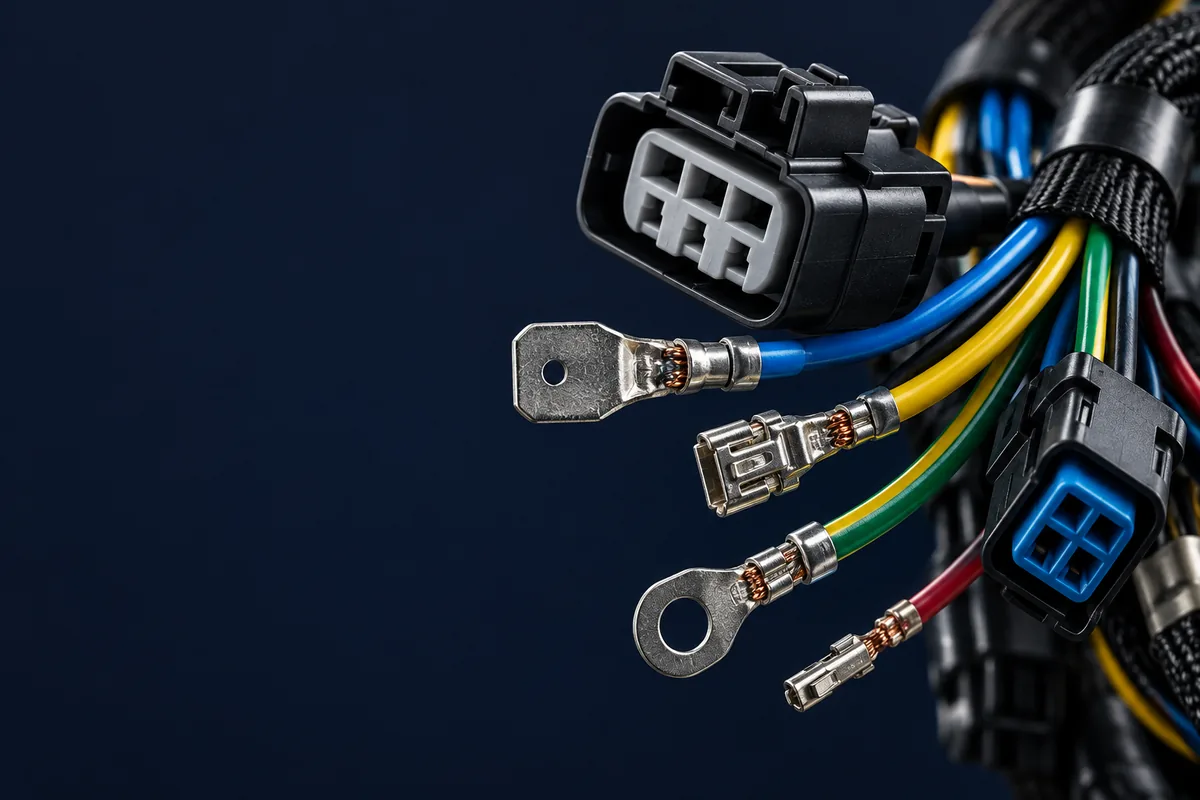
A practical guide to designing cable assemblies that are reliable, manufacturable, and cost-effective. Learn the 8 best practices that separate successful designs from costly failures.
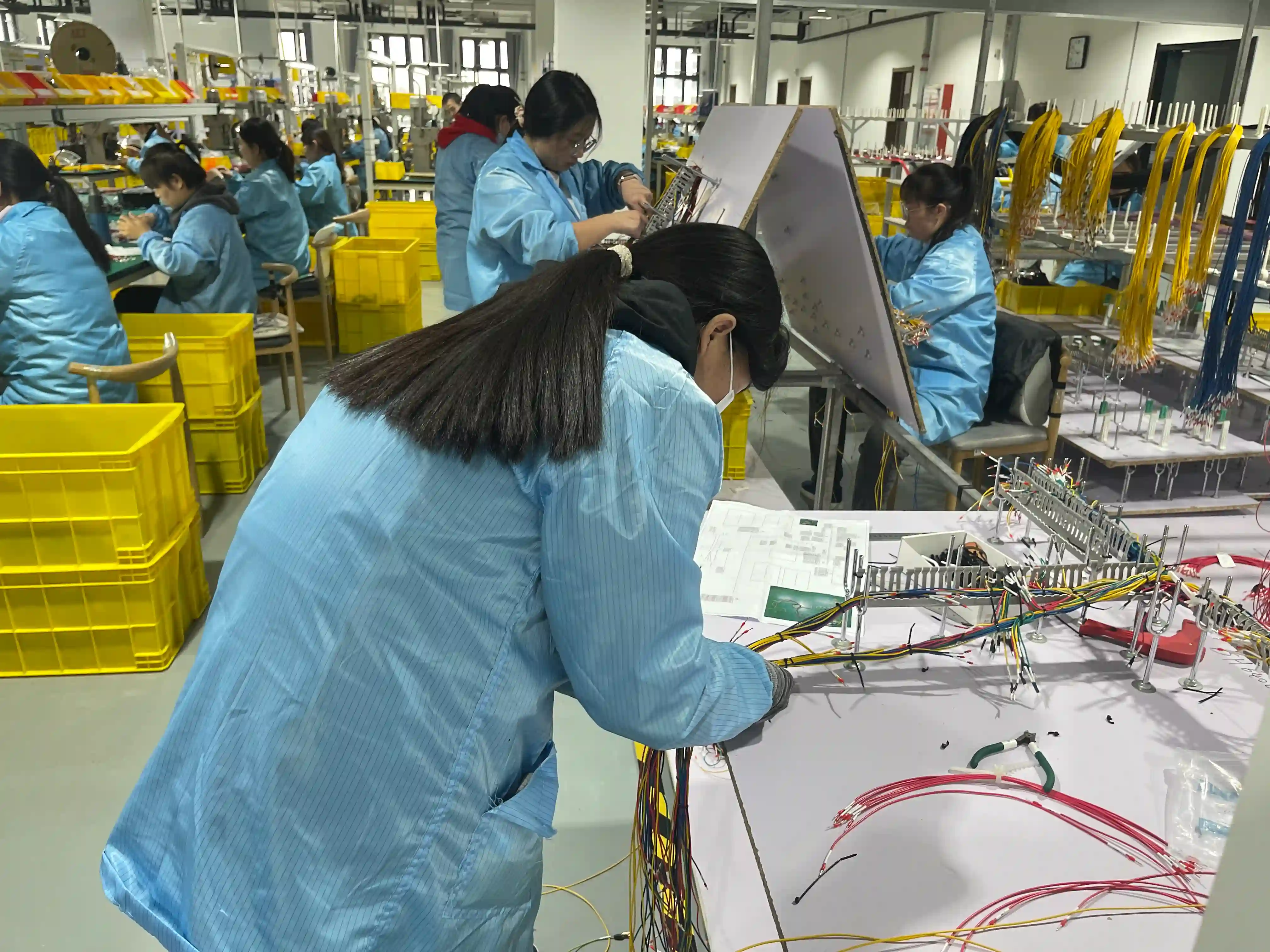
Introduction: Why Design Quality Matters
Cable assemblies and wire harnesses are the backbone of modern electrical systems. Whether powering industrial systems, industrial automation, or medical devices, the performance of your cable assembly directly affects product safety, reliability, and compliance. Yet cable assembly design is often treated as an afterthought—with costly consequences.
The cost of fixing design problems escalates dramatically as you move through the development cycle. An issue caught during design review might cost $100 to fix. The same issue caught during prototyping costs $1,000. Found during production? $10,000 or more—not counting schedule delays, customer impact, and reputation damage.
The 8 Best Practices at a Glance:
- 1 Start with comprehensive requirements analysis
- 2 Apply Design for Manufacturability (DFM) principles
- 3 Select materials based on operating environment
- 4 Use 3D CAD for harness routing
- 5 Document everything thoroughly
- 6 Design for testing
- 7 Prototype before production
- 8 Partner early with your manufacturer
1. Start with Comprehensive Requirements Analysis
Before you open your CAD software, thoroughly understand the application's requirements. Incomplete requirements are the #1 cause of cable assembly redesigns. Every assumption you make without validation is a potential failure waiting to happen.
Requirements Checklist:
Electrical Requirements
- Voltage levels (nominal and transient)
- Current requirements per circuit
- Signal types (power, data, analog, digital)
- Shielding/EMI requirements
- Impedance requirements (if any)
Environmental Requirements
- Operating temperature range
- Moisture/humidity exposure
- Chemical exposure (oils, fuels, solvents)
- UV/outdoor exposure
- Vibration and shock levels
Mechanical Requirements
- Flex cycles (if dynamic routing)
- Minimum bend radius constraints
- Space/routing constraints
- Weight limitations
- Pull/strain requirements
Compliance Requirements
- Industry standards (automotive, industrial, medical)
- Safety certifications (UL, CSA, CE)
- Environmental regulations (RoHS, REACH)
- Fire/smoke requirements (LSZH)
- Traceability requirements
For a complete requirements checklist template, see our Wire Harness RFQ Checklist.
2. Apply Design for Manufacturability (DFM) Principles
DFM is a systematic approach to designing cable assemblies that can be efficiently manufactured. Applying DFM principles early prevents costly redesigns and ensures your design translates smoothly to production.
Standardize Components
Use standard wire gauges, connector families, and terminal types where possible. Every unique component adds sourcing complexity, inventory cost, and potential for assembly errors.
Example: Instead of specifying 19 AWG wire (non-standard), use 18 AWG or 20 AWG. The slight over/under sizing costs less than the premium for odd gauges.
Respect Minimum Bend Radii
Every cable has a minimum bend radius below which conductor damage or insulation stress occurs. Design routing to maintain at least 4x outer diameter for flexible cables, 10x for semi-rigid.
Warning: Sharp bends near connectors are a leading cause of field failures. Allow generous bend radius immediately after connector backshells.
Design for Assembly Access
Ensure technicians can access crimps, splices, and connector interfaces. If a connection requires special tools or impossible hand positions, it will have quality issues.
Allow Tolerance Stack-up
Wire lengths, connector positions, and mounting points all have tolerances. Design service loops and routing flexibility to accommodate the cumulative tolerance stack-up.
3. Select Materials Based on Operating Environment
Material selection should be driven by your specific operating environment, not generic "best" materials. An industrial-grade PTFE wire is overkill for an indoor appliance—and a PVC wire will fail rapidly under a vehicle hood.
| Environment | Insulation | Jacket | Connectors |
|---|---|---|---|
| Indoor/Climate Controlled | PVC | PVC | Nylon housing, tin contacts |
| Automotive Under-Hood | XLPE | PUR or corrugated | PBT housing, sealed |
| Industrial/High Flex | TPE | PUR | Metal shell, gold contacts |
| industrial | PTFE/ETFE | PTFE or none | PEEK/metal, gold contacts |
| Medical | Silicone | Medical PVC/TPE | Biocompatible materials |
For detailed material guidance, see our Wiring Harness Materials Guide.
4. Use 3D CAD for Harness Routing
Modern wire harnesses are rarely designed in 2D alone. Use 3D CAD tools to route cables through the actual product geometry, ensuring proper fit, bend radii compliance, and interference avoidance.
Benefits of 3D Harness Design:
- Automatic length calculation from 3D path
- Bend radius verification at every point
- Interference detection with other components
- Weight and center-of-gravity analysis
- Service access verification
- Flattened manufacturing drawings
Popular Wire Harness CAD Tools
| Tool | Vendor | Best For |
|---|---|---|
| SolidWorks Electrical | Dassault | Mid-size companies, MCAD integration |
| Capital | Siemens | Automotive OEMs, complex harnesses |
| E3.series | Zuken | industrial, rail, industrial |
| CATIA Electrical | Dassault | industrial, automotive tier-1 |
5. Document Everything Thoroughly
Complete documentation ensures consistent manufacturing, enables quality verification, and supports future maintenance. Incomplete drawings are a leading cause of RFQ rejections and production delays.
Essential Documentation Package:
Assembly Drawing
Overall harness layout with dimensions, connector locations, breakouts, and routing paths. Include multiple views as needed.
Bill of Materials (BOM)
Complete list of all components with manufacturer part numbers, quantities, and approved alternates. Include wire color codes.
Schematic Diagram
Electrical schematic showing signal flow, connections, and circuit relationships. Essential for understanding system function.
Connector Pinout Tables
Pin-by-pin connection information for each connector: pin number, wire color, gauge, destination, and signal name.
Wire List
Complete tabular list of every wire: from-to connections, length, gauge, color, and any special processing (twist, shield).
Test Specification
Required tests, procedures, acceptance criteria, and any special equipment needed. Reference applicable standards.
Don't Forget Rev Control
Implement revision control from the start. Every document should have a revision level, date, and change summary. Manufacturing to the wrong revision is a common and expensive error.
6. Design for Testing
Testing validates that the built assembly matches the design and will perform in the application. Design your harness with testing in mind—ensure every circuit can be accessed and verified.
| Test Type | What It Verifies | Design Consideration |
|---|---|---|
| Continuity | All connections complete | Test points accessible at connectors |
| Insulation Resistance | No shorts between circuits | Wire spacing, insulation quality |
| Hi-Pot (Dielectric) | Insulation withstands voltage | Voltage rating, clearances |
| Pull Test | Crimp/termination strength | Crimp specifications, wire gauge match |
For comprehensive testing guidance, see our Wire Harness Quality Testing: 8 Essential Methods.
7. Prototype Before Production
Never skip prototyping, regardless of schedule pressure. Prototypes validate fit, function, and manufacturability before committing to production tooling and processes. The cost of prototype iterations is a fraction of production corrections.
Prototype Validation Checklist:
- Physical fit in actual assembly
- Connector mating and unmating
- Wire lengths with tolerance stack-up
- Bend radius compliance
- Service/maintenance access
- Electrical testing pass/fail
- Assembly time and difficulty
- Documentation completeness
See our Custom Cable Assembly Process Guide for detailed prototyping best practices.
8. Partner Early with Your Manufacturer
Engage your manufacturing partner during design, not after. Experienced manufacturers can identify DFM issues, suggest cost-effective alternatives, and ensure your design aligns with their process capabilities.
Without Early Engagement:
- Design uses unavailable components
- Specifications conflict with process capabilities
- Costly redesigns after quoting
- Extended lead times for special tooling
With Early Engagement:
- Design optimized for available materials
- Process-friendly specifications
- Accurate cost estimates from start
- Faster time to production
For guidance on selecting and working with manufacturers, see our guides on How to Choose a Wire Harness Manufacturer and Top 10 Questions to Ask Wire Harness Suppliers.
Common Design Mistakes to Avoid
-
Specifying materials without environment consideration
Using indoor-rated PVC for outdoor applications, or industrial-grade materials where standard would suffice.
-
Violating minimum bend radius
Routing cables through tight spaces without verifying bend radius compliance—especially at connector exits.
-
Over-constraining tolerances
Specifying ±1mm on lengths where ±10mm would work fine. Tighter tolerances add cost without benefit.
-
Incomplete documentation
Missing wire lists, incomplete BOMs, or drawings without dimensions cause quote delays and production errors.
-
Ignoring service access
Designing connectors into inaccessible locations, making field service impossible without disassembly.
-
Not engaging manufacturer early
Throwing a finished design "over the wall" and expecting smooth production.
Representative project (anonymized)
Anonymized example from our case bank, shared so buyers can see how this scope is actually executed in production.
Industry: electronics-distribution | Region: US | Year: 2026-Q1
Scenario: A US electronic components distributor requested a high-volume quote for a custom wire harness assembly requiring dedicated tooling.
Challenge: Accurately quoting a 60,000+ unit custom program required separating unit costs from mold investments, while the customer's 3D design files were needed to finalize the tooling cost estimate.
Solution: Issued an initial estimated unit price quote explicitly excluding mold fees, and formally requested the customer's 3D files to calculate and quote the tooling investment separately.
Result: Maintained sustained high-frequency engagement with the customer over a two-month period, demonstrating that transparent tooling cost management keeps complex custom programs alive during the quoting phase.
Concrete numbers: 60,000+ unit inquiry volume, custom mold required, 3D file dependency for tooling quote, 2-month active communication cycle
Frequently Asked Questions
What is DFM in cable assembly design?
DFM (Design for Manufacturability) is a systematic approach to designing cable assemblies that can be efficiently and reliably manufactured. It involves considering manufacturing constraints, standard processes, and assembly methods during the design phase to avoid costly rework, reduce production delays, and improve quality.
What documentation is needed for cable assembly manufacturing?
Essential documentation includes: assembly drawings with dimensions and views, Bill of Materials (BOM) with part numbers, schematic diagrams showing electrical connections, wire routing specifications with bend radii, connector pinout diagrams, test specifications and acceptance criteria, and any special process instructions or workmanship standards.
Why is prototyping important before production?
Prototypes validate that the design meets functional requirements, fits properly in the assembly, and can be manufactured consistently. They help identify design issues, material problems, or assembly challenges before committing to production tooling and processes. The cost of fixing problems at prototype stage is 10-100x less than fixing them in production.
What industry standards apply to cable assembly design?
Key standards include IPC/WHMA-A-620 for cable and wire harness assemblies workmanship, IPC-2221 for generic PCB design (relevant for connector interfaces), UL standards for safety certification, and industry-specific standards like SAE for automotive, IEC 60068 for industrial, and IEC 60601 for medical devices.
Conclusion
Good cable assembly design isn't about using the most advanced materials or tightest tolerances—it's about matching the design to the application requirements while ensuring manufacturability. The 8 best practices in this guide provide a framework for successful designs that transition smoothly from released drawing to production.
Start with thorough requirements, apply DFM principles, document comprehensively, and engage your manufacturer early. These fundamentals, consistently applied, separate successful cable assembly programs from costly failures.
Need Design Support for Your Cable Assembly?
Our engineering team provides DFM reviews, material recommendations, and DFM and manufacturability review to help you create reliable, cost-effective cable assemblies.
Related Articles
Wire Harness Design Guide: 10 Critical Steps
Comprehensive guide for designing reliable wire harnesses
Wire Harness RFQ Checklist: 15 Details Needed
Complete checklist for successful wire harness quotes
Custom Cable Assembly Process: 8 Steps
From concept to delivery guide
Top 10 Wiring Harness Materials
Material selection guide for engineers
Hommer Zhao
Founder & General Manager
Hommer reviews customer-owned cable assembly designs for manufacturability, sourcing risk, testability, and production readiness.