Telecommunications

Telecommunications WireHarnesses & RF Cable

Low-loss RF, fiber and Ethernet cable assemblies engineered for 5G base stations, network infrastructure, antenna feeders and PoE equipment — impedance-controlled to 6 GHz+, SMA / N-type / FAKRA terminated and IP67-sealed for outdoor service.

6 GHz+
RF Frequency
IP67
Outdoor Rated
99.8%
First-Pass Yield
7–10 Days
Samples
Overview

What makes a telecom wire harness different

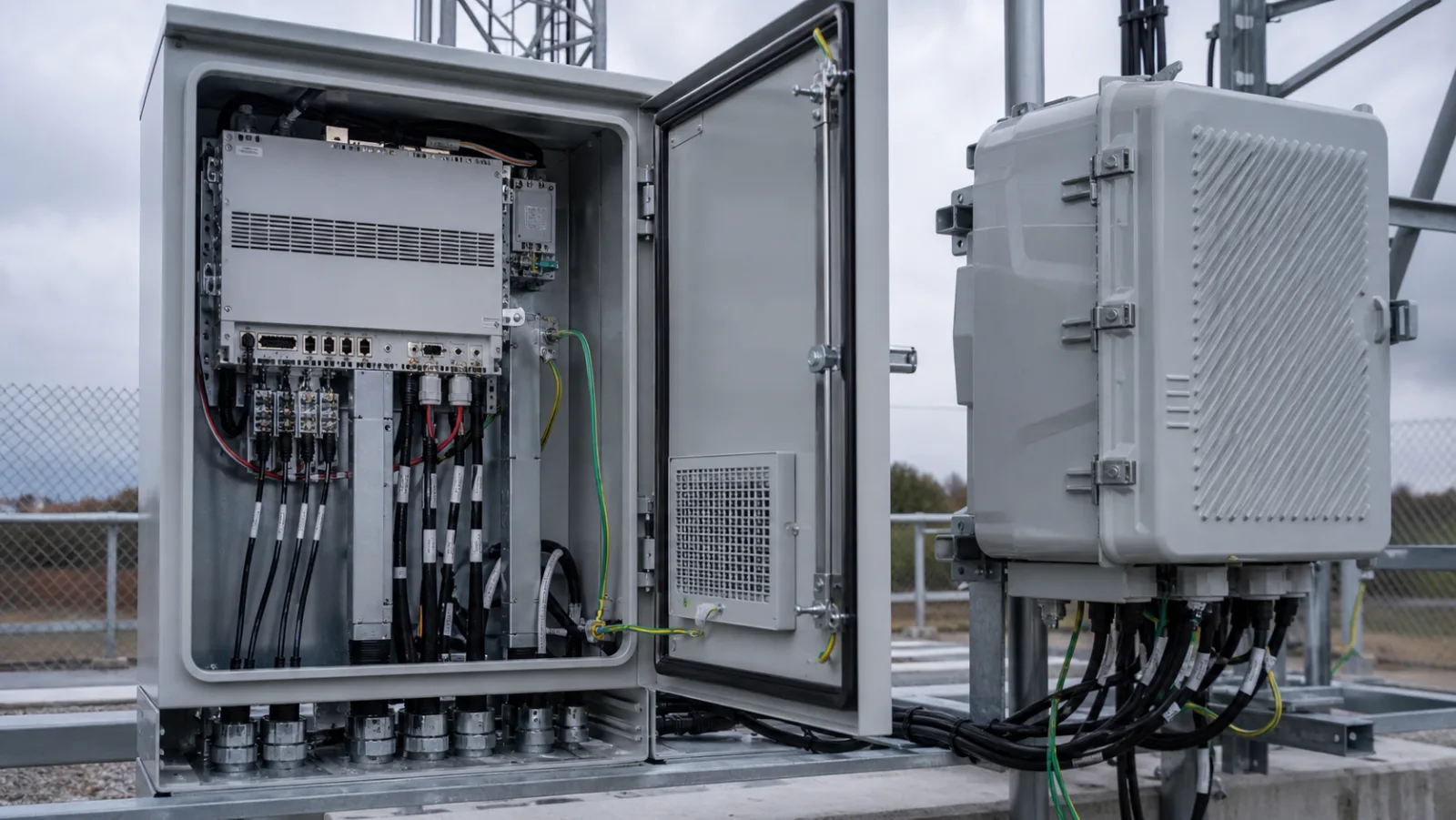
A telecom cable assembly is judged on signal integrity, not just continuity. RF feeder and jumper runs have to hold impedance, keep insertion loss low and control PIM, while Ethernet and high-speed data runs have to reject EMI and crosstalk over distance. On top of that, most of this hardware lives outdoors — on a rooftop, up a tower or in a curbside enclosure — so the same harness needs UV-stable jackets and IP67 sealing to survive a -40°C to +85°C environment for years. That combination of electrical and environmental demand is why telecom harnesses use low-loss coax, validated RF connectors and tested terminations rather than general-purpose wire.

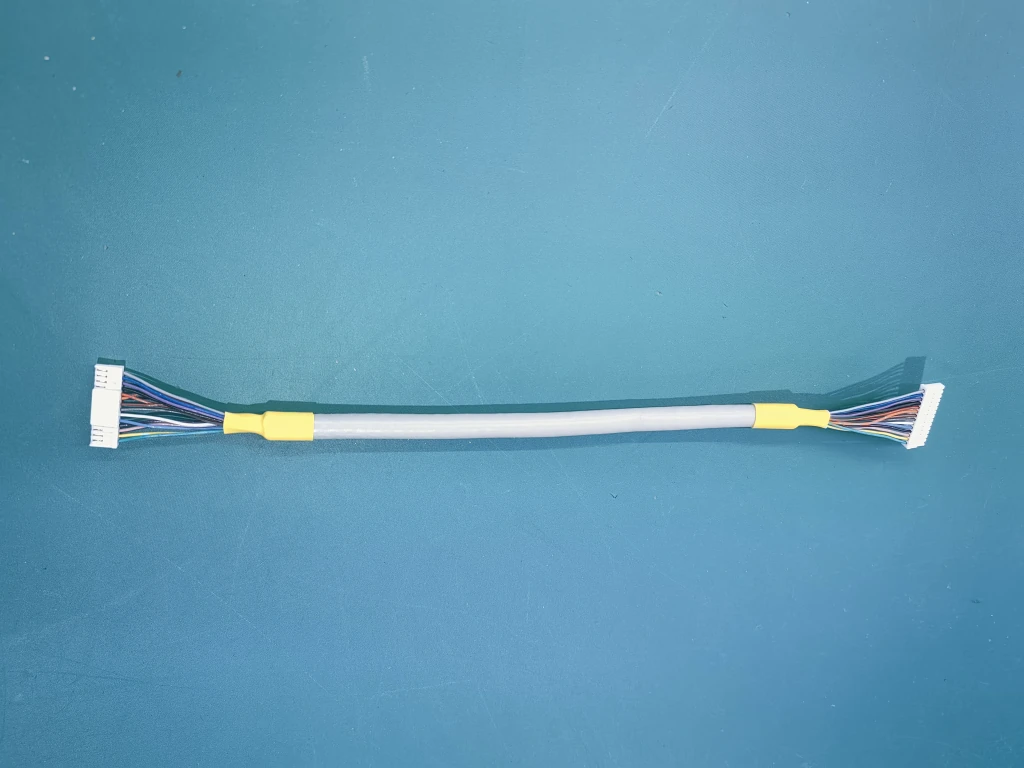
Across a network the wiring changes job at every layer: low-loss RF jumpers where the 5G radio meets the antenna, LMR-style and semi-rigid feeders on the tower, micro-coax for multi-gigabit fronthaul and board-to-board links, shielded twisted-pair and RJ45 / M12-D Ethernet inside switching and edge nodes, and PoE harnesses out to customer-premise equipment. We build all of these as custom, pre-terminated, in-house-tested assemblies. For RF feeder and jumper paths we draw on our coaxial cable assembly service; for tight, high-speed links our micro-coaxial cable assembly line; and where automotive-telematics interfaces appear, our FAKRA cable assembly service.

Applications

Telecom applications we wire

Low-loss RF, fiber and Ethernet assemblies for every layer of the network

5G Base Stations & Small Cells

Low-loss RF jumpers and DC power harnesses for macro base stations, small cells and massive-MIMO radios. Phase-stable coax and weatherproof terminations keep insertion loss and PIM down where the radio meets the antenna.

Low-loss RF coax to 6 GHz+
SMA / N-type / FAKRA terminations
Weatherproof IP67 outdoor sealing
PoE-capable power + signal runs

Network Infrastructure & Switching

High-density harnesses for switching centers, core routers and edge-compute nodes — power, ground, RJ45 / M12-D Ethernet and intra-rack signal looms bundled and labeled for fast install and clean airflow.

RJ45 & M12-D Ethernet looms
Cat6A / shielded twisted pair
Power + ground distribution
Labeled, length-controlled bundles

Antenna & RF Feeder

Antenna feeder and inter-radio jumper assemblies built with LMR-style and semi-rigid coax. Controlled impedance and shielded construction protect signal integrity on rooftop, tower-mount and outdoor enclosure runs.

LMR-style & semi-rigid coax
50 Ω impedance control
N-type / SMA / MCX / MMCX
UV-stabilized outdoor jackets

Fiber & High-Speed Data

Micro-coax and fiber assemblies for fronthaul, backhaul and high-speed board-to-board links. Tight-tolerance micro-coax handles multi-gigabit data where space and bend radius are at a premium.

Micro-coax for high-speed data
Single/multi-mode fiber options
Tight bend-radius routing
Shielded against crosstalk

Customer-Premise & PoE Equipment

Cable assemblies for ONTs, gateways, access points and PoE-powered devices — Ethernet, power and antenna leads combined into clean, install-ready harnesses for indoor and outdoor CPE.

PoE power + data delivery
RJ45 / M12-D connectors
Indoor & outdoor variants
Strain-relieved overmolds
Construction

Built telecom-grade, layer by layer

Conductors

Silver-plated and tinned copper center and shield conductors for low RF loss and corrosion resistance — fine-stranded where flex and bend radius matter, sized for impedance and ampacity.

Insulation & Dielectric

Low-loss foam or solid PTFE/PE dielectrics that hold 50 Ω (and 75 Ω) impedance across the band, plus shielded twisted pair for Ethernet runs that must reject EMI over distance.

Jacket & Shielding

UV-stabilized, IP67-rated outdoor jackets for rooftop and tower exposure, with foil-plus-braid or double-braid shielding to control PIM, leakage and crosstalk on RF feeder runs.

Connectors

Factory-terminated SMA, N-type, FAKRA, MCX/MMCX RF connectors and RJ45 / M12-D Ethernet contacts — crimped, torqued and tested in-house so no terminations are made in the field.

Telecom-grade technical capabilities

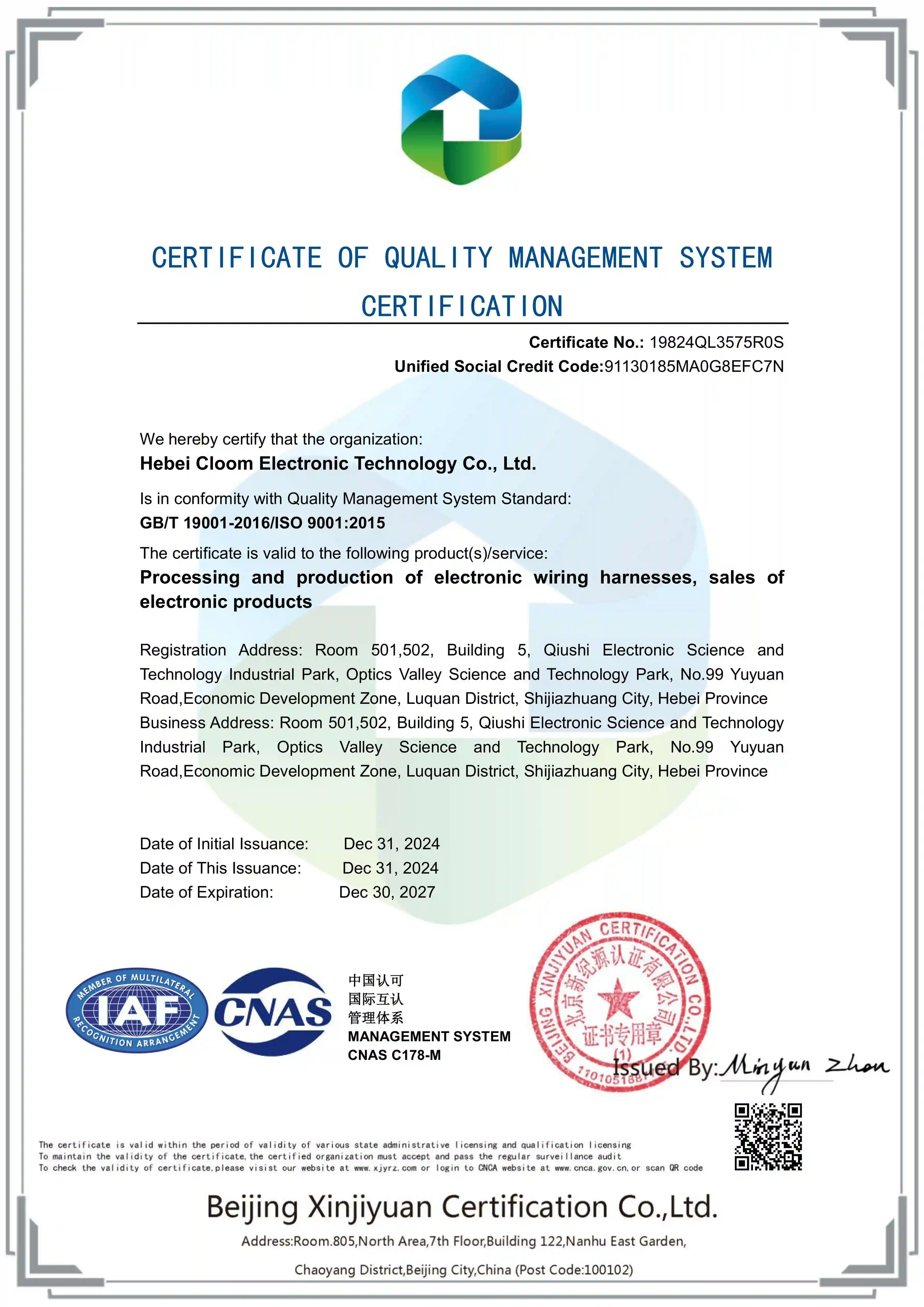
ISO 9001 manufacturing built to IPC/WHMA-A-620 workmanship, with impedance-controlled RF processing, fiber termination and IP67 outdoor assembly under one roof.

For RF feeder and jumper paths that need controlled impedance, low PIM and outdoor-sealed terminations, see our shielded cable assembly service and our optical cable assembly service for fronthaul and backhaul fiber links between cabinets and radios.

RF FrequencyTo 6 GHz+
Outdoor SealingIP67 Rated
Signal TypesCoax / Fiber / Ethernet
ConnectorsSMA / N / FAKRA
First-Pass Yield99.8%
Sample Lead Time7–10 Days
Telecommunications RF and fiber cable assembly

Why choose our telecom wire harness services

RF-engineered cable assemblies built for 5G and next-generation network infrastructure

RF Signal-Integrity Engineering

Assemblies are built for low insertion loss, high return loss and controlled PIM. We hold 50 Ω (and 75 Ω) impedance and verify it, so the harness does not become the weak link between radio and antenna.

Outdoor & Tower-Grade Durability

UV-stabilized jackets, corrosion-resistant connectors and IP67 sealing withstand years of rooftop, tower-mount and outdoor-enclosure exposure across a -40°C to +85°C temperature range.

Coax, Fiber & Ethernet Under One Roof

From LMR-style RF coax and micro-coax to shielded twisted pair and PoE Ethernet, mixed-signal telecom looms are built and tested as one assembly instead of being split across vendors.

Built to Telecom EMC & IPC/WHMA-A-620

Harnesses are manufactured to IPC/WHMA-A-620 Class 2/3 workmanship under our ISO 9001 quality system, to RoHS material requirements and your telecom EMC targets.

Telecommunications industry standards

Our telecom harnesses are made to IPC/WHMA-A-620 workmanship under our ISO 9001 quality system, built to RoHS material and telecom EMC requirements for signal integrity and outdoor durability.

ISO 9001
Quality Management
A-620
IPC/WHMA Workmanship
RoHS
Material Compliance
FAQ

Telecom wire harness FAQ

What RF frequency range do your telecom cable assemblies support?

Our RF coax assemblies are built and tested for frequencies up to 6 GHz and beyond, covering sub-6 GHz 5G, LTE, Wi-Fi and most antenna-feeder and base-station bands. We hold 50 Ω impedance (75 Ω where required) and select low-loss coax and connectors so insertion loss and PIM stay within your link budget.

Which connectors do you terminate for telecom and RF harnesses?

For RF we factory-terminate SMA, N-type, FAKRA, and MCX/MMCX connectors; for data and power we terminate RJ45 and M12-D Ethernet, plus PoE-capable power contacts. All terminations are crimped, torqued and tested in-house, so installers do not field-terminate connectors on a tower or in an enclosure.

Are your assemblies rated for outdoor base-station and tower use?

Yes. We use UV-stabilized outdoor jackets and IP67-rated sealed connectors built to survive years of rooftop, tower-mount and outdoor-enclosure exposure, rated across a -40°C to +85°C range. This is what 5G small-cell, macro-radio and antenna-feeder runs require.

What cable types do you work with — coax, fiber or Ethernet?

All three. We build low-loss RF coax (LMR-style, RG-types and semi-rigid), micro-coax for high-speed data, single- and multi-mode fiber assemblies, and shielded twisted pair / Ethernet. Mixed-signal telecom looms can combine RF, data and PoE power in a single tested assembly.

Can you build micro-coax assemblies for high-speed data?

Yes. We terminate tight-tolerance micro-coax for multi-gigabit board-to-board and inter-module links where space and bend radius are constrained. See our micro-coaxial cable assembly service for connector, pitch and routing detail that is usually too specific for a broad telecom RFQ.

What standards do your telecom harnesses meet?

Assemblies are manufactured to IPC/WHMA-A-620 Class 2/3 workmanship under our ISO 9001 quality system, built to RoHS material requirements and to the telecom EMC targets your equipment must meet. IPC/WHMA-A-620 and ISO 9001 are held in-house; other telecom and EMC standards are met as build-to customer and industry requirements.

How do you keep PIM and insertion loss under control?

We select low-loss dielectrics and low-PIM connectors, control impedance through the build, and verify each RF assembly. Foil-plus-braid or double-braid shielding limits leakage and crosstalk, and torque-controlled, tested terminations prevent the contact issues that drive PIM on antenna-feeder and jumper runs.

What is your MOQ and lead time for telecom projects?

We support prototypes from 1–10 pieces with 7–10 day sample lead times, scaling to production batches (typically 500+ units, negotiable). This lets network and equipment teams validate an RF or Ethernet harness on real hardware before committing to volume, at a 99.8% first-pass yield.

Ready for your telecom wire harness project?

Low-loss RF coax, fiber and PoE Ethernet — IP67-sealed, 100% tested and SMA / N-type / FAKRA terminated, with 7–10 day samples. Talk to our telecom specialists.