Industry Platform

Data Center & AI UPS & Battery Power Harnesses

High-current wire harnesses for hyperscale UPS battery strings, rack busbar / PDU power and 48V DC AI/GPU racks — 8 AWG–4/0 AWG copper, up to 1000V DC, LSZH-jacketed and built to UL 1973 / UL 9540 and IPC/WHMA-A-620.

Data center UPS and battery power cable assembly
Max Conductor4/0 AWG
Rated1000V DC
First-Pass YieldHigh
Samples7–10 Days

Application Context

Power harnesses for hyperscale data centers and AI racks

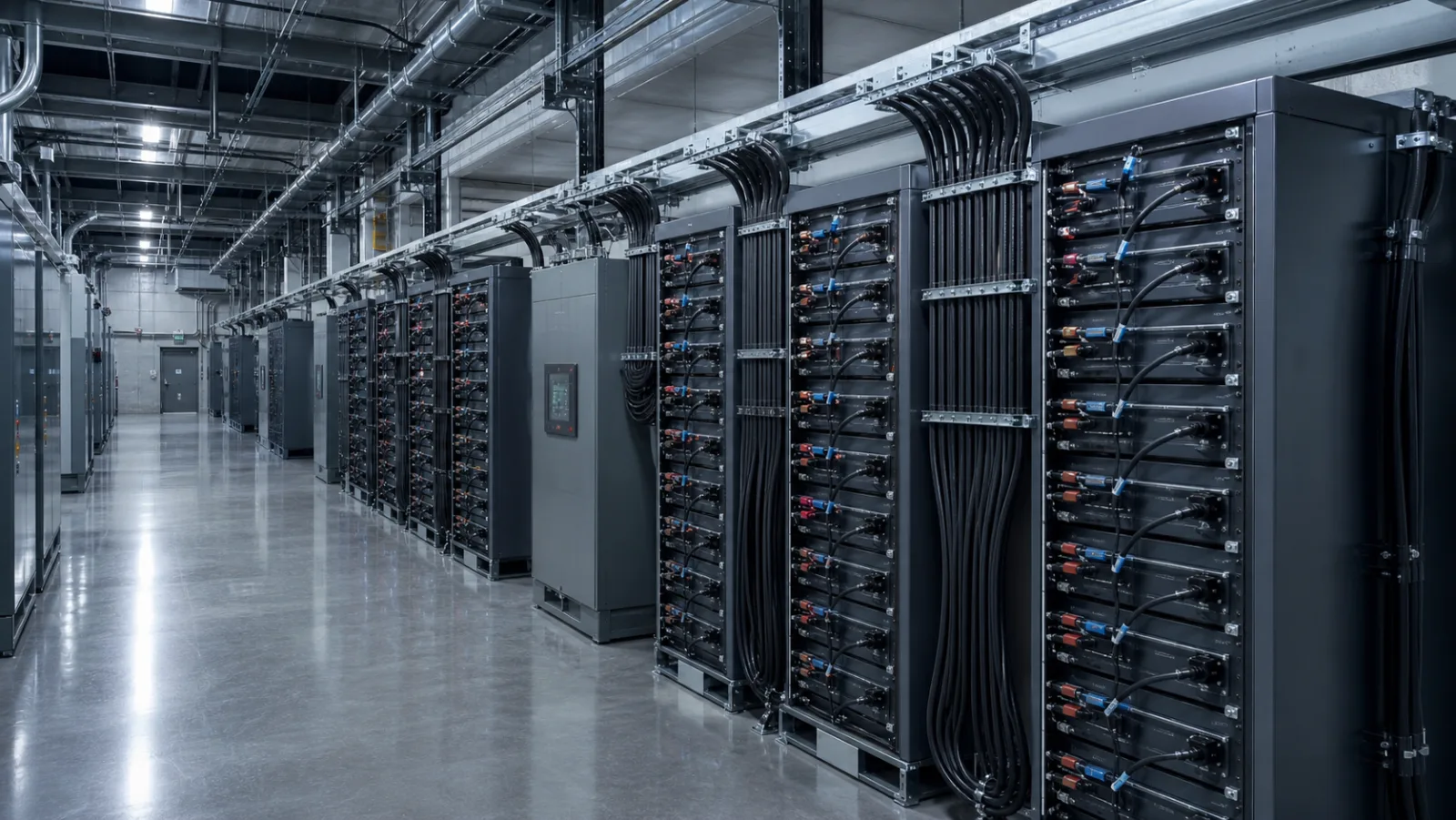
A data-center power harness carries far more current than a typical control or signal cable, and it cannot fail. UPS battery strings, rack busbars and high-density AI/GPU server rails move hundreds of amps continuously at 12V, 48V DC and battery-cabinet bus voltages up to 1000V DC. That demands high-current fine-stranded copper from 8 AWG up to 4/0 AWG, busbar links and lugs sized for voltage drop and heat rise, and LSZH flame-retardant jackets that limit smoke in an enclosed data hall. We build these as custom, pre-terminated assemblies — including battery cable for UPS strings and high-voltage DC cable assemblies for the cabinet bus.

Across a hyperscale deployment the wiring changes job at every stage: battery-string interconnects tying lithium, NiZn and VRLA cells into the UPS cabinet, BMS sense harnesses reporting per-cell voltage and temperature, busbar and PDU power harnesses distributing power down the rack, and high-current 48V DC harnesses feeding dense GPU and accelerator racks. Hot-swap matters in a live aisle, so we factory-terminate Anderson power connectors and Powerlok, and use TC-ER certified tray cable for exposed runs — all built to UL 1973 / UL 9540 battery-system requirements and IPC/WHMA-A-620 workmanship.

Applications

Data-center power we wire

High-current harnesses for UPS battery systems and high-density AI/GPU racks.

UPS Battery-String Interconnects

Battery-string interconnect harnesses and lugged jumpers that tie VRLA, lithium-ion and NiZn cells into the cabinet bus of a data-center UPS. Fine-stranded copper absorbs the vibration and repeated maintenance handling that rigid bar links cannot, while keeping voltage drop across the string negligible.

  • 8 AWG–4/0 AWG fine-stranded copper
  • Crimped lugs + busbar links
  • UL 1973 / UL 9540 battery systems
  • 600–1000V DC rated insulation

AI / GPU High-Density Server Power

High-current 48V DC and 12V power harnesses that feed dense GPU and accelerator racks running H100/MI300-class training and inference loads. Conductors are sized for minimal voltage drop at sustained high amperage so the rail holds under thermal load and transient draw.

  • 48V DC bus + 12V server rails
  • Low voltage-drop, high-amperage
  • Anderson SB/SBS hot-swap
  • TC-ER tray-cable construction

Rack Busbar & PDU Power Harnesses

Busbar links and PDU power harnesses that distribute power down the rack from the UPS output to vertical and horizontal PDUs. Pre-terminated Anderson and Powerlok connectors let technicians hot-swap without field crimping in a live aisle.

  • Rack busbar links
  • Amphenol Powerlok / lugs
  • LSZH flame-retardant jackets
  • Pre-terminated, tested terminations

Battery Cabinet & BMS Sense Harnesses

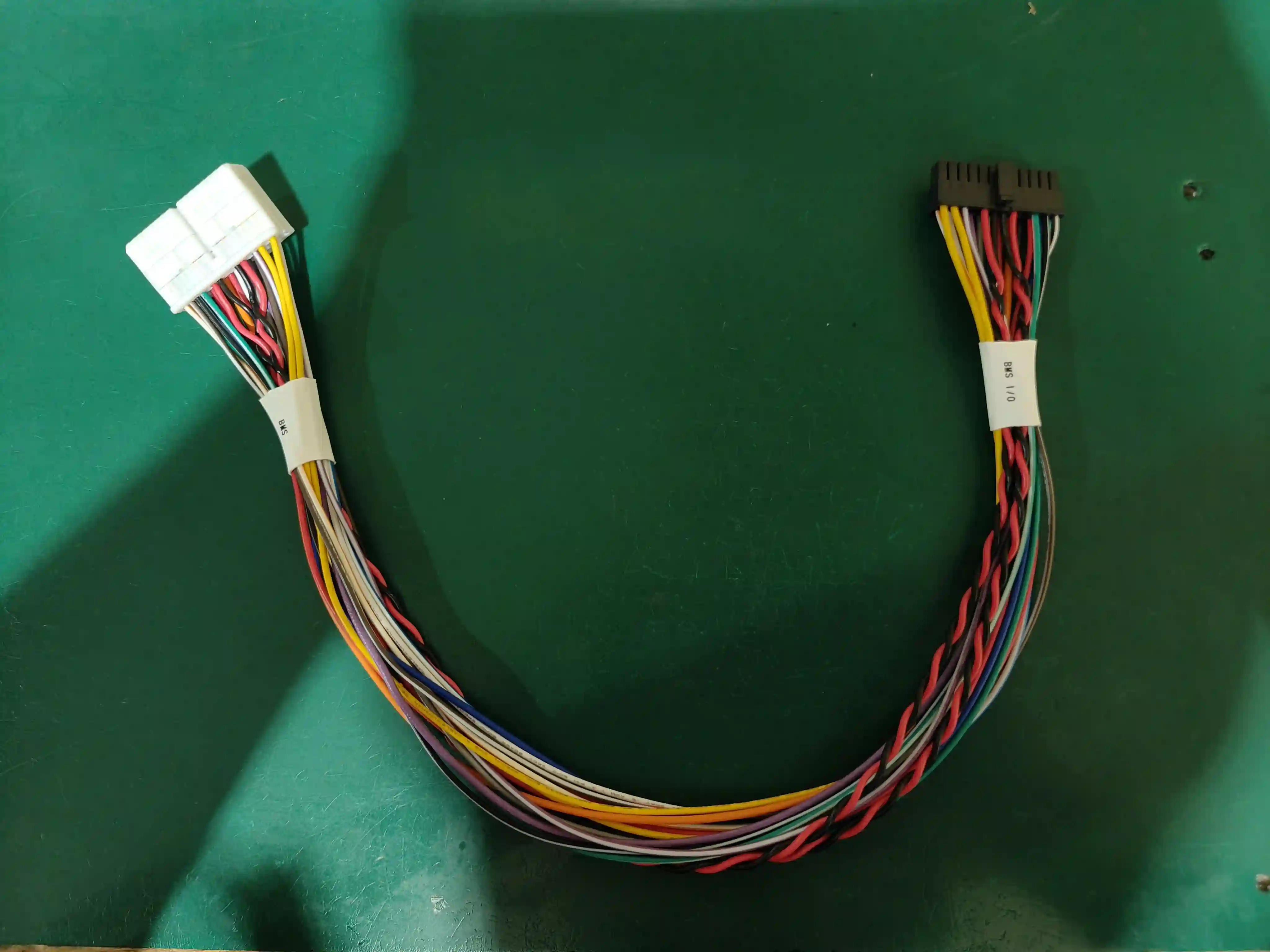
Combined power and BMS sense harnesses for lithium, NiZn and VRLA battery cabinets. Cell-voltage and temperature sense taps run alongside the high-current path in one tested assembly, so the battery management system sees every cell across the string.

  • Per-cell voltage + temp sense
  • Lithium / NiZn / VRLA cabinets
  • Sense connectors + power in one
  • Built to IPC/WHMA-A-620

Engineering Challenges

Review risk before production

01

Voltage Drop & Heat Rise

Conductor, lug and busbar-link sizing validated for voltage drop and heat rise on 48V DC busses and battery-string interconnects — engineered to targets, not just nominal ampacity tables.

02

Hot-Swap in a Live Aisle

Anderson SB/SBS and Powerlok terminations factory-crimped and tested — including contact-resistance checks — so technicians hot-swap modules instead of field-crimping in a live aisle.

03

Fire & Smoke in an Enclosed Data Hall

LSZH flame-retardant jackets to limit toxic smoke and corrosive gas, paired with TC-ER tray-cable construction so the same assembly is rated for exposed-run installation.

04

Battery-System Standards

UL 1973 (stationary battery) and UL 9540 (energy storage) requirements that data-center and BESS integrators design to, with IPC/WHMA-A-620 workmanship under our ISO 9001 quality system.

Technical Capabilities

High-current technical capabilities

UL 1973 / UL 9540 and TC-ER construction with high-current copper and LSZH jackets, validated for sustained DC service in UPS and AI/GPU power systems.

Conductor Range8 AWG – 4/0 AWG
Voltage RatingUp to 1000V DC
JacketLSZH Flame-Retardant
ConnectorsAnderson / Powerlok
First-Pass YieldHigh
Sample Lead Time7–10 Days
Data center UPS and battery power cable assembly

Manufacturing Process

A controlled build, drawing to shipment

01Drawing / BOM Review
02Connector Sourcing
03Cutting & Stripping
04Crimping / Assembly
05In-process Inspection
06Electrical Test
07Final Inspection
08Packaging & Export

Quality & Testing

Documentation for OEM review

Every data-center power harness gets continuity, polarity and dielectric-withstand testing, plus contact-resistance checks on high-current Anderson and Powerlok terminations — all documented for lot-level traceability before it ships.

Material ApprovalProcess ControlCrimp Pull-ForceContinuity TestDielectric WithstandContact ResistanceFinal InspectionLot TraceabilityCorrective Action

Why WHP

Why choose our data-center UPS harness services

Power harnesses engineered for uptime, hot-swap and the standards integrators design to.

High-Current DC Engineering

Conductor sizing, lug selection and busbar links validated for sustained high amperage on 48V DC GPU rails and battery-string interconnects — engineered for voltage-drop and heat-rise targets, not just nominal ampacity tables.

Built to UL 1973 / UL 9540

Battery-cabinet wiring built to the UL 1973 (batteries for stationary use) and UL 9540 (energy storage systems) requirements that data-center and BESS integrators design to, alongside TC-ER tray-cable construction.

IPC/WHMA-A-620 Workmanship

Every harness is crimped, lugged and assembled to IPC/WHMA-A-620 workmanship standards under our ISO 9001 quality system — the acceptance criteria that mission-critical power infrastructure demands.

100% Electrical Test

Continuity, polarity and dielectric-withstand testing on every assembly, plus contact-resistance checks on high-current Anderson and Powerlok terminations before it ships to your integration line.

Data-center power standards

Our UPS and battery harnesses are built to the battery-system and workmanship standards data-center and BESS integrators require.

UL 1973Stationary Battery Systems
UL 9540Energy Storage Systems
A-620IPC/WHMA Workmanship

FAQ

Data-center UPS harness FAQ

What conductors and gauges do you use for data-center UPS harnesses?
We build with high-current, fine-stranded tinned copper from 8 AWG up to 4/0 AWG. The fine stranding gives the flexibility needed for battery-string interconnects and cabinet handling, and tinning resists corrosion at lug and connector interfaces. Gauge is selected per assembly for ampacity and voltage-drop targets on 48V DC busses, 12V server rails and battery interconnects.
What voltage are your assemblies rated for?
Our UPS and battery-cabinet harnesses use insulation rated up to 1000V DC, covering the bus voltages of modern data-center UPS systems, lithium battery cabinets and high-density 48V DC server power. We match insulation thickness and conductor spacing to the DC system voltage rather than relying on nominal AC ratings.
Which connectors and terminations do you provide?
We factory-terminate Anderson SB and SBS power connectors for hot-swap modules, Amphenol Powerlok, crimped lugs for busbar and battery links, and dedicated BMS sense connectors. All high-current terminations are crimped and tested in-house — including contact-resistance checks — so technicians do not field-crimp in a live aisle.
What standards do you build battery and UPS harnesses to?
Battery-cabinet wiring is built to the UL 1973 (stationary battery) and UL 9540 (energy storage system) requirements that data-center and BESS integrators design to, with TC-ER tray-cable construction for exposed runs. Assemblies are manufactured to IPC/WHMA-A-620 workmanship under our ISO 9001 quality system.
Do you make BMS sense harnesses for lithium and NiZn cabinets?
Yes. We build combined assemblies that carry per-cell voltage and temperature sense taps alongside the high-current power path in a single tested harness, for lithium-ion, NiZn and VRLA battery cabinets. That gives the battery management system visibility into every cell across the string without a separate sense loom.
Why LSZH jackets for data-center wiring?
Data halls are enclosed spaces packed with people and equipment, so low-smoke zero-halogen (LSZH) flame-retardant jackets are specified to limit toxic smoke and corrosive gas if a cable is ever exposed to fire. We pair LSZH with TC-ER tray-cable construction so the same assembly is rated for exposed-run installation.
Can you build for high-density AI and GPU racks specifically?
Yes. We build high-current 48V DC bus and 12V rail harnesses for dense GPU and accelerator racks running training and inference loads. Conductors are sized for minimal voltage drop at sustained high amperage, with Anderson SB/SBS hot-swap connectors and busbar links so the rack rail holds under thermal load and transient draw.
What are your MOQ and lead times for data-center power harnesses?
We support prototypes from 1–10 pieces with 7–10 day sample lead times, scaling to production batches (typically 500+ units, negotiable). This lets integrators validate a UPS or rack-power harness on real hardware before committing to volume.

OEM Program Entry

Ready for your data-center UPS project?

High-current UPS, battery and 48V DC rack harnesses, 100% electrically tested, with 7–10 day samples. Talk to our power-systems specialists.

We will review

  • 01Design Feasibility
  • 02Component Availability
  • 03Cost Drivers
  • 04Validation Requirements

Related Capabilities

Related cable solutions

Custom cable assembly and harness services that pair with data-center UPS and AI-rack power programs.

Case Studies

Related case studies

Real, anonymized programs we delivered in this industry — the actual challenge, solution, and numbers.