TC-ER CertifiedPower Cable Assembly
We build TC-ER certified power cable assemblies for tray-to-machine runs where the buyer needs verified cable marking, controlled termination, and 100% electrical test records before the kit reaches the plant floor.

TC-ER power cable assemblies are specified when an industrial buyer needs tray cable behavior, not a generic multi-conductor cord. A cable marked TC-ER is tied to tray-cable and exposed-run installation language, while the finished assembly still depends on correct conductor sizing, gland compression, shield handling, strain relief, and test documentation. Our role is to convert that marked cable into a repeatable assembly that arrives cut to length, terminated, labeled, packed by route, and electrically verified.
This page is intentionally narrower than our high voltage cable assembly and battery cable assembly pages. TC-ER work is best for industrial machinery, VFD leads, pump skids, control cabinets, and factory automation where tray routing and plant installation rules drive the cable choice. For code background, buyers can review public summaries of the National Electrical Code, cable tray systems, and power cable construction.
If the drawing is still early, our power cable assembly guide explains the RFQ details that usually affect price and first-article timing: conductor size, termination style, jacket exposure, bend radius, labeling, and test records.
TC-ER Power Cable Manufacturing Scope
The useful work happens before crimping starts: cable marking, installation context, shielding, jacket exposure, and termination style are checked against the drawing.
TC-ER Cable Sourcing Review
We review the cable print, jacket marking, conductor count, voltage class, and supplier certificate before production so the assembly matches the tray-cable requirement on the RFQ.
- UL 1277 marking review
- TC-ER jacket legend check
- Supplier lot traceability
600V Power and Control Assemblies
Industrial power cable assemblies can combine motor power, control, brake, and auxiliary conductors in one jacket when the installation calls for tray-rated cable between equipment.
- 300V and 600V programs
- Multi-conductor layouts
- Power plus control circuits
Shielded VFD and Servo Options
Foil, braid, and drain-wire termination plans reduce electrical noise in drives, pumps, conveyors, and machine tools where tray routing passes near signal wiring.
- Braid and foil shields
- 360-degree termination
- Ground tail labeling
Oil, Sunlight, and Flame-Rated Builds
We match PVC, CPE, PUR, or XLPE constructions to the stated exposure instead of treating every TC-ER cable as interchangeable commodity wire.
- Oil-resistant jackets
- Sunlight-resistant options
- Vertical-tray flame ratings
Cut Length and Installation Control
Each finished cable can be cut, stripped, labeled, dressed, and packed to the exact tray-to-machine route length to reduce field trimming and rework.
- Custom length labels
- Branch and strip control
- Kitting by machine zone
100% Electrical Test Records
Continuity, polarity, insulation resistance, hi-pot, shield continuity, and visual marking checks are documented before shipment for production traceability.
- Continuity and polarity
- Hi-pot when specified
- Serialized test reports
Technical Specifications and Limits
TC-ER cable is not one material. The cable family can vary by voltage, conductor insulation, jacket, oil rating, sunlight rating, shield style, and approval stack. We verify those details before quoting because a wrong cable legend can create a field-installation problem even when the crimp quality is good.
"For TC-ER assemblies, the drawing should tell us both the electrical load and the installation assumption. A 600V VFD cable, an oil-resistant machine cable, and a tray-to-panel control whip can look similar on a BOM but fail for different reasons in the plant."
| Cable type focus | Type TC-ER tray cable assemblies for industrial exposed-run transitions |
| Typical voltage class | 300V and 600V, with 1000V-rated special cable reviewed case by case |
| Conductor range | 18 AWG to 2 AWG common; larger power leads reviewed from drawing |
| Conductor count | 2 to 25+ conductors depending on cable availability and bend radius |
| Jacket materials | PVC, CPE, PUR, TPE, XLPE, or customer-specified tray cable construction |
| Termination options | Ferrules, ring lugs, fork terminals, M12, circular, gland, and panel connectors |
| Quality references | IPC/WHMA-A-620 workmanship, ISO 9001 process control, customer drawing criteria |
| Testing | Continuity, polarity, insulation resistance, hi-pot, pull-force, and shield continuity |
| Prototype timing | 7-10 working days after approved drawing and available cable stock |
| Production range | 50 to 5,000 assemblies per release is the best-fit range for this service |
Best Fit and Out-of-Scope Guidance
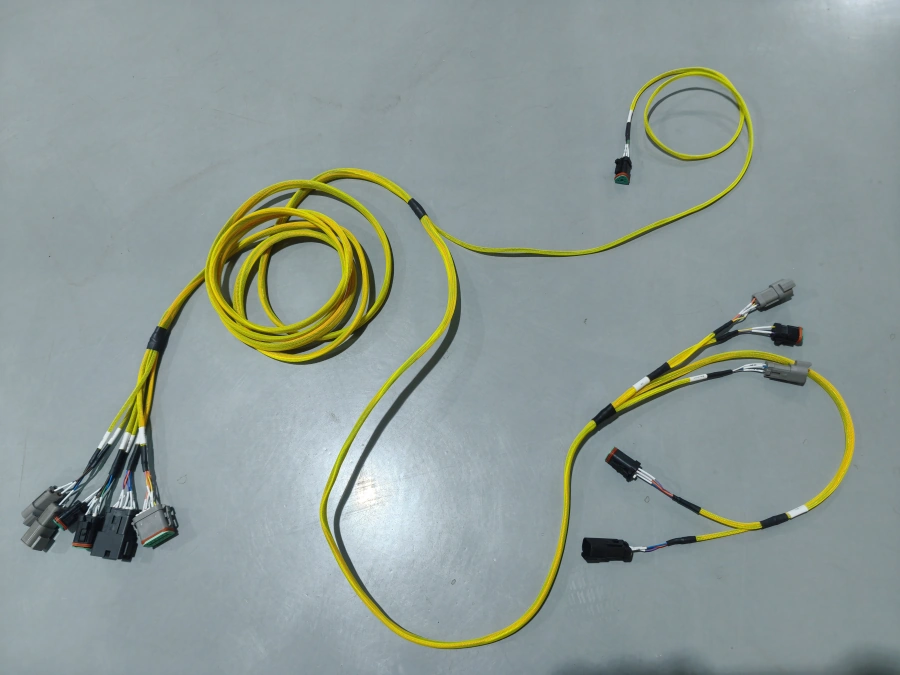
This service fits OEMs, machine builders, panel shops, and industrial integrators that already know the cable must be tray-rated or TC-ER marked. It is strongest when the buyer wants finished assemblies, not bulk cable reels: cut length, stripped ends, connectorized drops, labels, glands, kitting, and test reports.
We do not provide installation approval for a building, plant, or jurisdiction. The electrical contractor, engineer of record, or authority having jurisdiction must approve the final installation method. We also separate TC-ER work from residential wiring, temporary extension cords, and commodity bulk-cable distribution.
Best fit
Machine builders, panel shops, VFD systems, pump skids, and factory automation kits.
Buyer should provide
Drawing, cable marking, route length, connector part numbers, test requirements, and quantity.
Typical trade-off
Certified tray cable can raise material cost but reduces field conduit and rework risk where allowed.
Evidence package
Cable lot reference, inspection notes, electrical test record, and packed-by-route labels.
Production Workflow
Installation and Marking Review
We check whether the RFQ calls for Type TC, TC-ER, MTW, WTTC, or another marking, then confirm the required voltage, exposure, conductor count, and authority-having-jurisdiction notes.
Cable and Connector Selection
Engineering compares approved cable families, connector entries, glands, ferrules, lugs, bend radius, and shield termination before the first sample is released.
Prototype Build
Prototype TC-ER power cable assemblies are cut, stripped, labeled, and terminated for fit checks. A typical sample release is 7-10 working days when cable stock is available.
Electrical and Mechanical Validation
Assemblies are checked for continuity, polarity, insulation resistance, crimp pull force, label accuracy, shield continuity, and drawing conformance before volume approval.
Production Kitting
Production lots are packed by machine, panel, or route number with test records and cable lot references so the installer receives a ready-to-fit kit.
Common Applications
TC-ER certified power cable assemblies are most useful where field crews would otherwise spend time cutting bulk tray cable, stripping conductors, adding lugs, applying labels, and rechecking polarity at the machine. Prebuilt assemblies move that labor into a controlled factory process.

TC-ER Power Cable FAQ
Related Cable Assembly Services
High Voltage Cable Assembly
Use this service when the program needs 600V to 1500V DC power cables, orange HV identification, or EV/ESS routing support.
View serviceBattery Cable Assembly
Best for high-current battery interconnects, BMS wiring, energy storage leads, and lug-terminated battery power cables.
View serviceFactory Wiring Harness
Use this when the power cables are part of a broader machine harness kit with fixture-board routing and production kitting.
View serviceGet a Quote for TC-ER Certified Power Cables
Send your drawing, cable legend requirement, route lengths, connector part numbers, and expected release quantity. We will review certification fit before quoting production.