Cable Assembly

VOD Probe Cable — Custom Sensor Cable for Velocity of Detonation Measurement

Sacrificial coaxial probe cables engineered for in-situ Velocity of Detonation (VOD) measurement of explosive charges. Tight resistance tolerance per linear meter, deterministic burn profile, and connectorized leads ready for VOD recorders. Built for mining, quarrying, military demolition R&D, and explosives manufacturer test labs.

VOD probe cable assembly line for blasting instrumentation
Resistance Tolerance / m±2%
Std · LR · HT · Kevlar · Smart5 Variants
Continuity & Resistance Tested100%
Industry-AlignedISEE

Application Context

What a VOD probe cable is and how it works

A VOD probe cable is a sacrificial, continuous-resistance coaxial cable inserted along the length of an explosive charge. As the detonation front travels through the cable it progressively short-circuits the conductors, and a VOD recorder measures that resistance collapse over time to build a velocity-of-detonation profile across the charge. Because the cable is consumed in the blast, every meter has to present a deterministic, trustworthy resistance signature before that moment — which is exactly what separates a purpose-built probe cable from general-purpose coax.

We build a matched family of five variants — standard (Green), long-range (Blue / LR), high-temperature (HT), Kevlar-reinforced (K), and a SmartCable precision laboratory grade — so a blast program can swap variants without re-tuning its recorder calibration curve. Probe cables ship connectorized to the VOD recorder family used in the field and sit alongside the rest of the instrumentation on the shot: for the wider blast setup see our blasting instrumentation wire harness hub, and for non-sacrificial RF runs and reusable signal paths see our coaxial cable assembly service.

Probe Cable Variants

VOD probe cable manufacturing capabilities

Built for explosives instrumentation where every meter of probe cable must carry a deterministic resistance signature before it is consumed in the blast.

Standard VOD Coaxial Probe (Green Class)

Single-shot resistance probe cable for short to medium VOD column lengths. Tight per-meter resistance tolerance allows the VOD recorder to convert the time-domain resistance collapse into a velocity profile across the burn front. Used in commercial blasting, quarry production rounds, and field-grade explosives QA.

  • Continuous-resistance design
  • Tight ±2% per-meter tolerance
  • Color-jacketed for field identification

Long-Range Probe (Blue Class / LR)

Extended-length probe cable construction for deep-hole production blasts, large-bore mining charges, and long-column initiation studies. Conductor and dielectric stack tuned for low parasitic drift over 30 m+ probe lengths so the VOD recorder still sees a clean resistance decay.

  • Long-column construction
  • Reduced parasitic capacitance
  • Stable signature over 30 m+ runs

High-Temperature Probe (HT Class)

Tighter-tolerance probe cable engineered for hot-hole, sensitized emulsion, and elevated-temperature charge environments. Insulation and shield materials chosen to resist short-term thermal pre-stress without distorting the resistance baseline before the detonation front arrives.

  • Higher-temp insulation stack
  • Thermally stable conductor
  • Pre-blast baseline integrity

Kevlar-Reinforced Probe (K Class)

Mechanically reinforced probe cable for handling-heavy field deployments and abrasive borehole conditions. An aramid (Kevlar-style) braid sleeves the cable to protect the probe element during hole loading, stemming, and rough handling so the deterministic resistance signal survives until the blast.

  • Aramid braid reinforcement
  • Abrasion-resistant outer jacket
  • Improved tensile margin

SmartCable Precision Variant

Highest-precision probe cable construction for laboratory VOD measurement, ISEE-style explosives characterization, and academic explosives research where the tightest resistance tolerance and the cleanest VOD trace are required. Each lot characterized and serial-tracked.

  • Strictest resistance window
  • Lot-level characterization report
  • Lab and R&D grade

Connectorized Leads for VOD Recorders

Probe cables ship with a recorder-side termination matched to the VOD instrument family used in the field — BNC, custom screw-terminal, or recorder-specific banana / spring leads. The hot end is left bare for charge insertion or supplied with an initiation interface per project spec.

  • BNC, banana, screw-lug options
  • Bare hot-end for charge insertion
  • Recorder-compatible launch geometry

Engineering Challenges

What has to be right before the shot

01

Resistance-Per-Meter Accuracy

The recorder's velocity calculation only works if the per-meter resistance is trustworthy, so each lot is sampled and characterized to hold the program value inside a tight ±2% window.

02

Single-Use Sacrificial Survival

The cable is destroyed in the blast, so the workmanship target shifts to surviving transport, hole loading and stemming while presenting a clean baseline to the recorder — not surviving in service.

03

Borehole Mechanical Protection

Abrasion, sharp shotrock and stemming impact destroy unprotected probes, so aramid-reinforced and armored constructions are carried in-house rather than as a custom-only NRE add.

04

Recorder Termination Compatibility

Probe cables must drop into the existing VOD recorder fixture, so recorder-side terminations — BNC, banana, screw-lug or recorder-specific — are matched to the instrument used in the field.

Technical Capabilities

Technical specifications

Continuous-resistance coaxial probes built to IPC/WHMA-A-620 workmanship, characterized per lot and matched to your VOD recorder calibration.

Probe TypeContinuous-resistance coaxial probe (Pollet / Cyborg-style resistance method)
Per-Meter ResistanceCustom value per program (e.g. 10.8 Ω/m), held to ±2% baseline tolerance
Length Options1 m to 50 m+ per probe, supplied on labelled reels or pre-cut to length
Outer Jacket ColorVariant-coded (green / blue / orange / yellow) for field identification
Operating Temperature (Pre-Blast)Standard: 0 °C to +60 °C · HT class: tolerant of short-term hot-hole exposure
Mechanical ReinforcementStandard, aramid-braided (Kevlar-style), or armored variants on request
Recorder-Side TerminationBNC, banana plug, screw-lug, or recorder-specific custom connector
Hot-End PreparationBare conductor for direct charge insertion, or sealed initiation interface per drawing
Workmanship StandardIPC/WHMA-A-620 cable assembly workmanship, single-use sacrificial design
Quality Testing (Pre-Ship)100% continuity, 100% end-to-end resistance check, lot-level resistance/m verification
DocumentationCert of Compliance with measured resistance/m per lot; serialization on request for R&D programs
ComplianceIPC/WHMA-A-620, RoHS, REACH; export consideration aligned with end-user blast program documentation
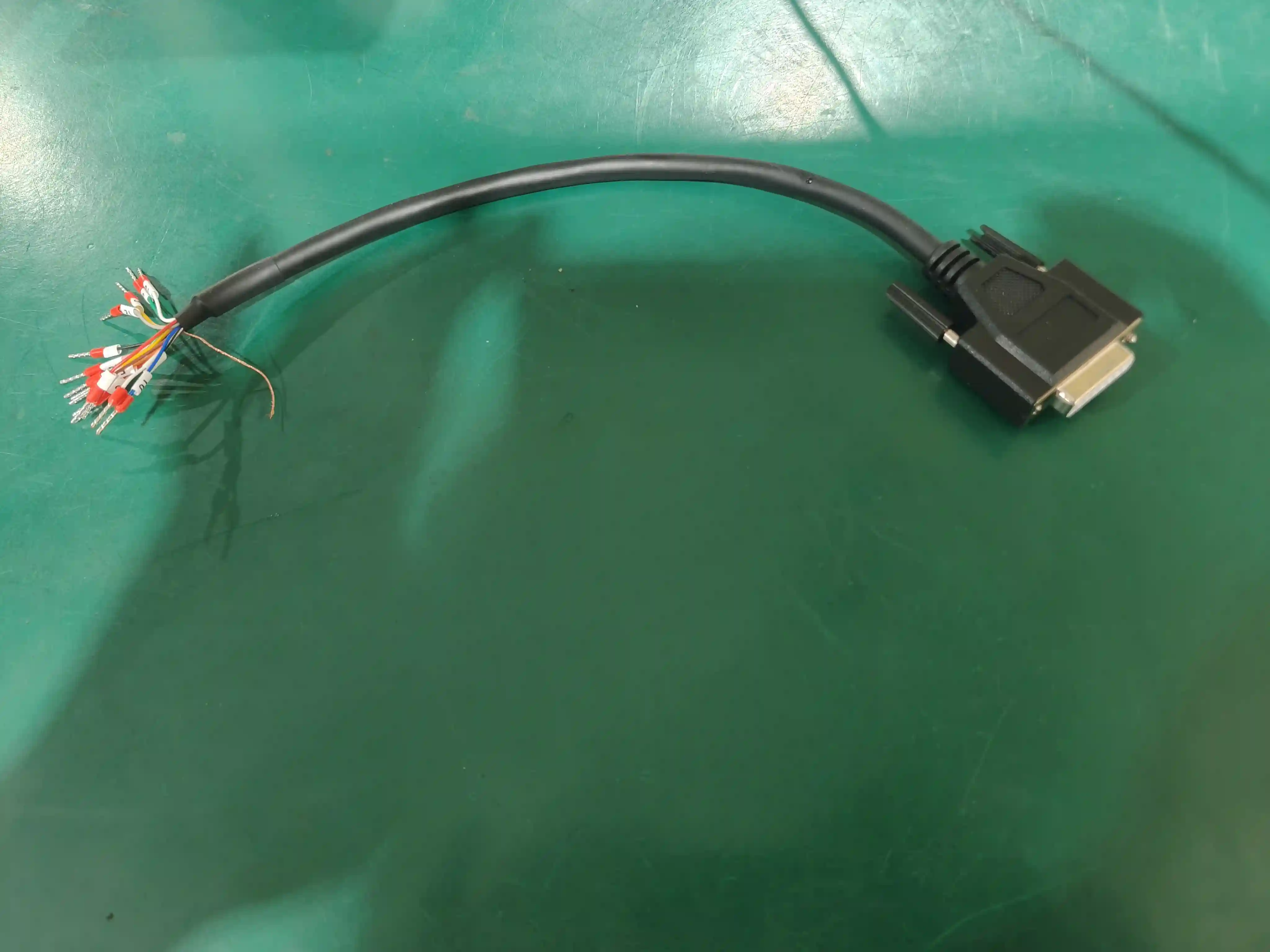
Continuity and resistance testing of VOD probe cable lots

Manufacturing Process

From RFQ to production

01Program & Recorder Review
02Variant Specification Lock
03Sample Build & Characterization
04100% Continuity + Resistance Verification
05Documentation & Serialization
06Logistics & Repeat Production

Quality & Testing

Documentation and testing before the cable ships

Every VOD probe cable is 100% continuity tested and end-to-end resistance checked before lot release, with sample-level per-meter resistance characterization on each production lot. Each shipment carries a certificate of compliance documenting the measured resistance per meter, manufacturing date, and lot ID — with unit-level serialization available for R&D and academic programs — so any anomalous VOD trace can be back-traced to the lot that produced it.

100% Continuity TestEnd-to-End ResistancePer-Meter Resistance / LotBaseline CharacterizationCert of ComplianceLot ID + Mfg DateUnit Serialization (R&D)IPC/WHMA-A-620 WorkmanshipAnomaly Back-Trace

Why WHP

Why blast engineers choose us for VOD probe cables

Probe cable is consumed in milliseconds — but every meter must be deterministic before that moment.

Resistance-Per-Meter Discipline

Each lot is sampled and characterized to confirm the per-meter resistance value matches the program spec inside a tight ±2% window. The VOD recorder's velocity calculation only works if that number is trustworthy.

Variant Matrix Standardization

We build a matched family of probe variants — standard, long-range, high-temperature, Kevlar-reinforced, and precision lab — so a blast program can swap variants without re-tuning the VOD recorder calibration curve.

Single-Use Sacrificial Design Mindset

Because the cable is destroyed in the blast, the entire workmanship target shifts: it has to survive transport, hole loading, and stemming, and present a clean baseline to the recorder — not survive in service. Our process windows are tuned for that specific lifecycle.

Recorder-Compatible Termination Library

We maintain a library of recorder-side terminations to match the VOD instrument the field engineer is actually using, so probe cables drop into the existing fixture without on-site adaptation.

Field-Validated Mechanical Protection

Aramid-reinforced and armored variants are specified by mining engineers who have lost probes to abrasion, sharp shotrock, or stemming impact. We carry those reinforcement constructions in-house, not as a custom-only NRE add.

Documentation for High-Reliability Programs

Mining, military, and R&D customers need traceability. Each shipment includes a per-lot measured resistance value, manufacturing date, and lot ID — enough to back-trace any anomalous VOD trace to the cable lot that produced it.

Standards & compliance

VOD probe cables are built to IPC/WHMA-A-620 cable-assembly workmanship, aligned with ISEE explosives-measurement practice, and RoHS / REACH compliant.

A-620IPC/WHMA Workmanship
ISEEIndustry-Aligned
RoHS / REACHCompliant

FAQ

VOD probe cable FAQ

What is a VOD probe cable and how does it work?
A VOD probe cable is a sacrificial continuous-resistance coaxial cable that is inserted along the length of an explosive charge. As the detonation front travels through the cable, it progressively short-circuits the conductors. A VOD recorder measures the resistance collapse over time and converts it into a velocity-of-detonation profile across the charge.
Which probe cable variant should I order?
Standard Green class covers most commercial blasting and quarry rounds. Blue (LR) is for deep-hole production blasts and long charge columns. HT is for hot-hole and sensitized emulsion environments. Kevlar-reinforced (K) is for abrasive borehole conditions and rough handling. SmartCable precision is for laboratory and explosives R&D programs.
What resistance per meter do you support?
Per-meter resistance is set per program. We commonly support values in the 10 Ohm/m range used by industry-standard VOD recorders, but we will match your recorder calibration and hold the lot resistance inside a tight tolerance window (typically ±2%) confirmed by lot-level measurement.
How long can a single VOD probe cable be?
Standard probe cables run from 1 m to roughly 30 m. Long-range LR variants extend that practical limit through reduced parasitic capacitance. For very long deep-hole programs, contact engineering with the column length, recorder model, and acceptable signal decay so we can confirm the right cable construction.
Are these probe cables single-use or reusable?
VOD probe cables are sacrificial. They are consumed in the blast. The product is engineered to survive transport, hole loading, stemming, and pre-detonation handling — and to present a clean baseline resistance to the recorder until the detonation front arrives.
What recorder-side terminations do you offer?
BNC, banana plug, screw-lug, and custom recorder-specific terminations are all supported. Tell us the VOD recorder model used in the field and we will match the launch geometry so probe cables drop into the existing fixture without on-site adaptation.
What documentation comes with each shipment?
Every shipment includes a lot-level certificate documenting the measured per-meter resistance, manufacturing date, and lot identifier. R&D and academic customers can request unit-level serialization for fully traceable cable-to-trace correlation.
What is your minimum order quantity?
We support prototype lots for initial recorder calibration and process qualification, scaling up to recurring multi-PO production volumes (hundreds of kilometers per year). Contact engineering with your forecast and program cadence for a phased proposal.

OEM Program Entry

Need a Reliable VOD Probe Cable Supplier?

Send your VOD recorder model, required probe length, target resistance per meter, and environmental conditions — we will spec the right variant and quote prototype + production lots in parallel.

We will review

  • 01Design Feasibility
  • 02Component Availability
  • 03Cost Drivers
  • 04Validation Requirements

Related Capabilities

Related capabilities

Pages adjacent to VOD probe cable that pair with the same blast program.

Applications

Where VOD Probe Cables Are Used

Single-use sacrificial probe cables for explosives test programs and operational blast QA across mining, defense, and research

Open-Pit and Underground Mining

VOD probe cables for production blast QA, fragmentation tuning, and bench-blast diagnostics. Mine engineers verify that the as-loaded explosive column actually detonates at the designed velocity so fragmentation, vibration, and yield match the model.

Quarry and Aggregate Production

Resistance probe cables for measuring detonation propagation through emulsion, ANFO, and watergel mixtures across short-bench production rounds. Used to verify that on-site sensitization and column geometry give the expected VOD.

Explosives Manufacturer R&D Labs

High-precision probe cables for new-product detonation characterization. Explosives developers feed clean VOD traces into shock physics models to validate cap sensitivity, gap-test results, and energy release at scale.

Military Demolition and EOD R&D

Probe cables for shaped-charge characterization, breaching charge validation, and demilitarization throughput trials. Pairs with high-speed cameras, pressure transducers, and EOD instrumentation harnesses across the same blast event.

Underwater and Subsea Blast Programs

Jacketed and reinforced probe cable variants for underwater shaped-charge tests, subsea cutting operations, and naval EOD R&D where the cable must survive hydrostatic insertion before the detonation front arrives.

Academic and National-Lab Programs

Laboratory-grade resistance probe cables for shock wave research, energetic materials studies, and university explosives programs aligned with ISEE practice and conventional shock-physics measurement protocols.

Representative Program

Representative project type (illustrative)

Representative project type we handle, shown for illustration. Not a specific named customer.

Industryblasting-instrumentation
RegionNorth America (Canada-based OEM)
Year2025-2026

Scenario: A Canadian blast-instrumentation OEM serving global mining and military demolition customers required a long-term supplier for a 5-variant VOD probe cable family — standard, long-range, high-temperature, Kevlar-reinforced, and a precision laboratory grade — to replace an aging incumbent supplier whose resistance-per-meter consistency had drifted.

Challenge: Each variant had a different per-meter resistance window. The CEO and the VP of Operations both engaged directly on technical and commercial terms because probe cable quality directly affects the customer's downstream VOD recorder calibration and their own end-customer mine safety reporting.

What we did: We characterized the incumbent cable, matched each variant's resistance window, and built a manufacturing window narrower than the customer's acceptance spec. Production runs are released only after a lot-level resistance/m check and a 100% end-to-end continuity test. Multi-PO supply with split-shipment air + sea logistics aligns with their seasonal mining demand.

Result: Moved from first sample to multi-PO recurring production within a single fiscal year. Now supplying a multi-variant probe cable family at production volume, with documentation that the customer forwards to their own mining and military end-customers as proof of supply-chain consistency.

Concrete numbers

  • 5 probe cable variants supplied
  • ±2% per-meter resistance tolerance
  • 500 km+ cable shipped under recurring POs
  • Split air + sea logistics per season
  • Direct CEO + VP engagement (technical + commercial)