Cable Assembly

Currency Equipment Cable Harness — Custom Wire Harness for Banknote & Cash-Handling Machines

Cable assemblies engineered for banknote-printing, banknote-processing, ATM, and cash-handling equipment — board cables, stacker harnesses, controller power leads, signal cables, and replacement breakout assemblies. Tight lot traceability, recurring annual repeat volumes, central-bank-grade reliability and supply continuity.

Currency equipment cable harness assembly line for banknote and cash-handling machines
Recurring Annual VolumeFlexible MOQ
Per-Project TrackingMulti-Project
Continuous Supply Programs5+ yr
Continuity + Visual100%

Application Context

Why currency-equipment harnesses are different

Banknote machines run 24/7 in environments where a $5 harness can stop a $500K machine — so for currency-technology equipment, supply continuity is as much the product as electrical performance. These cable assemblies are engineered for banknote-printing, banknote-processing, ATM, and cash-handling equipment: board cables, stacker harnesses, controller power leads, signal cables, and replacement breakout assemblies, all built to central-bank-grade reliability with tight lot traceability.

Currency-handling harnesses live inside banknote printers, sorters, and processors, where a field-failed harness is not a service call — it is a halted cash center. Programs run many revision-controlled drawings across multiple buying entities and recurring annual repeat volumes, so every crimp is logged, every lot is traceable, and every revision is locked to a fixture.

Capabilities

Currency-Handling Harness Capabilities

Cable assemblies built for the inside of banknote printers, sorters, and processors, where supply continuity matters as much as electrical performance

Board-to-Board Cable

Custom board-to-board cable assemblies connecting controller boards inside banknote processing modules. Fine-pitch ribbon, IDC, or molded-end constructions matched to your board connector pitch and stack-up.

  • Board-to-board controller cables
  • GUI-mounting board cables
  • Fine-pitch board-to-board

Stacker & Reject-Tray Harness

Stacker module wiring, reject-tray sensor harnesses, and module-to-frame cables for banknote stackers and adjacent control modules. Built to your drawing with a consistent connector and wire-spec stack across iterations.

  • Stacker module wiring
  • Reject-tray sensor harness
  • Per-drawing revision fidelity

Controller Board Power & Signal Cables

Controller-board power-connector cables, programming cables, CAN bus cables, and module power-fan-out for cash-handling controllers. Discrete signal-class wiring with documented mate-connector lists.

  • MCU power-connector cables
  • CAN bus programming cables
  • Signal-class fan-out

HDMI / USB / SATA Breakout Cable

Breakout cables for service-port, diagnostic, and module-interconnect roles — HDMI female-to-male breakout, Mini-USB B male-to-leads, SATA module cables, and custom programming jumpers built to the printer-OEM service tooling spec.

  • HDMI breakout (F/M, M/L)
  • Mini-USB B male-to-leads
  • SATA module + programming

Multi-Brand Connector Sourcing

Currency-technology assemblies routinely span multiple connector brands — JST, TE Connectivity, Molex, 3M, and custom OEM-specific parts. We maintain an active connector library and stock the most-used parts to keep turnaround tight.

  • JST / TE / Molex / 3M families
  • Custom OEM-specific parts
  • Active connector library stocked

Supply Continuity for Central-Bank Programs

Recurring annual repeat volumes per part number with flexible minimum order quantities. Multi-entity buying structures supported — OEM, R&D, and procurement entities — with consolidated traceability across orders.

  • Flexible minimum order quantities
  • Recurring annual repeat volume
  • Multi-entity buying support

Engineering Challenges

Review risk before production

01

Supply Continuity

A single obsolete connector or missed reorder can halt a cash center. We plan raw-cable stock, connector buffer, and capacity around recurring annual repeat volume so mid-volume orders do not break existing programs.

02

Revision Control

Currency-tech programs run many revision-controlled drawings per project. Each drawing is tracked to its own work-instruction sheet, fixture, and revision history so an older revision can be re-ordered cleanly.

03

Multi-Entity Traceability

Customer organizations span a printing OEM, an R&D arm, and a contract-services entity. Consolidated lot traceability and multi-entity invoicing keep the engineering audit trail intact across the buying structure.

04

Connector Availability

Assemblies span JST, TE Connectivity, Molex, 3M, and custom OEM-specific parts. An active connector library keeps the most-used cash-handling parts in stock so reorder turnaround is measured in days, not weeks.

Technical Capabilities

Technical Specifications

Fine-pitch board-to-board, IDC ribbon, discrete signal wiring and HDMI / USB / SATA breakout built to IPC/WHMA-A-620 workmanship with lot traceability for cash-handling programs.

Cable TypesDiscrete signal wiring, IDC ribbon, ultra-fine-pitch board-to-board, HDMI / USB / SATA, CAN bus
Wire AWG RangeAWG 30 (fine signal) through AWG 18 (module power)
Connector FamiliesJST (multiple series), TE Connectivity, Molex, 3M ribbon, custom OEM-specific
ConstructionCrimp + IDC + molded breakout per your drawing; mixed connector ends supported
MOQFlexible per part number; lower for R&D iteration on request
Annual Volume CapabilityRecurring annual repeat volume per part number; high-volume connector sourcing supported
Operating Temperature-10 °C to +60 °C standard (indoor cash-handling environments)
Workmanship StandardIPC/WHMA-A-620 Class 2 default; Class 3 for safety-critical paths
Quality Testing100% continuity, IDC connector pull-force sampling, visual inspection under magnification on fine-pitch boards
Engineering-Change DisciplinePer-drawing revision fidelity; revision-locked fixtures; ECN cycle tracked per part number
DocumentationLot traceability, operator-ID per crimp, multi-entity invoicing supported
ComplianceIPC/WHMA-A-620, RoHS, REACH, central-bank-grade supply continuity
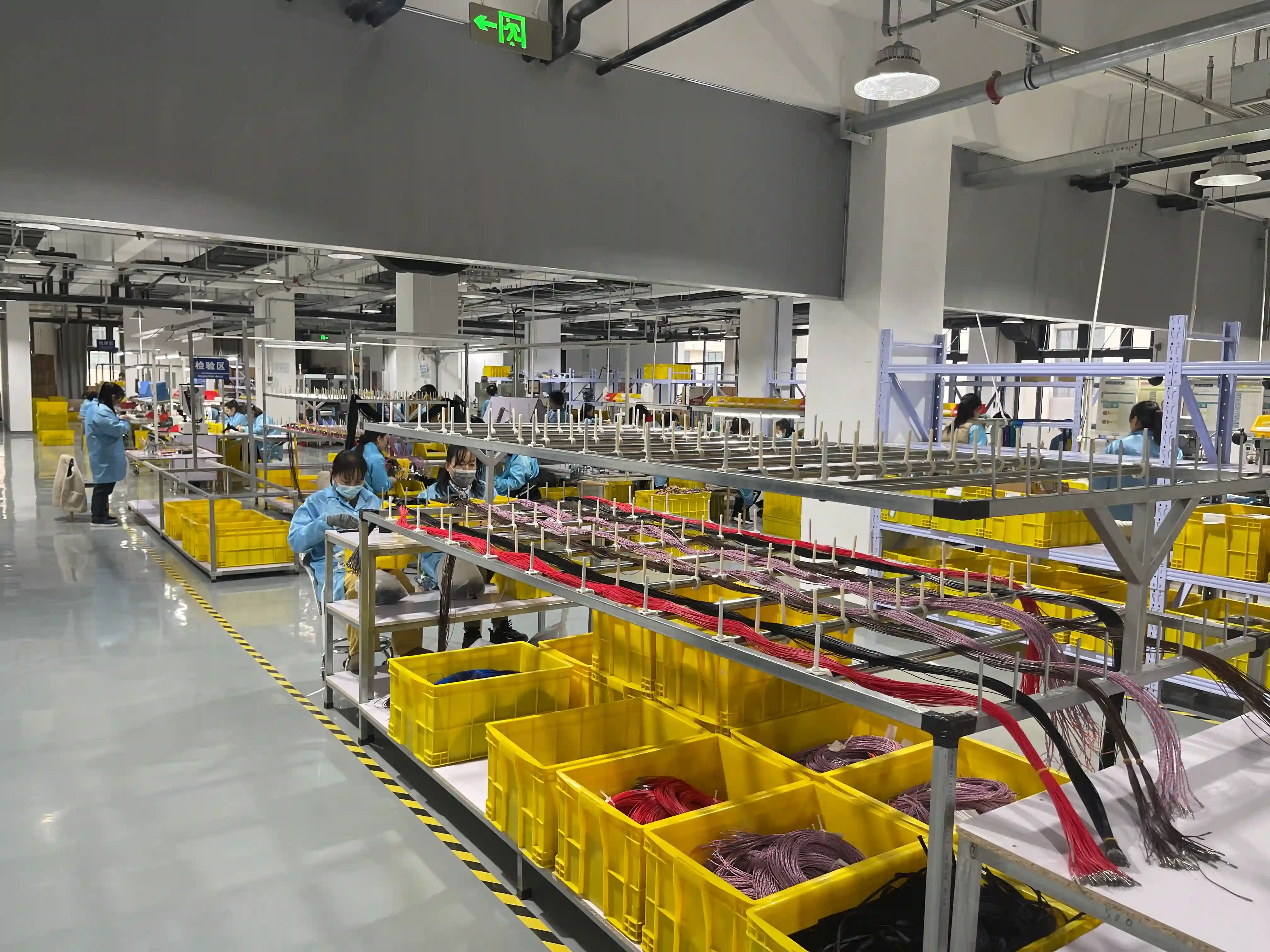
Currency-handling cable assembly manufacturing line

Manufacturing Process

From RFQ to production

01Drawing / BOM Review
02Component Sourcing
03Cutting & Stripping
04Crimping / Assembly
05In-process Inspection
06Electrical Test
07Final Inspection
08Packaging & Shipment

Quality & Testing

Documentation and traceability for central-bank programs

Every currency-handling harness gets 100% continuity verification, with IDC connector pull-force sampling and visual inspection under magnification on fine-pitch boards. Operator ID is logged per crimp and every lot is traceable, with revision-locked fixtures and ECN cycles tracked per part number before shipment.

100% Continuity TestIDC Pull-Force SamplingVisual Under MagnificationOperator-ID Per CrimpLot TraceabilityRevision-Locked FixturesECN Cycle TrackingPer-Drawing Work InstructionsMulti-Entity Documentation

Why WHP

Why Currency-Tech OEMs Choose Us

Banknote machines run 24/7 in environments where a $5 harness can stop a $500K machine — supply continuity is the product

5-Year Continuous Supply Track Record

We carry currency-technology customer relationships across multiple PR cycles, multiple buying entities, and multi-year repeat volume. Same engineering contact, same operators, same fixtures over 5+ years.

Per-Drawing Revision Fidelity

Currency-tech programs run many revision-controlled drawings per project. We track each drawing to its own work-instruction sheet, fixture, and revision history so an older revision can still be re-ordered cleanly.

Multi-Entity Buying Coordination

Customer organizations often span a printing OEM, an R&D arm, and a contract-services entity. We support consolidated traceability, multi-entity invoicing, and credit-line continuity across the buying structure without losing the audit trail.

Connector Library for Cash-Handling Spec

JST fine-pitch, TE Connectivity, 3M ribbon, and the most-used Molex parts for cash-handling are kept in active stock. Reorder turnaround is measured in days, not weeks.

Annual Volume Predictability

Recurring annual repeat volume per part is our sweet spot. We plan capacity, raw cable stock, and connector buffer around that profile so a sudden mid-volume order doesn't break the run-rate of the existing programs.

Central-Bank-Grade Reliability Mindset

A field-failed harness inside a central-bank cash-sorter is not a service call — it's a halted cash center. Our workmanship target reflects that: every crimp logged, every lot traceable, every revision locked to fixture.

Compliance & workmanship

Built to IPC/WHMA-A-620 workmanship with RoHS and REACH compliance and central-bank-grade supply continuity.

IPC/WHMA-A-620Class 2 default / Class 3 critical
RoHSCompliant
REACHCompliant

FAQ

Frequently Asked Questions

What is a currency-equipment cable harness?
It is a custom wire harness or cable assembly built into cash-handling machines — ATMs, banknote counters and sorters, note validators, coin dispensers, and vending or kiosk money modules. A single machine typically carries several harnesses: low-voltage power leads for motors and controllers, signal cables to optical and magnetic note sensors, and board-to-board interconnects between the main controller and transport modules.
Which connector systems do you use for cash modules?
Assemblies commonly use JST, Molex, TE Connectivity, and 3M families, alongside customer-specific OEM parts. Fine-pitch board-to-board and IDC ribbon connectors handle dense controller and sensor interfaces, while locking wire-to-board headers carry motor and solenoid power. We work from your existing drawing and connector callouts, and can source obsolete or long-lead parts through our connector library rather than forcing a redesign.
Do you build both signal and low-voltage power harnesses in one machine?
Yes. Banknote transports mix delicate sensor signal cabling (optical note-edge sensors, magnetic-ink and thickness detectors, encoders) with low-voltage power for feed motors, stackers, and clutches. We keep signal and power routing separated, apply the correct wire gauge per circuit, and follow your grounding and return scheme so motor switching noise does not couple into the note-reading signals.
How do you handle EMI shielding for note readers?
Note-validation sensors are sensitive to electrical noise, so signal harnesses that run near motors and power supplies are built with foil and/or braid shielding, controlled drain-wire termination, and defined ground points to the chassis. We follow the shield-termination and ground scheme called out on your drawing; where none is specified, engineering will propose one based on the cable route and sensor type.
What reliability and cleanliness controls apply for 24/7 duty?
Cash machines run continuously, so harnesses are built to IPC/WHMA-A-620 workmanship with 100% continuity testing, crimp pull-force sampling, and visual inspection under magnification on fine-pitch terminations. Assemblies are handled to keep flux residue, loose strands, and debris out of the note path, and strain relief plus proper routing protect against the constant vibration and flexing of transport mechanisms.
How do you manage drawing revisions across a program?
Each part number is tracked to its own work-instruction sheet, crimp tooling, and fixture, with revision history retained so a superseded revision can be re-ordered cleanly for machines already in the field. Engineering change notices are logged per drawing, which matters when the same currency-equipment platform is bought by multiple entities over several production years.
What is your minimum order quantity and lead time?
We support prototype and pilot lots for design validation and first-article approval, then scale to recurring production volumes. Lead time depends on connector and cable availability; keeping high-use cash-handling connectors in our library lets reorders of qualified assemblies turn around in days rather than weeks. Send your drawing, BOM, and forecast for a specific quote.
Can you reverse-engineer or replace an obsolete harness for legacy machines?
Yes. For fielded ATMs and cash-processing equipment where the original harness is no longer available, we can build to a physical sample or partial documentation, confirm connector pinout and wire gauge, and produce a form-fit-function replacement. First articles are dimensionally and electrically verified against the sample before repeat production.

OEM Program Entry

Spec'ing a Cash-Handling Equipment Program?

Send the harness drawing, connector callout, or stacker schematic. We will review the connector library, MOQ, annual volume, and revision discipline and quote sample + production in parallel.

We will review

  • 01Design Feasibility
  • 02Component Availability
  • 03Cost Drivers
  • 04Validation Requirements

Related Capabilities

Related Capabilities

Pages adjacent to Currency Equipment Cable Harness that pair with cash-handling and electronics harness programs

Applications

Currency-Technology Programs & Applications

Where these harnesses ship — printing, processing, sorting, and dispensing of banknotes and secure documents

Banknote Printing Machines

Internal harnesses for banknote and secure-document printing presses — sensor wiring, drive control, inspection-camera cabling, and operator-panel breakout assemblies.

Banknote Processing & Sorting Equipment

Cable assemblies for high-speed banknote-sorting machines used by central banks, commercial cash centers, and bulk-cash processors. Stacker, reject-tray, and MCU module wiring.

ATM & Cash-Recycler Subsystems

Internal harness and breakout cable for ATM cash-handling modules, recyclers, and self-service kiosks. Board-to-board, sensor harness, and service-port programming cable.

Currency-Technology R&D Labs

Engineering-iteration sample harnesses for R&D divisions developing next-generation banknote machines. Quick-turn PRs with engineering-change discipline across iterations.

Secure-Payment Terminal Manufacturers

Cable assemblies for secure-payment terminals, point-of-sale modules, and chip-card readers where signal integrity and tamper-aware routing matter.

Multi-Entity Cash-Handling Supply Chains

Programs that span a printing OEM, a contract R&D / project-services entity, and a multinational parent — coordinated harness supply with consolidated traceability.

Representative Project

Representative project type (illustrative)

Representative project type we handle, shown for illustration. Not a specific named customer.

Industrycurrency-technology
RegionGlobal
YearRecent

Scenario: A currency-technology OEM runs a recurring program with many revision-controlled drawings, where several buying entities (engineering, R&D, and procurement) share one engineering audit trail.

Challenge: Many active drawings, mixed connector families, and urgent purchase-order turnaround have to stay traceable across entities without losing revision discipline.

What we did: We maintain a per-drawing fixture and work-instruction library so any drawing can be re-ordered cleanly, and carry consolidated lot traceability across entities while keeping the engineering audit trail intact.

Result: Programs of this type move from first sample to a mature recurring relationship, with older revisions still re-orderable years later.

  • Per-drawing fixture and work-instruction library
  • Consolidated lot traceability across buying entities
  • Older revisions re-orderable years later