Cable Assembly

Construction Attachment Wire Harness — Custom Cable Assembly for Hydraulic Attachments

Wire harnesses engineered for construction equipment attachments — earth augers, drilling drives, hydraulic hammers, planetary drives, and skid-steer attachment electronics. Sealed Deutsch DT/DTM/DTHD constructions, IP67/IP69 ratings, 200-unit batch cadence, and a proven 2-year sample-iteration discipline from prototype to recurring production.

Construction attachment wire harness assembly line
Typical Batch Size200 units
Sealed Attachment BuildsIP67/IP69
Sample → Production Iteration2 yr
OEM Drawing ComplianceEC-Series

Application Context

What makes a construction-attachment harness different

A construction-attachment wire harness rides on the working end of a construction machine — earth-auger torque, hydraulic shock, water and dust ingress, and a multi-year service-life expectation define every construction choice. These harnesses are engineered for earth augers, drilling drives, hydraulic hammers, planetary drives, and skid-steer attachment electronics, built on sealed Deutsch DT/DTM/DTHD constructions rated IP67/IP69, not repurposed general-purpose hook-up wire and unsealed connectors.

Construction-attachment programs typically run 6–12 months of multi-revision sample iteration before an EC-series drawing is signed off, then settle into recurring 200-unit production batches. We track each EC-series drawing through its revision history, lock fixtures to revision level, and run calibrated Deutsch HDT-48-00 tooling so the same drawing ships two to three years later without losing the geometry, the connector list, or the workmanship target.

Capabilities

Construction Attachment Harness Capabilities

Wire harnesses that ride on the working end of a construction machine — earth-auger torque, hydraulic shock, water and dust ingress, and a multi-year service-life expectation

Hydraulic Attachment Auger Harness

Sealed harnesses for earth-auger, planetary-drive, and torque-multiplier attachments mounted to skid steers, mini-excavators, and compact loaders. Hour-meter signal, RPM sensor, and electrohydraulic control wiring built to OEM EC-series drawings.

  • Earth auger / planetary drive
  • Hour-meter + RPM signal
  • Electrohydraulic control wiring

Drill & Hammer Attachment Harness

Harnesses for rock-drill, post-driver, and breaker hammer attachments — sensor wiring, control valve solenoid drive, and operator-cab interface cables built to survive the impact, vibration, and contaminant exposure of a working hammer attachment.

  • Drill / hammer / breaker scope
  • Solenoid valve drive wiring
  • Vibration + impact tolerant

Multi-Channel ECU Interface Cable

ECU interface harnesses for smart construction attachments — CAN bus, diagnostic port, hour-meter, and sensor fan-out routed from the attachment back to the carrier-machine ECU through a Deutsch DTHD sealed bulkhead.

  • CAN bus + diagnostic port
  • Hour-meter + sensor fan-out
  • Carrier-machine ECU interface

Position & Pressure Sensor Harness

Discrete sensor cables for cylinder position transducers, hydraulic pressure sensors, and inclinometer wiring on construction attachments. Shielded twisted-pair construction with low-capacitance signal path for clean analog data.

  • Cylinder position transducers
  • Hydraulic pressure sensors
  • Inclinometer signal wiring

Sealed Deutsch Connector Practice

Built entirely on calibrated Deutsch HDT-48-00 tooling — DT, DTM, DTP, and DTHD series with TPA secondary lock verified before housing release. The construction equipment connector standard, applied correctly.

  • Deutsch DT/DTM/DTP/DTHD
  • HDT-48-00 calibrated tooling
  • TPA secondary lock verified

Sample-Iteration to Production Discipline

Multi-revision sample iteration through 6-12 months of OEM testing is normal for construction-attachment programs. We track each EC-series drawing through revision history, lock fixtures to revision-level, and ship 200-unit production batches once the drawing is signed off.

  • EC-series drawing revision tracking
  • Multi-rev sample iteration support
  • 200-unit production batches

Engineering Challenges

Review risk before production

01

Harsh Working-End Environment

Earth-auger torque, hydraulic shock, water and dust ingress and a multi-year service-life expectation drive material selection, over-jacket protection and IP67/IP69 sealing.

02

Sealed Deutsch Connector Integrity

DT/DTM/DTP/DTHD builds terminated on calibrated HDT-48-00 tooling with TPA secondary lock verified before housing release — the construction-equipment connector standard applied correctly.

03

Multi-Revision Drawing Control

EC-series drawings run through 6–12 months of sample iteration; fixtures are locked to revision level and every ECN is tracked so the geometry and connector list survive each change.

04

Program & Aftermarket Continuity

Procurement turnover is bridged with a formal hand-off of drawing, fixture and ECN status, and aftermarket replacements match the legacy connector tail-to-cable OD geometry.

Technical Capabilities

Technical Specifications

Sealed, IPC/WHMA-A-620 manufacturing built to EC-series OEM drawing fidelity for earth-auger, drill, hammer and planetary-drive attachments.

Wire ConstructionTXL / GXL / SXL automotive cable, ISO 6722 spec, jacketed multi-conductor
Conductor AWG RangeAWG 22 (signal) through AWG 10 (heavy solenoid + auxiliary power)
Connector FamiliesDeutsch DT, DTM, DTP, DTHD series; TE AMPSEAL; Anderson Powerpole; bulkhead pass-through
Crimp ToolingDeutsch HDT-48-00 calibrated, annual ISO 17025 third-party calibration
Sealing & IP RatingIP67 standard, IP69K available on specific connector families
Operating Temperature-40 °C to +125 °C standard, +150 °C engine-bay rated wire on request
Mechanical ReinforcementBraided sleeve, convoluted tubing, tape-wrapped jacket, strain-relief boots
Batch SizeTypical 200-unit production batch; lower for first-article and sample iteration
Workmanship StandardIPC/WHMA-A-620 Class 2 default; Class 3 available for safety-critical paths
Testing100% continuity, IP67 leak-check on sealed connectors where required, pull-force sampling
Drawing ComplianceEC-series OEM drawing fidelity; revision-locked fixtures; ECN tracked per harness SKU
ComplianceIPC/WHMA-A-620, UL 758, ISO 6722, IATF 16949 process discipline, RoHS, REACH
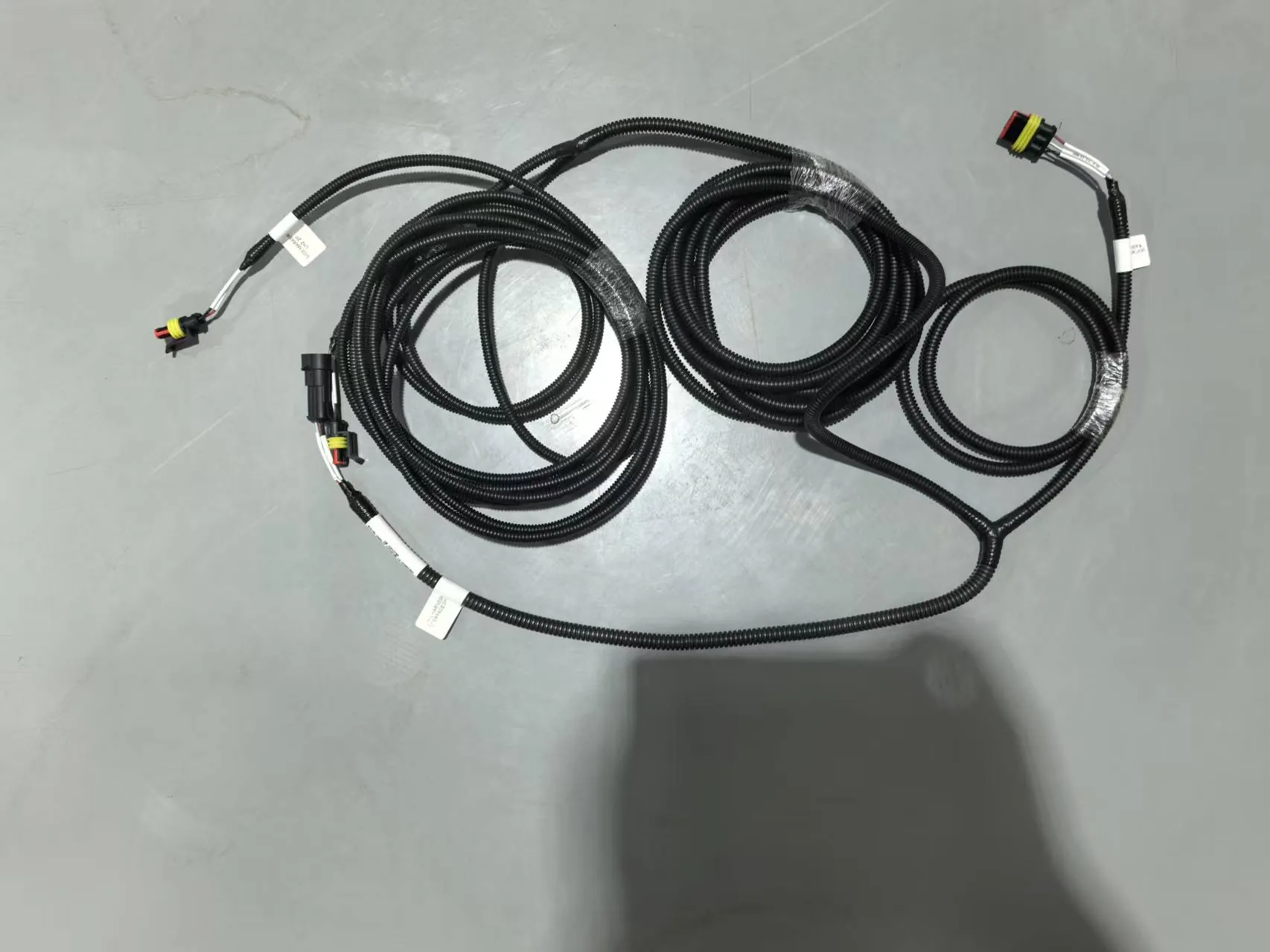
Construction attachment wire harness manufacturing

Manufacturing Process

From RFQ to Production

01Drawing / BOM Review
02Component Sourcing
03Cutting & Stripping
04Crimping / Assembly
05In-process Inspection
06Electrical Test
07Final Inspection
08Packaging & Shipment

Quality & Testing

Documentation for OEM review

Every construction-attachment harness gets 100% continuity verification, IP67 leak-check on sealed connectors where required, and pull-force sampling — documented to IPC/WHMA-A-620 Class 2 workmanship (Class 3 for safety-critical paths), with EC-series revision-locked fixtures and ECN tracking per harness SKU before it ships.

Material Approval100% ContinuityIP67 Leak-CheckCrimp Pull-ForceWorkmanship (A-620)EC-Series Revision LockFirst-Article ReportLot TraceabilityCorrective Action

Why WHP

Why Construction-Attachment OEMs Choose Us

Attachment harnesses live in the harshest environment of any construction-equipment harness — and they have to be replaceable years later

EC-Series Drawing Discipline

We track each EC-series drawing through revision history, lock fixtures to revision-level, and re-ship the same drawing 2-3 years later without losing the geometry, the connector list, or the workmanship target.

Calibrated Deutsch HDT-48-00 In-House

Construction-attachment harnesses are mostly Deutsch DT / DTM / DTP / DTHD. We run calibrated HDT-48-00 tooling annually qualified to ISO 17025 — no generic ratchet crimper improvisation.

200-Unit Batch Cadence

The typical construction-attachment OEM batch is 100-300 units. We plan capacity, raw cable stock, and Deutsch terminal buffer for that profile so a 200-unit recurring run doesn't break the rhythm of the next-customer's pilot work.

Multi-Revision Sample Iteration

Attachment OEMs typically run 6-12 months of sample iteration before signing off the production drawing. We support that iteration cadence with sub-batch sample lots and ECN tracking through every revision.

Sales-Continuity Through Buyer Turnover

Attachment-OEM procurement teams have turnover. When the original buyer leaves, we maintain program continuity through formal hand-off — drawing status, fixture status, ECN history — so the new buyer doesn't restart the program from scratch.

Aftermarket Replacement Geometry Match

For service and aftermarket programs, we match the connector tail-to-cable OD geometry of the legacy harness so the replacement assembly drops into the field-machine without rework.

Construction-attachment compliance & standards

Built to IATF 16949 process discipline and IPC/WHMA-A-620 workmanship on ISO 6722 automotive cable, with UL 758, RoHS and REACH compliance applied as the build-to requirement for your program.

IATF 16949Process Discipline
IPC/WHMA-A-620Class 2 / 3
ISO 6722Automotive Cable

FAQ

Frequently Asked Questions

What connector systems do you use on construction-attachment harnesses?
Sealed Deutsch DT, DTM, DTP and DTHD families are the working standard for construction attachments because they hold up to vibration, mud and wash-down while staying field-serviceable. We terminate them on calibrated Deutsch HDT-48-00 tooling and verify the TPA secondary lock before the housing is released. When your attachment already runs a different sealed system, we match the existing connector list from your drawing rather than substituting.
How do you seal a harness that runs on augers, drills and hammers?
Sealing is built up in layers: sealed connector interfaces (IP67, or IP69K where high-pressure wash-down is expected), single-wire seals and cable seals on every cavity, and an over-jacket or convoluted conduit where the harness routes past abrasion points. Blank cavities get sealing plugs so an unused position is never a leak path. The target IP rating is set per program and confirmed on sealed connectors with a leak-check where required.
How do you handle vibration and impact on hydraulic hammer and breaker attachments?
Impact and high-frequency vibration are the main failure drivers on hammers and breakers, so strain relief and routing carry most of the load: over-molded or clamped strain relief at the connector backshell, service loops to absorb relative motion, and secured routing that keeps the harness off sharp edges and pinch points. Crimps are pull-force sampled and workmanship is held to IPC/WHMA-A-620, which is what keeps terminations intact through the duty cycle.
Can you build harnesses with quick-disconnect couplers for attachment change-outs?
Yes. Attachments that swap on and off a carrier need a clean break point, so we build to a sealed quick-disconnect at the coupler interface — typically a keyed Deutsch bulkhead or a customer-specified connector — so the operator can disconnect and reconnect without tools and without exposing open pins to debris. We match the mating half already used on your carrier so the attachment drops in without field adaptation.
What wire gauge do you use for electric and hydraulic attachment actuators?
Gauge is sized to the actuator load, run length and acceptable voltage drop rather than a fixed default. Solenoid valves and position sensors on hydraulic attachments typically run lighter signal-level conductors, while electric actuators, work lights and motor feeds step up accordingly. We size from the current draw and duty cycle on your drawing and confirm the conductor and insulation rating against the working temperature.
How do you route sensor and control signals alongside power in the same harness?
Sensor feedback and solenoid or motor power can share a harness when the layout separates them properly — signal conductors kept on their own path, shielded cable used where a sensor is noise-sensitive, and the shield grounded at a single defined point. The connector pin-out and any shielding requirement come from your drawing, and we lock that arrangement to the revision level so it is reproduced identically on repeat builds.
Do you support prototype samples before committing to a production batch?
Yes. Construction-attachment programs typically run several months of multi-revision sample iteration before an EC-series drawing is signed off. We build sample runs against each revision, track the drawing through its ECN history, and only lock fixtures once the design is frozen — then settle into recurring production batches against the released revision.
What are your lead time and minimum order quantity?
Lead time and MOQ depend on connector availability, harness complexity and whether the design is still iterating or already released. We support small prototype lots during qualification and scale into recurring production batches once the drawing is frozen. Send the drawing, connector list and annual forecast and engineering will confirm a lead time and a phased quantity plan for your program.

OEM Program Entry

Building a Construction-Attachment Program?

Send the EC-series drawing pack, BOM, or sample-iteration history. We will review Deutsch connector spec, IP rating, batch cadence, and OEM drawing fidelity, then quote first-article + 200-unit production in parallel.

We will review

  • 01Design Feasibility
  • 02Component Availability
  • 03Cost Drivers
  • 04Validation Requirements

Related Capabilities

Related Capabilities

Capabilities adjacent to construction-attachment harnesses — sealed connector systems, heavy-equipment platforms and ingress-rated builds for the same rugged, wash-down duty cycle

Programs & Applications

Construction Equipment Programs & Applications

Attachment families where these harnesses ship — augers, drills, hammers, and planetary drives across the global construction-equipment supply chain

Earth Augers & Planetary Drives

Harnesses for hydraulic earth augers, planetary-drive auger heads, and torque-multiplier attachments used on skid steers, mini-excavators, and compact loaders for fencing, foundation, and utility work.

Rock Drills & Post Drivers

Cable assemblies for rock-drill and post-driver attachments — solenoid drive, sensor wiring, and operator-cab interface harnesses built for high-vibration drilling duty cycles.

Hydraulic Breaker Hammers

Sensor and ECU harnesses for hydraulic breaker hammer attachments where impact, heat, and contaminant exposure define the harness construction.

Skid-Steer & Mini-Excavator Attachments

Smart-attachment harnesses for skid-steer, mini-excavator, and CTL (compact track loader) attachment families. Carrier-machine ECU interface and hour-meter / RPM sensor wiring.

Hydraulic Auger / Drilling Attachment OEMs

Tier-1 OEMs supplying hydraulic auger drives, drilling attachments, and torque-multiplier products to global skid-steer and compact-loader brands.

Aftermarket Service & Replacement

EC-series drawing-compliant replacement harnesses for service and aftermarket programs — same connector geometry, same wire stack, same IP rating as the OEM-installed harness.

Representative Project

Representative project type (illustrative)

Representative project type we handle, shown for illustration. Not a specific named customer.

Industry: construction-attachment-equipment  ·  Region: Global  ·  Year: Recent

Scenario: A construction-machinery OEM building hydraulic attachments needs a harness supplier that can run multi-revision sample iteration over many months before sign-off, then steady batch volumes afterward.

Challenge: Several revision-controlled drawings run in parallel iteration, and the program has to survive a buyer transition without losing drawing, fixture, or change-history status.

What we did: We lock each drawing to its own fixture and revision history, support multi-revision sample iteration with sub-batch quantities, and bridge buyer transitions with a formal hand-off of drawing, fixture, and ECN status.

Result: Multi-revision iteration converges across the active drawings, the program survives the buyer change, and it continues into recurring batch production.

Several revision-controlled drawings in parallel iteration

Multi-month sample-to-production iteration

Buyer transition bridged without program disruption

Multi-attachment family scope