Aircraft Wire Harness& Aerospace Cable Assembly
Aerospace wire harnesses and cable assemblies for avionics, EWIS power distribution, sensors, in-flight entertainment and UAVs — M22759 airframe wire, D38999 connectors and MIL-STD-1553 databus, built to AS9100 quality requirements and IPC/WHMA-A-620 Class 3 workmanship.
What makes an aircraft wire harness different
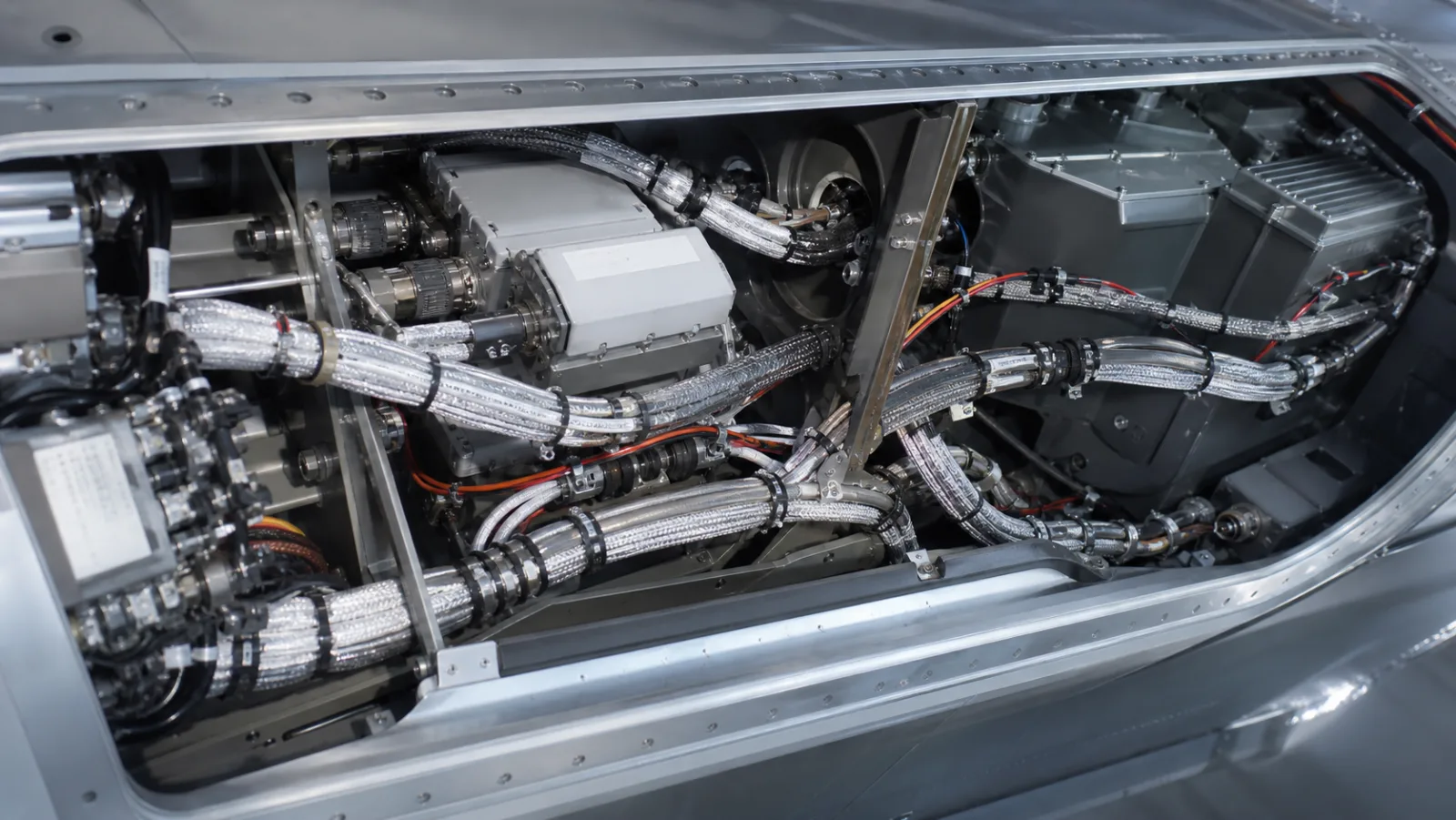
An aircraft wire harness is not commercial cable cut to length. It flies through wide temperature swings, low pressure at altitude, constant vibration, fluid exposure and lightning-strike currents — all while carrying flight-critical power and data where a single open or short can ground an aircraft. That is why aerospace harnesses are built from qualified materials: M22759 PTFE/ETFE airframe wire rated to 260°C, MIL-DTL-27500 shielded cable for EMI and lightning protection, and D38999 circular connectors with environmental backshells — assembled to mil-spec construction and workmanship standards from the first cut.
Across an airframe the wiring changes job at every zone: dual-redundant MIL-STD-1553 and ARINC 429 databus running avionics, EWIS power distribution feeding bus bars and generators, sensor and actuator harnesses on flight controls and engines, cabin and in-flight entertainment distribution, and ultra-light payload wiring on UAVs. We build each as a custom, weight-optimized assembly using high-temperature cable, shielded constructions and coaxial cable where signal integrity matters — all 100% electrically tested before they leave the floor.
Aerospace applications we wire
Aircraft harnesses and cable assemblies for every zone of an airframe and payload
Avionics & Databus Harnesses
Signal-integrity harnesses for navigation, communication, radar and flight-management systems. We build MIL-STD-1553 dual-redundant databus, ARINC 429 point-to-point links and CAN backbones with controlled-impedance shielded pairs that keep telemetry clean inside an electrically noisy airframe.
Power Distribution & EWIS
Primary and secondary electrical wiring interconnection system (EWIS) harnesses for power distribution, bus bars and generator feeders. High-strand copper conductors, separated routing and lightning-protective shielding are built to SAE AS50881 aerospace wiring practice.
Sensor & Actuator Harnesses
Flight-control, fuel, hydraulic and engine-monitoring harnesses linking sensors, servos and actuators. High-temperature M22759 wire and MIL-DTL-38999 backshell-banded terminations survive the heat, vibration and fluid exposure of zone and engine-nacelle installations.
In-Flight Entertainment & Cabin
Cabin management, seat power, lighting and IFE distribution harnesses. Lightweight, weight-optimized constructions with shielded data lines route through seat tracks and overhead bins while meeting cabin smoke, flammability and weight-budget requirements.
UAV & Drone Systems
Lightweight, flexible harnesses for unmanned aerial vehicles, autonomous aircraft and payload bays. Fine-strand copper-alloy conductors and miniature D38999 / micro-circular connectors cut weight where every gram costs endurance.
Ground Support Equipment
Rugged cable assemblies for aircraft ground power units, maintenance test sets and airport service vehicles. Heavy-duty MIL-DTL-5015 connectors and abrasion-resistant jackets handle repeated mate cycles on the ramp.
Built aerospace-grade, layer by layer
Conductors
Lightweight high-strand tinned, nickel- or silver-plated copper and copper-alloy conductors, sized for ampacity while trimming every gram of airframe weight.
Insulation
M22759 PTFE and ETFE (Tefzel) primary wire rated for 150–260°C continuous service — the dielectric strength, fluid resistance and flammability behavior airborne installations demand.
Shielding & Jacket
MIL-DTL-27500 shielded multi-conductor cable with braid/foil EMI and lightning-strike protection, plus high-temp, fluid- and abrasion-resistant jackets for zone and nacelle routing.
Connectors
D38999 / MIL-DTL-38999 circular, MIL-DTL-5015 and ARINC connectors with environmental backshells and banded shield terminations for sealed, EMI-bonded interfaces.
Aerospace-grade technical capabilities
M22759 / MIL-DTL-27500 construction with D38999 connectors and MIL-STD-1553 / ARINC 429 databus, validated for high-altitude, high-temperature airborne service.

Why choose our aircraft wire harness services
Aerospace cable assemblies that pass inspection and fly reliably for the life of the airframe
Built to Aerospace Standards
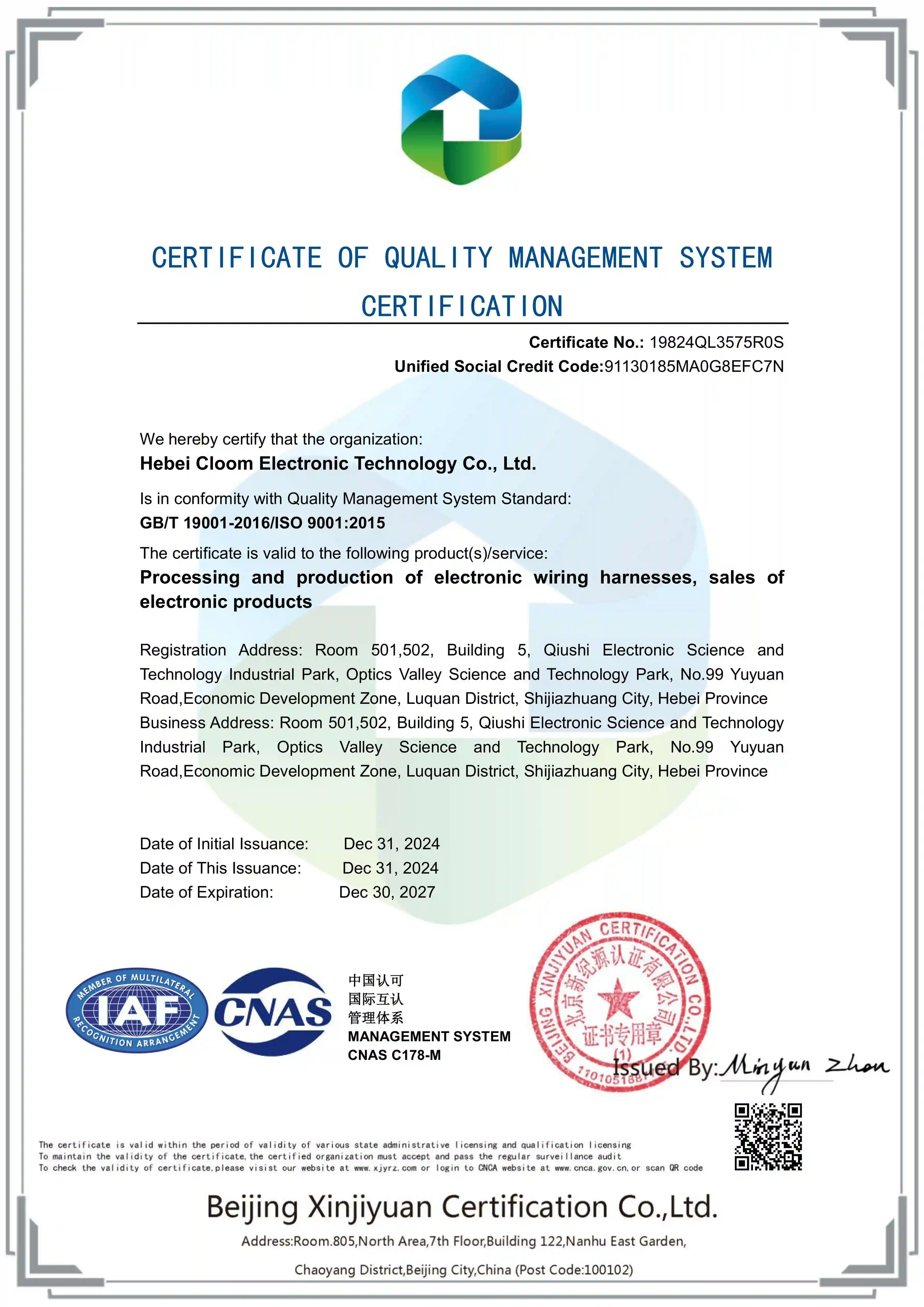
Harnesses manufactured to AS9100 quality requirements, IPC/WHMA-A-620 Class 3 workmanship and SAE AS50881 aerospace wiring practice, under our held ISO 9001 quality system.
Aerospace-Grade Materials
M22759 PTFE/ETFE airframe wire, MIL-DTL-27500 shielded cable and lightweight high-strand copper/copper-alloy qualified for high-altitude and high-temperature performance.
Lightweight Design
Weight-optimized assemblies using high strand-count wire and miniature D38999 connectors to minimize aircraft weight penalties without sacrificing reliability.
High-Reliability Testing
100% continuity and dielectric-withstand testing on every harness, plus altitude, temperature-cycling, vibration and signal-integrity verification to aerospace requirements.
Aerospace industry standards
Our aircraft harnesses are built to the aerospace and workmanship standards that integrators and quality teams require. We hold ISO 9001 and IPC/WHMA-A-620; AS9100 and SAE AS50881 are applied as build-to requirements.
Aircraft wire harness FAQ
What wire and insulation do you use for aircraft harnesses?
We build with M22759 airframe wire — lightweight high-strand copper or copper-alloy conductors with PTFE or ETFE (Tefzel) insulation rated for 150–260°C continuous service. For shielded runs we use MIL-DTL-27500 multi-conductor cable. These materials deliver the dielectric strength, fluid resistance and flammability behavior that airborne installations require, where ordinary hook-up wire would not survive.
Which connectors do you terminate for aerospace applications?
Our standard aerospace interfaces are MIL-DTL-38999 (D38999) circular connectors, MIL-DTL-5015 and ARINC connectors, terminated with environmental backshells and banded shield terminations. Miniature D38999 and micro-circular variants are used on UAV and payload harnesses where weight is critical.
Can you build MIL-STD-1553, ARINC 429 and CAN databus harnesses?
Yes. We build to MIL-STD-1553 dual-redundant databus, ARINC 429 point-to-point links and CAN backbones using controlled-impedance shielded twisted pairs. Routing, shield termination and connector selection are engineered to preserve signal integrity inside an electrically noisy airframe.
What quality and workmanship standards do you meet?
We manufacture to AS9100 quality requirements, IPC/WHMA-A-620 Class 3 workmanship and SAE AS50881 aerospace wiring practice. Our held certifications are ISO 9001 and IPC/WHMA-A-620 — other aerospace standards are applied as build-to and customer requirements rather than held certifications. For full mil-spec construction and qualification, see our mil-spec cable assembly service.
How do you keep aircraft harnesses lightweight?
Weight is engineered out at every layer: lightweight high-strand copper-alloy conductors, thin-wall M22759 insulation, miniature D38999 connectors, and weight-optimized bundling and routing. On UAV and payload harnesses, where every gram costs flight endurance, these choices add up to meaningful weight savings versus general-purpose cable.
What operating temperature can your aircraft harnesses handle?
M22759 PTFE/ETFE airframe wire is rated for continuous service up to +260°C depending on the specific construction, with high-temperature jackets for engine-nacelle and zone routing. This covers everything from cabin and avionics bays through hot-zone engine and actuator harnesses.
Do you provide EMI and lightning protection?
Yes. We build shielded constructions using MIL-DTL-27500 cable with braid and foil shields, banded shield terminations into the connector backshell, and separated routing — engineered to provide EMI rejection and lightning-strike protection for safety-critical airborne electronics.
What is your lead time for aircraft wire harnesses?
Prototype and sample harnesses ship in 7–10 days so you can validate fit, routing and connectorization on real hardware before committing to volume. Production batches scale from low-rate builds to full-rate manufacturing with the documentation and traceability aerospace programs require.
Ready for your aircraft wire harness project?
M22759 airframe wire, D38999 connectors and MIL-STD-1553 databus, 100% electrically tested, with 7–10 day samples. Talk to our aerospace specialists.
Related cable solutions
Custom cable assembly and harness services that pair with aircraft programs.
Mil-Spec Cable Assembly
MIL-DTL-38999, M22759 wire and AS9100 build-to aerospace cable programs.
Explore →High-Voltage Cable
Shielded high-voltage DC and power cable assemblies for airborne systems.
Explore →Drone Cable Harness
Ultra-light UAV and drone harnesses with miniature circular connectors.
Explore →Shielded Cable Assembly
EMI and lightning-protected MIL-DTL-27500 shielded constructions.
Explore →