What fire-safety standard do your rail UPS harnesses meet?
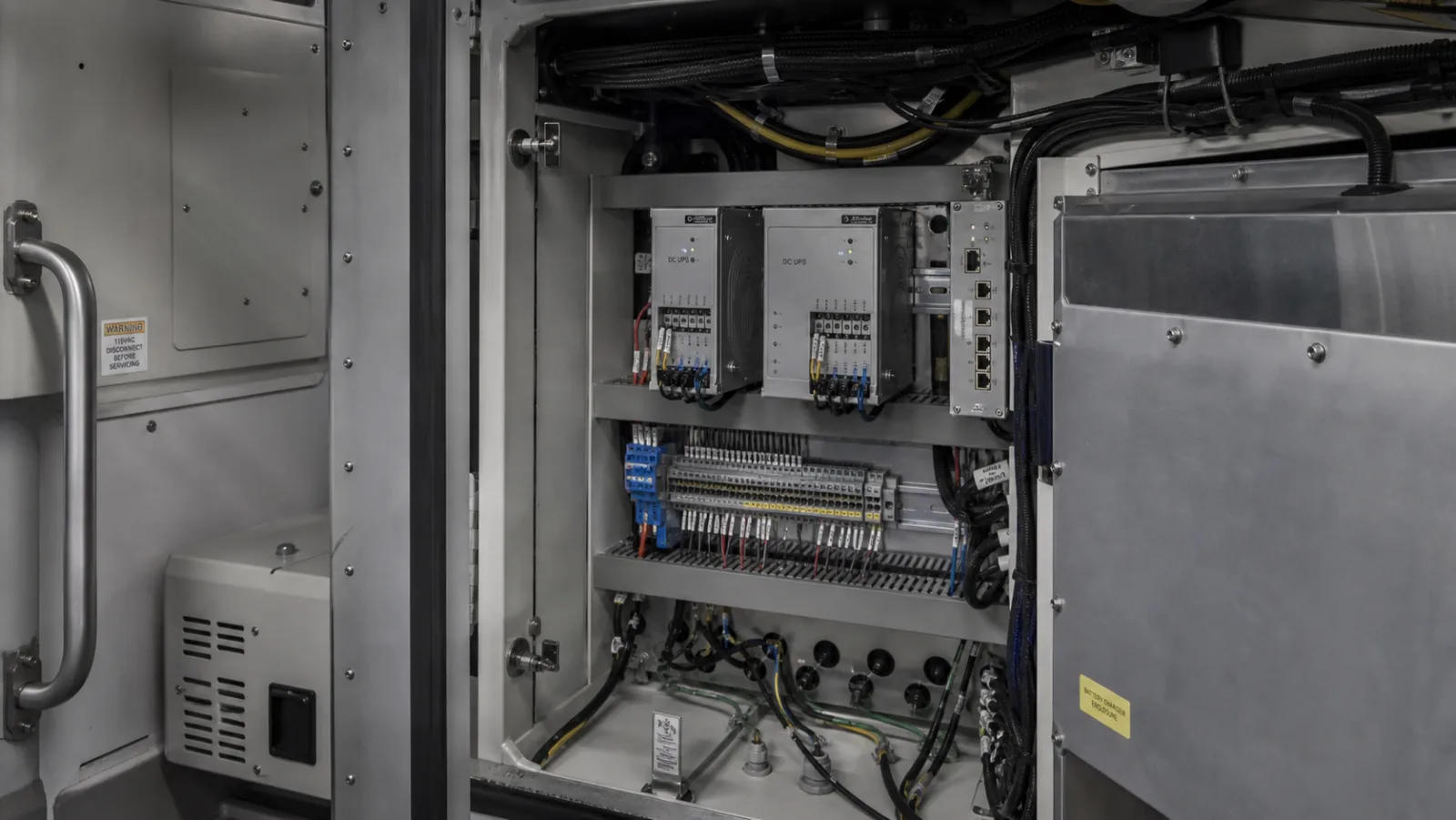
We build rail and transit backup harnesses to EN 45545-2 (European railway fire safety) and NFPA 130 (fixed guideway transit) using low-smoke, halogen-free (LSZH) cable. These materials limit smoke density and toxic-gas release inside an enclosed vehicle during a fire — a hard requirement for rolling-stock and metro UPS wiring that ordinary industrial cable cannot meet.
Are your harnesses built to EN 50155 and IEC 60571?
Yes. Onboard rolling-stock backup harnesses are built to the EN 50155 standard for railway electronic equipment and IEC 60571 rail requirements — covering temperature class, humidity, shock and vibration. We construct to your vehicle and signaling specifications; the cited rail standards describe what we manufacture to, while our held quality systems are ISO 9001 and IPC/WHMA-A-620 workmanship.
What conductor sizes do you offer for rail battery interconnects?
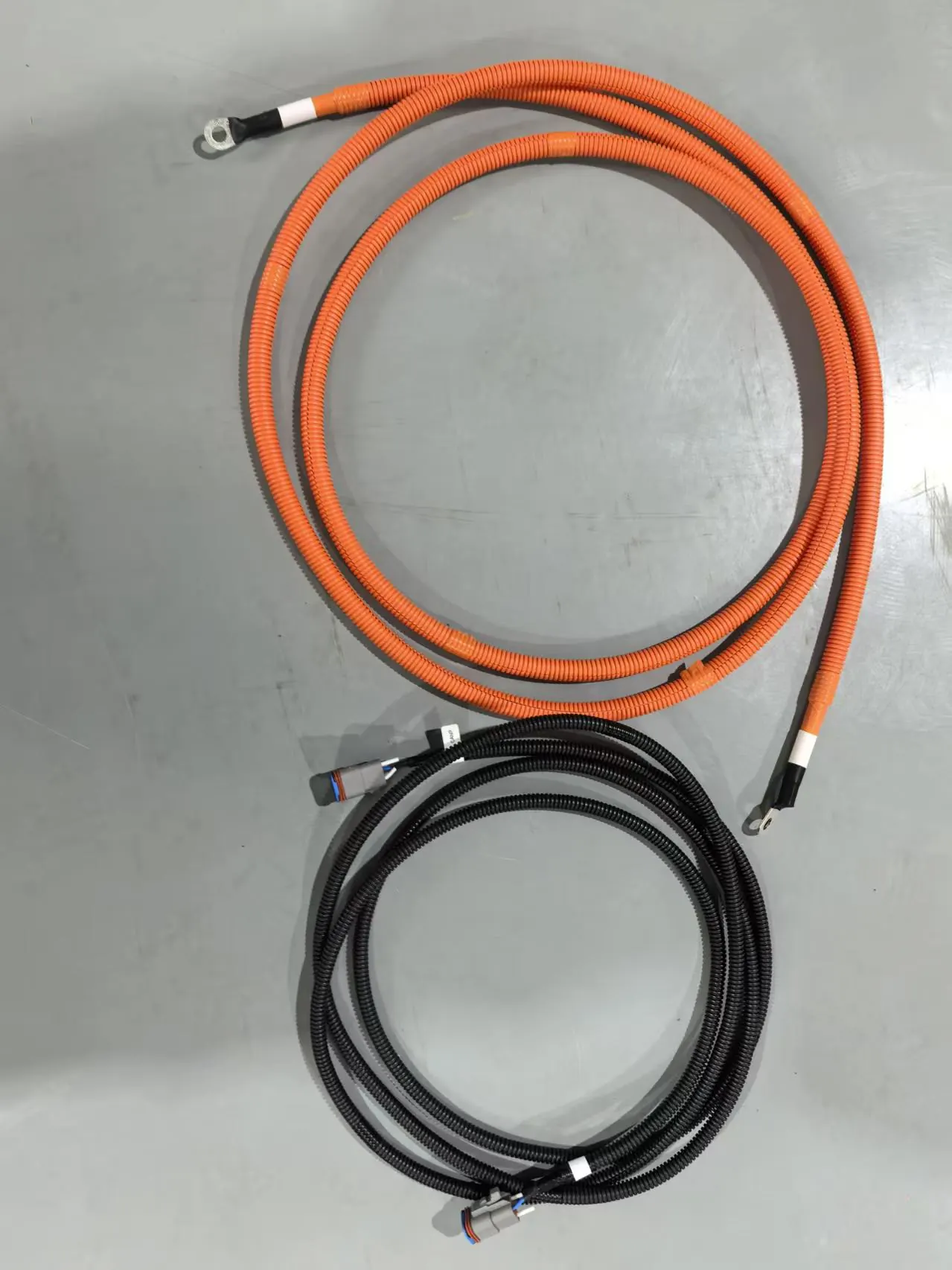
Conductor sizes run from 8 AWG up to 4/0 AWG, depending on the auxiliary-bus current and battery-bank capacity. We use vibration- and shock-resistant fine-stranded copper so the high-current interconnects between the battery box, DC/DC converters and the auxiliary bus survive constant rail movement without conductor fatigue.
Which connectors do you terminate for transit backup power?
We terminate rail-rated circular connectors, Anderson SB power connectors for high-current battery and auxiliary feeds, and sealed crimp lugs for substation battery interconnects. Anderson SB connectors handle repeated connect/disconnect on battery boxes, while sealed lugs and rail-rated circulars hold up to shock and vibration. All terminations are crimped and tested in-house — see our Anderson power connector cable assemblies for the connector detail.
Can you build BMS sense harnesses alongside the power cabling?
Yes. We combine high-ampacity battery interconnects with low-current BMS sense harnesses that monitor each cell string, building power and sense lines into a single labeled, tested assembly. That gives transit-substation and depot crews one verified harness to install instead of separate power and signal looms.
What temperature range are these harnesses rated for?
Our rail backup harnesses are rated for -40°C to +90°C continuous service, with -40°C cold-bend capability. That covers trackside signaling cabinets in winter climates, onboard battery boxes that heat up under load, and unconditioned transit-substation enclosures across the seasons.
Do you handle trackside signaling and substation backup too, not just onboard?
Yes. Beyond rolling-stock UPS we build battery-bank interconnects for wayside signaling and interlocking cabinets, level-crossing controls, and transit traction-substation backup. These are sealed, abrasion-resistant assemblies engineered to ride through grid outages without dropping a safety-critical circuit in an unconditioned trackside enclosure.
What are your MOQ and lead times for rail UPS projects?
We support prototypes from 1–10 pieces with 7–10 day sample lead times, scaling to production batches (typically 500+ units, negotiable). This lets rail integrators validate a backup harness against the actual battery box, signaling cabinet or substation rack before committing to volume, at a high first-pass yield.