Cable Assembly

USB Cable Assembly Custom Manufacturing

Custom USB cable assemblies for USB 2.0, USB 3.x, and USB-C programs that need controlled shielding, reliable strain relief, and production-ready test coverage. We support internal pigtails, panel-mount builds, overmolded customer cables, and OEM contract production.

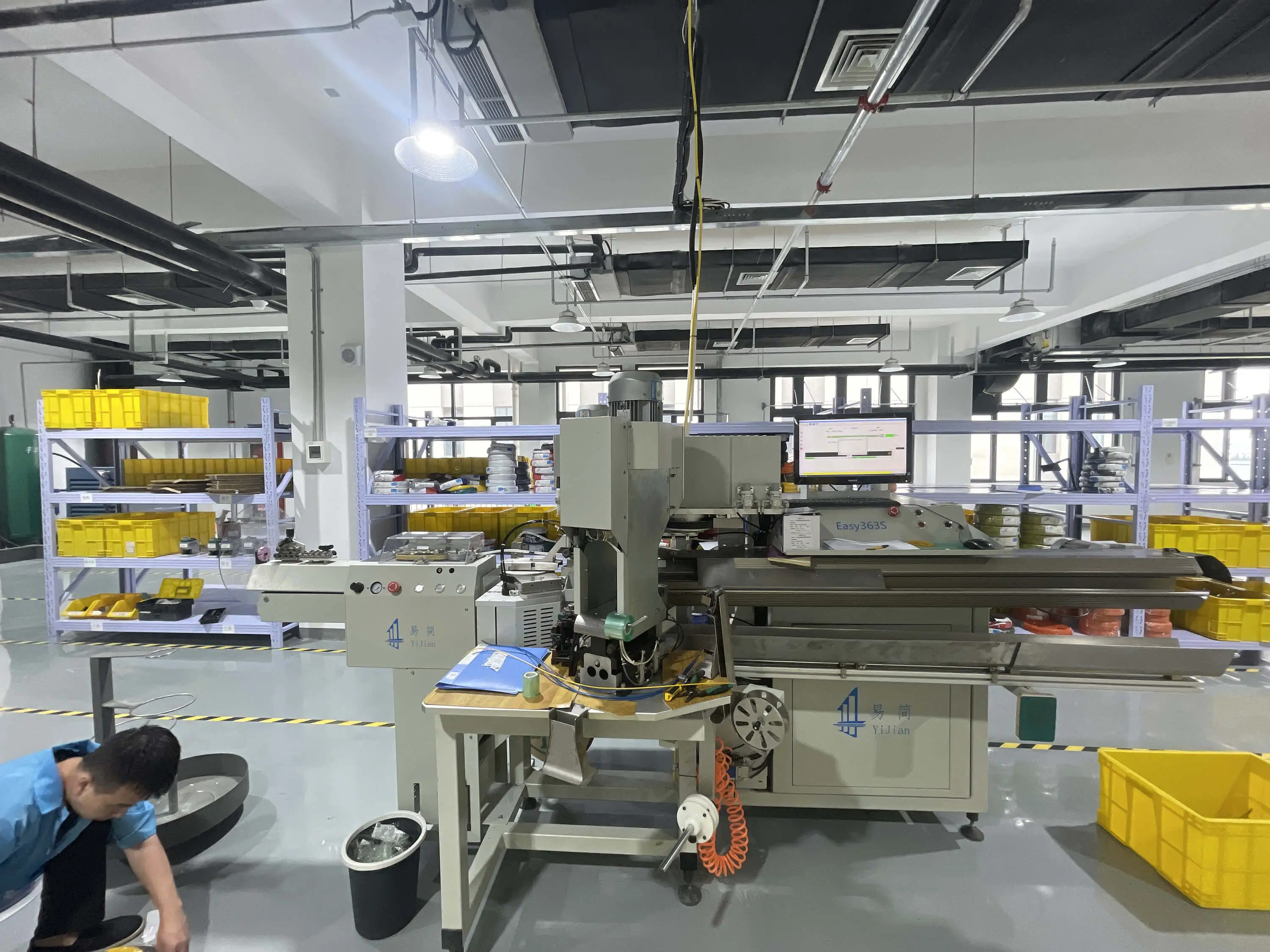
Custom USB cable assembly manufacturing with shielded cable routing and connector termination
Connector SupportUSB-C
Electrical Test100%
Prototype Days5–10
Build ControlOEM

Application Context

What a custom USB cable assembly involves

USB cables look simple from the outside, but the right design varies sharply depending on whether the build is internal, field-serviceable, customer-facing, or tied to higher-speed data. Standard cables are useful for evaluation and general accessories, but OEM programs usually need a different combination of length, panel geometry, current capacity, shielding behavior, appearance, or packaging — that is where a dedicated USB cable assembly saves rework.

We manufacture charging-only leads, USB 2.0 data cables, SuperSpeed USB 3.x harnesses, and USB-C builds that need controlled pair routing, shield continuity, and repeatable connector termination. Where a product sees frequent plugging cycles we add overmolded exits and strain relief; where cable length, connector fit, or shield strategy is still open we lock the construction first with prototype cable assembly; and programs that extend into controlled-impedance RF work carry over to our coaxial cable assembly service.

Capabilities

USB Cable Assembly Capabilities

Built for teams that need more than a catalog cable and need the finished assembly to match the real mechanical, electrical, and supply-chain constraints of the product.

USB 2.0 to USB 3.x Build Support

We manufacture USB cable assemblies for charging-only leads, USB 2.0 data cables, SuperSpeed USB 3.x harnesses, and USB-C builds that need controlled pair routing, shield continuity, and repeatable connector termination.

  • USB 2.0, USB 3.0, USB 3.2 capable
  • Charging-only or data-enabled builds
  • Prototype through production support

USB-C, Type-A, Micro-B, Mini-B & Panel-Mount Options

Programs range from internal board pigtails to external customer-facing cables. We support common USB connector families, locking panel interfaces, molded exits, and adapter-style assemblies based on your mating and packaging constraints.

  • USB-C, Type-A, Type-B, Micro-B, Mini-B
  • Panel-mount and bulkhead styles
  • Custom breakout and adapter leads

Signal Integrity & Shielding Control

High-speed USB assemblies fail when the twisted pair geometry, drain path, shield termination, or exit routing drift outside the design window. We review cable construction, braid and foil selection, impedance targets, and connector pin mapping before release.

  • Differential-pair aware routing
  • Foil, braid, or combo shielding
  • Drain-wire and shell-ground review

Power Delivery & Cable Current Review

For USB-C power programs we evaluate conductor size, voltage drop, connector temperature rise, and whether the assembly needs an e-marker or specific CC implementation before quoting a production build.

  • Charging-only or PD-capable builds
  • Power wire gauge selection
  • Voltage-drop review before sample

Overmolding, Strain Relief & Branding

Where the product sees frequent plugging cycles or field handling, we add molded exits, grommets, labels, heat shrink, or custom packaging. That matters for medical carts, handheld devices, kiosks, and retail accessory programs.

  • Overmolded exits available
  • Labeling and private packaging
  • Color and jacket options

100% Electrical Verification

Assemblies receive continuity, polarity, and shorts testing as standard. Programs with tighter requirements can add insulation resistance, shell grounding verification, pull-force checks, and fixture-based functional validation.

  • Continuity and shorts test
  • Pin-map verification
  • Program-specific functional checks

Engineering Challenges

Review risk before production

01

Signal Integrity

High-speed USB assemblies fail when twisted-pair geometry, drain path, or exit routing drift outside the design window — we review cable construction, impedance targets, and pin mapping before release.

02

Shield Termination & Grounding

Shield termination and shell grounding are common failure points in custom USB builds, so foil, braid, drain-wire, and shell-ground behavior are evaluated before quoting production.

03

Power Delivery & Current

For USB-C power programs we evaluate conductor size, voltage drop, connector temperature rise, and whether the assembly needs an e-marker or specific CC implementation before a production build.

04

Mating & Packaging Fit

Connector orientation, panel and bulkhead geometry, molded exits, and branch lengths are planned so the assembly installs cleanly instead of being quoted from connector names alone.

Technical Capabilities

Technical Scope Buyers Usually Ask About

USB StandardsUSB 2.0, USB 3.0, USB 3.2, USB-C by program scope
Connector FamiliesUSB-C, Type-A, Type-B, Micro-B, Mini-B, panel-mount variants
Cable ConstructionCharging cable, data cable, shielded twisted pair, hybrid power/data
Power Support5 V charging through higher-current USB-C designs by requirement
Data LanesUSB 2.0 D+/D-, SuperSpeed differential pairs where specified
Shielding OptionsUnshielded, foil, braid, foil plus braid, shell grounding control
Jacket MaterialsPVC, TPE, TPU, PUR, LSZH depending on use environment
Length Range100 mm to 10 m+ depending on signal and power target
Termination OptionsSoldered, crimped, IDC, panel-mount, overmolded exits
Accessory OptionsFerrites, labels, heat shrink, molded boots, packaging kits
TestingContinuity, shorts, polarity, shell ground, pull check, IR as required
Compliance FrameworkIPC/WHMA-A-620, RoHS, REACH, program-specific validation
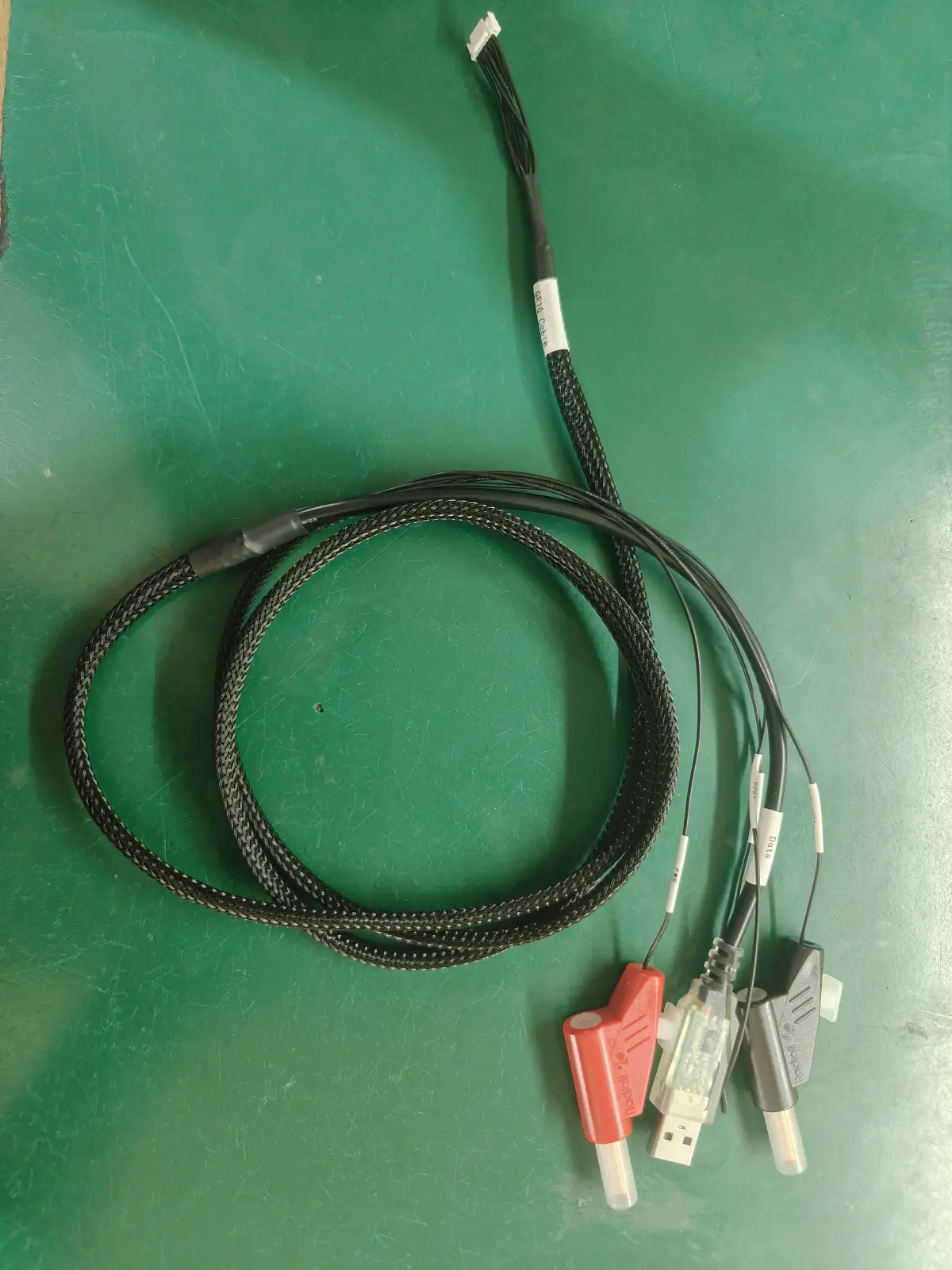
Cable preparation and connector termination process for custom USB cable assemblies

Manufacturing Process

Process Control for USB Programs

01Requirement & Mating Review
02Cable Construction Selection
03Sample Build & Fixture Setup
04Termination, Overmolding & Labeling
05Electrical & Mechanical Verification
06Controlled Release to Production

Quality & Testing

Testing matched to program risk

Assemblies receive continuity, polarity, and shorts testing as standard. Programs with tighter requirements add insulation resistance, shell-grounding verification, pull-force checks, and fixture-based functional validation — with the test scope aligned to the actual failure risk of the product before it ships.

Continuity TestShorts & PolarityPin-Map VerificationShell Ground CheckPull-Force TestInsulation ResistanceFunctional ValidationBOM & Revision LockSample Approval

Why WHP

Why choose our custom USB cable assembly service

Standard cables are useful for evaluation and general accessories, but OEM programs usually need a different combination of length, panel geometry, current capacity, shielding behavior, appearance, or packaging. That is where a dedicated USB cable assembly saves rework.

RFQ Review That Covers Power, Data, and Packaging Together

USB cable assemblies often get quoted from connector names alone. We review the electrical target, enclosure path, and use case together so the production build does not require late redesign.

Prototype-to-Production Change Control

We help teams move from pilot samples into stable production by locking the approved cable construction, termination method, and packaging record instead of letting the line drift.

Custom Assembly Without Forcing a Catalog Constraint

When an off-the-shelf USB cable misses your routing, panel, or branch requirement, we build to the real application instead of forcing the product to adapt to an unsuitable standard part.

Testing Depth Matched to Program Risk

Simple continuity may be enough for some internal service leads, but customer-facing USB cables often need a broader validation plan. We align the test scope with the actual failure risk.

USB cable assembly standards & compliance

We build USB cable assemblies to IPC/WHMA-A-620 workmanship and apply RoHS and REACH material compliance, with program-specific validation added to the acceptance criteria you require.

IPC/WHMA-A-620Workmanship
RoHSCompliant
REACHCompliant

FAQ

USB Cable Assembly FAQ

Can you build both charging-only and data-capable USB cable assemblies?
Yes. Some OEM programs only need power delivery, while others need USB 2.0 or SuperSpeed data performance. We review the cable architecture, connector pin mapping, and shield strategy before sample release so the build matches the intended use instead of looking correct but failing in the field.
Do you support USB-C cable assemblies with custom lengths and branch configurations?
Yes. We build straight-through USB-C cables, USB-C to legacy connector assemblies, panel-mount pigtails, and custom branch harnesses where USB is only one part of the overall assembly. The key is to define power, data, and mechanical requirements early because those factors drive the cable construction.
When does a USB cable assembly need shielding review?
Any time the assembly carries high-speed data, runs near noise sources, passes through a metal enclosure, or must maintain stable field performance. Shield termination and shell grounding are common failure points in custom USB builds, so we review them before quoting production.
Can you add overmolding and custom branding to USB cables?
Yes. We support molded exits, custom boots, labels, private packaging, and program-specific appearance control. For customer-facing products, those cosmetic and mechanical details should be defined at prototype stage rather than added after approval.
What information should I send for a USB cable RFQ?
Send the connector types on both ends, USB version or speed target, cable length, current requirement, drawing or photos, application environment, and expected annual quantity. If the assembly mounts to a panel or enclosure, include the mechanical stack-up as well.
What is your minimum order quantity for USB cable assemblies?
Prototype quantities can start low for engineering validation, while production programs scale after sample approval and BOM lock. The practical MOQ depends more on connector sourcing and any custom molding than on the cable type alone.

OEM Program Entry

Request a USB Cable Assembly Quote

Send your drawing, connector callout, target USB version, current requirement, and annual quantity. We will review cable construction, shielding, and production risk before issuing the quote.

We will review

  • 01Design Feasibility
  • 02Component Availability
  • 03Cost Drivers
  • 04Validation Requirements

Related Capabilities

Related Cable Assembly Services

USB cable assembly often overlaps with molded exits, prototype validation, and broader controlled-impedance interconnect work.

Applications

Where Custom USB Assemblies Fit Best

USB cables look simple from the outside, but the right design varies sharply depending on whether the build is internal, field-serviceable, customer-facing, or tied to higher-speed data.

Consumer Electronics & Accessories

USB cable assemblies for branded accessories, docks, charging products, and customer-facing device bundles where connector cosmetics, plugging durability, and packaging consistency all matter.

Industrial HMI, Kiosk & Service Ports

Panel-mount USB and internal service cables for control cabinets, kiosks, and machine HMIs that need robust strain relief, clear labeling, and stable field replacement procedures.

Medical Devices & Mobile Carts

USB leads for diagnostic peripherals, mobile workstations, patient-adjacent electronics, and cart systems where cable flexibility, clean routing, and lot traceability are important.

Embedded Computing & Test Fixtures

Internal USB harnesses and external test leads for SBCs, gateways, edge devices, and fixture stations where board-to-panel transitions and repeated mating cycles drive the design.

Automotive & Specialty Vehicle Electronics

USB charging and data assemblies for infotainment accessories, telematics retrofits, and cabin electronics that need connector retention, vibration-aware routing, and custom branch lengths.

OEM Device Programs

Build-to-print USB cable assemblies for OEMs that need revision control, controlled BOM substitutions, sample approval, and stable contract manufacturing after design freeze.

Standards & References

Standards & Reference Links

For teams aligning custom cable requirements with the broader USB ecosystem, these public references help clarify connector formats, signaling generations, and compatibility terminology used during the RFQ stage.