Custom Cable Loom Manufacturing

Cable LoomAssembly

A cable loom is a bundled wiring assembly that routes conductors, connectors, protective sleeves, labels, and branch exits as one install-ready unit. We build custom cable looms for OEM buyers who need routing control, repeatable termination quality, field-service labels, and documented testing before production release.

Routing and protection review before quote100% continuity and polarity testingSample-to-production documentation control
7-10 Day
Sample Target
100%
Electrical Test
3
Factory Network
ISO
Process Control

TL;DR

  • Cable looms combine wires, connectors, sleeves, ties, and labels into one install-ready harness.
  • Best RFQs include drawings, branch lengths, connector part numbers, protection zones, and test requirements.
  • Samples typically target 7-10 business days after BOM and connector confirmation.
  • Production looms should define IPC-A-620 workmanship, UL-758 wire style, and 100% electrical test scope.

Cable Loom Builds Planned Around Routing, Protection, and Release Control

A loom fails commercially when it fits the drawing but not the equipment. We review the installation path, branch stress, protection stack, and inspection plan before quote.

Install-Ready Loom Layouts

A wire loom is a routed wire bundle with branch exits, connector orientation, protection, and labels arranged for fast equipment installation. We build against fixture-board dimensions so branch length, breakout location, and connector clocking remain repeatable from sample to production.

Fixture-board controlled branch geometry
Connector orientation and label placement review
Drawing, sample, or photo-based RFQ support

Protection Stack Matched to the Environment

A protective cable loom is a harness assembly that uses conduit, braid, tape, sleeve, heat shrink, or grommets to reduce abrasion, splash, vibration, and service damage. We flag rub points and bend-radius concerns before the first sample is built.

Corrugated conduit, PET braid, PVC sleeve, and tape wrap
Heat shrink, boots, grommets, and strain relief options
Abrasion and service-access review before release

Controlled Crimping and Termination

Cable loom quality depends on termination control as much as routing. We align wire gauge, terminal family, applicator tooling, strip length, crimp height, pull checks, and connector insertion inspection with the released BOM.

IPC-A-620 workmanship checkpoints
UL-758 wire-style review when specified
Pull-force and visual inspection records by program

Production Documentation Buyers Can Audit

A custom cable loom should not rely on tribal assembly knowledge. We define build photos, route boards, label maps, test records, revision control, and packaging notes so repeat orders match the approved sample.

Sample records and outgoing inspection data
Continuity, polarity, and optional hipot checks
Revision-controlled BOM and work instructions
Real Project Snapshot

An anonymized example from our case bank that mirrors how this scope gets executed in production.

Industry

industrial

Region

Germany

Year

2025-2026

Scenario

A German industrial electrical systems integrator required cable harnesses for a high-volume annual program but faced sourcing constraints on specified connectors.

Challenge

The originally specified STOCKO connectors faced procurement limitations, and the required PTC components (EPCOS B59100A1080-A40) had a long 12-14 week lead time, threatening the overall project timeline for a 200kpcs/year program.

Solution

Proposed Lumberg connectors as a qualified alternative to STOCKO. Provided detailed specification comparisons and emphasized Lumberg's shorter MOQ and better delivery times to offset the PTC lead time bottleneck, while remaining transparent about the slightly higher price point of the alternative.

Result

The customer accepted the alternative for evaluation, agreeing to sample the Lumberg-based assemblies, which kept the high-volume annual program viable despite initial component sourcing bottlenecks.

Concrete Numbers

100kpcs/year per product (200kpcs total annual volume)PTC model: EPCOS B59100A1080-A40PTC lead time: 12-14 weeksConnectors evaluated: STOCKO vs. Lumberg

Anonymized from a real project. Specific buyer identifiers withheld; numbers quoted verbatim from project records.

Where Custom Cable Looms Make Procurement Sense

Cable loom sourcing is most valuable when equipment teams need consistent installation, cleaner service work, and fewer wiring errors across repeat builds.

Vehicle and Specialty Equipment Looms

Automotive, electric vehicle, motorcycle, truck, trailer, and off-highway equipment looms with branch protection, clips, conduit, and labels planned around the installation path.

Industrial Control and Machine Looms

Panel-to-sensor, motor, actuator, and control harness looms for automation equipment where routing, shield separation, and clear labels reduce assembly time.

Field-Service Replacement Looms

Replacement or retrofit loom assemblies with connector maps, color coding, labels, and packaging intended for technicians who need fast and low-error installation.

Power and Signal Mixed Looms

Mixed-gauge loom assemblies with power, signal, sensor, and communication branches separated by shielding, sleeve choice, or routing rules when the equipment requires it.

Cable Loom RFQ and Build Scope

Typical InputsDrawing, wire list, BOM, connector part numbers, sample photos, and installation notes
Conductor RangeSignal, sensor, control, and power leads across common OEM wire gauges
Protection OptionsConduit, braided sleeve, tape wrap, heat shrink, boots, grommets, and cable ties
Connector SupportMolex, JST, TE Connectivity, Amphenol, M12, sealed automotive, and customer-specified families
Sample Lead TimeTypically 7-10 business days after technical review and material confirmation
Production Lead TimeUsually 3-5 weeks depending on connector sourcing, loom complexity, and volume
Testing100% continuity and polarity testing, with hipot or insulation resistance when specified
WorkmanshipIPC-A-620 aligned assembly criteria with program-specific inspection notes
Quality ReferencesISO 9001 process control, IATF 16949 discipline by automotive program, and UL-758 wire review when required
DocumentationDFM feedback, sample records, test reports, label map, packaging notes, and revision control
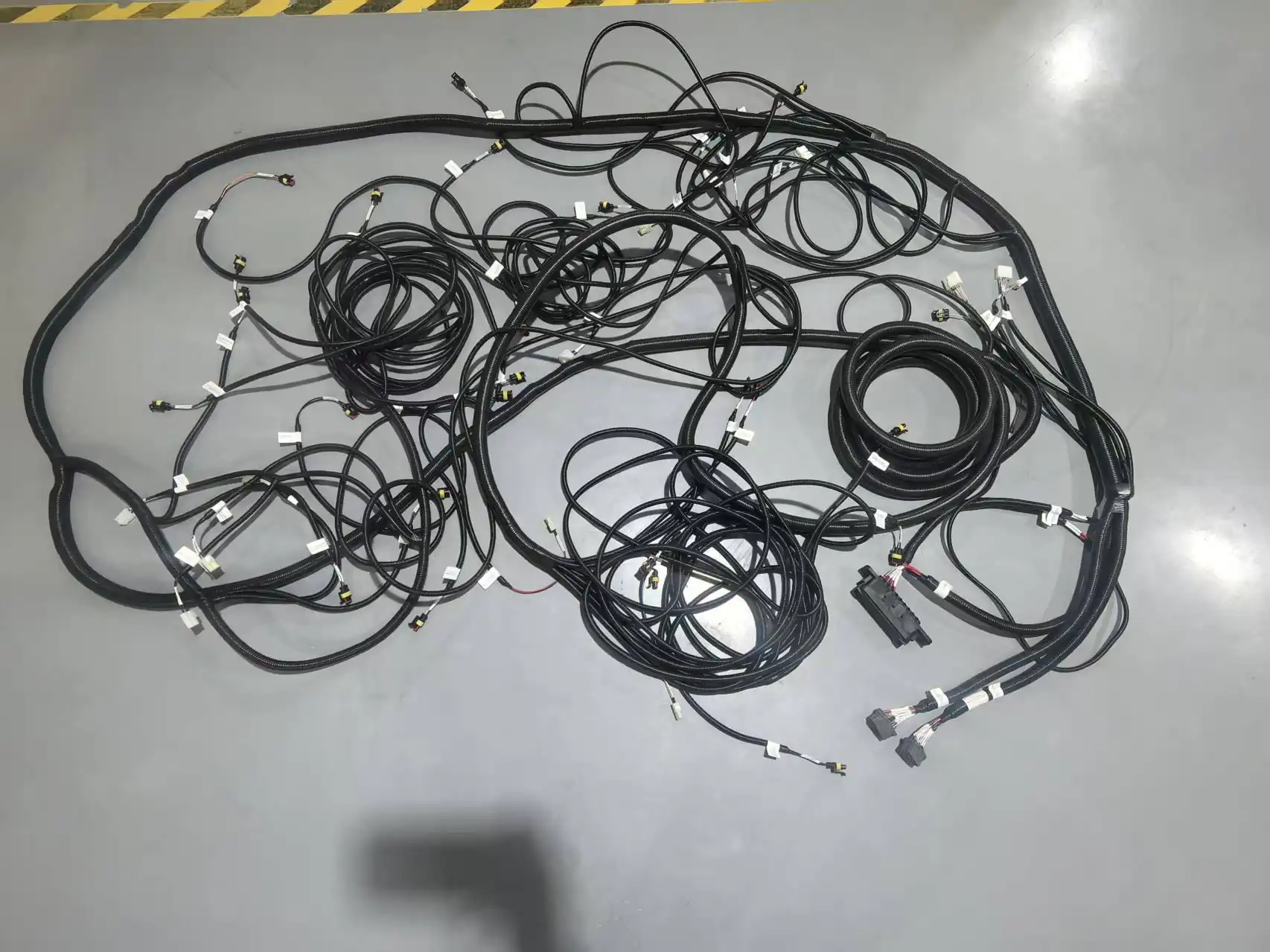
Cable Loom

Why OEM Buyers Use WellPCB for Cable Loom Manufacturing

The lowest piece price does not help if the loom causes installation delays, connector strain, or field wiring mistakes. We quote the assembly around how it will be built, tested, packed, and installed.

We Review the Loom as an Installed System

Our engineers check branch exits, connector orientation, protection zones, label readability, and service access before quote. In loom RFQs, we often find missing branch datums, undefined sleeve stop points, or connector clocking gaps before a buyer has paid for samples.

We Turn Ambiguous Samples Into Repeatable Builds

Many buyers begin with an old loom sample, a wire list, or equipment photos. We help convert that package into controlled build notes, test scope, and quote assumptions so the second order does not drift from the approved first article.

We Tie Standards to Practical Inspection

IPC-A-620 is used for workmanship expectations, UL-758 is reviewed for wire style and insulation requirements when specified, and ISO 9001 release controls support repeat production. For automotive programs, IATF 16949-style discipline can be aligned with customer PPAP or sample approval needs.

We Give Procurement Clear Lead-Time Drivers

Instead of a vague quote, we separate the risks that affect timing: connector availability, sleeve choice, tooling, sample quantity, annual volume, test fixture needs, labels, and packaging. That lets buyers compare suppliers on the real constraints.

Need a Quote for a Custom Cable Loom?

Send your drawing, wire list, sample photos, connector references, sleeve requirements, target quantity, and test needs. We will review the loom route, protection stack, termination risk, sample timing, and production release plan.

Send This With Your Cable Loom RFQ

Drawing, wire list, BOM, connector part numbers, or a physical sample photo set

Branch lengths, breakout points, sleeve or conduit zones, labels, clips, and installation environment

Sample quantity, annual volume, target lead time, testing requirements, and packaging needs

What You Get Back

Manufacturability feedback on routing, protection, termination, and missing RFQ details

Quoted sample timing, production lead time, MOQ assumptions, and material risks

Recommended inspection scope, electrical test plan, and release-document package

Buyer Questions Before Cable Loom RFQ

These are the details that most often change price, lead time, and sample approval for custom loom programs.

What is the difference between a cable loom and a wire harness?

The terms overlap in many RFQs. A cable loom usually emphasizes the routed bundle, branch protection, sleeves, ties, labels, and installation path, while a wire harness can describe the broader electrical assembly with connectors and terminals. We can quote either term from the same drawing package.

Can you quote from an existing cable loom sample instead of a full drawing?

Yes. Send photos, connector markings, wire colors, length measurements, labels, and the target equipment environment. We will identify what still needs confirmation before sampling, such as terminal references, sleeve material, branch tolerance, and test scope.

How should I specify loom protection?

Define the environment first: abrasion, splash, oil exposure, outdoor UV, bend radius, vibration, temperature, and service access. From there we can recommend conduit, braid, tape wrap, heat shrink, grommets, or mixed protection by zone.