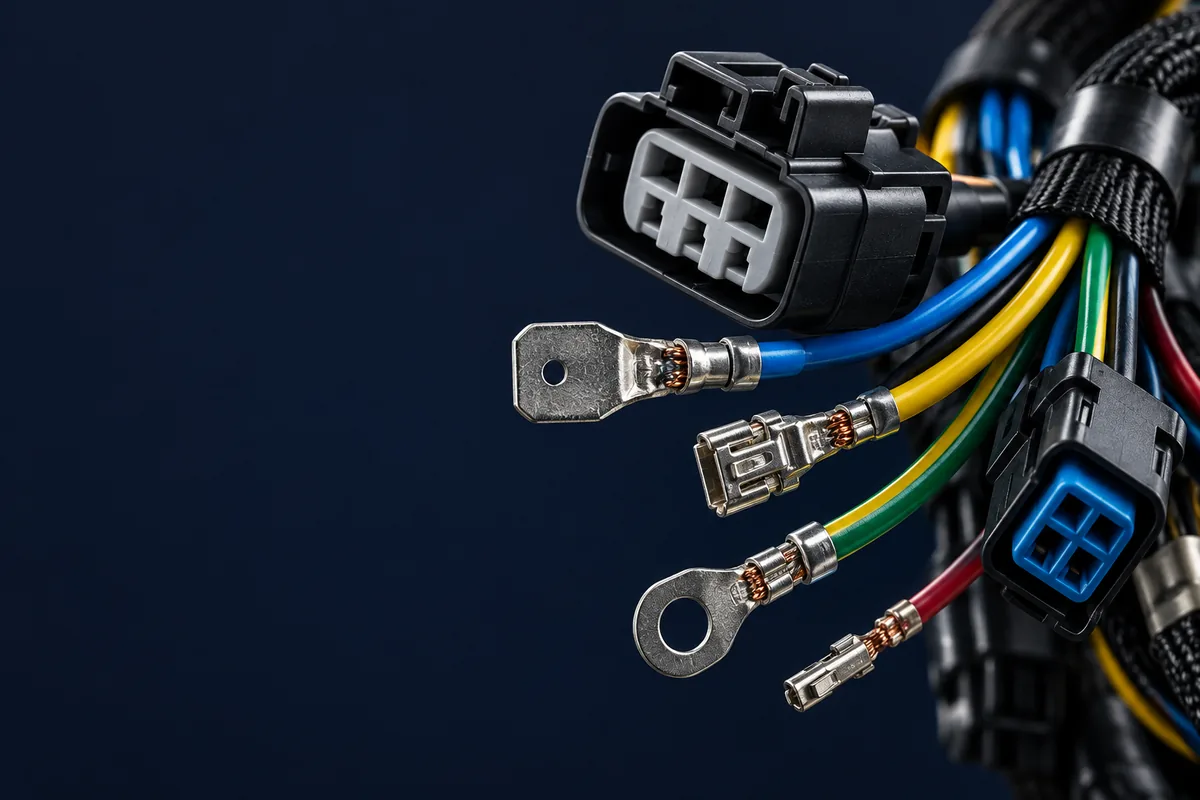
Real Project Snapshot
Anonymized example from our case bank, shared so buyers can see how this scope is actually executed in production.
Industry: industrial-equipment | Region: Australia | Year: 2025
Scenario: An Australian industrial equipment manufacturer completed a year-long testing phase of custom wire harness samples and provided specific dimensional feedback.
Challenge: The field testing revealed a specific mismatch: the conduit size on a primary harness model was 15mm, which did not meet the client's assembly requirements.
Solution: Our engineering team immediately reviewed the 15mm conduit specification feedback, collaborated with the client's engineers to define the correct dimensions, and prepared a revised quote for the updated samples and the 200-piece bulk order.
Result: Turned a potential project rejection into a collaborative design refinement, advancing the project to the next sample iteration and securing an expanded scope of inquiry for new product lines.
Concrete numbers: 15mm conduit size, 3 sample units, 200-piece batch size
A protective conduit decision that looks like a small line item can stop a wire harness program at installation. The drawing may show the right circuits, terminals, and connector housings, but if the conduit inside diameter is wrong, the harness will fight every clip, grommet, enclosure entry, and service bend on the machine.
In 2025, an Australian industrial equipment manufacturer finished a year-long field testing phase on custom wire harness samples and sent us dimensional feedback. The issue was not electrical continuity. It was mechanical fit: the primary harness model used a conduit that did not match the final assembly requirement. The case bank numbers were specific: "15mm conduit size", "3 sample units", "200-piece batch size". Our engineering team reviewed the 15mm conduit feedback, worked with the customer's engineers on the corrected dimension, and prepared a revised quote for updated samples and the 200-piece production batch.
That is the operational problem this guide solves. Conduit size affects harness build cost, lead time, routing clearance, abrasion resistance, noise, bend stiffness, grommet compression, and whether the buyer has to pay for another sample loop. If you source industrial, automotive, robotics, agricultural, or enclosure harnesses, conduit should be specified as an engineered protection system, not as a generic tube.
This article is written for OEM buyers, sourcing engineers, SQE teams, and NPI managers comparing conduit options before RFQ release. It connects to our wiring harness materials guide, grommet design guide, tape wrapping guide, and factory wiring harness service page.
Why Conduit Size Breaks Harness Programs
Conduit sizing is a geometry problem first and a material problem second. A wire bundle grows when circuits are added, splices are staggered, shields are folded back, labels overlap, tape transitions are applied, or drain wires are routed beside the main branch. A conduit that fits over loose wires on a bench may become too tight once the production build includes branch tape, splice protection, heat shrink, tie points, and final labels.
Under-sizing creates obvious problems: difficult insertion, pinched insulation, excessive assembly labor, and abrasion at conduit edges. Over-sizing creates different problems: loose fit, bundle rattle, poor clip retention, larger bend radius, enclosure crowding, and grommet leakage when the protected branch no longer compresses correctly. Both failures can pass a continuity test and still create field complaints.
The buying risk is that conduit is often selected late. Procurement may approve a low-cost corrugated tube after the harness design is mostly frozen, then discover during pilot install that the tube changes branch stiffness or will not pass through a 22 mm hole with the grommet installed. That delay is expensive because the fix may require new samples, revised drawings, updated work instructions, and retesting.
For conduit sizing, I ask buyers for the finished bundle OD, not only wire count. A 12-wire branch with two splices and a heat-shrink transition can need a different conduit than a clean 12-wire branch, even when the schematic is identical.
Workmanship expectations should also be tied to known standards. IPC-A-620 is commonly used as the cable and wire harness acceptance reference for routing, protection, and workmanship criteria. UL recognition and UL-758 appliance wiring material constraints can affect wire insulation and temperature ratings inside protected bundles. For automotive programs, IATF 16949 quality-system expectations make uncontrolled material and process changes harder to justify after PPAP or customer signoff.
Core Inputs Before You Pick Corrugated Tubing or Sleeve
Do not start with the catalog nominal size. Start with the finished branch. The supplier needs the maximum bundle outside diameter at straight sections, branch exits, splice zones, label zones, and grommet interfaces. For a split conduit, the closure behavior matters. For a non-split conduit, the largest connector or pre-installed terminal may decide whether the conduit can be installed before or after termination.
The practical fill target depends on material and service environment. For many static industrial harness branches, buyers should avoid filling rigid conduit so tightly that operators have to force the bundle through. A useful early target is to keep the finished bundle below roughly 70% to 80% of the usable conduit ID for static routing, then adjust based on bend radius, installation method, and whether the conduit is split. Dynamic service, high vibration, or serviceable branches may need more clearance and better edge control.
Here are the inputs that prevent the most RFQ clarification loops:
- Finished bundle OD range in millimeters, measured at the largest tape, splice, shield, or heat-shrink section.
- Required conduit type: split corrugated tube, closed corrugated tube, braided sleeve, spiral wrap, PVC tube, PA/PP conduit, or metal conduit.
- Routing path, clip spacing, grommet location, and minimum bend radius.
- Environment: abrasion, oil, coolant, UV, washdown, temperature, vibration, and service access.
- Installation sequence: conduit installed before crimping, after termination, or during final harness board assembly.
- Compliance targets such as IPC-A-620 workmanship, UL-758 wire rating, RoHS, REACH, and customer-specific automotive requirements.
Comparison Table: Common Harness Protection Options
| Protection Option | Best Use | Size Decision | Main Risk | Cost / Lead-Time Impact |
|---|---|---|---|---|
| Split corrugated conduit | Industrial and vehicle branches needing fast service access | Bundle OD plus room for split closure and tape transitions | Loose fit can rattle; tight fit can pinch insulation at the slit | Low to moderate cost; common sizes usually 1-2 weeks |
| Closed corrugated conduit | Higher retention where conduit is installed before final termination | Largest bundle section and installation sequence decide feasibility | Late connector changes can make installation impossible | Moderate labor if preloaded on the harness board |
| PET braided sleeve | Abrasion protection with lower stiffness and cleaner appearance | Expandable sleeve range must cover max OD and recovery grip | Fraying, weak end treatment, or poor coverage at branch exits | Moderate cost; labor depends on end sealing and branch count |
| Spiral wrap | Retrofit, small batches, or branches needing cable breakout flexibility | Wrap pitch and OD after wrapping must fit clips and glands | Slow assembly and inconsistent pitch if not controlled | Low material cost; higher labor on long branches |
| PVC or PU tube | Simple point-to-point protection, fluid splash, or smooth wipe-down | ID, wall thickness, temperature, and chemical exposure all matter | Cold stiffness, chemical swelling, or trapped moisture | Low to moderate cost; custom colors can add 2-4 weeks |
| Metal conduit or overbraid | High abrasion, heat, shielding, or rodent-resistant environments | Clearance at termination and bend radius must be checked early | Weight, grounding complexity, sharp edges, and slower assembly | Higher cost; longer sourcing and inspection cycle |
The table shows why conduit selection cannot be reduced to "10 mm versus 15 mm." The right answer depends on how the branch is built, where it moves, how it is clipped, and what evidence the buyer needs before release.
Engineering Trade-Offs Buyers Should Control
Fill Ratio and Assembly Labor
A tight conduit can look efficient in CAD but become expensive on the production line. Operators may need extra time to feed the bundle, straighten twisted wires, or protect terminals during insertion. If conduit insertion adds 30 seconds to a harness built at 2,000 pieces per month, that is more than 16 extra labor hours each month before scrap and rework are counted. Ask the supplier to quote the conduit decision with expected process impact, not just material price.
Bend Radius and Branch Stiffness
Conduit increases stiffness. A protected branch that fits in a straight layout may push against a connector when routed through a tight machine corner. If the branch exits a sealed connector, the added stiffness can move stress into the terminal cavity or seal interface. Link conduit decisions to strain relief and routing rules, especially for branches connected to pumps, motors, sensors, battery modules, or moving equipment.
Grommet and Clip Fit
Many conduit failures appear at interfaces. A conduit OD that is acceptable in open routing may be wrong at a grommet, P-clip, enclosure gland, or molded bracket. When the conduit OD changes, check the whole stack: wire bundle, tape overlap, conduit wall, grommet compression, clip diameter, and tolerance. Our waterproof cable assembly page covers why sealing interfaces need this kind of dimensional discipline.
Material Temperature and Chemical Exposure
Polypropylene, polyamide, PVC, polyurethane, PET, and metal conduit do not behave the same under heat, oil, coolant, cleaning chemicals, UV, or cold flex. Buyers should state the service temperature range and the chemical list instead of asking for "industrial grade" protection. A harness routed near an engine, hydraulic system, agricultural sprayer, battery cabinet, or washdown robot needs a different material decision than an indoor control cabinet.
The wrong conduit usually creates a mechanical failure before an electrical failure. The harness may pass 100% continuity, then fail because the branch cannot sit in the clip, seal through the grommet, or survive abrasion at the machine frame.
Validation Evidence Before Production Release
Buyers should request evidence proportional to risk. A low-risk static cabinet harness may need dimensional photos, fit check, and continuity test. A vehicle, outdoor industrial, agricultural, or robotics harness may need abrasion review, temperature exposure, vibration consideration, pull or retention checks at branch exits, and a first article report. For controlled automotive programs, conduit changes after sample approval may also require customer notification or PPAP impact review.
A practical first article package for conduit-controlled harnesses includes:
- Measured finished bundle OD before conduit and measured final OD after conduit or sleeve installation.
- Photos of branch exits, conduit ends, tape transitions, grommet interfaces, clips, labels, and connector backshells.
- Continuity and hipot results where the product specification requires them.
- Workmanship inspection against the agreed class or customer criteria, commonly referencing IPC-A-620.
- Material declarations for RoHS, REACH, flame rating, UL-related wire constraints, and customer chemical restrictions.
- Installation notes showing whether conduit is fitted before or after crimping and whether special tooling is required.
For the Australian industrial project mentioned earlier, the lesson from the 15mm conduit feedback was simple: dimensional validation has to happen on the installed sample, not only in the harness board drawing. The 3 sample units created a controlled path for correction before the 200-piece batch. That is far cheaper than discovering the same problem after all production material is cut, labeled, and packed.
RFQ Checklist for Conduit-Controlled Harnesses
Send more than the schematic. A supplier can quote faster and with fewer assumptions when the RFQ includes the mechanical installation data. If the conduit size is still open, ask for two options: the lowest-risk fit and the lowest-cost fit. The difference is often a few cents in material but several days in sample feedback or assembly time.
- Drawing, wire list, BOM, and any existing sample photos.
- Target conduit size if known, plus acceptable OD limits at clips, grommets, and enclosure entries.
- Quantity: prototype, pilot, and production volume, including the first release quantity and annual forecast.
- Environment: temperature range, oil, coolant, UV, washdown, abrasion, vibration, and movement.
- Target lead time and whether samples are needed before a bulk PO.
- Compliance target: IPC-A-620 class expectation, UL-758 related wire constraints, RoHS, REACH, IATF 16949, or customer-specific rules.
- Required deliverables: DFM review, quote, lead-time risk, sample photos, test report, and first article inspection record.
When a buyer sends conduit OD limits, clip drawings, and the target lead time with the RFQ, we can separate real engineering risk from routine sourcing. That often saves one full clarification loop before quoting.
Frequently Asked Questions
How do I choose the right conduit size for a wire harness?
Measure the finished bundle OD at the largest point, including splices, tape, labels, shield folds, and heat shrink. For many static branches, start with a conduit ID that leaves about 20% to 30% free space, then confirm bend radius, clip fit, grommet fit, and installation sequence before release.
Is 15mm conduit enough for an industrial wire harness?
Only if the finished bundle, tape transitions, and installation path fit inside that mechanical envelope. In our 2025 Australian industrial case, a 15mm conduit size on 3 sample units did not match the final assembly requirement, so the design had to be reviewed before the 200-piece batch.
What is the difference between split conduit and closed conduit?
Split conduit can be installed after termination and supports service access, but the slit can pinch insulation if the fill is too tight. Closed conduit has better retention but usually must be installed before final connector termination, so connector size and process sequence must be checked early.
Which standard applies to conduit workmanship in harness assemblies?
Many buyers use IPC-A-620 as the workmanship reference for cable and wire harness assemblies. It does not replace the drawing, but it gives a common inspection language for routing, protection, damage, and acceptance criteria. UL-758 may matter when appliance wiring materials and insulation ratings are part of the requirement.
How much does conduit choice affect lead time?
Common split corrugated conduit sizes may add only 1-2 weeks when stock is available. Custom colors, uncommon diameters, metal protection, special flame ratings, or customer-approved sources can add 2-6 weeks, especially if samples and material declarations are required before production.
What should I send to get a conduit-controlled harness quote?
Send the drawing, BOM, quantity, target conduit size, bundle OD limits, clip or grommet drawings, environment, target lead time, and compliance target. A strong supplier should return a DFM review, realistic quote, material lead-time notes, and a validation plan for samples or first article approval.
Need Help Locking Conduit Size Before Your Next Harness PO?
Send your drawing, BOM, current sample photos, target quantity, environment, target lead time, and compliance target. Include the conduit size you are considering, any clip or grommet drawings, and the maximum allowable OD at each installation point.
We will return a DFM review, conduit-size recommendation, cost and lead-time notes, sample or first article validation plan, and a quote for prototype or production harnesses. If the design is not ready for production, we will flag the dimensional risks before they become rework on the assembly floor.
Contact our engineering team to review your conduit-controlled wire harness before releasing the PO.