Technical Guide
Retractile Cords:
Complete Manufacturing, Specification & Sourcing Guide
A robotics OEM spent $8,000 replacing 200 retractile cords on deployed cleaning robots after the PVC jackets cracked within six months. The replacement cords — polyurethane with a properly cured 4:1 extension ratio — have been running for three years without a single field return. The difference was material selection and manufacturing process control.
Typical extension ratio range
Flex cycles for PU retractile cords
Unit cost range at production volume
Lead time for custom retractile cords
- 1. What Is a Retractile Cord?
- 2. How Retractile Cords Are Manufactured
- 3. Material Selection: PVC vs Polyurethane vs TPE
- 4. Types, Extension Ratios & Specifications
- 5. Retractile Cord vs Cable Reel vs Spring Balancer
- 6. Common Failure Modes and Prevention
- 7. Industry Applications
- 8. Integrating Retractile Cords into Wire Harness Assemblies
- 9. UL Certification and Compliance
- 10. How to Specify Custom Retractile Cords
- 11. Frequently Asked Questions
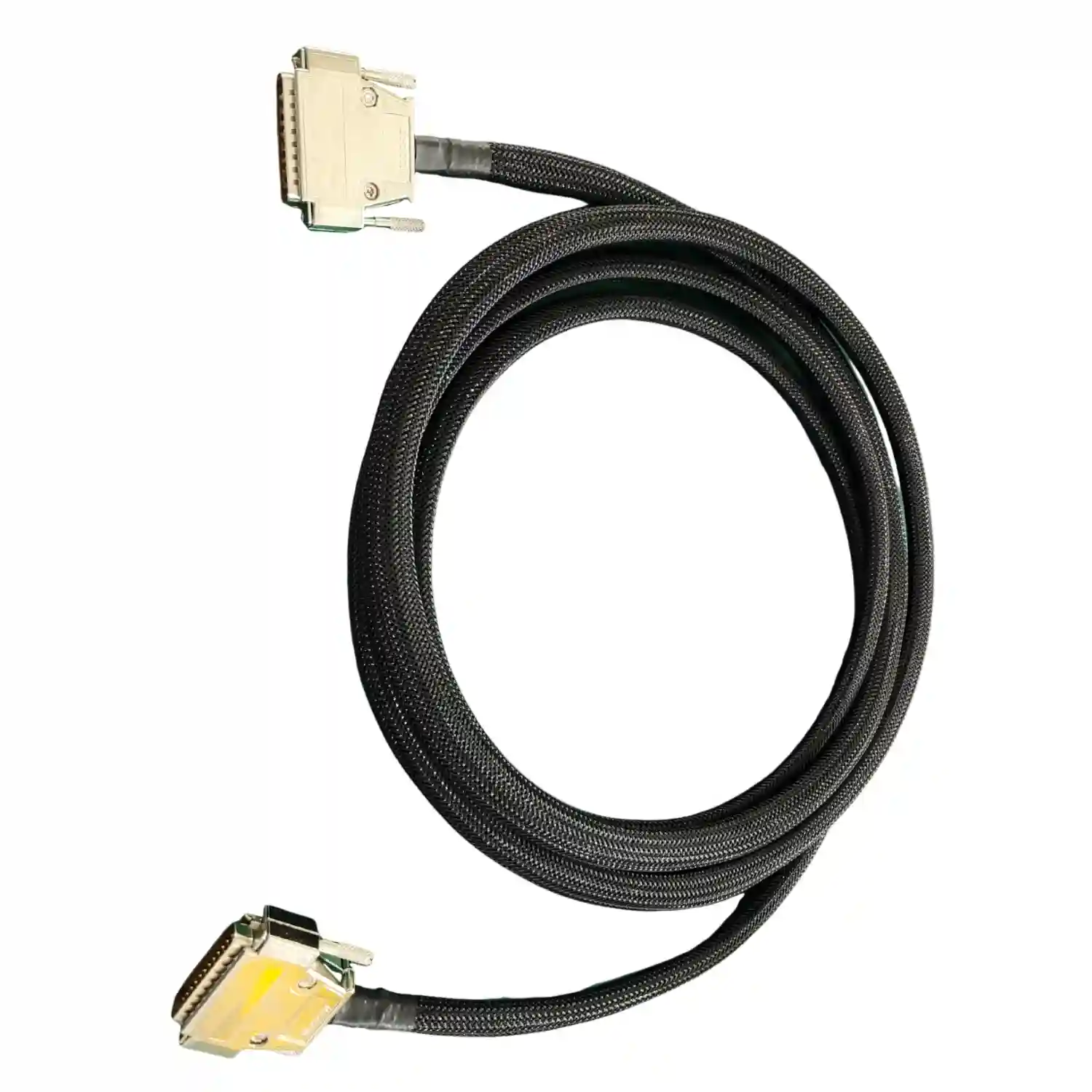
Retractile coil cord assembly showing helical coil structure and terminated connectors for industrial application
Custom retractile cord assembly with terminated connectors for industrial cable management
Every cable management decision involves a tradeoff between reach, compactness, and reliability. Retractile cords — the helically coiled cables that self-retract when released — solve all three simultaneously. They deliver 6 to 15 feet of working reach from a package that coils down to 18 inches, with no mechanical reels, springs, or moving parts to maintain.
The global retractile cord market serves medical devices, industrial automation, military communications, point-of-sale terminals, and robotics. Yet most procurement teams and design engineers specify retractile cords based on incomplete data — choosing PVC when polyurethane was required, or accepting a 3:1 extension ratio when the application demanded 5:1. The result: premature memory loss, jacket cracking, and expensive field replacements.
This guide covers the manufacturing process that creates coil memory, the material properties that determine service life, how to choose between retractile cords and mechanical alternatives, and a specification checklist for ordering custom retractile cords that perform for years — not months.
1. What Is a Retractile Cord?
A retractile cord is a cable permanently formed into a helical coil that self-retracts to its coiled length when tension is released. The coil memory is thermally set during manufacturing — the cable is wound around a mandrel and heated above its jacket material's glass transition temperature, then cooled under controlled tension. This molecular rearrangement creates permanent "spring memory" that allows the cord to extend and retract thousands of times without mechanical assistance.
The terms retractile cord, coil cord, curly cord, and spiral cable all describe the same product. "Retractile" is the NEC (National Electrical Code) designation used in Article 400 for flexible cord classifications. "Coil cord" is the industry trade name. Old telephone handset cables are the most recognizable example, but modern retractile cords carry power, data, and signal connections in configurations from 2 to 40+ conductors.
Extension ratio is the defining specification. A cord with a 4:1 ratio and a 2-foot coiled length extends to 8 feet. Standard ratios range from 3:1 to 5:1, with custom ratios up to 8:1 available for specialized applications. The ratio depends on mandrel diameter, wire gauge, jacket thickness, and curing parameters.
2. How Retractile Cords Are Manufactured
Retractile cord manufacturing is a five-stage process where the curing stage determines coil quality. Manufacturers that rush curing — holding temperature for 20 minutes instead of the required 45 — produce cords that lose memory within months. The mandrel winding and heat-setting steps cannot be shortcut without compromising the product.
Mandrel diameter controls the coil's outer diameter and retraction force. A smaller mandrel produces a tighter coil with higher retraction force but reduced extension ratio. Manufacturers stock mandrels from 0.25" to 3" OD. Custom mandrel fabrication adds $500–$2,000 to tooling but allows precise control over coil geometry for space-constrained applications.
The difference between thermoset and thermoplastic curing matters for service life. Thermoplastic materials (PVC, TPE) can be reformed with heat — useful for manufacturing but a liability in high-temperature environments where ambient heat can relax coil memory. Thermoset materials like cross-linked polyethylene (XLPE) and some specialty polyurethanes form permanent chemical bonds during curing and resist thermal relaxation up to their decomposition temperature.
Table
| Stage | Process | Critical Parameters | Typical Duration |
|---|---|---|---|
| 1. Wire Prep | Cut, strip, and pre-tin conductors to length | Wire gauge ±0.5 AWG, strip length ±1mm | 5–10 min/batch |
| 2. Mandrel Winding | Wind cable helically around steel mandrel at controlled pitch | Mandrel OD, pitch angle, tension (2–8 lbs) | 10–20 min |
| 3. Oven Curing | Heat wound assembly to set coil memory | PVC: 150°C/45 min; PU: 180°C/60 min | 45–90 min |
| 4. Cooling | Controlled cool-down while still on mandrel | Rate: 2–5°C/min to room temperature | 30–60 min |
| 5. Termination | Strip coil ends, crimp/solder connectors, overmold if required | Pull test ≥ spec per UL 486A | 15–30 min |
Quote
Text: The oven stage is where retractile cord quality is won or lost. We hold PU cords at 180°C for a full 60 minutes — some competitors cut this to 30 minutes to increase throughput. Our cords maintain 95% retraction force after 100,000 cycles. The shortcut cords drop to 60% within 20,000 cycles. You cannot test for this at incoming inspection — it only shows up six months later in the field.
Author: Hommer Zhao
Role: Engineering Director
3. Material Selection: PVC vs Polyurethane vs TPE
Jacket material determines 80% of a retractile cord's service life, chemical resistance, and operating temperature range. PVC dominates budget applications. Polyurethane (PU) is the standard for industrial and medical environments. TPE (thermoplastic elastomer) bridges the gap for applications requiring flexibility without PU cost.
For medical device applications, polyurethane is the standard choice — it withstands daily wipe-down with isopropyl alcohol and quaternary ammonium disinfectants without crazing or cracking. PVC jackets degrade visibly after 6 months of hospital cleaning protocols. Hytrel (a DuPont thermoplastic polyester elastomer) costs 4–6x more but handles autoclave sterilization temperatures that would destroy PU.
Table
| Property | PVC | Polyurethane (PU) | TPE | Hytrel (DuPont) |
|---|---|---|---|---|
| Temperature Range | -10°C to +70°C | -40°C to +90°C | -30°C to +80°C | -40°C to +150°C |
| Flex Life (cycles) | 50,000–100,000 | 500,000–2,000,000 | 200,000–500,000 | 1,000,000+ |
| Chemical Resistance | Fair (oils degrade) | Good (resists oils, solvents) | Good (resists UV, ozone) | Excellent (fuels, oils, acids) |
| Abrasion Resistance | Low | High | Medium | Very High |
| Memory Retention | Fair — softens above 60°C | Good — stable to 85°C | Good — stable to 75°C | Excellent — stable to 140°C |
| Unit Cost (relative) | 1x (baseline) | 2–3x | 1.5–2x | 4–6x |
| Typical Applications | POS terminals, telephone cords | Medical carts, robotics, industrial tools | Consumer electronics, light industrial | Military, aerospace, high-temp industrial |
4. Types, Extension Ratios & Specifications
NEC Article 400 classifies retractile cords by insulation type, temperature rating, and application environment. The most common types for retractile cord applications are SOOW, SEOOW, and STOW — all flexible cord constructions rated for hard usage or extra-hard usage.
Extension ratio selection depends on the working envelope. Measure the maximum reach your operator needs, then divide by the available coiled storage space. A 5:1 ratio gives more reach per foot of coiled cord but produces higher retraction force — which matters for hand-held devices where the cord pulls against the operator's grip. For robotics cable assemblies, a 3:1 or 4:1 ratio typically provides the best balance between reach and retraction force.
Table
| Cord Type | Description | Voltage | Temp Rating | Best For |
|---|---|---|---|---|
| SOOW | Service, Oil-resistant jacket + Oil-resistant insulation, Weather | 600V | 60°C–105°C | Industrial tools, portable equipment |
| SEOOW | Service, Elastomer, Oil-resistant outer + inner, Weather | 600V | 60°C–105°C | Extra flexibility for robotic arms |
| STOW | Service, Thermoplastic, Oil-resistant, Weather | 600V | 60°C | Light industrial, indoor/outdoor |
| SJT | Service Junior, Thermoplastic | 300V | 60°C | POS terminals, consumer electronics |
| SVT | Service Vacuum, Thermoplastic | 300V | 60°C | Vacuum cleaners, light-duty appliances |
Quote
Text: Extension ratio is a design constraint, not a wish list. A client asked for 8:1 on a 16 AWG 4-conductor cord and couldn't understand why retraction force was so high that the cord pulled their handheld scanner off the counter. We redesigned at 4:1 with a longer coiled length — same working reach, half the pull force. Ratio and working reach are separate decisions.
Author: Hommer Zhao
Role: Engineering Director
5. Retractile Cord vs Cable Reel vs Spring Balancer
Retractile cords are one of three cable management solutions — and picking the wrong one costs more than just the hardware. A cable reel adds $200–$500 and 15 lbs to a workstation that only needed an $18 retractile cord. A retractile cord on a 30-foot reach application fails within weeks. Matching the solution to the application prevents both over-engineering and premature failure.
Decision shortcut: If your reach requirement exceeds 15 feet or your cable is 8 AWG or heavier, skip retractile cords entirely — use a cable reel. Retractile cords above these thresholds produce excessive retraction force and lose memory faster due to the mechanical stress on larger-diameter coils.
Table
| Criteria | Retractile Cord | Cable Reel | Spring Balancer |
|---|---|---|---|
| Max Reach | 3–15 ft | 15–100 ft | 3–10 ft (fixed position) |
| Wire Gauge Range | 28–10 AWG | 16–4 AWG | 18–12 AWG |
| Weight | 0.2–2 lbs | 5–30 lbs | 2–8 lbs |
| Unit Cost | $5–$50 | $50–$500 | $30–$150 |
| Moving Parts | None | Reel hub, spring, slip rings | Spring mechanism, cable guide |
| Maintenance | Zero | Annual: lubrication, spring inspection | Semi-annual: spring check |
| Cycle Life | 500K+ (PU) | 50K–200K | 100K–500K |
| Best Application | Handheld tools, medical carts, POS | Heavy tools, vehicle repair bays | Overhead tool suspension |
6. Common Failure Modes and Prevention
Retractile cord failures cluster into three categories. Memory loss — the cord losing its ability to retract — is the most common, accounting for 60% of field returns. Three causes cover 90% of cases: over-extension beyond designed ratio, sustained heat exposure above the jacket material's glass transition temperature, or insufficient curing during manufacture.
Jacket cracking and crazing is the second most common failure at 25% of field returns. UV exposure degrades PVC, chemical attack from cleaning agents erodes unprotected surfaces, and cold-temperature embrittlement fractures jackets operated below their material rating. Use PU or TPE for outdoor applications. For medical environments with daily disinfectant exposure, specify PU with minimum Shore 80A hardness.
Conductor fatigue accounts for 15% of returns but is the hardest to diagnose. Flex cycling breaks individual strands over time, and high-frequency signals degrade as coil inductance increases with extension. Specify stranded conductors with higher strand count (Class K per IEC 60228) for power applications. For data signals above 10 MHz, use shielded conductors with drain wire and limit extension ratio to 3:1.
7. Industry Applications
Medical devices represent the highest-value retractile cord market segment. Patient monitoring cables, infusion pump cords, surgical tool tethers, and medical cart power cords all use PU-jacketed retractile cords rated to UL 60601-1. The key specification: chemical resistance to hospital disinfectants including isopropyl alcohol and quaternary ammonium compounds.
Industrial automation uses retractile cords for barcode scanner cords, handheld HMI cables, teach pendant cords, and power tool tethers. SOOW or SEOOW rating provides oil resistance required on factory floors. Robotics applications demand shielded conductors with TPE or PU jackets at 3:1 extension ratios for drag chain integration.
Military and defense applications require the most extreme specifications: MIL-DTL-compliant constructions with Hytrel or XLPE jackets operating from -40°C to +85°C. Field radio handset cords, vehicle intercom cables, and portable test equipment tethers must survive desert heat, arctic cold, and chemical warfare decontamination agents.
8. Integrating Retractile Cords into Wire Harness Assemblies
Retractile cords are often a component within a larger wire harness assembly rather than a standalone product. The retractile section connects a fixed harness in a chassis to a moving subassembly — a display panel, a scanner holster, or a robotic end-effector. The integration points where the retractile section meets the fixed harness are the highest-stress locations in the entire assembly.
Strain relief at the coil-to-harness junction is non-negotiable. Without it, flex cycling concentrates at the transition point and breaks conductors within 10,000 cycles regardless of cord quality. Overmolded strain reliefs with a 4:1 length-to-diameter ratio distribute bending stress across a longer section, extending junction life by 5–10x.
For multi-conductor applications, maintain the same conductor count and gauge through the retractile section as the fixed harness. Splicing down to smaller gauge within the retractile section saves cost but creates a thermal bottleneck — the retractile section's tighter bundling and coiled geometry reduce heat dissipation capacity by 30–40% compared to the straight run.
Quote
Text: We build 15,000 retractile assemblies per month for medical equipment. The retractile cord itself never fails — it's always the transition point. We overmold every junction with a Shore 60A TPE boot that tapers from 12mm at the harness side to 8mm at the coil entry. That $0.35 overmold eliminates what used to be a $45 field service call.
Author: Hommer Zhao
Role: Engineering Director
9. UL Certification and Compliance
Two UL standards govern retractile cord compliance. UL 62 (Flexible Cords and Cables) covers the base cable construction — conductor sizing, insulation thickness, jacket material, and voltage rating. UL 817 (Cord Sets and Power-Supply Cords) applies when the retractile cord ships with a molded plug or appliance connector attached.
UL 62 requires a minimum of 6,000 flex cycles under rated load for flexible cords. UL 817 adds dielectric withstand testing at 2,000V AC for 1 minute, plug retention force testing (minimum 35 lbs axial pull for 15A/125V plugs), and strain relief verification. Both standards require marking: UL listing mark, cord type designation, voltage rating, conductor size, and manufacturer identification.
For international markets, IEC 60227 (PVC-insulated cables) and IEC 60245 (rubber-insulated cables) are the equivalent standards. CE marking requires testing to the applicable IEC standard. Canadian certification requires cCSA or cUL marking. Medical applications add IEC 60601-1 safety requirements including creepage and clearance distances and leakage current limits.
10. How to Specify Custom Retractile Cords
A complete retractile cord specification requires 12 parameters. Missing any one of them forces your manufacturer to assume — and assumptions drive rework. Use this checklist when submitting an RFQ for custom retractile cords.
Lead time for custom retractile cords runs 4–6 weeks for production quantities of 100+. Request a prototype run of 5–10 units first — allow 2–3 weeks for prototypes. Tooling costs (mandrel fabrication, connector tooling) range from $500 to $5,000 depending on coil geometry and connector complexity. MOQs typically start at 50–100 pieces for standard configurations.
For volume pricing, the cost curve drops significantly between 500 and 2,000 units as mandrel utilization improves and material waste decreases. At 5,000+ units, negotiate annual blanket orders with quarterly releases to lock in pricing while managing inventory.
Checklist
- Number of conductors (2–40+)
- Wire gauge per conductor (AWG or mm²)
- Conductor material (tinned copper, bare copper, silver-plated)
- Shielding requirement (braid, foil, spiral, none)
- Jacket material (PVC, PU, TPE, Hytrel, XLPE)
- Coiled length (compressed, no tension)
- Extended length (maximum working reach)
- Extension ratio (3:1, 4:1, 5:1, or specify working reach)
- Coil outer diameter (fits within routing channel?)
- Connector type on each end (molded plug, bare leads, specific connector P/N)
- Operating environment (temperature range, chemicals, UV exposure)
- Regulatory requirements (UL 62, UL 817, IEC 60601, MIL-SPEC)
11. Frequently Asked Questions
Frequently Asked Questions
What is a retractile cord and how does it differ from a standard cable?
A retractile cord is a cable permanently formed into a helical coil through mandrel winding and heat curing. Unlike standard cables, it self-retracts to a compact coiled length when released and extends when pulled, with typical extension ratios of 3:1 to 5:1. A 2-foot coiled cord extends to 6–10 feet of working reach with zero mechanical parts.
I need 500 custom retractile cords for medical carts — what should I specify and what's the typical lead time?
Specify conductor count and AWG (18–22 AWG for signal, 14–16 AWG for power), polyurethane jacket for chemical resistance, shielding for data signals, and UL 62 or UL 817 listing. Lead time is 4–6 weeks: 1–2 weeks tooling, 2–3 weeks production, 1 week testing. Request 5–10 prototype units first (2–3 week lead time) to validate extension ratio and routing in the cart chassis.
Why does my retractile cord stop retracting after a few months?
Memory loss accounts for 60% of retractile cord field returns. Three causes cover 90% of cases: (1) Over-extension beyond designed ratio permanently deforms the coil. (2) Sustained heat above the jacket material's glass transition temperature relaxes coil memory — PVC fails above 70°C, PU tolerates 90°C. (3) Insufficient curing during manufacturing. Request flex-life test data showing retraction force at 10K, 50K, and 100K cycles.
Which is better for my application — a retractile cord, a cable reel, or a spring balancer?
Choose retractile cords when reach is under 15 feet, cable is 12 AWG or smaller, and the cord extends/retracts 50+ times per day. Cable reels suit 15–100 ft reach with heavy gauge cable. Spring balancers work for overhead tool suspension at a fixed position. Retractile cords cost $5–$50, weigh under 2 lbs, and have zero maintenance.
What UL certifications apply to retractile cords?
UL 62 covers base cable construction and requires minimum 6,000 flex cycles. UL 817 applies when the cord includes molded plugs, adding dielectric, plug retention, and strain relief testing. For medical use, add IEC 60601-1. For international markets, IEC 60227 (PVC) or IEC 60245 (rubber) are the equivalent standards.
Frequently Asked Questions
What is a retractile cord and how does it differ from a standard cable?
A retractile cord is a cable permanently formed into a helical coil through mandrel winding and heat curing. It self-retracts to a compact coiled length when released, with typical extension ratios of 3:1 to 5:1.
I need 500 custom retractile cords for medical carts — what should I specify?
Specify conductor count and AWG, polyurethane jacket for chemical resistance, shielding for data signals, and UL 62 or UL 817 listing. Lead time is 4–6 weeks.
Why does my retractile cord stop retracting after a few months?
Memory loss from over-extension, heat exposure above the jacket's glass transition temperature, or insufficient curing during manufacturing. Request flex-life test data from your manufacturer.
Which is better — a retractile cord, cable reel, or spring balancer?
Choose retractile cords for under 15 feet reach and 12 AWG or smaller cable. Cable reels for 15–100 ft heavy gauge. Spring balancers for overhead fixed-position tool suspension.
What UL certifications apply to retractile cords?
UL 62 covers base cable construction. UL 817 applies when the cord includes molded plugs. For medical use, add IEC 60601-1.
References
- UL (Underwriters Laboratories) — Safety Organization Overview
- IEC 60601 — Medical Electrical Equipment Safety Standard
- National Electrical Code (NEC) — Article 400 Flexible Cords and Cables
- US Patent 3318994 — Method of Making Retractile Cords
Cta
Title: Need Custom Retractile Cords?
We manufacture custom retractile cords from 2 to 40+ conductors with PVC, PU, TPE, or Hytrel jackets. Prototypes in 2–3 weeks, production in 4–6 weeks, with full UL compliance documentation.
Primarybutton: Get a Quote
Secondarybutton: See Capabilities