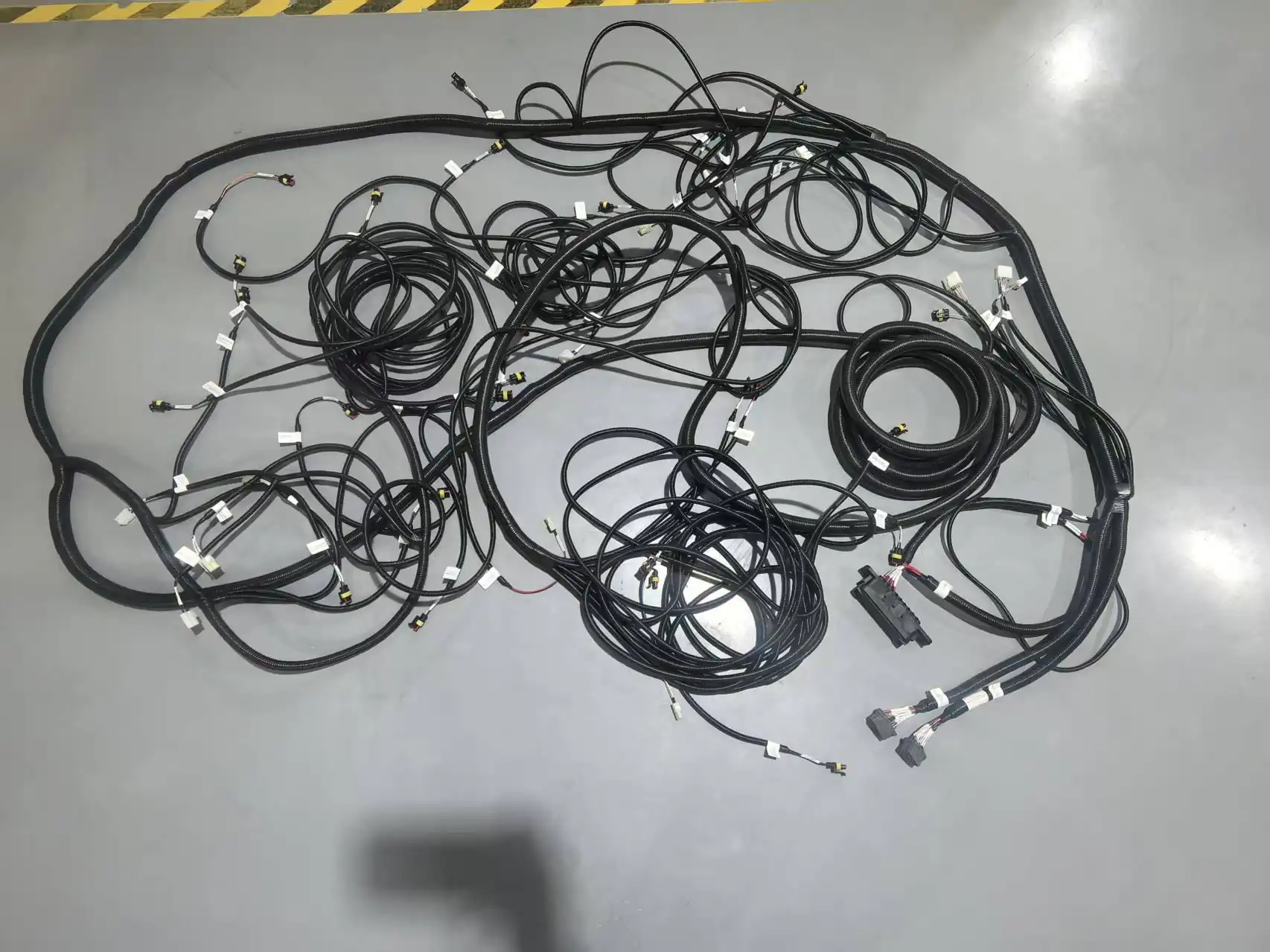
Cable Assembly

Box Build Cable Assembly without Scope Drift

Box build cable assembly is a higher-level harness integration service where tested cables, labels, connectors, glands, hardware, and customer-supplied modules are installed into an enclosure or control box. We keep the RFQ focused on routing, fit, test evidence, and packout so buyers can source a finished wiring subassembly without adding unrelated electronics manufacturing scope.

Box build cable assembly and enclosure harness integration
RFQ Risk Review24 hrs
Electrical Test100%
Typical Pilot Timing2-3 weeks
Quality SystemISO 9001

Application Context

Box build cable assembly, in brief

  • Use this service when the harness must arrive installed, labeled, tested, and packed inside an enclosure.
  • We cover cable routing, connector mounting, strain relief, labeling, hardware fit, and electrical test release.
  • Bare electronic module manufacturing and populated-module production are outside this page scope.
  • Send drawings, BOM, enclosure CAD, photos, wiring diagram, test method, labels, and packaging requirements.

Scope

What Box Build Cable Assembly Includes

A focused scope for buyers who want enclosure-ready wiring, not a vague electronics assembly quote.

Enclosure Harness Integration

Enclosure harness integration is the controlled installation of cable assemblies into a box, cabinet, operator station, or equipment module. We review bend space, connector access, gland compression, tie-down points, service loops, and branch labels before price and lead time are locked.

  • Control boxes, instrument enclosures, pump modules, and service kits
  • Harness routes checked against photos, drawings, or enclosure CAD
  • Wire, cable, connector, gland, and label ownership separated in the quote

Connector and Panel Hardware Fit

Panel hardware fit is where many enclosure builds fail. A connector may be correct electrically but still miss thread length, washer stack, rear clearance, wrench access, gasket compression, or grounding path. We review those mechanical details before first articles ship.

  • Bulkhead connectors, cable glands, terminals, switches, lamps, and service pigtails
  • Panel thickness, cutout, thread, boot, and clearance review
  • Fit checks documented before repeat production

Labeling, Serialization, and Packout

Labeling is a production control system, not decoration. We can apply wire IDs, harness tags, connector labels, barcode labels, bag labels, and revision-controlled packout so installation teams receive a box build that matches the work instruction.

  • Wire numbers, cable labels, barcode tags, and bag-and-tag kits
  • Revision-controlled labels and packing rules
  • Shipment-ready packaging for line-side or field-service installation

100% Electrical Test Before Release

A final test plan is the set of checks that proves the finished box build matches the wiring diagram and acceptance criteria. For this scope, we focus on continuity, shorts, polarity, connector pinout, shield continuity, and selected hipot or insulation resistance when the drawing requires it.

  • Continuity, shorts, polarity, pinout, and selected dielectric checks
  • Fixture planning for repeatable control-box release
  • Test reports and release evidence available by project

Material and Alternate Review

Material review protects schedule when a connector, gland, terminal, ferrule, sleeve, or enclosure accessory has long lead time. We separate approved alternates from assumptions, then show the buyer where cost, MOQ, or lead time changes before purchasing begins.

  • Connector, terminal, gland, sleeve, tie, and label sourcing review
  • Approved-equivalent notes for constrained parts
  • MOQ and lead-time assumptions visible in the quote

Scope Boundary Written Into the RFQ

A box build cable assembly page should not blur into services the buyer did not request. Our scope covers harness and cable integration inside the enclosure. Customer-supplied electronic modules can be mounted and interconnected when documented, but fabrication or population of those modules is out of scope for this page.

  • In scope: harnesses, connectors, labels, glands, hardware, test, and packout
  • Out of scope: bare electronic module manufacturing and populated-module production
  • Best fit: enclosure-ready wiring subassemblies for OEM equipment

Engineering Challenges

Where box build risk actually lives

01

Enclosure Fit & Bend Radius

A loose cable can pass electrical test yet fail the box build when the bend radius is too tight, a gland compresses the wrong jacket diameter, or a connector backshell blocks the cover — so we review the cable and enclosure route together.

02

Panel Hardware Fit

A connector can be correct electrically and still miss thread length, washer stack, rear clearance, wrench access, or gasket compression. We review those mechanical details before first articles ship.

03

Test After Integration

Continuity on loose cables does not prove the finished box is correct after routing, fastening, and connector mounting. We define the release test after integration so the evidence matches the finished build condition.

04

Long-Lead Parts & Sourcing

Connectors, glands, terminals, ferrules, and enclosure accessories can carry long lead times. We separate approved alternates from assumptions and flag cost, MOQ, or lead-time changes before purchasing begins.

Technical Capabilities

Commercial and Technical Scope

Best-fit programsHarness-in-enclosure assemblies, control boxes, instrument modules, service kits
Typical RFQ inputsDrawing, BOM, wiring diagram, enclosure CAD or photos, quantity, labels, test plan
Assembly scopeCable routing, connector mounting, glands, labels, tie-downs, hardware, packout
Testing100% continuity, shorts, polarity, pinout; hipot or IR when specified
Sample timingOften 2-3 weeks after drawing, BOM, parts, and payment confirmation
Volume rangePrototype, pilot, 100-120 unit batches, and forecasted production releases
DocumentationQuote assumptions, BOM review, test report, COC, label and packing detail
Out of scopeBare electronic module manufacturing and populated-module production
Box build cable assembly and enclosure wiring integration

Manufacturing Process

Box Build Cable Assembly Process

01RFQ Intake and Scope Split
02Drawing and Enclosure Review
03Sourcing and Alternate Check
04Sample Build and Fit Review
05Electrical Test and Documentation
06Packout and Repeat Release

Quality & Testing

Test evidence for the finished box build

Quality control happens after the finished routing condition is created, not only on loose harnesses. We define the electrical test points, polarity and shorts checks, label inspection, and connector retention for the integrated assembly, adding shield continuity, hipot, or insulation resistance when the drawing requires those records.

100% ContinuityShorts CheckPolarity CheckConnector PinoutShield ContinuityHipot / Insulation ResistanceLabel InspectionConnector RetentionRelease Documentation

Why WHP

Why Enclosure Builds Need More Than a Cable Quote

The lowest unit price is not useful when the harness does not fit the box, the label set is wrong, or final test cannot catch a wiring error.

The Enclosure Changes the Harness

A loose cable assembly can pass electrical test and still fail the box build when the bend radius is too tight, the gland compresses the wrong jacket diameter, or a connector backshell blocks the cover. We quote the cable and enclosure route together so those risks are visible.

Installation Labor Moves Upstream

When WellPCB ships a prewired module, the OEM no longer spends line time sorting loose leads, interpreting wire labels, and correcting routing variation. The trade-off is that the RFQ must include enclosure photos, wire diagram, labels, and packout rules early.

Test Evidence Must Match the Finished Assembly

Continuity on loose cables does not prove the final box is correct after routing, fastening, and connector mounting. We define the release test after integration so the buyer receives evidence for the finished build condition.

Supplier Boundaries Stay Clear

Many box build pages promise every electronics task under one heading. This page is narrower: WellPCB supports harness manufacturing, cable integration, mechanical fit, labels, and test for enclosure builds. That clarity prevents mismatched quotes and scope creep.

FAQ

Buyer Questions Before Releasing a Box Build RFQ

What is box build cable assembly in a wire harness factory?
Box build cable assembly is the integration of cable assemblies, wire harnesses, labels, connectors, glands, fasteners, and customer-supplied modules into an enclosure or control box. In our scope, the release evidence usually includes 100% continuity, shorts, polarity, and pinout testing after integration. The buyer should send drawings, BOM, enclosure CAD or photos, label rules, quantity, target timing, and test requirements so the quote covers the finished assembly rather than loose cables.
My project has 100 control boxes and a 3-week pilot deadline. Is that realistic?
A 3-week pilot can be realistic when drawings, BOM, enclosure details, and customer-supplied items are already available. In one automation case from our case bank, the program involved 100-120 unit batches, 2-3 weeks lead time after payment, 5 connector/housing variants per assembly. Similar timing depends on connector availability, enclosure hardware, label approval, and whether the test fixture is simple continuity or a custom functional check.
What files should I send to compare box build quotes fairly?
Send the wiring diagram, harness drawing, enclosure CAD or photos, BOM, connector datasheets, panel cutouts, quantity split, label artwork, test method, acceptance criteria, and packing rule. A supplier can price a cable set from fewer files, but a box build needs enclosure context. Missing panel thickness, rear clearance, gland thread, or label position can change unit cost and first-article timing after the PO.
Do you manufacture the electronic modules inside the enclosure?
This page is limited to harness-in-enclosure integration. WellPCB can mount, connect, label, and test customer-supplied modules when the drawing defines the mechanical and wiring interface, but this service does not include bare electronic module manufacturing or populated-module production. Keeping that boundary visible lets procurement compare the actual cable assembly and enclosure wiring scope without hidden assumptions.
How do you control quality after cables are installed in the box?
Quality control happens after the finished routing condition is created, not only on loose harnesses. We define 100% electrical test points, polarity checks, shorts checks, visual criteria, label inspection, connector retention, and selected hipot or insulation resistance when required. For buyer qualification, workmanship expectations can be aligned with IPC cable and harness context, while quality-system evidence can be reviewed against ISO 9000 style documentation.
When should I choose box build cable assembly instead of separate wire harnesses?
Choose box build cable assembly when installation labor, label control, enclosure fit, or final test evidence matters more than receiving loose harnesses. Separate harnesses work when your own line already handles routing and inspection. A finished enclosure wiring subassembly is better when field-service kits, control boxes, or OEM modules must arrive packed by revision with connectors, glands, hardware, and test records already matched.

OEM Program Entry

Get a Quote for Box Build Cable Assembly

Send your wiring diagram, BOM, enclosure CAD or photos, connector details, quantity, label rules, and test requirements. We will return a scope-controlled quote for harness integration, final test, and shipment-ready packout.

We will review

  • 01Design Feasibility
  • 02Component Availability
  • 03Cost Drivers
  • 04Validation Requirements

Related Capabilities

Related Harness Services

Use these pages when the RFQ is narrower than a complete enclosure wiring build.

Applications

Where Box Build Harness Integration Fits

Common programs where OEM buyers save time by receiving one tested enclosure wiring subassembly instead of loose cable sets.

Industrial Control Boxes

E-stop stations, operator pendants, pump controllers, small automation boxes, and machine modules where terminal landing, connector orientation, and label readability decide installation speed.

Instrumentation and Test Equipment

Measurement boxes, sensor breakouts, inspection fixtures, and field instruments that need shielded signal routing, panel connector fit, service loops, and serialized release documentation.

Energy and Power Modules

Low-voltage power distribution boxes, battery accessory enclosures, charger subassemblies, and serviceable power modules where wire gauge, strain relief, and packout must match the installation plan.

Medical and Diagnostic Equipment

Non-sterile diagnostic modules, cart wiring, device subassemblies, and service kits where cable routing, traceability, and final electrical test need to be controlled before shipment.

Robotics and Automation Cells

EOAT boxes, sensor junction boxes, robot controller accessories, and line-side modules where harness labels, connector keying, and replacement packaging reduce maintenance mistakes.

Field-Service Replacement Kits

Prewired boxes and cable kits for maintenance teams that need the correct harness, connectors, fasteners, labels, and instructions packed together under one revision.

Process In Detail

Box Build Cable Assembly Process

A six-step workflow that keeps enclosure fit, sourcing, labels, and test evidence visible before production release.

1 · RFQ Intake and Scope Split

We separate harness manufacturing, purchased hardware, customer-supplied modules, enclosure work, testing, labels, and packaging into visible quote lines so the buyer sees what is included.

2 · Drawing and Enclosure Review

Engineering checks wiring diagrams, BOM, CAD files, photos, panel openings, connector clearance, bend radius, service loops, and grounding points before sample timing is promised.

3 · Sourcing and Alternate Check

Purchasing reviews connectors, terminals, glands, fasteners, sleeves, labels, and enclosure accessories for MOQ, lead time, approved equivalents, and customer approval requirements.

4 · Sample Build and Fit Review

The pilot unit confirms cable length, tie-down position, label visibility, connector access, cover clearance, and test fixture needs before the build package is frozen.

5 · Electrical Test and Documentation

Operators perform 100% continuity, shorts, polarity, and pinout checks, with additional shield continuity, hipot, or insulation resistance when the drawing requires those records.

6 · Packout and Repeat Release

Approved builds are packed by enclosure, kit, serial number, or shipment lot with revision-controlled labels, accessories, COC, and test evidence when required.

Case Snapshot

Real Project Snapshot

Anonymized example from our case bank, shared so buyers can see how this scope is actually executed in production.

mining · Asia-Pacific · Recent

Scenario: During a custom wiring harness project for the mining sector, the client expanded their requirements to include highly specialized braided cables and specific identification methods.

Challenge: The client required precise braided cable configurations with specific core colors, AWG sizes, and stripe patterns, alongside laser-etched markings and injection-molded connectors, testing the supplier's material sourcing and customization capabilities.

Solution: Confirmed capability to source and manufacture the exact braided cable specifications and integrate laser-etched markings and injection-molded connectors into the assembly, providing detailed technical validation.

Result: Client expanded the scope of inquiry to include these custom components, showing increased trust in the supplier's comprehensive customization capabilities for specialized mining applications.

  • 3 Core (Yellow, Red, Blue)
  • 18 AWG GXL
  • Black braid with 2 blue stripes
  • 50m or 100m rolls

Before You Send An RFQ

Send This With Your Box Build RFQ

Harness-first box build scopeEnclosure fit review before sampling100% electrical test release

Send This With Your Box Build RFQ

  • Wiring diagram, harness drawing, BOM, enclosure CAD or photos, and connector panel details
  • Quantity split for prototype, pilot, and production, plus sample deadline and annual forecast
  • Label rules, test plan, packout requirements, customer-supplied module list, and acceptance criteria

What You Get Back

  • Scope split showing harness, hardware, customer-supplied items, test, labels, and packout
  • Fit, sourcing, MOQ, tooling, and lead-time risk notes before sample release
  • Recommended first-article checks, production test method, and packaging plan

Resources

Useful Buyer Resources

Technical references for teams preparing a cleaner enclosure wiring RFQ.

Standards & References

Standards and Reference Points Buyers Commonly Check

Enclosure harness integration usually touches workmanship, quality-system, and environmental-fit questions. These public references help teams align terminology before supplier approval.

Reviewed by

Hommer Zhao

Wire Harness and Cable Assembly Engineering Lead

  • 10+ years reviewing OEM cable assembly RFQs
  • Experience with enclosure harness fit, label, and test release
  • Factory voice from wire harness and cable assembly production