Real Project Snapshot — What Is A Cable Gland
Anonymized example from our case bank, shared so buyers can see how this scope is actually executed in production.
Industry: industrial | Region: Germany | Year: 2025-2026
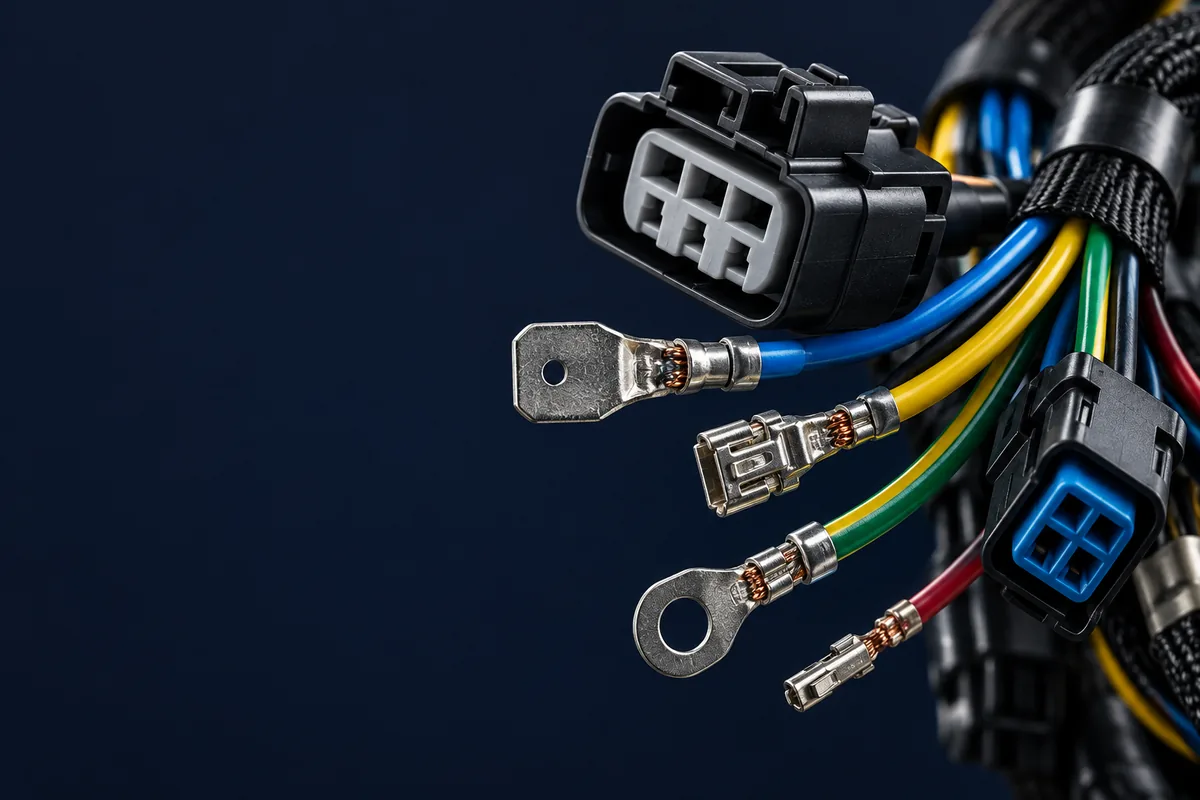
Scenario: A German industrial electrical systems integrator required cable harnesses for a high-volume annual program but faced sourcing constraints on specified connectors.
Challenge: The originally specified STOCKO connectors faced procurement limitations, and the required PTC components (EPCOS B59100A1080-A40) had a long 12-14 week lead time, threatening the overall project timeline for a 200kpcs/year program.
Solution: Proposed Lumberg connectors as a qualified alternative to STOCKO. Provided detailed specification comparisons and emphasized Lumberg's shorter MOQ and better delivery times to offset the PTC lead time bottleneck, while remaining transparent about the slightly higher price point of the alternative.
Result: The customer accepted the alternative for evaluation, agreeing to sample the Lumberg-based assemblies, which kept the high-volume annual program viable despite initial component sourcing bottlenecks.
Concrete numbers: 100kpcs/year per product (200kpcs total annual volume), PTC model: EPCOS B59100A1080-A40, PTC lead time: 12-14 weeks, Connectors evaluated: STOCKO vs. Lumberg
Technical Guide
Cable Gland Selection Essentials
Types, Materials, IP Ratings, and How Buyers Specify the Right One
A cable gland looks like a small hardware item, but in real production it decides whether a cable entry stays sealed, resists pull-out, preserves grounding or shielding, and survives the actual environment around the equipment. This guide explains what a cable gland does, how it differs from a connector, which types buyers should separate, and what information to send before requesting a quote or approving a sample.
core jobs a cable gland usually must do: retain the cable, seal the entry, and protect the enclosure boundary
common material families dominate most sourcing decisions: nylon, brass, nickel-plated brass, and stainless steel
common sealing targets for washdown, outdoor, and industrial equipment cable entry points
minimum RFQ inputs serious suppliers usually need: cable OD, thread, panel thickness, environment, material, and test expectation
Industrial cable assembly passing through an equipment enclosure where cable gland selection affects sealing, strain relief, and long-term reliability
Cable glands are small compared with the enclosure or cable assembly around them, but they control whether the cable entry remains sealed, mechanically stable, and suitable for the actual environment.
A cable gland is the mechanical interface that secures a cable where it enters an enclosure, panel, junction box, or machine housing. In U.S. industrial language, buyers may also hear cord grip, cable fitting, cable strain relief, or cable connector, but the function is the same: hold the cable, seal the opening, and prevent the enclosure from losing its intended protection level. The core definition lines up with standard public references on cable glands and the IP code system listed in the external resources section below.
That sounds simple until the wrong gland reaches the factory floor. Then the problems show up quickly: the cable OD falls at the edge of the clamping range, the thread does not match the enclosure cutout, the brass body corrodes in a marine setting, the non-shielded gland breaks EMC continuity on a braided cable, or the installer over-tightens the compression nut and cold-flows the jacket. In each case, the hardware cost is small but the operational cost is not.
For cable assembly and wire harness buyers, cable glands matter most when the cable entry must survive washdown, vibration, outdoor weather, oil, dust, flexing, or shielding requirements. If your project includes sealed interconnects, rugged equipment, or panel-mounted assemblies, a cable gland should be specified with the same discipline as the cable, connector, and test scope. That same discipline also connects to broader topics covered in our wire harness waterproofing guide, strain relief guide, and waterproof cable assembly page.
1. What a Cable Gland Does and Why It Matters
The core job of a cable gland is to manage the transition between the free cable and the enclosure wall. A good gland clamps the jacket without damaging it, seals around the cable so water or dust do not bypass the housing, and locks into the enclosure with the correct thread or locknut arrangement. Depending on the design, it may also bond armor or braid, preserve EMC continuity, or provide an entry barrier for hazardous-area equipment.
That is why a cable gland is not just a random accessory. It is part of the enclosure system. If the enclosure is supposed to maintain IP66 or IP68 performance, the gland must be specified, installed, and tested in a way that supports that target. If the equipment is being sold into North America, the discussion often expands to enclosure expectations related to NEMA enclosure types, especially when buyers are comparing washdown, outdoor, and corrosion-heavy applications.
In custom cable assembly work, the mistake is often thinking about the connector and forgetting the entry point. The mating connector may be perfectly sealed, but if the panel entry uses the wrong gland, the enclosure still fails in the field. For industrial control cabinets, robotics cells, marine equipment, and outdoor sensor nodes, the gland is frequently the weakest point unless it is treated as a controlled design input from the start.
If the clamping range does not match the cable OD, normal tugging or vibration can shift the cable and transfer load into the terminals or splice area.
If the seal is oversized, under-compressed, or assembled on the wrong jacket material, water and dust enter through the cable entry before anyone suspects the box.
Metric, PG, and NPT thread assumptions still get mixed in real projects, which creates rework at the enclosure machining stage.
Standard nylon glands do not automatically preserve EMC continuity on braided or armored cable. That requires the correct gland family.
Quote
Text: We treat cable glands as a system input, not a catalog afterthought. On sealed equipment, one wrong cable-entry choice can erase the value of an IP67 connector or a well-designed enclosure in less than 30 minutes of field exposure.
Author: Hommer Zhao
Role: Founder & General Manager
2. The Main Cable Gland Types Buyers Should Separate
Most buyers do not need to memorize every cable gland variation on the market, but they do need a clean classification system. The first split is by function: standard sealing gland, strain-relief gland, EMC or shield-termination gland, armored-cable gland, hazardous-area gland, and split gland for pre-terminated cables. The second split is by material: nylon or plastic for lighter-duty and corrosion-resistant applications, plated brass for general industrial equipment, and stainless steel for aggressive washdown, food, marine, or chemical exposure.
The wrong purchasing habit is to approve a gland by thread alone. M20 does not tell you whether the gland is appropriate for shielded cable, outdoor UV exposure, panel thickness, hygienic washdown, or flex-heavy machine wiring. A buyer must still confirm cable diameter range, body material, seal material, ingress rating, and whether the cable is round, armored, shielded, or pre-terminated.
For projects that cross between panel wiring and finished assemblies, the gland choice also affects downstream manufacturing. A split gland may be worth the added component cost if the cable already carries a molded connector that cannot be removed. An EMC gland may be necessary if the cable enters noisy drives or servo equipment. In other words, the correct gland family depends on the full cable architecture, not just the hole in the enclosure.
Table
| Cable Gland Type | Best Fit | Main Advantage | Primary Watchout |
|---|---|---|---|
| Standard nylon gland | Indoor panels, lighter industrial equipment, cost-sensitive builds | Low cost, corrosion-resistant body, easy handling | Not ideal for heavy mechanical abuse or high-temperature metal-body expectations |
| Nickel-plated brass gland | General industrial control, machine wiring, outdoor equipment | Strong body, broad availability, good all-around durability | Must still confirm seal material and corrosion suitability for the exact environment |
| Stainless steel gland | Marine, food equipment, chemical washdown, harsh outdoor exposure | High corrosion resistance and strong mechanical performance | Higher cost and unnecessary over-specification for mild indoor environments |
| EMC or shield-termination gland | Shielded cable entering drives, servo cabinets, telecom, or instrumentation enclosures | Helps maintain braid or shield continuity through the enclosure wall | Cannot be substituted with a standard gland when EMC continuity matters |
| Armored-cable gland | Steel wire armor or braided armor cable systems | Provides mechanical retention and armor termination | Wrong selection can leave armor unsupported or incorrectly bonded |
| Split gland or split entry system | Pre-terminated cable assemblies with molded plugs already installed | Lets installers route finished cables without cutting connectors off | Must verify final sealing level because split systems vary widely by design |
Note: A cable gland is not interchangeable just because the thread matches. Cable diameter range, material, seal design, and the cable construction itself still decide whether the part is acceptable.
Quote
Text: When the cable OD is near the edge of the gland range, we slow down and verify it. A gland advertised for 6 mm to 12 mm cable does not automatically behave well on every 6.1 mm or 11.9 mm jacket once temperature, compression, and real installation variation show up.
Author: Hommer Zhao
Role: Founder & General Manager
3. How to Size and Specify a Cable Gland Correctly
Sizing starts with the actual finished cable outside diameter, not the nominal conductor size and not the drawing from an early prototype. Buyers should ask for the jacket OD tolerance from the cable supplier or measure a released sample from production stock. A gland that looks right on paper can still fail if the real cable runs larger after shielding, tape, braid, or jacket changes.
Thread selection comes next. Metric threads dominate many new industrial builds, but PG and NPT still appear in legacy equipment and regional installs. The enclosure cutout, locknut method, thread engagement, and panel thickness all need to match the gland design. If the project involves a subcontract enclosure fabricator and a separate cable assembler, put the thread callout directly in the RFQ package so the two teams are not making different assumptions.
Then define the performance boundary. Does the gland only need light dust protection for an indoor cabinet, or must it survive IP68 submersion, washdown, UV, coolant, vibration, and repeated cable movement? Does the cable need pure strain relief, or must the gland also preserve shield continuity? Good suppliers can recommend a family once they know the cable construction, environment, and enclosure target, but they cannot do that from 'M20 black gland' alone.
Checklist
Minimum Inputs Buyers Should Send Before Approval
- Actual finished cable outside diameter and tolerance, not just conductor gauge
- Cable construction details: unshielded, shielded, armored, pre-terminated, or overmolded
- Enclosure thread or cutout standard: metric, PG, or NPT
- Panel or wall thickness and whether access to the rear side is available for a locknut
- Target ingress level such as IP66, IP67, or IP68 and whether the requirement is washdown or submersion
- Environment details including UV, salt, oil, coolant, detergent, flexing, and operating temperature
Questions That Prevent Rework
- Does the project need EMC continuity or simple sealing only?
- Is the cable round and dimensionally stable, or is it flat, soft, or highly compressible?
- Will the cable move in service, or is the gland only supporting a static entry point?
- Does the enclosure need a matching sealing washer, locknut, or grounding accessory?
- Should the supplier deliver the gland loose, panel-installed, or integrated into the cable assembly build process?
4. Matching Material, IP Rating, and Application Environment
Material choice should follow the real environment rather than habit. Nylon glands work well in many indoor cabinets and moderate industrial builds because they resist corrosion and stay economical. Nickel-plated brass is often the general-purpose step up for machine equipment, industrial panels, telecom boxes, and outdoor products where better mechanical strength is useful. Stainless steel becomes important when exposure includes salt spray, aggressive wash chemicals, food-processing cleanup, or chemical attack.
Seal material matters just as much as body material. If the gland seal is not compatible with oil, coolant, detergent, temperature cycling, or UV, the body may survive while the sealing function degrades. This is one reason cable-entry design should be reviewed alongside the broader enclosure strategy discussed on our industrial automation page and marine industry page, where environmental exposure is much harsher than a clean indoor cabinet.
Buyers also need to separate splash protection from real immersion or washdown requirements. IP66, IP67, and IP68 are not interchangeable labels. If the equipment will be pressure-washed or mounted outdoors for years, the cable gland choice should be validated with the same seriousness as the sealed connector system or the jacket material. For demanding cable-entry programs, that often means pairing the gland decision with the same waterproofing logic covered in our IP rating guide and our overmolded cable assembly page.
- Indoor control cabinet
- Usually driven by fit, basic sealing, and cost control.
- Nylon or plated brass is often enough when temperature and chemicals are moderate.
- Outdoor or washdown equipment
- Usually driven by UV, water ingress, and corrosion resistance.
- Brass or stainless options become more common, with careful sealing-washer review.
- Shielded instrumentation or servo systems
- Usually driven by EMC continuity and stable grounding path through the enclosure.
- A standard sealing gland is not enough if the braid or shield must be terminated correctly.
- Marine or chemical exposure
- Usually driven by salt, fluid attack, and long service life.
- Stainless steel and compatible seal materials often justify the higher part cost.
Quote
Text: We push buyers to describe the environment with numbers: indoor or outdoor, washdown or occasional splash, static or moving cable, and the real temperature window. Once you say minus 20 to plus 80 degrees C with detergent exposure and daily hose-down, the acceptable gland list becomes much narrower and much safer.
Author: Hommer Zhao
Role: Founder & General Manager
5. Installation Risks, Inspection Checks, and RFQ Data
Even the correct gland can fail if assembly discipline is weak. Common installation errors include using the wrong thread adapter, omitting the sealing washer, tightening only the body without correctly compressing the seal nut, over-tightening soft cable jackets, or assuming every black elastomer seal behaves the same. In field programs, another common failure is mixing cable lots with different OD while keeping the same gland callout.
Inspection should be matched to the actual risk. For a low-risk indoor panel, visual confirmation of thread fit, cable range, and basic retention may be enough. For outdoor or waterproof assemblies, buyers should also confirm correct accessories, gland orientation, visible seal compression, pull resistance consistent with the design intent, and any required ingress test at the system level. If the cable is shielded, confirm that the specified EMC or armor termination hardware was actually used.
The fastest path to a clean quote is to send a controlled package: drawing or photos, cable OD, thread standard, environment, quantity split, and any ingress or test requirement. If the gland is part of a broader assembly, tell the supplier whether the cable arrives loose, pre-terminated, or overmolded, because that single detail can change the acceptable gland family completely.
Checklist
Incoming or First-Article Checks
- Verify gland part number and cable diameter range against the released BOM
- Confirm thread standard and locknut or sealing-washer stack match the enclosure drawing
- Inspect that the cable jacket is clamped, not cut, pinched, or visibly deformed
- Confirm the gland family matches the cable type: standard, EMC, armored, or split
- Review any required enclosure-level ingress or spray test before full release
RFQ Data Suppliers Need
- Cable OD and cable construction
- Thread or mounting detail
- Target IP or enclosure performance level
- Material preference or corrosion concerns
- Static vs moving cable condition
- Prototype quantity, production quantity, and validation scope
6. Frequently Asked Questions
The questions below are the ones buyers and engineers usually ask before approving cable-entry hardware for industrial, telecom, marine, and equipment builds.
Frequently Asked Questions
What is the difference between a cable gland and a connector?
A cable gland manages cable entry into an enclosure by providing retention, sealing, and sometimes grounding or EMC continuity. A connector creates a separable electrical interface between two mating parts. In many builds, you need both: a connector for the circuit and a gland for the enclosure wall.
How do I choose the right cable gland size?
Start with the actual finished cable outside diameter and its tolerance, then match it to the gland clamping range and the enclosure thread or cutout. A project can still fail if the cable is technically inside the range but sits at the extreme high or low end without enough sealing margin.
When should I use brass instead of nylon cable glands?
Brass or nickel-plated brass is usually the safer choice when you need stronger mechanical performance, better thread durability, or more demanding outdoor and industrial use. Nylon is often enough for indoor cabinets and lighter-duty equipment, especially when corrosion resistance and cost matter more than body strength.
Can one cable gland handle shielded and unshielded cable equally well?
Not always. A standard sealing gland can work for both if you only need strain relief and sealing, but shielded or armored cable often needs a dedicated EMC or armor-termination gland to preserve braid continuity or support the armor correctly.
Are IP67 and IP68 cable glands interchangeable?
No. Both describe high levels of ingress protection, but they are not automatically interchangeable because the test conditions differ. If your equipment relies on a specific washdown or immersion requirement, the gland, enclosure, and full assembly method should be approved against that exact target.
What should I send a supplier when asking for a cable gland recommendation?
Send six basics at minimum: cable OD, cable construction, thread or cutout standard, environment, target sealing level, and quantity split for prototype and production. If the cable is pre-terminated or overmolded, include that too because it can change the recommended gland family immediately.
Frequently Asked Questions
What is the difference between a cable gland and a connector?
A cable gland manages cable entry into an enclosure by providing retention, sealing, and sometimes grounding or EMC continuity. A connector creates a separable electrical interface between two mating parts.
How do I choose the right cable gland size?
Use the actual finished cable outside diameter and tolerance, then match that to the gland clamping range and the enclosure thread or cutout. Do not size the gland from conductor gauge alone.
When should I use brass instead of nylon cable glands?
Brass or nickel-plated brass is usually preferred for stronger mechanical performance and tougher industrial or outdoor duty, while nylon is often suitable for indoor cabinets and lighter-duty applications.
Can one cable gland handle shielded and unshielded cable equally well?
Only if the application needs simple sealing and strain relief. Shielded or armored cable often needs a dedicated EMC or armor-termination gland to preserve braid continuity or support the armor correctly.
Are IP67 and IP68 cable glands interchangeable?
No. They indicate different ingress-protection conditions, so the gland, enclosure, and full assembly method should be approved against the actual washdown or immersion target required by the product.
What should I send a supplier when asking for a cable gland recommendation?
Send cable OD, cable construction, thread or cutout standard, environment, target sealing level, and quantity split. Also state whether the cable is loose, pre-terminated, or overmolded.
External References
Cta
Title: Need Help Matching Cable Glands to a Real Cable Assembly?
Send the cable drawing, actual OD, enclosure detail, and environment. We can review whether your program needs a standard gland, EMC gland, armored-cable gland, or a different cable-entry strategy before you release tooling or production.
Primarybutton: Request Engineering Review
Secondarybutton: Contact Our Team
Badges
- Cable-entry review before production
- Support for waterproof and shielded assemblies
- RFQ guidance for enclosure and cable fit
Rfqtitle: Send These Items With Your RFQ
Rfqitems
- Cable OD with tolerance and cable construction details
- Thread or enclosure cutout requirement
- Environment: indoor, outdoor, washdown, marine, oil, or UV
- Sealing target such as IP66, IP67, or IP68
- Whether the cable is loose, pre-terminated, or overmolded
Deliverablestitle: What You Get Back
Deliverablesitems
- Recommended gland family and material direction
- Risk review for sealing, retention, and EMC continuity
- Quote guidance aligned to prototype and production needs