Should you bring your own design or leverage your supplier's engineering? The choice between OEM and ODM models affects your costs, time-to-market, IP ownership, and competitive advantage. Here's how to decide.
Short answer: Choose OEM / build-to-print when you already have, or can fund, a released drawing, BOM, and test specification and want to own the design and retain the ability to change suppliers. Choose ODM only when you lack harness engineering and accept supplier-held design or IP rights under terms you must negotiate. The decision is really about who holds design authority and who owns the files, tooling, and test program.
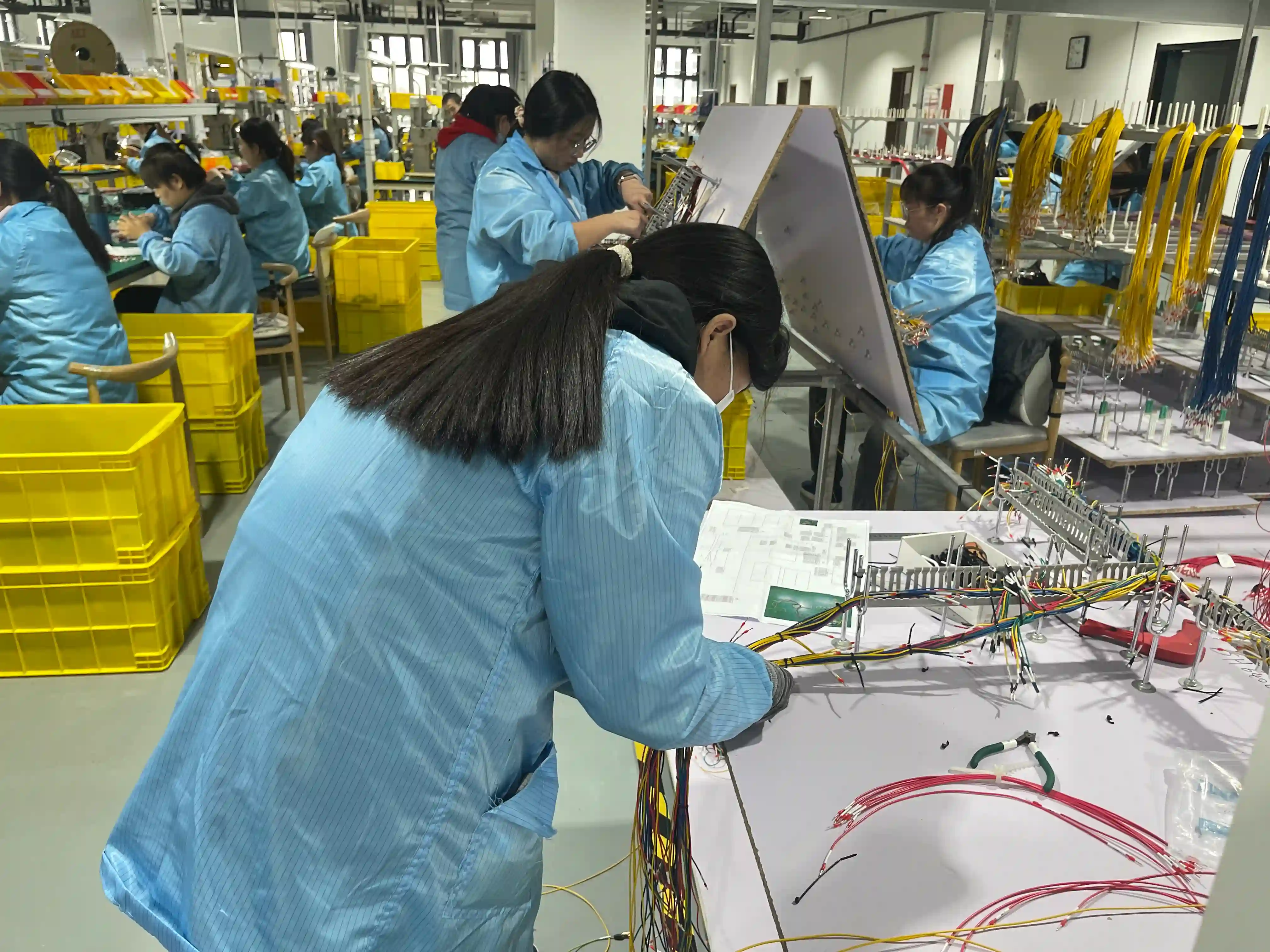
The choice between OEM and ODM determines who controls the design—and who owns the intellectual property
One of the first sourcing questions is whether a manufacturer will build a customer-controlled design or whether the buyer is evaluating an ODM that owns or develops the design. The answer determines which suppliers qualify, how intellectual property is handled, and how the relationship is structured.
These two models—OEM (Original Equipment Manufacturer) and ODM (Original Design Manufacturer)—represent fundamentally different approaches to outsourced manufacturing. And in the wire harness world, the distinction matters more than most people realize.
This guide breaks down both models, compares their advantages, and helps you determine which approach best fits your business needs. If you're still evaluating suppliers, pair this with our complete manufacturer selection guide.
OEM vs ODM: Quick Comparison
| Factor | OEM Model | ODM Model |
|---|---|---|
| Who Designs | You (the customer) | Manufacturer |
| IP Ownership | Customer owns design | Manufacturer owns (licensing typical) |
| Upfront Investment | Higher (design costs) | Lower (leverage existing designs) |
| Time to Market | Longer (design phase) | Faster (existing designs) |
| Customization | 100% custom | Based on existing platform |
| Differentiation | High (unique design) | Limited (shared design base) |
| Supplier Switching | Easier (own the design) | Harder (tied to supplier) |
| Engineering Support | Need in-house capability | Supplier provides |
What is OEM Wire Harness Manufacturing?
In the OEM model, you (the customer) design the wire harness, and the manufacturer builds it to your exact specifications. You provide the drawings, BOM, and technical requirements. The manufacturer provides the labor, equipment, and expertise to execute your design at scale.
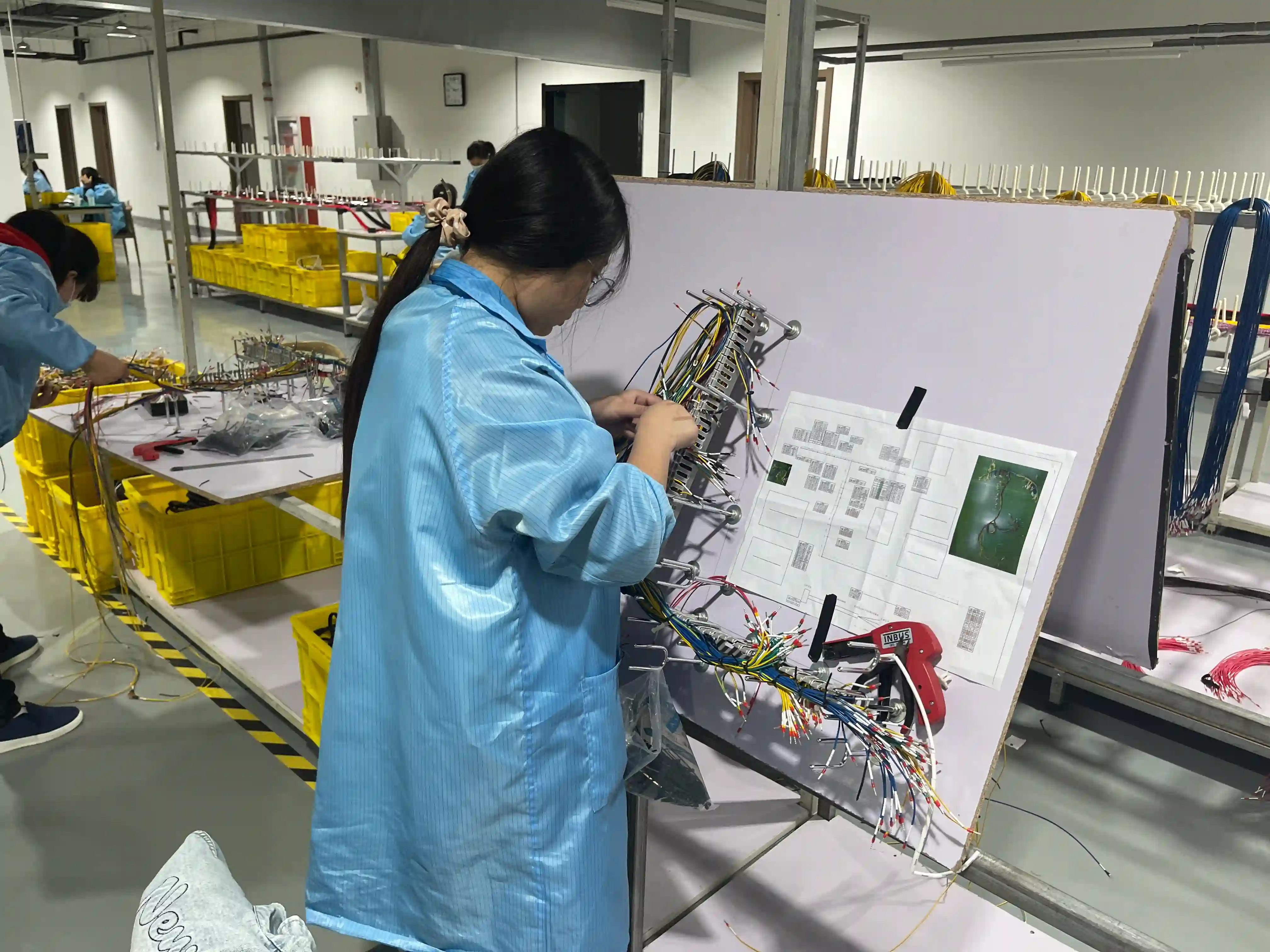
How OEM Manufacturing Works:
OEM Advantages
- • Full control over design and specifications
- • You own all intellectual property
- • Complete product differentiation
- • Easy to switch manufacturers
- • No licensing fees or royalties
- • Tailored exactly to your application
OEM Challenges
- • Requires in-house engineering capability
- • Higher upfront design investment
- • Longer development timeline
- • Design risk is on you
- • May lack manufacturing optimization
- • Need deep wire harness expertise
WHP Scope
Wire Harness Production provides build-to-print OEM manufacturing from customer-approved drawings, BOMs, and test requirements. Our review is limited to DFM and manufacturability; product design and all design approvals remain with the customer.
What is ODM Wire Harness Manufacturing?
In the ODM model, the manufacturer handles the design as well as production. They either create a custom design based on your requirements or offer an existing design platform that can be modified. You typically license the design or purchase it outright.
This ODM section is neutral industry context. Wire Harness Production does not provide ODM or product-design services; we provide build-to-print manufacturing plus DFM and manufacturability review of customer-owned designs.
How ODM Manufacturing Works:
ODM Advantages
- • No in-house engineering required
- • Faster time-to-market
- • Lower upfront investment
- • Leverage manufacturer's expertise
- • Design optimized for manufacturability
- • Access to proven designs
ODM Challenges
- • Limited or no IP ownership
- • Harder to switch suppliers
- • Less product differentiation
- • Potential licensing fees
- • Competitors may use similar design
- • Less control over design decisions
Scope Boundary
ODM can be an industry sourcing option when a supplier is contractually responsible for design and IP terms are explicit. Wire Harness Production is not an ODM and does not design products; our scope starts with customer-approved design inputs and covers build-to-print manufacturing plus DFM review.
Which Model Should You Choose?
The right choice depends on your specific situation. Here's a decision framework based on common scenarios:
| Your Situation | Recommended Model | Why |
|---|---|---|
| Have in-house electrical engineering team | OEM | Leverage your team's expertise and maintain full control |
| Need to get to market quickly | ODM | Skip design phase, leverage existing solutions |
| Wire harness is key differentiator | OEM | Protect your competitive advantage with owned IP |
| Wire harness is commodity/standard | ODM | Why reinvent? Use proven designs |
| Startup with limited resources | ODM | Minimize upfront investment, focus on core business |
| Highly regulated industry (medical, industrial) | OEM | Full design control needed for compliance documentation |
| Plan to switch suppliers later | OEM | Own your design, avoid lock-in |
| Need application-specific expertise | ODM | Leverage manufacturer's industry experience |
Cost Comparison: OEM vs ODM
| Cost Category | OEM | ODM |
|---|---|---|
| Design/Engineering | High (your cost) | Low/None (or NRE fee) |
| Tooling/Fixtures | Your cost | May be amortized |
| Unit Price | Competitive | May include design premium |
| Licensing/Royalties | None | Possible (depends on agreement) |
The Hybrid Approach: Best of Both Worlds
In practice, many wire harness relationships don't fit neatly into pure OEM or ODM boxes. The most effective partnerships often combine elements of both:
Hybrid Model Options:
-
1OEM with DFM Support: You design, manufacturer optimizes for production. IP stays with you, but you benefit from their manufacturing expertise.
-
2ODM with IP Transfer: Manufacturer designs, but you purchase full IP rights. Higher upfront cost, but you own everything.
-
3Collaborative Design: Joint engineering effort with shared IP. Both parties contribute expertise, share ownership.
WHP Scope
For WHP programs, the customer owns the product design and approves every change. We flag manufacturing risks and propose DFM observations against released inputs; we do not convert concepts into product designs or share design ownership.
Critical: IP & Ownership Considerations
Intellectual property is where OEM vs ODM decisions get real. A vague understanding of who owns what can lead to serious problems down the road. Get this in writing before starting any project.
Questions to Answer in Your Agreement:
- • Who owns the design drawings and documentation?
- • Who owns improvements made during production?
- • Can the manufacturer use the design for other customers?
- • What happens to tooling and fixtures if you switch suppliers?
- • Who owns the test programs and procedures?
- • What are the restrictions on sharing technical data?
Who Holds What: An Ownership Map for Harness Programs
These ownership patterns are typical, not universal — the contract decides. Separate design authority from possession of files and equipment, and record access, approval, and transfer rights before production begins.
| Item | OEM / build-to-print | ODM | Settle in writing |
|---|---|---|---|
| Released drawing and revision history | Customer owns and releases the drawing; manufacturer works to the approved revision. | Supplier controls design files; customer access depends on licensing or transfer terms. | File formats, revision history delivery, design approval authority, and transfer rights. |
| BOM and approved manufacturer part numbers (connectors, terminals, seals, wire) | Customer controls the BOM and approves manufacturer part numbers and alternates. | Supplier maintains the design BOM; disclosure and substitution approval depend on the agreement. | Complete BOM access, approved alternates, and who authorizes substitutions. |
| Crimp / process specs (terminal-manufacturer datasheet values you reference) | Customer specifies applicable requirements; manufacturer implements them using referenced terminal-manufacturer datasheet values. | Supplier selects and documents applicable process requirements for its design. | Datasheet references and revisions, required values, process-document access, and approval of deviations. |
| Test program and test fixture / continuity-hipot board | Customer sets test requirements; program and fixture ownership require separate agreement. | Supplier commonly controls the test implementation; transfer rights need negotiation. | Program files, fixture ownership, compatible equipment, maintenance responsibility, and transfer access. |
| Production tooling (applicators, nests, assembly boards) | Supplier equipment and customer-funded dedicated tooling may coexist; funding alone does not settle title. | Supplier commonly retains tooling used for its design platform. | Asset ownership, identification, storage, maintenance, and release when changing suppliers. |
| Improvements discovered during production (ECNs) | Manufacturer proposes DFM observations; customer approves design changes and controls the released revision. | Supplier may control design changes and retain improvement rights under the agreement. | Improvement ownership, ECN approval, notification, and updated file delivery. |
| Supplier's reuse of the design for other customers | Customer-owned design is supplied for authorized production; reuse rights should be expressly restricted. | Supplier may reuse its platform unless exclusivity limits that right. | Confidentiality, permitted use, exclusivity, and limits on reuse of customer-specific changes. |
Before You Switch Suppliers: What You Should Already Hold
- • Current released drawing at the correct revision.
- • BOM with manufacturer part numbers and approved alternates.
- • Crimp and process requirements referenced from terminal-manufacturer datasheets.
- • Test specification plus the test program and fixture ownership status.
- • First-article and inspection records.
- • Packaging and labeling specification.
- • ECN and deviation log.
Use revision control to keep the transfer package aligned with the current approved build.
The first-article inspection guide explains the records to review when qualifying the new supplier's build.
What Standards Do and Do Not Settle
IPC/WHMA-A-620 ("Requirements and Acceptance for Cable and Wire Harness Assemblies") defines workmanship acceptance with three classes: Class 1 general, Class 2 dedicated service, and Class 3 high performance. The buyer states the class on the drawing or purchase order. It governs how a harness is judged, not who designed or owns it; see the IPC/WHMA-A-620 inspection guide.
ISO 9001:2015 clause 8.5.3 ("Property belonging to customers or external providers") lists intellectual property among the property an organization must identify, verify, protect, and safeguard while under its control or being used by it. This is a reason to ask any supplier how customer drawings and files are controlled.
Related Resources
How to Choose a Wire Harness Manufacturer
12 critical factors for selecting the right manufacturing partner.
Custom Cable Assembly Services
Learn about our build-to-print cable assembly manufacturing and DFM review capabilities.
Wire Harness RFQ Checklist
15 details manufacturers need for accurate OEM quotes.
About Wire Harness Production
Learn about our manufacturing capabilities and build-to-print approach.
Not Sure Which Model Fits Your Needs?
We provide build-to-print OEM manufacturing with DFM and manufacturability review of customer-owned designs. Let's discuss your released drawing, BOM, and test plan—no commitment required.
Frequently Asked Questions
What is the difference between OEM and ODM wire harness manufacturing?
Under an OEM model you provide the complete design and the manufacturer builds exactly to your specification. Under an ODM model the manufacturer designs and builds the harness, and you market it under your brand, leveraging their existing engineering.
Which model gives me more control over intellectual property?
OEM gives you the most IP control because you own the design and drawings. With ODM, the design knowledge often resides with the manufacturer, so ownership and exclusivity terms must be negotiated explicitly in the contract.
Which model is faster to market?
ODM is usually faster because you build on proven, existing designs and skip much of the engineering phase. OEM takes longer up front but yields a product tailored precisely to your requirements.
Which model costs less?
ODM typically lowers up-front engineering and NRE cost by reusing established designs, while OEM concentrates spend on custom development in exchange for full control. Total cost depends on volume and how unique your requirements are.
What must be ready for build-to-print manufacturing?
Provide a customer-approved drawing, BOM, acceptance criteria, and test requirements. We review that package for manufacturability while design changes and IP remain under customer control.
Which model is right for my company?
If you have strong internal engineering and need a unique, protected design, OEM fits best. If you want speed, lower development cost, and proven designs, ODM is usually the better path.
Who owns the test fixtures and tooling in a build-to-print harness program?
Ownership depends on who paid and what the purchase order says. Put ownership of applicators, assembly boards, and test fixtures in writing before first article; in a pure OEM program, the design files stay yours either way.
What should I hold before moving a harness program to a new supplier?
Hold the released drawing at the current revision, BOM with manufacturer part numbers, process and crimp requirements, test specification and fixture status, and first-article records. Use the wire harness RFQ checklist to prepare the package for the new supplier.