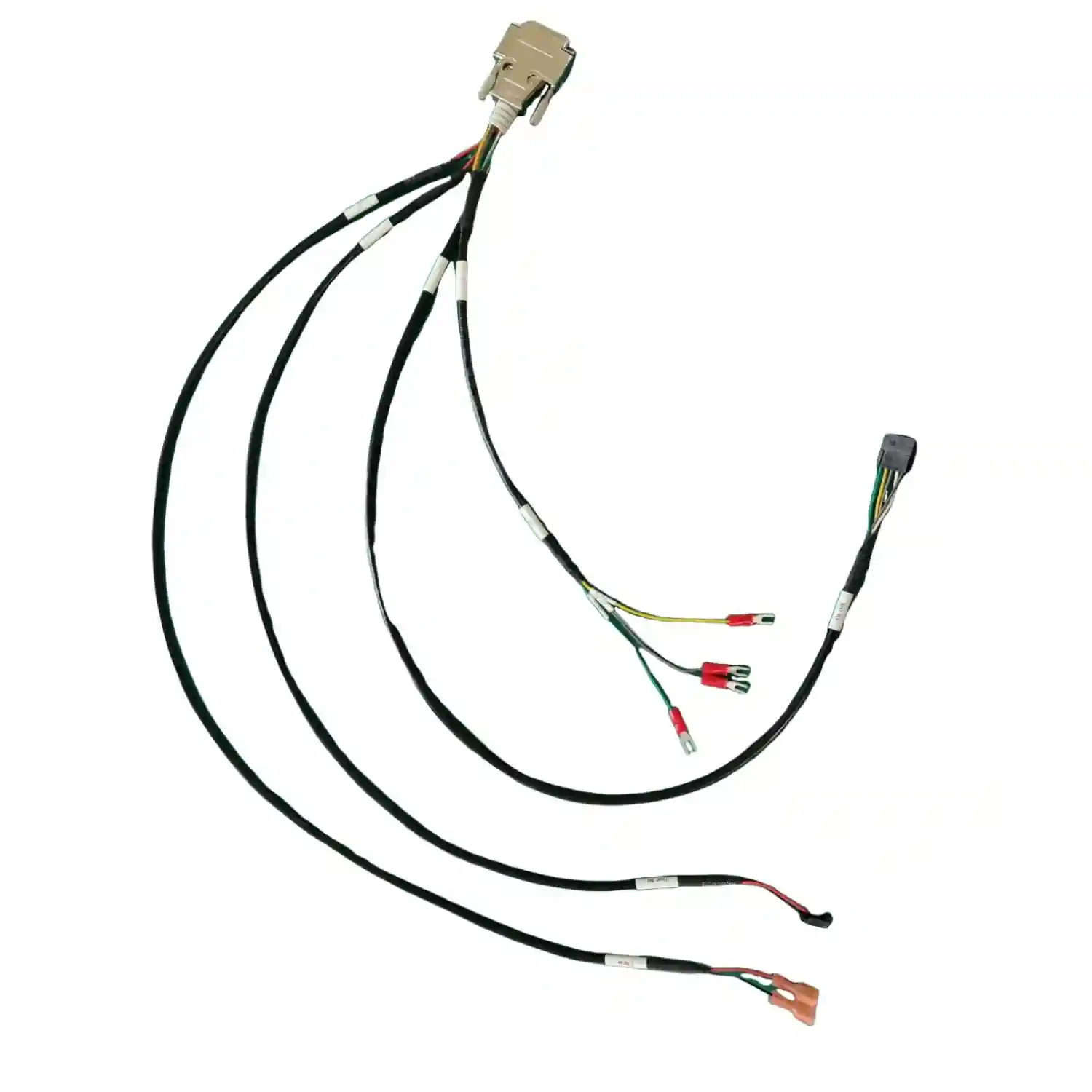
En flatkabel kan se enkel ut på en ritning och ändå orsaka veckor av försening i produktion. I FFC- och FPC-program är felet sällan en dramatisk elektrisk händelse; det är oftare summan av små mekaniska avvikelser i böjlinje, exponerad kontaktlängd, stiffener-tjocklek eller kontaktorientering.
Den här guiden hjälper OEM-inköpare, NPI-team och konstruktörer att välja mellan FFC och FPC, låsa pitch, kontaktorientering och böjväg före RFQ samt definiera de valideringar som krävs före massproduktion. If your team is comparing related connector and assembly options, also review our wire harness connector selection guide, custom cable assembly process guide, FPC cable assembly page, and prototype cable assembly service.
1. Why flat-cable programs fail after the first sample
FFC and FPC assemblies fail late because teams often approve them too early. The first sample proves only that the outline can fit and the connector can mate one time. It does not prove that the copper pattern will survive repeated folding, that the stiffener thickness matches the connector clamp window, or that the assembler can hold exposed-contact length consistently at volume. Those are production problems, not prototype problems, so they appear right when schedule pressure is highest.
The risk is amplified by the fact that flat-cable assemblies are usually specified into compact products with almost no tolerance budget. A branch length error of 3 mm on a large wire harness may be recoverable. A tail-length error of 0.3 mm on a 0.5 mm-pitch FPC can create unreliable clamping. The buyer therefore needs a sourcing package that treats geometry, insertion mechanics, and bend life as release criteria rather than afterthoughts.
“On most FFC and FPC projects, the expensive mistake is not choosing the wrong family in theory. It is approving a sample without locking bend radius, exposed-contact length, and stiffener thickness to within about 0.1 to 0.2 mm where the connector interface is unforgiving.”
2. FFC vs FPC: what buyers are really choosing between
FFC usually means a flat, parallel-conductor cable built with discrete conductors laminated between insulation films. It is often the lower-cost choice when the routing is straightforward, the conductor count is defined, and the cable mainly needs compact packaging rather than complex geometry. FPC cable assemblies use patterned copper on a flexible base and are usually selected when the design needs custom circuit routing, branching, shielding layers, controlled contact pads, or shaped mechanical features that a standard flat cable cannot deliver cleanly.
From a buyer perspective, the real decision is about process capability and application risk. If your product uses one simple fold, modest insertion cycles, and a standard pitch such as 0.5 mm or 1.0 mm, an FFC assembly may solve the problem with less tooling and lower piece price. If your product needs tight packaging around hinges, odd geometry, EMI control, integrated shielding, stiffeners in multiple zones, or asymmetric contact layouts, an FPC assembly is usually the safer technical choice even when the quoted price is higher.
Comparison table: when each option makes commercial sense
| Decision Factor | FFC Cable | FPC Cable | Main Buyer Risk | Best Fit |
|---|---|---|---|---|
| Piece price | Usually lower on standard geometries | Usually higher because patterning and custom features add cost | Choosing only by quote can hide rework cost | Cost-sensitive, simple routes |
| Routing freedom | Limited to simple linear conductor layout | High; supports custom pad layout and irregular shape | Simple cable forced into a complex path | Tight packaging, custom geometry |
| Bend management | Good for static folds when radius is controlled | Better for engineered flex zones when designed correctly | Assuming all flat cables tolerate dynamic folding | Repeated flex or hinge paths |
| Shielding options | More limited and often external | Can integrate shielding or grounding features more cleanly | Late-stage EMI fix increases cost | Noise-sensitive devices |
| Connector interface control | Standardized, but sensitive to exposed length and orientation | Highly customizable with pads, stiffeners, and pad finish choices | Clamp mismatch or contact wear | Custom interconnect interface |
| Tooling and lead time | Often faster for standard constructions | Usually longer because validation is more custom | Late DFM change resets schedule | Programs that can absorb engineering review |
“If the assembly only needs a simple straight interconnect, FFC often wins on cost and lead time. Once the product needs shaped tails, shield continuity, or a flex zone that must survive 10,000 cycles, FPC usually becomes cheaper than repeated field failures.”
3. The six specifications buyers should lock before RFQ release
The fastest way to destabilize an FFC or FPC quote is to send only the conductor count and pitch. Suppliers then fill in the missing details differently, so the quotes look comparable while the offered construction is not. Buyers should define the interface and mechanical envelope up front, even if the supplier still helps optimize the final stack.
The six most important items to lock are conductor count, pitch, contact orientation, exposed-contact length, stiffener thickness, and bend path. For many programs you should also define total length tolerance, insertion direction, shielding need, strain-relief features, and the expected number of mating or flex cycles. A quote that omits those items is not really a quote; it is a placeholder.
- Pitch: Common values such as 0.5 mm and 1.0 mm are easy to say and easy to misread. State nominal pitch and acceptable tolerance in the released drawing.
- Contact orientation: Define same-side versus opposite-side contacts clearly. A visually similar sample can still be unusable if the contact orientation is mirrored.
- Exposed-contact length: This is often held around tenths of a millimeter at the connector tail. If it drifts, clamp force and contact wipe change immediately.
- Stiffener details: Specify material zone, length, and finished thickness at the connector interface. Connector makers usually give a narrow clamp window.
- Bend path: Show whether the cable sees one static fold, repeated service flex, or installation-only movement. Those are different qualification cases.
- Shielding and grounding: If the assembly runs near displays, sensors, motors, or RF sections, define whether shielding is required before tooling begins.
If your program also includes mixed interconnect types, tie these requirements back to the broader cable assembly design guide, EMI shielding guide, and the compact-assembly capabilities on our custom cable assembly page.
4. What the design review should cover before you approve tooling
Buyers should ask for a short DFM review before approving tooling or pilot release. On FFC/FPC assemblies, the most valuable review topics are not glamorous. They are contact tail geometry, stiffener-to-connector fit, fold sequence, support during insertion, and whether the final assembly operator can install the cable without creating a crease exactly where the copper or conductor transition is most vulnerable.
A good supplier review also checks whether the chosen connector family matches the insertion environment. A top-contact ZIF connector, bottom-contact ZIF connector, and non-ZIF friction-lock style may all fit the same pitch, but they do not tolerate the same handling. If operators are working under magnification, inside a cramped enclosure, or in a regulated product build where rework is expensive, the mating style matters almost as much as the cable itself.
For medical and compact industrial products, it is also worth reviewing how the cable will be handled during service. Will it be unplugged during maintenance? Does the latch need to survive 20 cycles or 200 cycles? Does the cable route around a battery, hinge, camera module, or heated component? Those answers often determine whether the quote needs a better stiffener, a changed fold line, or protective tape near the exit. If your product falls into those use cases, compare the environment notes on our medical cable assemblies and industrial automation harness page.
“A flat cable drawing is incomplete until it shows how the operator inserts it. If the assembly depends on fingernail force, blind folding, or a latch that must survive more than 50 service events, that handling condition belongs in qualification, not in tribal knowledge.”
5. Validation tests that matter before mass production
The validation plan should match how the cable will actually fail in service. Continuity is necessary, but it is rarely enough. A realistic plan for FFC/FPC sourcing usually includes dimensional checks at the connector tail, continuity and insulation testing, insertion and extraction observation, bend or flex testing where relevant, and visual inspection after environmental exposure. For higher-risk devices, buyers should also review contact resistance change, shield continuity, and any retention or peel-related checks tied to the stiffener area.
Static applications may only need a controlled fold and installation trial. Dynamic applications need cycle testing. A cable that looks fine after 10 bench folds may crack or delaminate after 5,000 cycles in a hinge or carriage motion. The correct cycle target depends on the product, but the key sourcing rule is simple: if the cable will move in the field, the quote and sample plan should state the minimum cycle count before you approve the design.
Environmental testing also matters. Compact devices often expose flat cables to heat buildup, cleaning chemicals, or repeated service handling. Even a 60 C to 80 C internal zone can change adhesive behavior or creep on marginal constructions over time. If the product is safety- or uptime-sensitive, request a short matrix that covers temperature exposure, insertion handling, and post-test continuity rather than relying on a single room-temperature sample pass.
Five release checks worth adding to the sample plan
- Connector-interface dimensional report with pitch, exposed-contact length, and stiffener thickness results
- 100% continuity and shorts test on the sample lot, with insulation testing where the application requires it
- Installation trial in the real product housing or a representative fixture
- Defined bend or flex trial, such as 1,000, 5,000, or 10,000 cycles depending on application risk
- Post-test visual inspection for whitening, crease marks, lifted layers, pad wear, and latch damage
6. Common buyer mistakes that drive scrap and redesign
The first common mistake is buying by pitch alone. Teams assume any 0.5 mm flat cable can replace any other 0.5 mm flat cable. In practice, contact orientation, total thickness, stiffener thickness, pad or exposed-tail geometry, and insertion direction can make nominally similar parts incompatible. The second mistake is treating all bends the same. A single installation fold is not equivalent to repeated service flex. The third mistake is approving a nice-looking sample without asking how the supplier will hold the connector-interface dimensions in production.
Another frequent issue is failing to define the service environment early. Flat cable assemblies that pass in a consumer prototype may not survive a disinfectant-wipe routine in a medical product or the vibration and heat of an industrial enclosure. Buyers should write the environment into the RFQ and sample plan, not add it after the first failure. If the application also includes higher-current or discrete-wire sections, connect that thinking to our wire harness testing methods and material substitution control guide.
The last mistake is underestimating lead time impact. FFC can often move faster than FPC on standard builds, but both can slip if the geometry changes after the connector is selected. A 2 mm housing shift in the product can force a new tail layout, new fold location, or new stiffener zone. Buyers should therefore freeze the mechanical interface before treating the cable lead time as fixed.
7. What to send in an RFQ package so suppliers quote the same build
A clean RFQ package for FFC/FPC cable assembly should include the drawing, 3D or fit envelope if available, connector part number, conductor count, pitch, total length, contact orientation, stiffener requirements, bend path, shielding requirement, target annual quantity, prototype quantity, target lead time, and application environment. If the cable must survive service motion, include the expected cycle target. If the cable is used in a regulated or uptime-sensitive product, state the validation evidence you expect with the sample.
That package lets suppliers quote the same technical problem instead of filling in the gaps with assumptions. It also makes it easier to compare prototype plans, not just prices. One supplier may offer a faster first sample but no flex validation. Another may include a more complete review with a slightly longer pilot schedule. Without a defined RFQ package, those tradeoffs stay hidden until the wrong sample is already on your bench.
Frequently Asked Questions
What is the main difference between FFC and FPC for buyers?
FFC is usually the better fit for straightforward, standard-geometry interconnects such as 0.5 mm or 1.0 mm pitch links where cost and lead time matter most. FPC is usually the better fit when the assembly needs custom pad layout, shaped geometry, shielding, or a flex zone validated for 1,000 to 10,000 cycles or more. On most programs, the real difference is whether the product needs a simple interconnect or a custom mechanical-electrical package.
What pitch should buyers expect on flat cable assemblies?
Common pitches include 0.5 mm and 1.0 mm, but the correct choice depends on the connector family, current level, and available package space. Buyers should not approve by pitch alone because a 0.5 mm system with the wrong contact orientation or stiffener thickness can still fail even if the nominal pitch is correct.
How many flex cycles should an FPC cable survive?
The answer depends on the application. An installation-only fold may need only assembly verification, while a service hinge or moving module may need 1,000 to 10,000 cycles or more in validation. Buyers should state the minimum target in the RFQ instead of assuming the supplier will infer it from the drawing.
Do buyers need shielding on every FPC or FFC assembly?
No. Shielding depends on signal sensitivity, nearby noise sources, grounding strategy, and product layout. It becomes much more important around displays, sensor lines, RF modules, motors, and compact digital systems where emissions or susceptibility margin is small, especially when the product must pass limits such as CISPR 32 or customer-specific EMC tests. If EMI is a concern, define it before sampling rather than adding it after a failed test.
What dimensional checks matter most at the connector interface?
Buyers should focus on pitch, exposed-contact length or pad length, overall cable thickness, stiffener thickness, and the exact contact orientation. Those dimensions are often controlled within tenths of a millimeter because even a 0.1 to 0.2 mm mismatch can affect clamping, contact wipe, and insertion stability.
What should be included in an FFC or FPC cable RFQ?
Send the connector part number, conductor count, pitch, total length, contact orientation, stiffener details, bend path, shielding need, annual quantity, prototype quantity, target lead time, and the validation scope. If the cable moves in service, include the expected cycle count such as 1,000 or 5,000 cycles and the pass-fail rule for post-test continuity, contact resistance, and visible damage.
Need help sourcing an FFC or FPC cable assembly?
Send your drawing, connector part number, pitch, conductor count, bend path, prototype quantity, annual volume, and validation target through our contact page. We will review whether FFC or FPC is the better fit, flag the connector-interface dimensions that need control, recommend a practical sample and validation plan, and quote a build path that matches your real production risk.
- Send next: drawing, connector part number, pitch, conductor count, bend path, environment, prototype and annual quantity
- You receive back: DFM review, supplier-risk notes, validation recommendations, and a quotation aligned to your release stage
- Best fit for: medical devices, compact industrial controls, displays, scanners, battery products, and other dense interconnect programs