Guía Técnica
Código de color del cable de red:
T568A, T568B y guía de pedidos de pares
If a network cable passes continuity but the pairs are landed in the wrong color order, the link can still fail certification, lose PoE stability, or negotiate down from 1 Gbps to 100 Mbps. That is why network cable color code is not a cosmetic detail. It is a wiring rule tied directly to pair geometry, crosstalk control, and field serviceability. This guide explains T568A and T568B, shows the exact conductor order, and outlines what buyers should send when sourcing custom Ethernet cable assemblies for industrial, telecom, and device-level harness projects.
Stats: [{'value': '8', 'label': 'conductors terminated in a standard 8P8C Ethernet plug'}, {'value': '4 pairs', 'label': 'twisted pairs that must stay matched end to end'}, {'value': '100 m', 'label': 'maximum horizontal channel length commonly referenced for structured cabling'}, {'value': '568', 'label': 'the ANSI/TIA family that defines common pair termination patterns'}]
Table Of Contents: [{'href': '#what-the-colors-mean', 'text': '1. What the Network Cable Colors Actually Mean'}, {'href': '#t568a-vs-t568b', 'text': '2. T568A vs T568B: The Exact Color Order'}, {'href': '#pair-order-matters', 'text': '3. Why Pair Order Matters More Than Continuity'}, {'href': '#straight-through-crossover', 'text': '4. Straight-Through vs Crossover Cables'}, {'href': '#industrial-oem-rules', 'text': '5. OEM Rules for Industrial and Custom Cable Assemblies'}, {'href': '#inspection-and-testing', 'text': '6. Inspection and Test Requirements Before Shipment'}, {'href': '#rfq-checklist', 'text': '7. RFQ Checklist for Custom Network Cable Assemblies'}, {'href': '#faq', 'text': '8. Frequently Asked Questions'}]
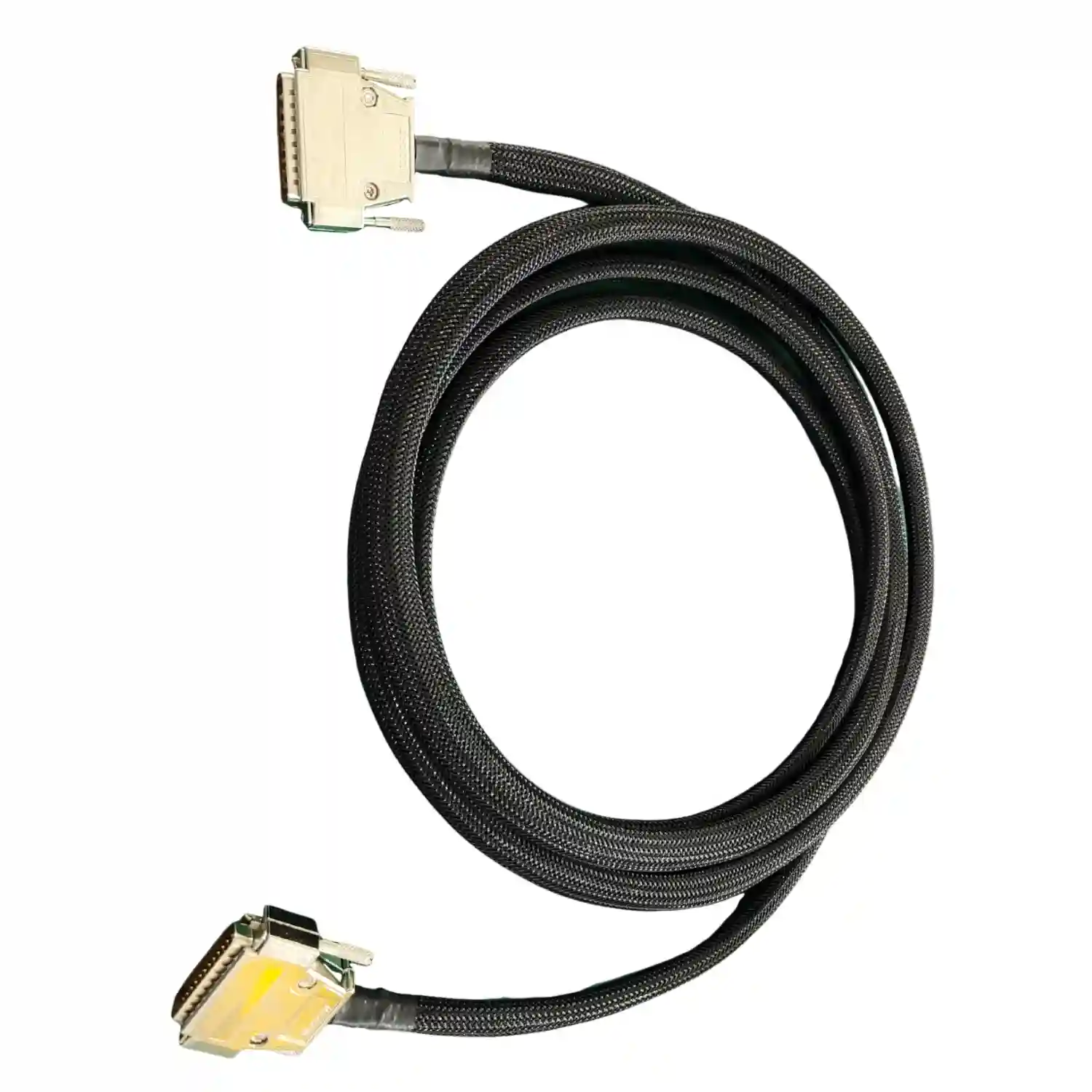
Industrial Ethernet cable assembly with twisted-pair conductors, shield termination, and overmolded connector exits prepared for machine wiring and telecom equipment
When buyers search for a network cable color code, they usually want one of three things: the pin order for T568A, the pin order for T568B, or a fast way to check whether a supplier is preserving pair integrity during assembly. All three matter. The physical colors help technicians terminate and inspect the cable, but the electrical requirement is really about keeping each twisted pair together from one end of the assembly to the other. Standards such as ANSI/TIA-568 and the broader practice around Ethernet over twisted pair exist because wrong pair mapping creates return loss, NEXT, and intermittent network faults that a simple buzzer test will miss.
For OEMs buying custom assemblies, that distinction matters even more. A short patch cable inside a cabinet, an M12-to-RJ45 industrial adapter, and a shielded harness routed beside motor drives all use recognizable color codes, but they do not share the same risk profile. If your application also involves movement, vibration, or electromagnetic noise, the color code is only one part of the design package. Shield termination, bend radius, and strain relief should be specified alongside the pinout, especially for EMI-sensitive cable assemblies and industrial M12 Ethernet assemblies.
1. What the Network Cable Colors Actually Mean
A standard Ethernet cable uses four twisted pairs. Each pair is identified by a solid color conductor and a white-striped mate: orange, green, blue, and brown. In a compliant assembly, the colors are not arbitrary decoration. They identify the pair and help the technician land the conductors in the proper 8-position order without splitting the pair assignment.
The most common confusion is assuming that any arrangement with eight unique conductors is acceptable if pin 1 still reaches pin 1 and pin 2 still reaches pin 2. That is false. Gigabit Ethernet uses all four pairs, and even 10/100 Ethernet depends on pair geometry for impedance control and noise rejection. Split pairs can show full continuity and still fail a certification tester because the signal path is electrically wrong.
When a customer tells me a cable is pinned correctly because the continuity light is green, I ask one question: did you verify pair map or only conductor map? I have seen 1 Gbps links fall back to 100 Mbps because pair 3 and pair 4 were split while every pin still rang through.
2. T568A vs T568B: The Exact Color Order
T568A and T568B are the two common termination patterns for 8P8C modular Ethernet connectors. The difference is straightforward: the green pair and orange pair swap positions. The blue pair stays on pins 4 and 5, and the brown pair stays on pins 7 and 8. Electrically, either pattern works when both cable ends use the same scheme.
Table
| Pin | T568A Color | T568B Color | Pair Number | Common Note |
|---|---|---|---|---|
| 1 | White/Green | White/Orange | Pair 3 or 2 position | Swapped between A and B |
| 2 | Green | Orange | Pair 3 or 2 position | Swapped between A and B |
| 3 | White/Orange | White/Green | Pair 2 or 3 position | Swapped between A and B |
| 4 | Blue | Blue | Pair 1 | Same in both standards |
| 5 | White/Blue | White/Blue | Pair 1 | Same in both standards |
| 6 | Orange | Green | Pair 2 or 3 position | Swapped between A and B |
| 7 | White/Brown | White/Brown | Pair 4 | Same in both standards |
| 8 | Brown | Brown | Pair 4 | Same in both standards |
From a sourcing standpoint, the critical rule is consistency. A straight-through patch cable can be all T568A or all T568B, but both ends must match. In North American commercial practice, T568B is still very common. In institutional or legacy structured-cabling environments, T568A may be specified. Neither is automatically “better”; the correct one is the one that matches the system design, labeling standard, and installed base.
Buyers sometimes ask which standard gives better signal quality. The real answer is zero improvement if both ends are correctly terminated. The quality difference comes from pair preservation, strip length control, and shield handling, not from choosing B instead of A.
3. Why Pair Order Matters More Than Continuity
Ethernet performance depends on each twisted pair staying together as a signal pair. If one conductor from the green pair is matched with one conductor from the orange pair, the assembly may still show eight connected pins but the balance of the differential pair is broken. That is the classic split-pair failure.
In production, split pairs usually come from manual rework, poor work instructions, or inspectors checking only pin-to-pin continuity. For shielded Cat5e, Cat6, or Cat6A assemblies, the assembler must also limit untwist length near the plug. If the pair is untwisted too far back from the contact zone, near-end crosstalk increases and the test margin shrinks. This becomes more visible in higher-bandwidth and PoE-loaded systems, including machine vision, industrial switches, and cabinet harnesses inside the telecommunications and data infrastructure markets.
For custom harnesses, another failure mode is mixing generic “network cable” language with application-specific connectoring. An RJ45 patch cable, an M12 D-coded cable, and an M12 X-coded cable do not share the same conductor assignment even if all of them carry Ethernet traffic. The color code must always be tied to the actual connector family, pin numbering view, and target protocol.
4. Straight-Through vs Crossover Cables
A straight-through cable uses the same pinout on both ends. Historically, a crossover cable used T568A on one end and T568B on the other to swap transmit and receive pairs for direct device-to-device connections. In modern networks, auto MDI-X reduces the need for crossover assemblies, but they still appear in maintenance inventories and legacy equipment support.
That is why RFQs should never just say “RJ45 cable, 2 meters.” The supplier needs to know whether the assembly is straight-through or crossover, shielded or unshielded, stranded or solid conductor, molded or field-terminable, and whether PoE is expected. If your assembly will be routed in motion or beside power conductors, add flex-life and shielding requirements just as you would for a signal-sensitive cable assembly.
5. OEM Rules for Industrial and Custom Cable Assemblies
Custom network cable assemblies for OEM products are rarely just office patch cords. They may be integrated into cabinet harnesses, robotic cells, medical devices, or machine interfaces. In those environments, the buyer should define more than the T568 pattern:
Cards: [{'title': 'Connector View Control', 'content': 'Specify whether pin numbering is shown from the contact face or termination face. Many field errors come from mirrored pin views rather than from color confusion itself.'}, {'title': 'Cable Construction', 'content': 'State Cat5e, Cat6, or Cat6A, conductor type, shielding style, jacket material, and temperature range. Pair order alone does not protect performance if the cable construction is underspecified.'}, {'title': 'Mechanical Protection', 'content': 'Define bend radius, overmolding, boot style, and strain relief if the cable will be pulled during assembly or routed through a moving machine section.'}]
For industrial assemblies, shielding is often the hidden differentiator. A correctly colored T568B plug can still fail in the field if the drain wire, foil, or braid is terminated poorly at the connector shell. The cable may link up in the lab and drop packets next to a VFD or servo drive. That is why serious buyers specify both the network color code and the EMC design rule set.
If the application sits next to motors, inverters, or weld equipment, the pinout is only half the job. I want the RFQ to tell me shield construction, shell bonding method, and whether the customer expects continuity through the plug shield or isolated grounding at one side. Those details decide whether the cable survives the factory floor.
6. Inspection and Test Requirements Before Shipment
At minimum, a production-ready network cable assembly should be checked for wire map, short/open faults, and shielding continuity when applicable. For higher-risk programs, that is not enough. OEM buyers should define what level of test evidence is required per lot or per unit.
Reasonable validation levels include 100% wire-map testing, sample certification on a cable analyzer for insertion loss and NEXT, PoE load verification when the cable powers remote devices, and visual inspection that confirms color order, jacket strip length, and plug seating. For industrial overmolded versions, add pull testing or retention checks on the finished connector exit, especially if the design borrows methods from broader sealed or protected cable assemblies.
For short internal assemblies, buyers often skip full channel certification because the cable does not represent a full 90 m permanent link. That can be acceptable, but then the drawing should explicitly call out which tests substitute for a full field certification, such as 100% continuity plus periodic performance validation on golden samples.
7. RFQ Checklist for Custom Network Cable Assemblies
If you need a supplier to quote a network cable assembly correctly on the first pass, send these items:
- Exact pinout standard: T568A, T568B, crossover, or custom map
- Connector family and part number on both ends, including shielded or unshielded version
- Cable category, conductor type, jacket material, and required operating temperature
- Assembly length and tolerance, plus straight, coiled, or routed harness geometry
- Performance requirement: 100BASE-TX, 1000BASE-T, PoE, EtherCAT, Profinet, or other protocol
- Test plan: 100% wire map, sample certification, shield continuity, retention, or environmental checks
- Labeling, packaging, revision control, and whether first article approval is required
That level of definition reduces rework, especially when the supplier manufactures multiple cable families and may otherwise default to a generic commercial patch-cord build. It also gives the inspection team an objective standard instead of relying on tribal knowledge about “the usual network color code.”
8. Frequently Asked Questions
What is the color order for T568B?
T568B from pin 1 to pin 8 is white/orange, orange, white/green, blue, white/blue, green, white/brown, brown. It keeps the blue pair on pins 4 and 5 and the brown pair on pins 7 and 8, which is why technicians often memorize only the orange and green swap.
What is the color order for T568A?
T568A from pin 1 to pin 8 is white/green, green, white/orange, blue, white/blue, orange, white/brown, brown. Like T568B, it uses 4 twisted pairs and 8 positions, but the green and orange pairs trade locations on pins 1, 2, 3, and 6.
Is T568A better than T568B for Gigabit Ethernet?
No. For 1000BASE-T, both patterns work if both cable ends are terminated consistently and the assembly meets pair-balance and crosstalk requirements. The standard choice does not create more bandwidth by itself; poor untwist control or split pairs does.
Can a cable pass continuity and still fail the network?
Yes. A split-pair cable can show 8 connected conductors on a simple continuity tester and still fail a cable certifier. That happens because Ethernet relies on 4 matched differential pairs, not just 8 isolated conductors. This is one of the most common field mistakes on hand-terminated cables.
Do crossover cables still matter today?
Less than before, but yes in some legacy systems. Many modern devices support auto MDI-X, which removes the need for manual pair swapping. Even so, some service kits still keep crossover cables for older switches, controllers, and direct commissioning tasks.
What should I require from a supplier for a custom Ethernet cable assembly?
Require the pinout standard, connector part numbers, cable category, shielding detail, and test plan in writing. For OEM production, a good baseline is 100% wire-map testing, visual verification of color order, and documented sample performance validation for the target protocol such as 1000BASE-T or industrial Ethernet.
Preguntas frecuentes
What is the difference between T568A and T568B?
The only conductor-order difference is that the orange pair and green pair swap positions. Pins 4 and 5 stay blue/white-blue, and pins 7 and 8 stay white-brown/brown. If both ends use the same pattern, either one supports standard Ethernet links.
Can I mix T568A on one end and T568B on the other?
Yes, but that creates a crossover cable rather than a straight-through cable. That was common for direct device links before auto MDI-X became widespread. If your equipment documentation does not explicitly call for crossover, use the same scheme on both ends.
How much untwist is acceptable at the plug?
The exact allowance depends on the connector system and the category target, but the practical rule is to keep untwist as short as possible near the contact point. Excess untwist reduces pair balance and NEXT margin, which matters more as you move from basic office links to higher-performance industrial assemblies.
Does PoE change the required color code?
No, PoE does not change T568A or T568B color order. It does raise the importance of conductor gauge, contact quality, temperature rise, and plug quality because the cable may carry both data and power at the same time.
Should OEM drawings show colors or only pin numbers?
They should show both. Pin numbers define the electrical requirement, while colors speed up assembly and inspection. On an 8-conductor Ethernet cable, including both views reduces mirrored termination mistakes and shortens first-article review time.
Need custom network cable assemblies for industrial equipment?
Send us your connector part numbers, required T568A or T568B mapping, cable category, shielding requirement, and target application. We build custom Ethernet and industrial communication cable assemblies with defined pinouts, controlled assembly instructions, and production test records. Request a quote here or review our broader manufacturing capabilities.