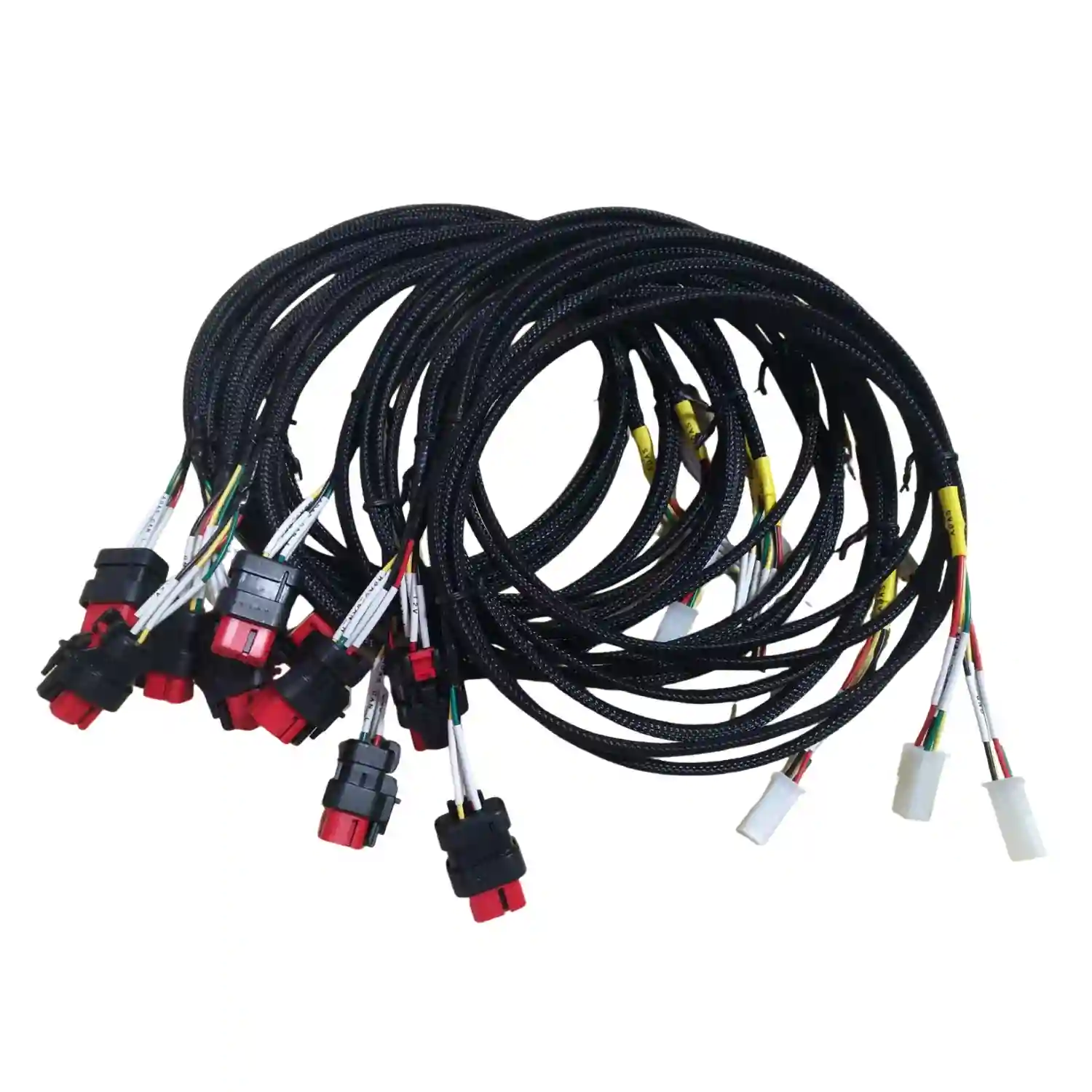
Industrial cleaning robots look simple from the outside: batteries, pumps, brush motors, sensors, a control cabinet, and a charging interface. The problem is that all of those systems pull on the same cable assembly in a dirty, wet, chemically active environment. A harness that would perform well inside a dry AMR or a stationary control cabinet can fail early once it is routed near recovery tanks, detergent dosing modules, hinged covers, caster vibration, and repeated maintenance access. Buyers usually discover the gap only after pilot fleets begin showing intermittent faults, charger disconnects, or corrosion inside supposedly sealed connectors.
That is why cable assembly selection for industrial cleaning robots should not be treated as a generic robotics purchase. Cleaning robots live in a harsher overlap zone between mobile robotics, industrial automation, and washdown equipment. They need flex life for steering modules and articulated masts, sealing for splash and spray, chemical resistance against alkaline and acidic cleaning agents, and reliable low-voltage signal integrity for cameras, LiDAR, ultrasonic sensors, and safety circuits. Battery branches, meanwhile, must handle current, abrasion, and serviceability without creating bulk that makes routing impossible.
This guide is written for OEM sourcing teams, mechanical and electrical engineers, and NPI buyers who need an RFQ-ready framework. It builds on the selection logic in our <a href="/blog/wire-harness-waterproofing-ip-rating-guide" class="text-blue-600 hover:text-blue-700">wire harness waterproofing guide</a>, the movement-focused design rules in our <a href="/industries/robotics" class="text-blue-600 hover:text-blue-700">robotics cable assembly page</a>, and the process controls covered in our <a href="/blog/overmolded-cable-assembly-guide" class="text-blue-600 hover:text-blue-700">overmolded cable assembly guide</a>. It also fits closely with rugged equipment programs in <a href="/industries/industrial-automation" class="text-blue-600 hover:text-blue-700">industrial automation</a> where uptime and maintenance cost matter as much as unit price.
1. Why Cleaning Robot Cable Assemblies Fail in the Field
The operational problem is usually not that buyers forget about water. They remember water, then underestimate everything that comes with it. Cleaning robots see splash, standing moisture, foamed detergent residue, battery vapor in enclosed spaces, vibration from brush decks, and repeated service handling. Once that happens, the weak point may be the rear shell seal, the branch breakout, the charging connector latch, the strain relief behind a pump motor, or a sensor cable bend point near the steering axis. One weak interface is enough to shut down an entire robot during a production shift or at an airport cleaning window.
In sourcing reviews, the most common mistake is to buy by connector headline alone. A drawing says "IP67 connector" and the team assumes the assembly is covered. But ingress protection depends on the whole system: cable OD tolerance, rear grommet compression, mating condition, torque discipline, overmold geometry, venting strategy, and whether the harness is exposed during maintenance. Standards such as IEC 60529 IP ratings describe enclosure performance, not a shortcut that removes the need to review routing and assembly process.
Chemical exposure is the second blind spot. Floor care robots may run neutral cleaners in one facility, chlorinated wash chemicals in another, and degreasers in a third. TPU, PVC, TPE, silicone, adhesive heat shrink, potting compounds, and connector seals do not all age the same way under those fluids. A harness that passes electrical test at shipment can still stiffen, crack, swell, or lose sealing compression after repeated exposure. That is why buyers should request real compatibility evidence rather than assuming "industrial grade" means detergent-proof.
The third blind spot is motion. Steering columns, squeegee lift systems, brush head articulation, docking ports, and mast-mounted sensor kits all create dynamic cable paths. If the harness is routed with the wrong bend radius, insufficient slack control, or a material set designed for static use, field failures show up as intermittent open circuits and communication dropouts long before the robot reaches its advertised service life.
Ingress at the rear of the connector
A sealed interface can still leak if cable OD varies, the backshell is mismatched, or technicians repeatedly disconnect the harness during service.
Chemical attack on jackets and seals
Detergent, disinfectant, alkaline cleaners, and oils can harden elastomers, cloud sensor cable jackets, or reduce long-term sealing force.
Flex-fatigue near moving modules
Brush decks, steering pivots, and lift modules create repeated bend cycles that destroy static-rated wire and poorly anchored branches.
Service-induced damage
Fast maintenance targets often lead to tugging, mis-mating, or poor reassembly unless the cable architecture is designed for field access.
"A cleaning robot harness does not fail because it touched water once. It fails because water, chemistry, motion, and maintenance all stack on the same branch until a marginal design runs out of margin."
Hommer Zhao
Technical Director
2. Environmental and Electrical Requirements Buyers Must Define
The fastest way to get a weak quote is to send only a connector sketch and a cable length. Cleaning robot cable assemblies need a full operating profile. Start with the washdown condition: incidental splash, low-pressure rinse, foam cleaning, or high-pressure close-range wash. If the robot will be sanitized or cleaned in food, pharma, or public-facility environments, say so early because the material stack may need to move toward higher-end sealing, smoother overmold geometry, and better chemical resistance.
Then define the electrical architecture. Most industrial cleaning robots combine battery power branches, low-voltage control wiring, motor phases, encoder lines, charging leads, CAN or Ethernet communication, and sensor interfaces for LiDAR, ultrasonic modules, IMUs, cameras, or safety devices. Those circuits should not all be treated alike. Power branches may prioritize current, abrasion, and temperature rise. Sensor branches may prioritize shielding continuity, stable connector retention, and low-noise routing. Safety circuits may need clearer separation and traceability if they support machine functions influenced by frameworks such as ISO 13849.
Serviceability also belongs in the requirement set. A robot that is opened weekly for tank cleaning or brush replacement should not use the same branch breakout logic as a sealed internal harness meant to remain untouched for years. If field technicians are expected to replace a pump assembly or a sensor mast quickly, buyers should request keyed connectors, visible cavity labeling, and strain relief that survives repeated disconnect cycles. That reduces downtime more effectively than trying to shave a few dollars from the BOM later.
Finally, define compliance targets and documentation expectations. At minimum, most buyers will want declarations around RoHS, material traceability, and workmanship aligned with IPC/WHMA-A-620. If the robot platform is sold into stricter sectors, add labeling, change-control, and environmental validation requirements before the RFQ goes out.
"If the RFQ does not define water exposure, chemistry, motion, and service access together, the supplier is forced to guess. In robot cable design, guessing is another word for delayed failure."
Hommer Zhao
Technical Director
Minimum Requirement Data Buyers Should Send
Robot model or subsystem: scrubber, sweeper, pressure-wash robot, AMR cleaner, or outdoor sanitation unit
Expected exposure: splash only, hose-down, foam cleaning, or high-pressure washdown
Chemical set: detergent type, sanitizer, degreaser, pH range, and any solvent exposure
Power and signal details: voltage, current, communication type, sensor list, and charging interface
Movement profile: static, flexing hinge, torsion, drag chain, rotating mast, or steering pivot
Target compliance and documentation: IPC/WHMA-A-620, RoHS, validation reports, lot traceability, and PPAP if required
3. Cable Architecture by Cleaning Robot Type
Not all cleaning robots stress the harness in the same way. Ride-on autonomous scrubbers usually combine battery current, vacuum motor power, pump control, brush deck movement, and docking or charger branches in a relatively compact chassis. Compact AMR cleaners often add a heavier sensor load and tighter packaging, which makes EMI control and connector miniaturization more important. Outdoor cleaning robots face UV, broader temperature swings, and more aggressive contamination. Municipal or industrial washdown machines may prioritize sealing and abrasion over miniature packaging.
That is why buyers should review architecture by robot class instead of searching for one universal cable specification. The right assembly for a dry indoor sweeper can be underbuilt for a high-pressure washdown platform. The right assembly for a heavily articulated sensor mast can be overbuilt and overpriced for a static battery compartment. The goal is not maximum ruggedness everywhere. The goal is to put cost exactly where the environment and motion justify it.
The table below gives a practical comparison buyers can use during platform definition or supplier RFQ review.
| Robot Type | Dominant Exposure | Cable Priorities | Typical Connector Direction | Main Validation Focus |
|---|---|---|---|---|
| Indoor autonomous scrubber | Splash, detergent, battery vibration | Sealing, current capacity, service access | Sealed circular or latch connector with rear grommet control | Ingress, pull relief, chemical spot test |
| Compact AMR floor cleaner | Continuous motion, tight bend radius, sensor density | High-flex cable, shielding continuity, compact routing | Mini sealed connectors plus shield-managed sensor branches | Flex cycling, EMI stability, connector retention |
| Ride-on sweeper/scrubber hybrid | Dust, vibration, operator maintenance | Abrasion resistance, branch protection, easier field replacement | Robust sealed connectors with visible keying | Abrasion, service cycle, mixed-environment reliability |
| Pressure-wash cleaning robot | High-pressure spray, detergent, hose movement | IP69K-level strategy, overmolded exits, smooth cleanable surfaces | Overmolded or high-seal circular interfaces | High-pressure ingress, seal recovery, hose-down repeatability |
| Outdoor sanitation or municipal cleaning robot | Water, UV, dirt, temperature swing, corrosion | UV-stable jacket, corrosion-resistant contacts, robust clamps | Sealed metal or engineered polymer connectors | Environmental aging, corrosion, thermal cycling |
| Sensor mast or camera module branch | Torsion, bend, washdown drift | Low-mass cable, strain control, signal integrity | Compact keyed sensor connectors | Torsion life, signal continuity, retention after maintenance |
If the robot has separate power, sensor, and charger zones, ask the supplier to split the harness architecture by function instead of forcing one material stack across every branch.
4. Materials, Connectors, and Validation Tests That Matter
Material selection should start with the fluid exposure list, not with what is cheapest or easiest to source. TPU is often a strong option where abrasion and flex matter, but some detergent sets may push buyers toward other compounds or additional protective sleeving. PVC can still be acceptable on static protected branches, yet it is often the wrong answer for repeated flex or aggressive cleaning chemistry. For strain relief and branch exits, overmolding can simplify sealing, but only if the compound, cable jacket, and connector interface are compatible and the design still allows service access where needed.
Connector choice should be driven by the real mating cycle, sealing method, and field service model. Some robot programs want an overmolded, low-touch interface. Others need a field-replaceable connector that technicians can disconnect quickly without special tools. In both cases, rear sealing, latch security, cavity layout, and polarization matter more than brand familiarity alone. Buyers comparing waterproof options should also cross-check the system-level guidance in our waterproof cable assembly service page and the retention rules in our strain relief guide.
Testing should match failure mode. If the robot sees hose-down cleaning, perform ingress and post-exposure electrical verification. If the branch moves continuously, run bend or torsion cycling at the actual installed radius. If the platform uses cameras, LiDAR, CAN, or Ethernet, verify signal continuity after environmental exposure instead of testing only at room condition. For battery and motor branches, review temperature rise, crimp performance, and routing wear. Good validation is not expensive compared with a fleet retrofit after launch.
Suppliers that understand cleaning robots will usually propose a validation matrix rather than one generic sample report. That matrix should connect each branch to its likely risk: water ingress, chemical compatibility, abrasion, flex life, current loading, or service misuse. If the supplier cannot explain which test addresses which failure mode, they may be building cable assemblies, but they are not yet engineering them for this application.
What to Compare
MaterialsCable jacket chemistry, seal elastomer, adhesive heat-shrink behavior, braid or foil shielding stability, and clamp or conduit wear points.
Keep technical terms, part numbers, and validation criteria fixed across language versions so engineering review stays aligned.
What to Verify
ConnectorsRear seal compatibility with actual cable OD, latch security under vibration, mating orientation, and ease of field replacement.
If cleaning robots are opened often for tank or brush maintenance, include service-cycle testing in addition to ingress testing.
What to Request
ValidationIngress test method, flex or torsion cycle target, chemical exposure summary, pull-force data where relevant, and before/after electrical results.
Tie every test result back to the actual robot branch and its operating environment.
"The right test plan for a cleaning robot is not one IP test and a visual inspection. You need post-exposure electrical evidence, because the field problem is usually intermittent failure after stress, not immediate open circuit at the bench."
Hommer Zhao
Technical Director
5. RFQ Checklist for Procurement and NPI Teams
By this point the pattern should be clear: the best cable assembly supplier is not the one that simply confirms they can build to print. It is the one that spots missing requirement data before tooling, pilot build, or first fleet launch. That is where AIDA turns into action for B2B buyers. Attention comes from the downtime problem. Interest comes from understanding why generic robot harnesses fail here. Desire comes from a supplier who can compare options with evidence. Action comes from sending a complete RFQ so the supplier can quote the right build the first time.
A strong cleaning robot RFQ should include the drawing or 3D routing reference, BOM or preferred components, annual and pilot quantity, target lead time, washdown and chemical environment, temperature range, moving versus static branch definition, test scope, and compliance target. If any part of that package is missing, the supplier should flag the risk instead of quietly pricing assumptions. That feedback loop is often the difference between a useful quote and an expensive revision cycle.
Buyers should also ask what they will receive back beyond unit price. For a real sourcing decision, you want DFM notes, recommended connector or overmold changes, lead time by critical component, test plan assumptions, and any identified compatibility gaps. The quote itself is only one part of the commercial decision. What matters more is whether the supplier has translated your robot environment into a manufacturable and supportable cable architecture.
Drawing, BOM, or existing sample with clear branch identification and installed bend zones
Pilot quantity, annual forecast, and target lead time for prototype, EVT, DVT, and production
Exact environment: splash, washdown pressure, detergent type, sanitizer, UV, dust, and temperature range
Electrical data: voltage, current, motor loads, sensor interfaces, communication protocol, and charging details
Compliance target: IPC/WHMA-A-620 class, RoHS, customer validation format, PPAP or traceability expectations
Service model: which connectors are field-replaceable, maintenance interval, and allowable repair actions
6. Frequently Asked Questions
The questions below are the ones buyers and NPI teams ask most often when they move from a prototype cleaner to a fleet-ready production robot.
Is IP67 enough for an industrial cleaning robot cable assembly?
Sometimes, but not always. IP67 may be adequate for incidental splash or brief immersion, while hose-down or high-pressure wash environments often need a higher sealing strategy such as IP68 or IP69K plus better rear sealing, overmold control, and post-wash electrical verification.
What cable jacket works best with detergents and disinfectants?
There is no universal answer because cleaner chemistry varies. TPU often performs well for abrasion and flex, but buyers should still provide the actual detergent or sanitizer set and ask for compatibility evidence after repeated exposure, not just a generic material claim.
Do cleaning robots need high-flex cable on every branch?
No. Static battery and cabinet branches may not need high-flex constructions, but steering pivots, brush lift sections, docking branches, and sensor masts often do. Matching cable class to the real motion profile prevents both overdesign and premature fatigue.
How many validation samples should we request before production?
The exact number depends on program risk, but buyers should at least request representative samples built on intended production tools, with enough units to cover ingress, mechanical, and electrical validation. For moving branches, sample plans should include repeated flex or torsion cycles rather than one-pass inspection only.
Should sensor, power, and charging circuits share one harness?
They can, but only if routing, shielding, serviceability, and thermal rise are controlled. Many robots benefit from separating high-current battery or charger branches from low-level signal branches to reduce noise, simplify maintenance, and localize failures.
What should we send a cable assembly supplier to get an accurate quote quickly?
Send the drawing or sample, BOM, quantity, environment, target lead time, and compliance target together. When suppliers receive those six inputs up front, they can usually return meaningful DFM feedback, risk notes, and a realistic commercial quote much faster than when they have to price assumptions.