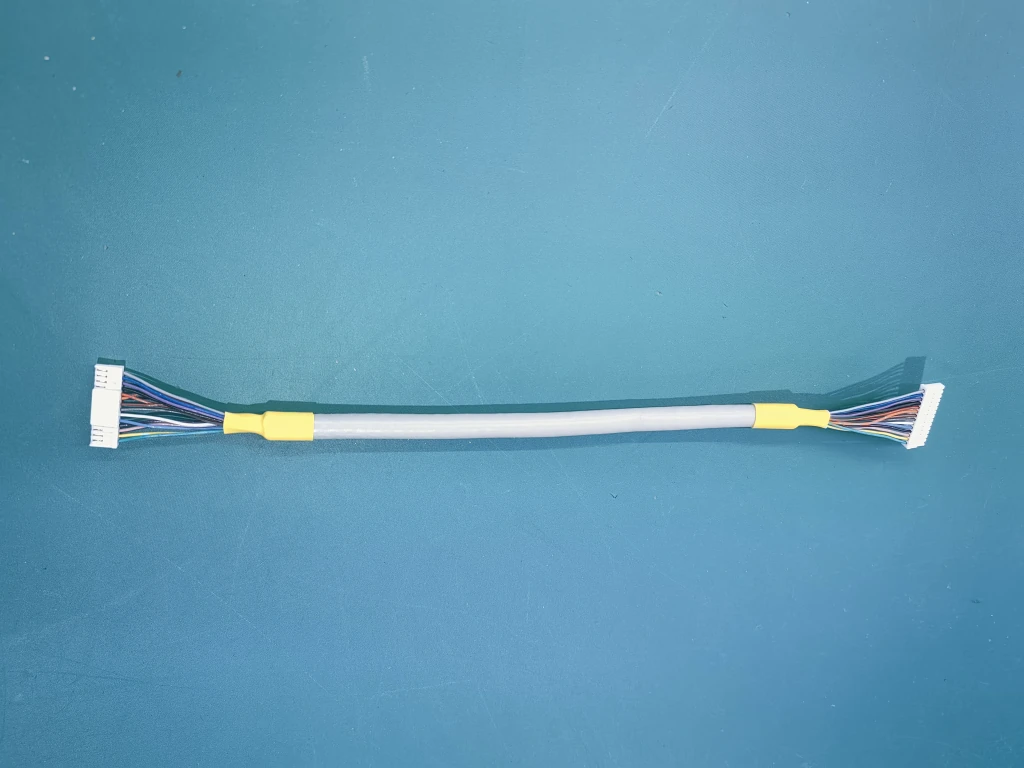
Pressure Sensor Cable Assemblyfor Industrial OEMs
A pressure sensor cable assembly is a custom cable set that connects pressure transducers, transmitters, switches, and sensor modules to PLCs, robot controllers, pump skids, HVAC units, and industrial machines. Buyers usually come to us when the drawing is close but sourcing is not clean: one cable jacket is unavailable, an M12 connector has a long lead time, or a UL material change must be justified before production scale-up. Our factory review starts before the quote is locked. We check pinout, connector keying, shield termination, cable OD, bend radius, label rules, strain relief, and continuity-test fields against IPC-A-620 workmanship language, UL-758 wire expectations, ISO 9001 documentation practice, and IATF 16949-style change control when the harness feeds an automotive or robotics platform.
TL;DR
- Send drawings, BOM, pressure sensor model, connector part numbers, cable length, voltage/current, environment, quantity, and test-report expectations.
- You receive a costed RFQ, sourcing-risk notes, UL-certified material alternatives when useful, sample timing, production timing, and test evidence plan.
- Best fit: pressure sensors, transmitters, switches, pump skids, robotics cells, HVAC equipment, and industrial automation panels.
- Key standards: IPC-A-620 workmanship, UL-758 wire review, ISO 9001 documentation, and IATF 16949-style change control.
Pressure Sensor Cable Assembly capabilities
Our factory review starts before the quote is locked. We check pinout, connector keying, shield termination, cable OD, bend radius, label rules, strain relief, and continuity-test fields against IPC-A-620 workmanship language, UL-758 wire expectations, ISO 9001 documentation practice, and IATF 16949-style change control when the harness feeds an automotive or robotics platform.
Pressure sensor cable review
A pressure sensor cable assembly is a custom cable set that connects pressure transducers, transmitters, switches, and sensor modules to PLCs, robot controllers, pump skids, HVAC units, and industrial machines. Buyers usually come to us when the drawing is close but sourcing is not clean: one cable jacket is unavailable, an M12 connector has a long lead time, or a UL material change must be justified before production scale-up. We check whether the sensor output, connector keying, cable route, and shielding choice match the control cabinet or robot module before the sample is built.
UL-certified material alternatives
The case-bank robotics program required cost breakdowns and exploration of alternative materials, including UL-certified alternatives. We quote the named material, then mark any approved alternate path so purchasing can reduce cost without losing compliance control.
Pinout, polarity, and shielding control
A pressure sensor cable assembly is an electrical interface that must preserve signal direction, polarity, and shielding continuity from the sensor body to the controller. We define continuity, shorts, shield, and label checks before release.
Costed RFQ and CIPL-style breakdown
Procurement teams need more than a lump-sum quote when a product is moving toward mass production. We can separate connector, wire, accessory, labor, tooling, test, and packaging assumptions so alternative materials are reviewed with evidence.
Prototype-to-production handling
Next-generation prototype assemblies often contain out-of-stock parts or preliminary drawings. We flag unavailable material in the initial quote and propose controlled alternatives instead of hiding the shortage until sample build.
Documented test evidence
Production release can include continuity, pinout, polarity, shorts, visual workmanship, label, shield continuity, pull-force sampling, dimensional checks, CoC, and customer-defined report fields. The plan is aligned before procurement approves the supplier.
An anonymized robotics case from the project case bank used to anchor this service page.
Industry
robotics
Region
US
Year
2026
Scenario
A US robotics integrator sought to optimize costs for their pressure sensors and cable harnesses during mass production scale-up.
Challenge
The customer supplier industrialization team requested detailed cost breakdowns and the exploration of alternative materials, including UL-certified alternatives, to reduce unit costs without compromising quality or compliance.
Solution
Provided transparent cost breakdowns using standardized CIPL templates, proposed and validated UL-certified alternative materials, and adjusted the manufacturing process to accommodate the new components seamlessly.
Result
Achieved measurable cost reductions for the customer, secured long-term RFQs for new cable harnesses, and established a strategic supply chain partnership.
Concrete Numbers
Anonymized from a real project. Specific buyer identifiers withheld; numbers quoted verbatim from project records.
Where pressure sensor cables fit
Built for US and global OEM buyers comparing suppliers at RFQ stage.
Robotics pressure modules
Pressure sensors and cable harnesses for grippers, pneumatics, vacuum systems, tooling heads, and robot support equipment.
Pump and hydraulic skids
Cable sets for transmitters, switches, and control-panel connections where oil, vibration, and service replacement affect reliability.
HVAC and compressor equipment
Pressure transducer leads for HVAC units, compressor controls, refrigeration systems, and climate equipment.
Industrial automation panels
M8, M12, pigtail, and panel interface wiring for PLC input modules, distributed I/O, and machine control.
Test and measurement systems
Short-run or production cable assemblies for pressure monitoring, calibration fixtures, and instrumentation cabinets.
Production scale-up
Programs where purchasing needs cost breakdowns, UL-certified alternatives, MOQ clarity, and stable revision control.
Pressure sensor cable capability table

How RFQ risk is reduced before sampling
The strongest quote explains sourcing, compliance, testing, and production trade-offs before the buyer issues the purchase order.
Real robotics cost case anchors the page
A US robotics integrator asked for cost optimization on pressure sensors and cable harnesses during mass production scale-up. We provided transparent cost breakdowns, proposed UL-certified alternatives, and adjusted the manufacturing process around the approved components.
Material shortages are flagged early
In another US robotics RFQ, preliminary drawings included materials that were out of stock. We highlighted the availability constraint in the first quote and prepared alternative material proposals so the buyer could compare schedule risk before supplier selection.
Compliance is tied to the part, not slogans
IPC-A-620 supports workmanship review, UL-758 supports wire-material review when applicable, ISO 9001 supports documented quality practice, and IATF 16949-style change control helps automotive and robotics teams manage alternates.
The recommendation changes by volume
For prototype builds, the priority is fast clarification of pinout, connector fit, and sample evidence. For production scale-up, the priority shifts to MOQ, CIPL-style cost breakdown, approved alternates, inspection records, and stable packaging.
Relevant standards and reference bodies
These references help US and global OEM buyers align cable workmanship, wire-material evidence, and supplier qualification before approval.
IPC Workmanship
Reference background for IPC and cable-assembly workmanship expectations used during supplier review.
UL Safety Organization
Reference context for UL component recognition and safety expectations when buyers review wire and cable materials.
ISO 9000 Quality Systems
Reference context for documented quality-management systems used in supplier qualification.
Reviewed by
WellPCB Wire Harness Engineering Team
Custom cable assembly and wire harness manufacturing support
Ready to quote a pressure sensor cable assembly?
Send drawings, BOM, pressure sensor model, connector part numbers, cable length, voltage/current, environment, quantity, and test-report expectations. You receive a costed RFQ, sourcing-risk notes, UL-certified material alternatives when useful, sample timing, production timing, and test evidence plan.
Send this with your RFQ
Send drawings, BOM, pressure sensor model, connector part numbers, cable length, voltage/current, environment, quantity, and test-report expectations.
Approved connector brands, no-substitution rules, mating connector details, cable jacket preference, shield requirement, and label rules.
Sample quantity, target production volume, MOQ expectation, annual forecast, packaging requirement, and delivery schedule.
Continuity, pinout, polarity, shield continuity, dimensional, CoC, and test-report requirements.
What you get back
You receive a costed RFQ, sourcing-risk notes, UL-certified material alternatives when useful, sample timing, production timing, and test evidence plan.
Open questions for missing pinout, connector, shielding, material, label, environment, and testing inputs.
Material availability note with stock risk, MOQ impact, and alternate-review path when parts are constrained.
Recommended IPC-A-620, UL-758, ISO 9001, and IATF 16949-style release evidence when required.
Pressure sensor cable RFQ questions buyers ask
Answers for procurement, engineering, and supplier-quality teams before sample approval.
What is a pressure sensor cable assembly?
A pressure sensor cable assembly is a custom cable set connecting a pressure transducer, transmitter, switch, or sensor module to a PLC, robot controller, pump skid, HVAC unit, or industrial machine. The RFQ should define connector type, pinout, cable length, voltage/current, shielding, labels, environment, and test requirements so IPC-A-620 workmanship and UL-758 material review can be applied correctly.
I need 200 pressure sensor cables for a robotics pilot build. Is that too small?
A 200-piece pilot build is a normal RFQ size when the drawing, BOM, connector stock, and test plan are clear. We separate sample timing from production timing, flag MOQ issues on connectors or UL-rated wire, and define continuity, pinout, polarity, and shield checks before release. If the BOM is mature, a 7-10 day sample target is often practical.
Can you propose UL-certified alternative materials to reduce cost?
Yes, when the drawing and customer approval path allow alternates. One case-bank robotics program requested cost breakdowns and alternative materials, including UL-certified alternatives, for pressure sensors and cable harnesses. We keep the original material, proposed alternate, UL evidence, fit risk, MOQ, and test impact visible so purchasing does not approve a cheaper part blindly.
Which standards should appear in a pressure sensor cable RFQ?
IPC-A-620 is useful for cable and wire harness workmanship language, UL-758 is relevant when Appliance Wiring Material or recognized wire constructions matter, ISO 9001 supports documented quality control, and IATF 16949-style change control helps when the cable feeds automotive or robotics equipment. The drawing and purchase contract should still define final acceptance criteria.
My preliminary drawing has an out-of-stock connector. Can you still quote?
Yes, but the quote should show the shortage instead of hiding it. In a US robotics RFQ, next-generation prototype assemblies had material out-of-stock flagged in the initial quote. We prepared alternative sourcing and material proposals so the buyer could compare price, schedule, and approval risk before placing a prototype order.
What files should I send to get an accurate quote?
Send the 2D drawing, BOM, pressure sensor model, connector part numbers, mating interface, cable length, pinout, voltage/current, environment, sample quantity, annual forecast, label rules, packaging, and required reports. Photos of the installed route or failed cable help us review bend radius, connector orientation, strain relief, and service handling.