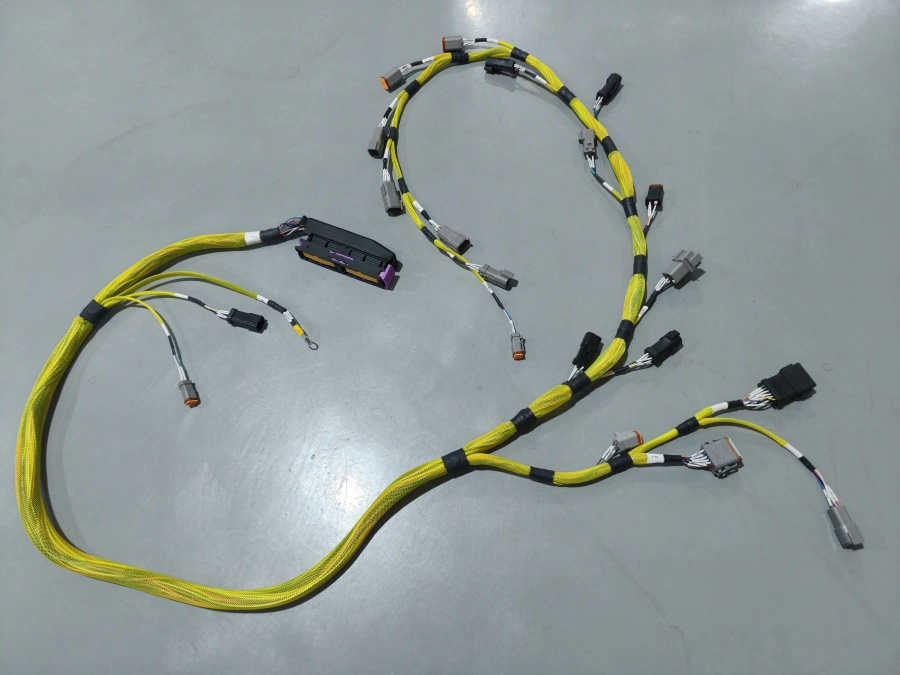
Motor Cable Assemblyfor Motion-Control OEMs
Motor cable assembly is a custom cable build that links servo drives, motors, encoders, brakes, VFDs, and machine controllers with controlled conductor sizing, shielding, connector fit, labels, and test evidence. We review the motor power path, feedback path, brake leads, drag-chain route, connector sourcing risk, and 100% electrical test plan before quote so a buyer comparing three suppliers sees the production risk behind the unit price.
TL;DR
- Use this service for servo power, encoder feedback, brake, VFD, and motion-control cable assemblies.
- Send drawings, motor model, drive model, connector part numbers, cable length, bend route, and test scope.
- We flag shielding, drag-chain, current, grounding, connector lead-time, and alternate-source risks before quote.
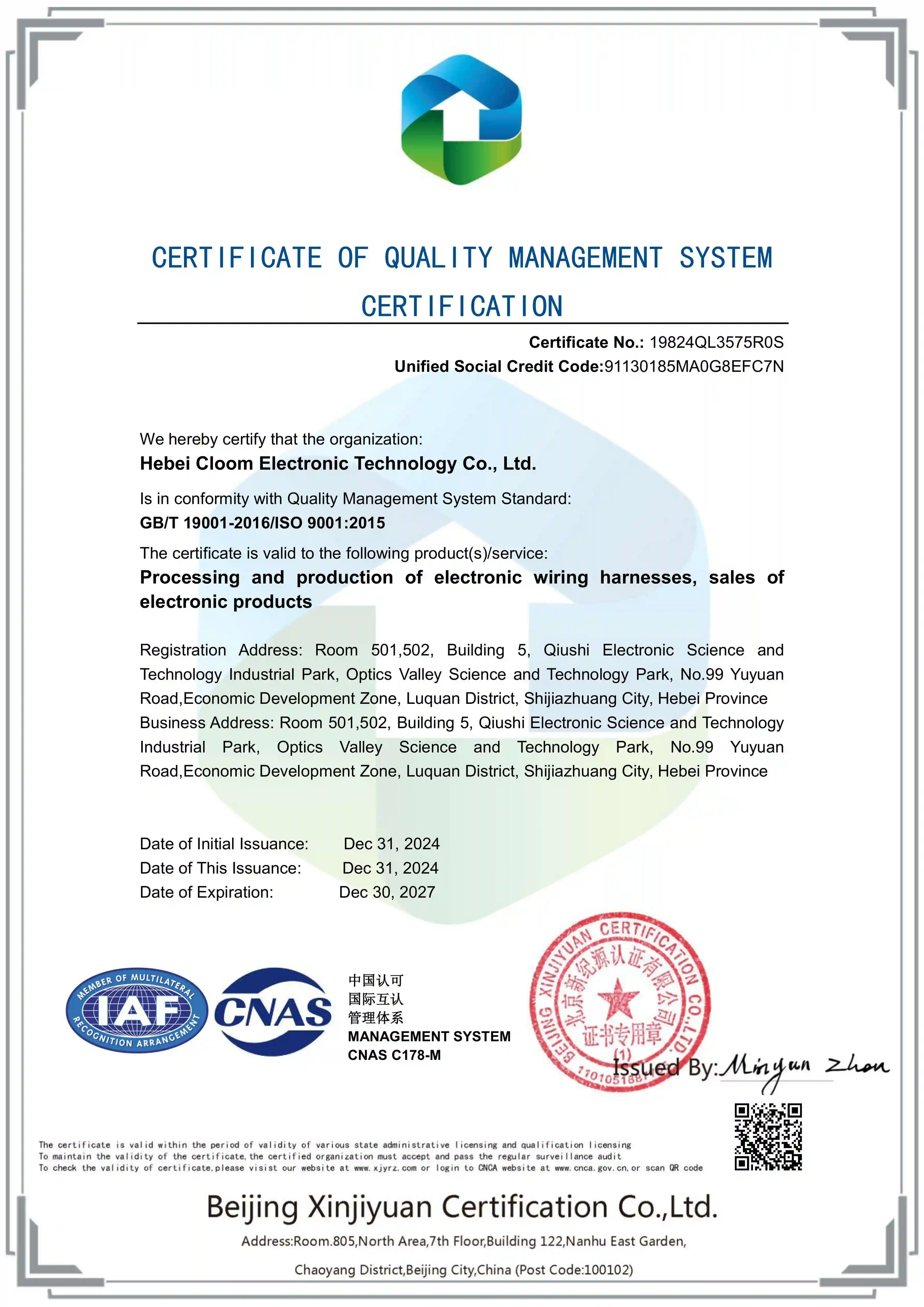
- IPC-A-620, UL-758, ISO 9001, and IATF 16949-style controls are mapped to the RFQ when required.
Motor Cable Assembly RFQ Controls
Motor cables fail when power, feedback, shielding, and connector sourcing are quoted as separate details instead of one controlled assembly.
Servo motor power cable builds
A servo motor cable is a power cable assembly that carries drive output to a servo motor while surviving flex, oil, vibration, and electrical noise. We review conductor size, jacket material, shield termination, grounding method, connector backshell, bend radius, and current rating before pricing.
Encoder and feedback cable control
An encoder cable assembly is a signal cable that returns position, speed, or commutation feedback from a motor to a drive or controller. We separate feedback wiring from noisy power conductors, review twisted-pair or shielded cable needs, and define continuity, pinout, and label checks.
Brake and hybrid motor cable layouts
A brake cable harness is a motor cable branch that powers a holding brake or safety-related release circuit. For hybrid assemblies, we check whether brake, thermal sensor, encoder, and power conductors belong in one cable, two jackets, or separate harness branches.
Drag-chain and moving-axis routing
Moving-axis cables need bend radius, jacket, torsion, clamp, and strain-relief decisions before sampling. We ask for route photos, cable carrier dimensions, travel length, speed, and service environment so the assembly is not built like a static panel lead.
Connector sourcing and alternate review
Motor cable programs often stall because a connector, insert, backshell, or PTC component is constrained after the unit price is approved. We review specified brands, approved alternates, no-substitution rules, MOQ, and distributor availability before the RFQ is treated as production-ready.
Documented release testing
Every motor cable assembly should have a release plan for continuity, pinout, insulation resistance where specified, shield continuity, visual workmanship, label position, and packaging protection. We align inspection records with IPC-A-620 workmanship and customer-specific test limits.
An anonymized case-bank example showing why connector and component sourcing must be reviewed before a motor cable quote is approved.
Industry
industrial
Region
Germany
Year
2025-2026
Scenario
A German industrial electrical systems integrator required cable harnesses for a high-volume annual program but faced sourcing constraints on specified connectors.
Challenge
The originally specified STOCKO connectors faced procurement limitations, and the required PTC components (EPCOS B59100A1080-A40) had a long 12-14 week lead time, threatening the overall project timeline for a 200kpcs/year program.
Solution
Proposed Lumberg connectors as a qualified alternative to STOCKO. Provided detailed specification comparisons and emphasized Lumberg's shorter MOQ and better delivery times to offset the PTC lead time bottleneck, while remaining transparent about the slightly higher price point of the alternative.
Result
The customer accepted the alternative for evaluation, agreeing to sample the Lumberg-based assemblies, which kept the high-volume annual program viable despite initial component sourcing bottlenecks.
Concrete Numbers
Anonymized from a real project. Specific buyer identifiers withheld; numbers quoted verbatim from project records.
Where Motor Cable Assemblies Fit
Best for OEM equipment where motion reliability depends on power delivery, feedback integrity, and repeatable factory release records.
Servo-driven automation cells
Power, encoder, and brake cable assemblies for gantries, conveyors, packaging lines, palletizers, and inspection equipment where connector fit and noise control affect uptime.
Industrial robots and end-of-arm tools
Flexible motor and feedback harnesses for robot axes, grippers, wrist modules, and camera-assisted tooling where repeated movement makes strain relief a design input.
VFD and motor control panels
Shielded motor leads, panel pigtails, and field wiring harnesses for variable-frequency drive systems that need clear grounding, labels, and terminal control.
AGV, AMR, and mobile platforms
Compact drive-motor cable assemblies for mobile robots, traction systems, steering modules, and battery-powered machinery where vibration and service replacement matter.
Machine tools and CNC equipment
Motor cable sets for spindles, axes, coolant-zone actuators, and tool changers where oil-resistant jackets, connector locks, and routing discipline reduce field faults.
Pumps, compressors, and industrial skids
Harnesses for motors, sensors, heaters, and control boxes used in skid-mounted equipment where branch labels and repeatable packaging speed installation.
Motor Cable Assembly Capability Table

How We Reduce Motor Cable RFQ Risk
A motor cable quote is only useful when the supplier has checked current path, feedback path, sourcing risk, and test evidence before committing lead time.
We quote the whole motion link
Motor power, encoder feedback, brake release, thermal sensing, shielding, labels, and connector retention interact in the same machine. We review those interfaces together so the RFQ does not hide electrical-noise or routing problems until the first article build.
Connector risk is visible before PO
The case-bank program had a specified PTC component with a 12-14 week lead time and connector limits on a 200kpcs/year opportunity. We separate sourcing risk, approved alternates, and no-substitution rules before price approval.
Trade-offs are documented
A lower-cost connector can fail if the mating interface, locking method, seal, or terminal wire range changes. A higher-priced alternate can still be the right choice when it prevents a line-down delay or keeps a high-volume launch viable.
Testing matches the application
Static motor leads may need continuity, pinout, and visual checks. Servo feedback and shielded motion cables often need shield continuity, insulation resistance, controlled labels, and customer-defined report fields for supplier-quality approval.
Standards Used in Motor Cable Assembly Review
For motor cable assembly programs, we map workmanship, wire material, quality-system, and change-control expectations to public standards references before defining the release evidence.
IPC workmanship context
Public background on IPC standards used when buyers define cable and wire harness workmanship expectations.
UL safety organization context
Public background for UL and wire or cable material safety review in industrial equipment programs.
NIST standards context
Public background on how standards support supplier qualification, inspection plans, and repeatable quality records.
Factory Engineering Note
Hommer Zhao
Wire Harness and Cable Assembly Engineering Lead
Need Motor Cable Assemblies for a Motion Program?
Send your drawing, connector part numbers, motor and drive model, cable length, motion route, quantity, and required test evidence. We will return sourcing risks, missing inputs, sample timing, and a production-ready quote path.
Send This With Your RFQ
2D drawing, BOM, wire list, pinout, current revision, and motor or drive model
Connector part numbers, mating halves, backshells, approved alternates, and no-substitution rules
Cable length, moving-axis route, bend radius, clamp points, jacket preference, sample quantity, and annual forecast
Continuity, pinout, insulation resistance, shield continuity, label, packaging, certificate, and test-report expectations
What You Get Back
Manufacturability questions for missing pinout, shield, brake, encoder, and routing inputs
Connector sourcing-risk note with MOQ, lead-time, and alternate-review comments
Sample and production lead-time view based on material availability and test scope
Recommended IPC-A-620, UL-758, ISO 9001, and IATF 16949-style evidence package
Motor Cable RFQ Questions Buyers Ask
Answers for servo cable sourcing, feedback wiring, drag-chain routing, and supplier-quality evidence before sample approval.
I need 200 servo motor cable assemblies for a prototype build. Is that too small?
A 200-piece motor cable assembly prototype is a normal RFQ size when drawings, connector details, and test scope are clear. The main limiter is not quantity; it is material availability for motor-side connectors, backshells, terminals, and shielded cable. Send the motor model, drive model, pinout, cable length, and target sample date. We can quote prototype and production options separately, then define whether continuity, pinout, shield continuity, or insulation resistance records are required for the first build.
Should servo power and encoder feedback be in one cable or separate cables?
Servo power and encoder feedback should be separated when electrical noise, bend life, connector size, or service replacement risk is high. A hybrid motor cable can reduce installation time, but power conductors and feedback pairs need shielding, grounding, and spacing decisions. For moving-axis machinery, we ask for cable carrier dimensions, travel length, and bend radius before recommending one jacket or split assemblies. The safer RFQ method is to quote both layouts when the drawing has not been validated in the machine.
How do you verify a motor cable assembly before shipment?
Motor cable assembly verification starts with 100% continuity and pinout testing against the approved drawing. Depending on the RFQ, we add visual workmanship inspection, label position checks, shield continuity, insulation resistance, hipot, or pull-test records. IPC-A-620 gives workmanship context for cable and harness acceptance, while UL-758 supports wire and insulation review. The test report should name the revision, quantity, fixture or method, operator, date, and pass/fail result so supplier quality can approve samples without guessing.
What causes motor cable lead-time problems after price approval?
Motor cable lead-time problems usually come from constrained connectors, backshells, terminals, PTC parts, or cable constructions that were not checked during RFQ. In our case bank, a German industrial program had a PTC model, EPCOS B59100A1080-A40, with a 12-14 week lead time on a 100kpcs/year per product (200kpcs total annual volume) program. We review specified parts, approved alternates, MOQ, and distributor supply before presenting a quote as production-ready.
Can you use an alternate connector if the specified motor connector is hard to source?
An alternate connector can be used only after the buyer approves fit, pin count, current rating, wire range, locking method, seal, and mating compatibility. In one high-volume case, the customer evaluated STOCKO vs. Lumberg connectors because the original connector path created sourcing risk. We never silently substitute a motor connector because even a small housing or terminal change can affect serviceability, vibration retention, and inspection records. The quote can include original and alternate options side by side.
What standards should I mention in a motor cable assembly RFQ?
A practical motor cable assembly RFQ should mention IPC-A-620 for workmanship expectations, UL-758 for wire and cable material context, ISO 9001 for quality-system control, and IATF 16949-style change discipline when the assembly is used in vehicle or high-risk industrial programs. The RFQ should also define the actual tests: continuity, pinout, insulation resistance, shield continuity, label inspection, and packaging requirements. Standards help, but the drawing and test limits decide what the factory can verify.