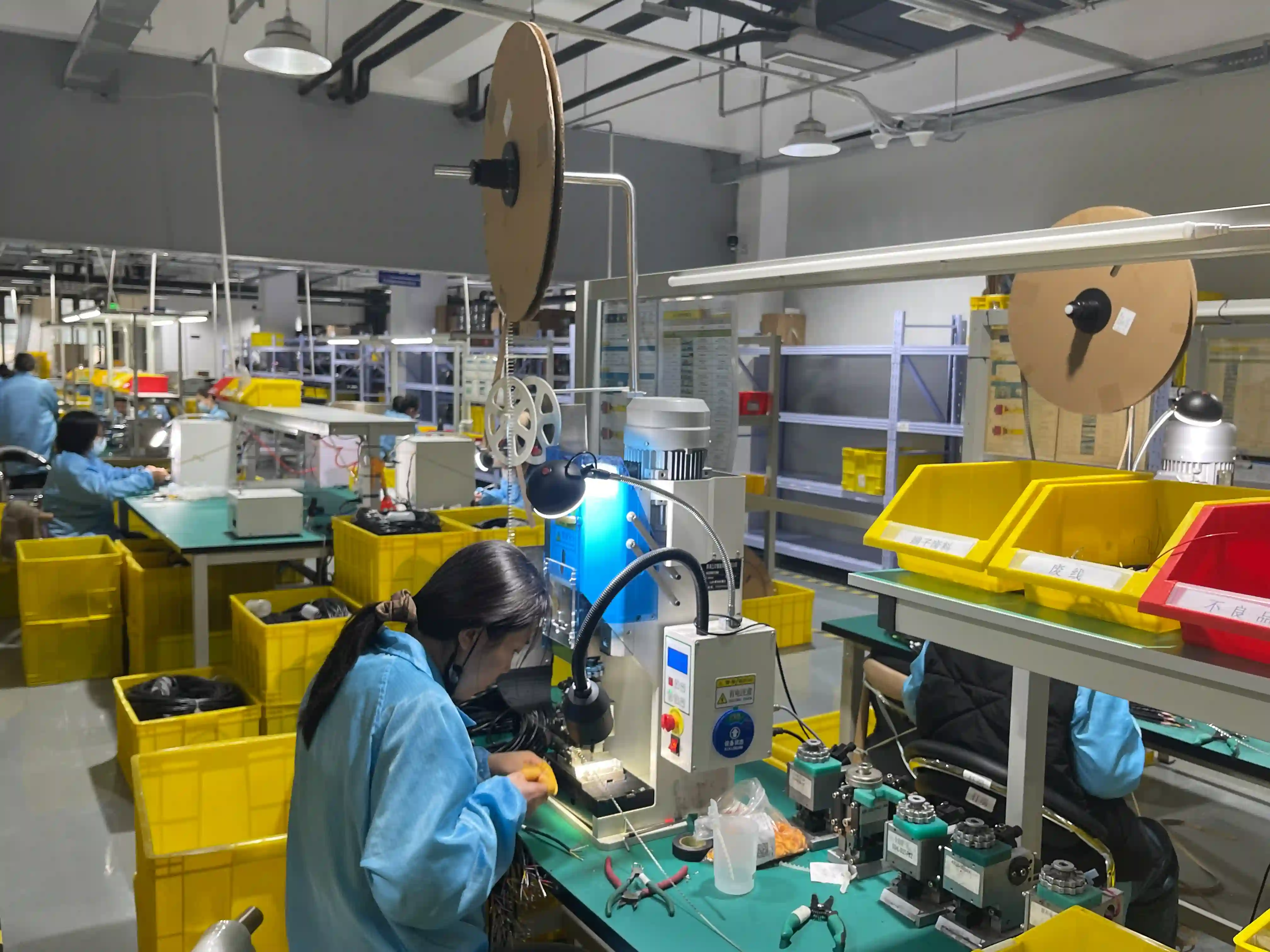
Electrical terminal connectors are the small metal interfaces that turn loose conductors into serviceable connections. In a wire harness, they may fasten a ground lead to a stud, join two wires inside a branch, plug into a relay tab, land in a terminal block, or protect fine strands before clamping. They look simple, but they control current path, pull strength, service access, vibration behavior, corrosion risk, and production yield.
The most common buying mistake is describing terminals only by shape: ring, fork, ferrule, butt splice, or quick disconnect. Shape matters, but it is only the first filter. A real terminal specification also needs wire range, conductor material, insulation diameter, barrel style, stud or tab size, plating, temperature rating, tooling requirement, and inspection method. Without those details, two suppliers can quote parts that look similar and perform very differently.
This article is written for OEM buyers, sourcing engineers, and harness program managers who need practical terminal choices without unnecessary catalog noise. It stays inside wire harness and cable assembly manufacturing: crimp terminals, splice terminals, ferrules, disconnects, tabs, and insulated or non-insulated formats that production teams actually build and inspect.
1. What Electrical Terminal Connectors Actually Do
Electrical terminal connectors create a repeatable interface between a wire and another conductor, stud, tab, terminal block, or splice point. The terminal must hold the conductor mechanically, maintain low-resistance electrical contact, and survive the environment where the harness operates. A terminal that is slightly wrong can pass a bench continuity check but fail during vibration, heat cycling, installation torque, or field service.
A terminal has two sides that buyers should specify separately. The wire side includes conductor size, strand construction, insulation diameter, and whether the barrel is open, closed, insulated, or heat-shrink sealed. The mating side includes ring hole size, fork width, blade size, tab width, pin format, or splice geometry. Treating those two sides as one generic part number is how harness teams end up with loose studs, over-crimped strands, cracked insulation sleeves, or terminals that cannot seat in the final equipment.
Terminal decisions sit beside broader connector and crimp decisions. Our wire harness crimping guide covers crimp height and pull-force discipline, while the wire harness connector selection guide explains how terminal interfaces fit into complete connector families. For public background, see the external electrical connector references listed after the article.
Electrical contact
The terminal must carry the required current with stable contact resistance across the expected temperature and vibration range.
Mechanical retention
The wire barrel, insulation support, and mating interface must resist pullout, side load, and installation movement.
Service interface
Ring, fork, blade, and quick-disconnect terminals change how technicians install, remove, or replace the harness.
Manufacturing repeatability
A terminal must be compatible with the supplier's applicator, die set, strip length, crimp height window, and inspection equipment.
"We do not approve a terminal from shape alone. For every production crimp, our team checks at least 4 linked inputs: wire size, insulation diameter, terminal barrel range, and applicator setting. One mismatch can turn a good drawing into a bad harness."
Hommer Zhao
Technical Director
2. Main Electrical Terminal Connector Types
Most wire harness programs use a limited set of terminal families. The exact catalog names vary by manufacturer, but the sourcing logic stays consistent: choose the mating style first, then validate wire range, barrel geometry, insulation support, plating, and tooling. Buyers should also separate permanent joints from serviceable connections. A butt splice solves a different problem than a ring terminal, even if both are crimped.
Ring terminals are preferred when the connection must stay captured under a screw or stud. Spade and fork terminals install faster because the screw does not always need to be removed, but they are easier to dislodge if clamp force or geometry is wrong. Quick-disconnect terminals are useful for serviceable tabs, relays, switches, heaters, and appliance-style connections. Ferrules protect fine-stranded conductors before screw-clamp termination. Butt splices and parallel splices join wires inside the harness when a branch or repair point is required.
There are also open-barrel terminals used inside connector housings. These terminals depend heavily on matching the exact housing family, cavity, seal, and crimp applicator. If a harness program includes connector housings from Molex, TE, JST, Deutsch, or Amphenol, the terminal is not a generic commodity. The approved terminal, seal, cavity plug, and extraction tool should be controlled together.
| Terminal Type | Typical Interface | Best Fit | Main Buying Risk |
|---|---|---|---|
| Ring terminal | Screw, stud, ground point | Ground leads, battery links, chassis bonding, power distribution | Wrong stud hole, tongue width, current rating, or torque environment |
| Spade / fork terminal | Screw clamp without full screw removal | Serviceable control panels and low-vibration equipment | Open fork can loosen if clamp force, screw size, or vibration is uncontrolled |
| Butt splice | Wire-to-wire inline joint | Harness repairs, branch extensions, low-profile joints | Wrong barrel size creates weak pull force or strand damage |
| Parallel splice | Multiple wires into one barrel | Branch circuits, common power or ground distribution | Unbalanced conductor fill and poor crimp compression |
| Quick-disconnect | Male tab and female receptacle | Relays, switches, heaters, serviceable modules | Loose retention from wrong tab size, plating, or spring force |
| Ferrule | Fine-stranded wire into clamp terminal | Control cabinets, instrumentation, DIN-rail terminal blocks | Using the wrong ferrule length or cross-section for the clamp |
| Open-barrel contact | Connector housing cavity | Automotive, industrial, medical, and robotics harnesses | Mixing terminals, seals, and housings from incompatible series |
The safest RFQ language is not just 'ring terminal' or 'female disconnect.' State the wire size, stud or tab size, insulation style, material, plating, and the approved manufacturer part number if one exists.
"Ring terminals look forgiving, but the details are not optional. A 6 mm stud hole, 10 AWG conductor, and high-vibration chassis ground need a different tongue, barrel, and validation plan than a 22 AWG signal ground on an indoor control panel."
Hommer Zhao
Technical Director
3. How Buyers Should Select Terminals
Terminal selection should start with the electrical load and conductor, then move to the mechanical interface. Current rating depends on conductor size, terminal material, contact area, temperature rise, and how the terminal is installed. A terminal advertised for a wire range may still be wrong if the conductor uses unusual strand count, extra-thick insulation, high-temperature jacket material, or a compacted conductor that changes barrel fill.
The second decision is insulation and sealing. Non-insulated terminals are compact and inspectable, but they often need separate heat shrink tubing, boots, or enclosure protection. Vinyl or nylon insulated terminals simplify handling and reduce accidental contact in low-risk applications. Heat-shrink insulated terminals add sealing and strain relief for splash, humidity, or outdoor exposure, but they require controlled heat application so the adhesive flows without damaging the wire jacket.
The third decision is material and plating. Tin-plated copper terminals are common for general harness work because they balance conductivity, corrosion resistance, and cost. Nickel, silver, or gold may appear in high-temperature, low-level signal, or repeated-mating applications. Buyers should avoid mixing dissimilar metals without engineering review, especially where moisture, salt, or field vibration are present. If the terminal connects to a chassis, bus bar, relay tab, or field device, the mating material matters as much as the terminal itself.
Finally, consider assembly workflow. A terminal that saves two cents but requires slow hand tooling, special strip preparation, or difficult visual inspection can cost more in pilot production. For custom harness projects, our custom cable assembly service review normally checks conductor, terminal, tooling, and test plan together before production pricing is finalized.
| Selection Factor | What to Define | Why It Matters |
|---|---|---|
| Wire size | AWG or mm2, strand class, conductor material | Controls barrel fill, crimp height, pull force, and current capacity |
| Insulation diameter | Outer diameter and jacket material | Determines insulation support, sleeve fit, and strip length |
| Mating interface | Stud, screw, tab, terminal block, splice, or housing cavity | Prevents loose hardware, wrong tab width, and seating failures |
| Environment | Temperature, vibration, moisture, oil, salt, service access | Drives plating, sealing, strain relief, and retention requirements |
| Tooling | Applicator, die set, hand tool, crimp-height target | Determines repeatability and whether production can scale |
| Inspection | Visual criteria, pull test, continuity, first-article photos | Catches hidden process drift before shipment |
Insulated terminals
Best for low-to-medium-risk assemblies where touch protection and fast installation matter.
Confirm sleeve material, color code, temperature rating, and whether the sleeve hides the crimp area from inspection.
Non-insulated terminals
Best when space is tight, visual inspection is important, or separate strain relief is already defined.
Often paired with heat shrink tubing, boots, or harness tape after crimp approval.
Heat-shrink terminals
Best for moisture, splash, or field repair environments where the splice or terminal must be sealed.
Require controlled heating so the tubing recovers and adhesive seals around the wire jacket.
Open-barrel terminals
Best for connector housings where the terminal locks into a cavity and may include a wire seal.
Require exact series control because similar-looking contacts often have different retention and seal geometry.
4. Crimping, Pull Force, and Inspection Controls
Crimping is the manufacturing step that decides whether the terminal becomes a reliable connection or a future field failure. A good crimp compresses conductor strands into a gas-tight mechanical and electrical joint without cutting strands, cracking the barrel, over-compressing insulation, or leaving loose wire. Public crimping references explain the basic joining principle, but production control depends on terminal-specific tooling and documented acceptance criteria.
For harness production, buyers should ask how the supplier validates each terminal during setup and first article. Typical controls include strip-length verification, conductor brush check, crimp height measurement, pull-force testing by wire size, visual inspection of bellmouth and insulation support, and continuity testing after assembly. Critical harnesses may also need microsection review, lot traceability, or 100% electrical testing depending on application risk.
The acceptance standard should be agreed before samples are built. Many harness teams reference IPC/WHMA-A-620 workmanship criteria, but buyers still need the specific class, drawing notes, and supplier inspection plan. A generic statement such as 'crimp to standard' is not enough when the harness supports safety, uptime, or warranty-sensitive equipment.
"For production terminals, we want objective evidence, not just a clean-looking crimp. At minimum, our first article package should show strip length, crimp height or tool setting, pull-force result, and 100% continuity for the finished harness."
Hommer Zhao
Technical Director
Crimp Setup Checks
Confirm terminal part number, applicator, die set, and wire size before first article
Measure strip length and conductor brush against the terminal drawing
Record crimp height or approved tool setting for each terminal family
Run pull-force checks by conductor size and document failures before production release
Photograph first-article crimps when the terminal is new, alternate, or high risk
Incoming Inspection Checks
Verify terminal type, plating, insulation color, and stud or tab size match the PO
Check that ring and fork tongues are not cracked, twisted, or undersized
Confirm butt splices and ferrules are fully inserted with no loose strands
Review continuity and pull-test records when required by the drawing
Quarantine any alternate terminal until engineering approval is documented
5. RFQ and Incoming Inspection Checklist
A terminal RFQ should remove ambiguity before pricing. Send the harness drawing, wire list, terminal part numbers, approved alternates, mating hardware, quantity, environment, and testing requirement. If the drawing is incomplete, send photos or samples of the existing assembly, especially around stud grounds, service tabs, relay sockets, terminal blocks, and splice points.
Buyers should also define alternate control. Terminal substitutions are common during allocation or cost reduction, but an alternate can change barrel dimensions, plating, insulation sleeve, strip length, applicator, and pull-force result. Our wire harness component sourcing guide explains how to manage approved alternates without losing traceability, and our connector depinning guide shows why terminal retention details matter during rework.
For incoming inspection, do not inspect every terminal family the same way. A low-current indoor fork terminal may need dimensional and visual checks only. A high-current ring terminal, safety ground, sealed butt splice, or connector-housing contact deserves stronger evidence: approved part number, tool setup record, pull-force result, visual acceptance, and electrical test report where applicable.
Send This With the RFQ
Harness drawing, wire list, and terminal schedule
Wire gauge or mm2, conductor material, strand construction, and insulation OD
Terminal part number, approved alternates, plating, and insulation style
Mating stud, screw, tab, terminal block, or connector housing details
Quantity split by prototype, pilot, and annual production volume
Inspection requirement: visual, pull force, continuity, hi-pot, or first-article photos
Approve Before Production
First-article samples match the mating hardware and enclosure clearance
Crimp setup records match terminal and wire families
Alternate terminals are documented before shipment
Packaging prevents bent tongues, distorted ferrules, and mixed terminal lots
Supplier can explain how failed crimps are contained and traced
What are the most common electrical terminal connector types?
The 7 terminal types most buyers compare are ring terminals, spade or fork terminals, butt splices, parallel splices, quick-disconnect terminals, ferrules, and open-barrel connector contacts. Each type needs a defined wire range, mating interface, and crimp process.
When should I use a ring terminal instead of a spade terminal?
Use a ring terminal when the connection must stay captured under a screw or stud, such as a ground point or power distribution post. Use a spade terminal when service speed matters and the vibration risk is controlled. Always define the stud size, for example M4, M5, M6, or 1/4 inch.
Are insulated terminals better than non-insulated terminals?
Insulated terminals are better when touch protection and fast handling matter, while non-insulated terminals are better when space, inspection visibility, or separate heat shrink control matters. The decision should include the temperature rating, sleeve material, and whether 100% visual inspection is required.
What information is needed to quote crimp terminals correctly?
A supplier needs at least 6 inputs: terminal type, wire size, insulation diameter, mating hardware, plating or material, and inspection requirement. For production harnesses, also send approved alternates, annual volume, and target lead time.
How do suppliers verify terminal crimp quality?
Common checks include strip-length inspection, crimp height or tool-setting control, conductor brush review, pull-force testing by wire size, visual inspection, and continuity testing. Higher-risk programs may require IPC/WHMA-A-620 class criteria, lot traceability, and first-article photos.
Can I substitute one terminal brand for another?
Only after engineering approval. A substitute terminal can change barrel geometry, plating, insulation sleeve, applicator, strip length, and pull-force results. For automotive or safety-sensitive harnesses, treat the substitution as a documented change before production shipment.