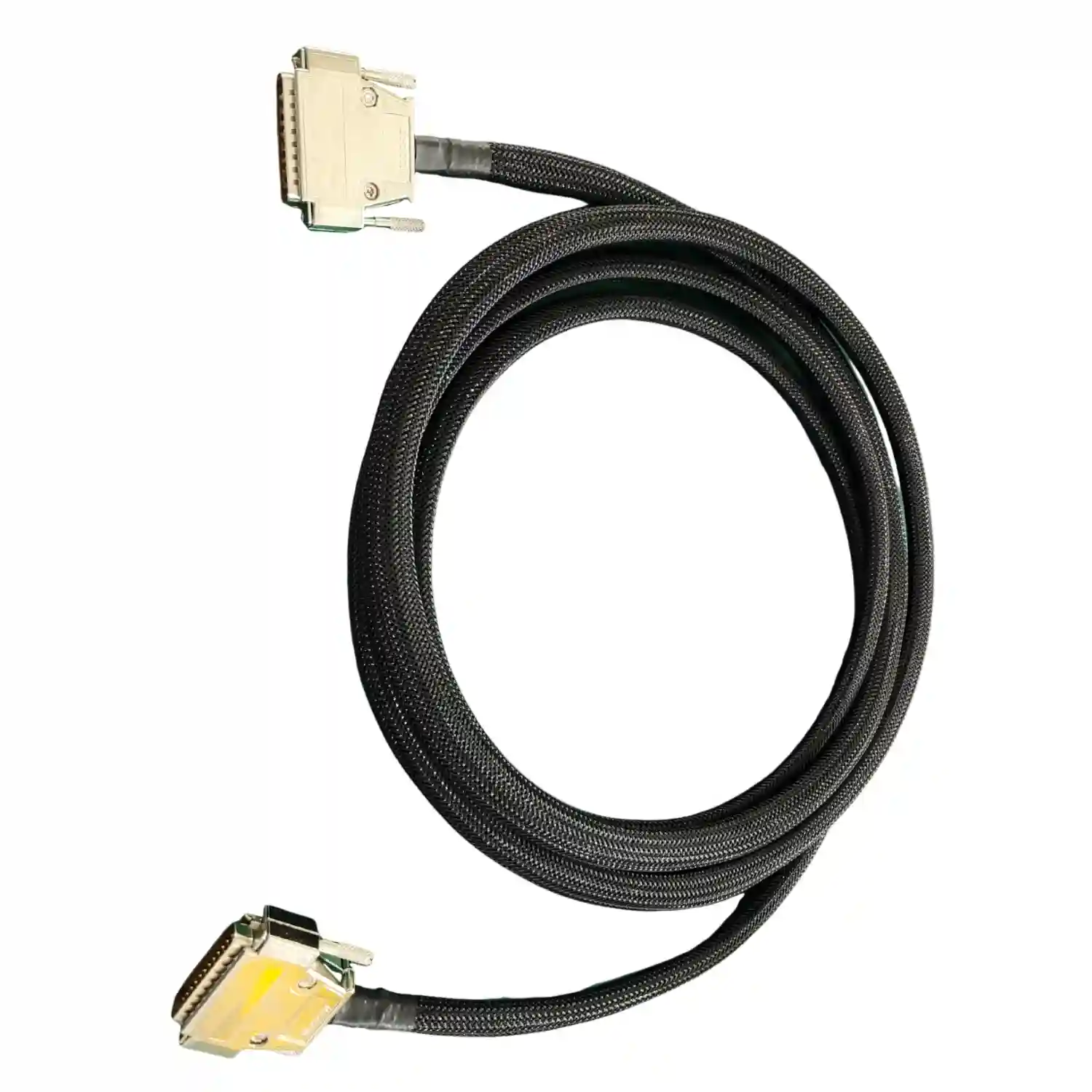
Real Project Snapshot — Power Cable Assembly Guide
Anonymized example from our case bank, shared so buyers can see how this scope is actually executed in production.
Industry: earthmoving-equipment | Region: Australia | Year: 2023 → 2024
Scenario: An Australian heavy machinery manufacturer requested quotes for multiple custom wire harness models but provided incomplete technical drawings at the initial inquiry stage.
Challenge: Missing critical specifications, including relay models, [Deutsch](/custom-cable-assembly/deutsch-connector-cable-assembly) connector models, and Hammond enclosure details, prevented accurate quoting and risked production errors for the 200-piece batch.
Solution: We implemented an engineering-to-engineering clarification process, compiling a detailed technical checklist to guide the client's internal engineering team to provide the missing specs, ensuring all requirements were locked down before sampling.
Result: Achieved full specification lock-down, enabling accurate quoting for 3 sample units and the 200-piece production run, preventing costly rework and material delays.
Concrete numbers: 3 sample units, 200-piece batch size, Deutsch connectors specified, Hammond enclosures specified
Power Cable Assembly Guide: Types, Ratings & Industrial Applications
From 120V office equipment to 35kV industrial substations, choosing the wrong power cable assembly can mean anything from nuisance tripping to catastrophic failure. Here's everything engineers need to know about selecting the right power cables for demanding applications.
Power cable assemblies must handle high currents, extreme temperatures, and harsh industrial environments while maintaining safety and reliability
Power cable assemblies are the backbone of every electrical system—from the humble extension cord powering your laptop to the armored cables feeding a manufacturing plant. Yet "power cable" is one of those terms that means vastly different things depending on context: a data center engineer worries about C13/C14 connectors and redundant power paths, while a wind farm installer is specifying 35kV XLPE cables rated for 40-year outdoor exposure.
This guide cuts through the complexity. Whether you're designing power distribution for industrial machinery, selecting cables for renewable energy installations, or simply trying to understand why your factory's motor keeps tripping breakers, you'll find actionable guidance here.
For general cable assembly fundamentals, see our cable assembly vs wire harness comparison. For custom manufacturing processes, check out our custom cable assembly process guide.
What's Covered in This Guide
The first decision in selecting any power cable is understanding your voltage class. This determines insulation requirements, safety margins, testing protocols, and ultimately cost. The IEC and NEC use slightly different boundaries, but here's the practical breakdown:
| Classification | Voltage Range | Typical Applications | Common Standards |
|---|---|---|---|
| Low Voltage (LV) | Up to 1kV (1000V) | Residential, commercial, machinery, motors | IEC 60502-1, UL 1277 |
| Medium Voltage (MV) | 1kV to 35kV | Distribution networks, industrial substations, wind/solar | IEC 60502-2, IEEE 1580 |
| High Voltage (HV) | 35kV to 230kV | Transmission lines, utility interconnects | IEC 60840, IEC 62067 |
| Extra High Voltage (EHV) | 230kV+ | Grid interconnects, HVDC transmission | IEC 62067, project-specific |
Hommer's Take
"About 90% of our power cable assembly work is low-voltage—factory automation, control panels, motor feeds. But that remaining 10% of medium-voltage work for solar farms and industrial substations requires completely different manufacturing capabilities: specialized termination equipment, high-pot testing up to 50kV, and personnel with utility-grade training. Don't assume your LV supplier can handle MV projects."
Insulation Materials: PVC vs XLPE vs EPR
Insulation isn't just about preventing shorts—it determines operating temperature, current capacity, lifespan, and environmental resistance. Here's how the three dominant materials compare:
| Property | PVC | XLPE | EPR |
|---|---|---|---|
| Max Operating Temp | 70°C | 90°C | 90°C |
| Emergency Overload | 100°C | 130°C | 130°C |
| Short Circuit Temp | 160°C | 250°C | 250°C |
| Voltage Range | Up to 1kV | Up to 500kV | Up to 35kV |
| Flexibility | Excellent | Good | Excellent |
| Moisture Resistance | Good | Excellent | Excellent |
| Fire Performance | Toxic smoke | Low smoke | Low smoke |
| Relative Cost | $ | $$ | $$$ |
| Best For | Indoor LV, budget applications | MV/HV, outdoor, direct burial | Flexible MV, frequent movement |
Polyvinyl Chloride
The workhorse for low-voltage applications. Cost-effective with good flexibility, but limited by temperature and toxic smoke concerns.
Use when: Cost matters, indoor installation, temperatures under 70°C
Cross-Linked Polyethylene
The industry standard for medium and high voltage. Superior temperature rating and moisture resistance makes it ideal for demanding applications.
Use when: MV/HV applications, outdoor, underground, high temperatures
Ethylene Propylene Rubber
Premium option when flexibility matters. Excellent for medium-voltage cables that need frequent handling or movement.
Use when: Flexible MV cables, mining, portable equipment
Fire Safety Note
Standard PVC releases hydrogen chloride (HCl) gas when burned—corrosive and toxic. For enclosed spaces, tunnels, or public buildings, specify LSZH (Low Smoke Zero Halogen) alternatives. The IEC 60332 and IEC 61034 standards define fire performance requirements.
The conductor is where your current actually flows. Material choice affects conductivity, weight, cost, and termination requirements. Wire gauge determines current-carrying capacity and voltage drop.
Copper vs Aluminum: The Eternal Debate
| Factor | Copper | Aluminum |
|---|---|---|
| Conductivity | 100% (reference) | 61% |
| Weight (same conductivity) | 100% | 48% |
| Cost (same conductivity) | Higher | ~60% of copper |
| Termination | Standard | Requires special lugs |
| Corrosion | Resistant | Oxide layer (manageable) |
| Best For | Indoor, tight spaces, reliability-critical | Long runs, utility, weight-sensitive |
AWG to Metric Conversion & Ampacity Reference
| AWG | Metric (mm²) | Ampacity* (Copper) | Typical Applications |
|---|---|---|---|
| 18 AWG | 0.75 mm² | 7A | Control wiring, low-power devices |
| 16 AWG | 1.5 mm² | 10A | Light fixtures, extension cords |
| 14 AWG | 2.5 mm² | 15A | General purpose outlets |
| 12 AWG | 4 mm² | 20A | Kitchen circuits, tools |
| 10 AWG | 6 mm² | 30A | Dryers, water heaters |
| 8 AWG | 10 mm² | 40A | Ranges, large AC units |
| 6 AWG | 16 mm² | 55A | Sub-panels, small motors |
| 4 AWG | 25 mm² | 70A | Service entrance, large equipment |
| 2 AWG | 35 mm² | 95A | 100A service panels |
| 1/0 AWG | 50 mm² | 125A | 150A services, feeders |
| 4/0 AWG | 95 mm² | 195A | 200A services, industrial |
*Ampacity values are approximate for THWN copper in conduit at 30°C ambient. Actual values depend on installation method, ambient temperature, and conductor count. Always consult NEC tables or IEC 60364 for design calculations.
Hommer's Take
"Voltage drop kills more projects than undersized ampacity. On a 200-foot run at 20A, 14 AWG wire gives you over 5% voltage drop—motors won't start properly, LED drivers will overheat. I always recommend going one gauge larger than the NEC minimum for runs over 100 feet. The extra copper cost is nothing compared to troubleshooting a 'mystery' motor problem six months later."
Connectors are the interface between your cable and equipment—and the most common failure point. Understanding the major standards helps you specify the right connector for voltage, current, and environmental requirements.
IEC 60320 Appliance Couplers (C-Series)
| Connector | Rating | Max Temp | Common Use |
|---|---|---|---|
| C13/C14 | 10A @ 250V | 70°C | Computers, monitors, network equipment |
| C15/C16 | 10A @ 250V | 120°C | Hot equipment (kettles, fryers) |
| C19/C20 | 16A @ 250V | 70°C | Servers, UPS, data center PDUs |
| C21/C22 | 16A @ 250V | 155°C | High-heat industrial equipment |
NEMA vs IEC vs CEE: Regional Standards
| Standard | Region | Common Types | Typical Ratings |
|---|---|---|---|
| NEMA | North America | 5-15, 5-20, 6-20, L6-30, L14-30 | 15-50A @ 120-250V |
| IEC 60309 (CEE) | Europe / International | Blue (230V), Red (400V 3-phase) | 16-125A @ 230-400V |
| AS/NZS 3112 | Australia/NZ | Type I plug variants | 10-15A @ 230V |
Published ampacity values assume ideal conditions: free air, 30°C ambient, single conductor. Real installations rarely match these assumptions. Understanding derating factors prevents overheated cables and tripped breakers.
Temperature Derating
Higher ambient temperatures reduce current capacity:
- • 30°C ambient: 100% capacity
- • 40°C ambient: ~88% capacity
- • 50°C ambient: ~75% capacity
- • 60°C ambient: ~58% capacity
Bundling Derating
Multiple conductors in conduit trap heat:
- • 1-3 conductors: 100% capacity
- • 4-6 conductors: 80% capacity
- • 7-9 conductors: 70% capacity
- • 10-20 conductors: 50% capacity
Calculation Example
10 AWG THWN copper in conduit: base ampacity 40A. Installation in 45°C environment with 6 conductors: 40A × 0.87 (temp) × 0.80 (bundling) = 27.8A usable capacity. Always verify with NEC Table 310.15 or IEC 60364-5-52.
For more on quality testing that validates cable performance, see our wire harness quality testing methods guide.
Industrial Applications
Power cable requirements vary dramatically by application. Here's what to specify for common industrial environments:
Solar & Renewable Energy
- UV-resistant jacket (USE-2, PV wire)
- 90°C rated for rooftop installations
- 1000V DC or 1500V DC rated
- Direct burial rated for ground-mount
Wind Power
- Medium voltage (up to 35kV) XLPE
- Torsion-resistant for nacelle cables
- Cold-flexible to -40°C
- 40-year design life rating
Data Centers
- C13/C14 and C19/C20 connectors
- Locking connectors for vibration
- Color-coded for A/B redundancy
- Plenum-rated (CMP) for air handling
Factory Automation
- VFD-rated for motor drives
- Oil-resistant jacket (STOOW, SOOW)
- Shielded for EMI environments
- Continuous flex for [robotics](/industries/robotics)
Hommer's Take
"[EV charging](/industries/ev-charging-harness) is the fastest-growing segment we're seeing. Level 2 chargers need 40-50A circuits, and DC fast chargers require 480V three-phase at 100A+. The cable requirements are brutal: outdoor exposure, repeated connection cycles, and drivers running over cables with their cars. We're using TPE jackets rated for 10,000+ mate cycles and crush-resistant designs. This market didn't exist five years ago."
Power Cable Selection Checklist
Before Specifying Power Cables, Verify:
Electrical Requirements
- System voltage (nominal and max)
- Load current (continuous and peak)
- Short circuit current rating
- Voltage drop budget (usually <3%)
Environmental Factors
- Ambient temperature range
- Indoor/outdoor/direct burial
- Chemical exposure (oil, solvents)
- UV exposure / sunlight resistance
Installation Requirements
- Cable run length
- Conduit/raceway/cable tray
- Bend radius constraints
- Static or flexing application
Compliance & Standards
- Required certifications (UL, CE, CSA)
- Fire rating (plenum, riser, LSZH)
- Industry-specific codes (NEC, IEC)
- Local AHJ requirements
Frequently Asked Questions
What's the difference between SOOW and SJOOW cable?
Both are portable power cables, but SOOW is rated for 600V while SJOOW is rated for 300V. The "J" indicates junior service with lighter construction. SOOW has thicker insulation and jacket, better suited for industrial environments. SJOOW works for lighter-duty applications like power tools and portable equipment under 300V.
Can I use extension cords for permanent installations?
No—this violates NEC 400.12 and most electrical codes. Extension cords are temporary wiring devices not rated for permanent installation, concealment in walls, or routing through holes. For permanent installations, use appropriate building wire (NM-B, THHN in conduit) or hard-wired appliance connections. Violations create fire hazards and insurance liability.
Why do some power cables have shielding?
Power cable shielding serves two purposes: containing EMI emissions from the power conductors, and protecting sensitive nearby equipment from interference. VFD (variable frequency drive) cables are commonly shielded because the high-frequency switching creates significant electrical noise. The shield is typically grounded at both ends to provide a low-impedance path for noise currents.
What does "plenum rated" mean for power cables?
Plenum-rated cables (CMP) use special low-smoke, flame-retardant materials suitable for installation in air-handling spaces (plenums) above drop ceilings or under raised floors. Standard cables release toxic smoke when burned that HVAC systems would spread throughout a building. Plenum cables cost 2-3x more but are required by code in these spaces. Riser-rated (CMR) is intermediate, suitable for vertical runs between floors.
How do I calculate voltage drop for long cable runs?
Use this formula: Vdrop = (2 × L × I × R) / 1000, where L is one-way length in feet, I is current in amps, and R is resistance per 1000 feet (from wire tables). For 3-phase: multiply by 1.732 instead of 2. Keep total drop under 3% for branch circuits, 5% total from service to outlet. A free voltage drop calculator and NEC Chapter 9 Table 8 help with precise calculations.
Related Resources
Cable Assembly vs Wire Harness
Understand the fundamental differences and when to use each type.
EV High-Voltage Wire Harness Guide
400V vs 800V systems, HVIL safety, and EV-specific requirements.
Quality Testing Methods
Hi-pot testing, continuity checks, and other critical tests for power cables.
Custom Cable Assembly Process
From concept to delivery: the complete manufacturing process.
Need Custom Power Cable Assemblies?
From standard IEC power cords to custom high-voltage industrial assemblies, we manufacture power cables for applications up to 35kV. UL/CE certified with full testing capabilities.