Technical Guide
Fire-Rated Cables for Wire Harness:
Types, Standards & Selection Guide
A hotel renovation in Manchester used standard PVC cables for its fire alarm circuit. During a kitchen fire, the PVC insulation released dense hydrogen chloride smoke that reduced corridor visibility to zero within 90 seconds — before the alarm could direct evacuation. The replacement system used BS 6387 CWZ fire-resistant LSZH cables that maintained circuit integrity for 3 hours during testing. Same building, same routes, different outcome when the cable specification matched the hazard.
BS 6387 Cat C test temperature
Circuit integrity under fire (BS 6387)
LSZH cost premium over PVC
CPR Euroclass rating range
- 1. Fire-Resistant vs Flame-Retardant: Two Different Jobs
- 2. Fire Cable Standards: IEC 60332, IEC 60331, BS 6387 & CPR
- 3. LSZH vs PVC: Smoke, Toxicity & Material Selection
- 4. NEC Fire Ratings: Plenum, Riser & General Purpose
- 5. Integrating Fire-Rated Cables into Wire Harness Assemblies
- 6. Industry Applications & Code Requirements
- 7. Testing & Verification: How to Validate Fire Ratings
- 8. How to Specify Fire-Rated Cables for Your Project
- 9. Cost Analysis: When the Premium Pays for Itself
- 10. Frequently Asked Questions
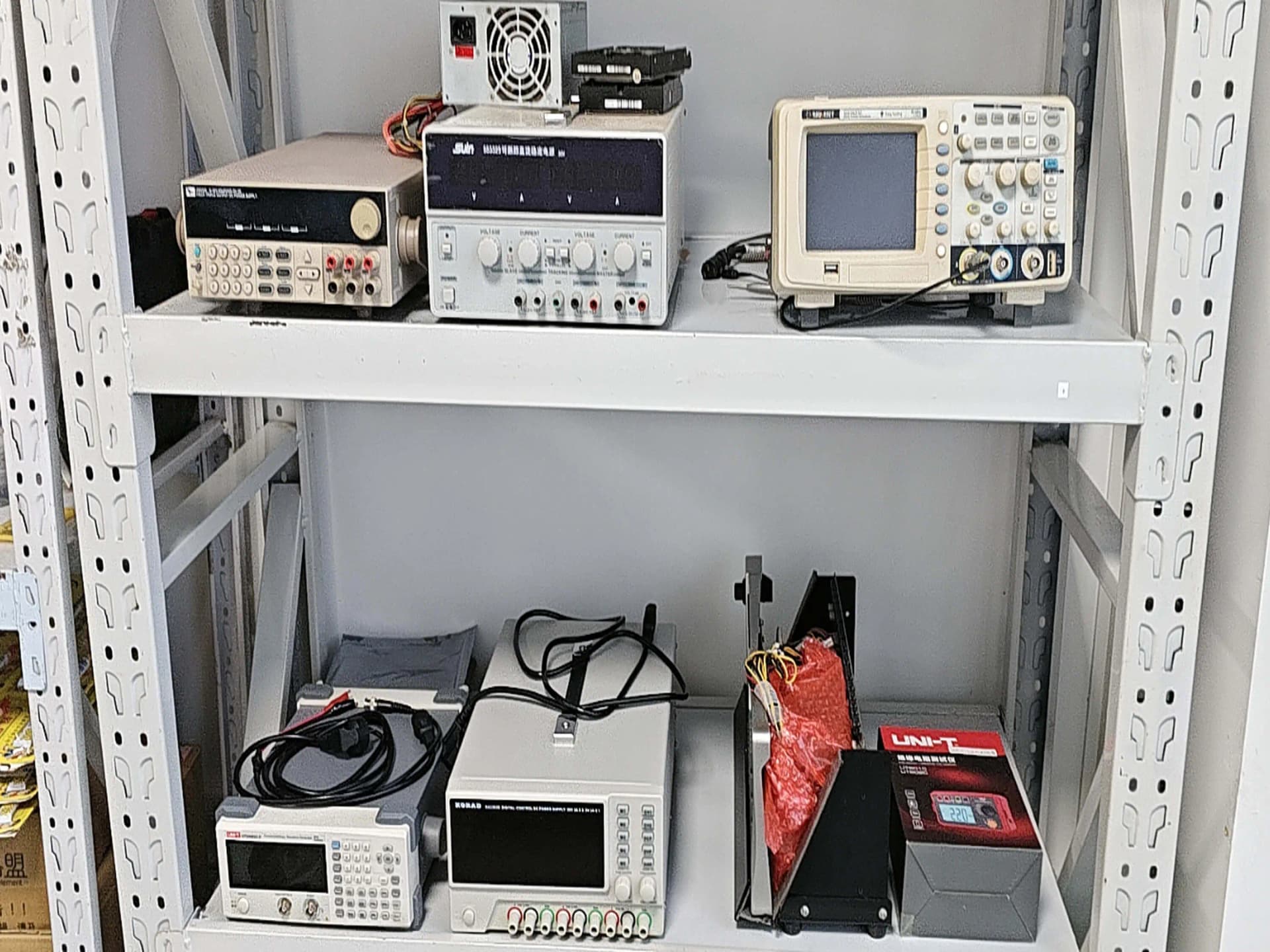
Fire-rated cable testing equipment used to verify IEC 60331 circuit integrity and IEC 60332 flame propagation compliance for wire harness assemblies
Fire-rated cable testing and verification equipment for IEC 60331/60332 compliance
Fire kills through smoke before it kills through heat. In building fires, 75% of deaths result from toxic gas inhalation — not burns. PVC-insulated cables release hydrogen chloride (HCl) gas when burning, which forms hydrochloric acid on contact with moisture in the lungs. A single meter of burning PVC cable in an enclosed corridor can reduce visibility to under 1 meter and make the air lethal within minutes.
Fire-rated cables address two separate problems: preventing the cable from spreading fire along its route (flame retardancy), and keeping critical circuits operational while the building burns around them (fire resistance). These are distinct engineering requirements served by different cable constructions, tested to different standards, and mandated by different code sections. Confusing the two has caused building systems to fail during fires.
This guide covers the standards that define fire cable performance, the material science behind LSZH and mica-barrier constructions, how fire ratings apply to wire harness assemblies (not just standalone cable runs), and a specification checklist for getting fire-rated wiring right on the first order.
1. Fire-Resistant vs Flame-Retardant: Two Different Jobs
Flame-retardant cables self-extinguish when the fire source is removed — they limit fire propagation along the cable route but make no guarantee about circuit function during the fire. Fire-resistant cables maintain circuit integrity while actively burning — power and signal continue flowing through the conductor even as the outer jacket chars and the insulation degrades. One protects the cable; the other protects the circuit.
The construction difference is a layer of mica tape wrapped around each conductor. Mica is a natural silicate mineral that withstands temperatures above 1,000°C without decomposing. During a fire, the polymer insulation burns away, but the mica barrier maintains electrical separation between conductors and between conductors and ground. A flame-retardant cable uses fire-resistant jacket compounds (typically filled with aluminum hydroxide or magnesium hydroxide) but has no mica barrier — once the insulation fails, the circuit shorts.
Table
| Criteria | Flame-Retardant Cable | Fire-Resistant Cable |
|---|---|---|
| Primary Function | Limits fire spread along cable | Maintains circuit integrity during fire |
| Key Construction | Fire-retardant jacket compound | Mica tape barrier around conductors |
| Circuit During Fire | Fails when insulation degrades | Operates for 30 min to 3+ hours |
| Test Standard | IEC 60332 (flame propagation) | IEC 60331 / BS 6387 (circuit integrity) |
| Cost Premium | 10–30% over standard PVC | 2–4x standard PVC |
| Typical Use | General building wiring, risers | Fire alarms, emergency lighting, smoke fans |
Quote
Text: The most expensive fire cable mistake I see is using flame-retardant cable on a circuit that needs fire resistance. The flame-retardant cable costs half as much, passes visual inspection, and looks identical on the reel. The difference only shows up during a fire — when the fire alarm cable fails at 400°C and the building has no warning system. We had a client discover this during a commissioning test. Replacing 12 kilometers of cable through a completed hospital cost more than the original cabling contract.
Author: Hommer Zhao
Role: Engineering Director
2. Fire Cable Standards: IEC 60332, IEC 60331, BS 6387 & CPR
Four standards families govern fire cable performance globally. IEC 60332 tests flame propagation — whether the cable spreads fire. IEC 60331 tests circuit integrity — whether the cable keeps working during fire. BS 6387 combines both concepts with additional mechanical shock and water spray tests. The EU Construction Products Regulation (CPR) created Euroclass ratings that bundle multiple fire properties into a single classification.
BS 6387 is the most demanding single-cable fire resistance standard. The CWZ classification requires passing three sequential tests: Category C — circuit integrity at 950°C for 3 hours with flame alone; Category W — circuit integrity at 650°C for 15 minutes of flame followed by 15 minutes of water spray; Category Z — circuit integrity at 950°C for 15 minutes with mechanical shock applied every 30 seconds.
The CPR Euroclass system rates cables from Aca (non-combustible, reserved for mineral cables) down to Fca (no performance determined). Most commercial building specifications require Cca or B2ca. The Euroclass also includes additional classifications: s1/s2/s3 for smoke production, d0/d1/d2 for flaming droplets, and a1/a2/a3 for acidity of fire gases. A full CPR designation looks like B2ca-s1,d0,a1.
Table
| Standard | What It Tests | Key Categories | Region |
|---|---|---|---|
| IEC 60332-1 | Single cable flame propagation | Pass/fail at 60-second flame application | Global |
| IEC 60332-3 | Bundled cable flame propagation | Cat A (highest): 7L/m; Cat C (lowest): 1.5L/m | Global |
| IEC 60331 | Circuit integrity under fire | 830°C for 90 min minimum | Global |
| BS 6387 | Fire resistance with shock + water | C (950°C/3hr), W (water), Z (shock) | UK/International |
| CPR EN 50575 | Reaction to fire classification | B2ca, Cca, Dca, Eca Euroclasses | EU mandatory |
| NEC Article 760 | Fire alarm cable in buildings | FPLP (plenum), FPLR (riser), FPL (general) | North America |
3. LSZH vs PVC: Smoke, Toxicity & Material Selection
LSZH (Low Smoke Zero Halogen) is a jacket material compound, not a fire rating. LSZH cables can be flame-retardant, fire-resistant, or neither — the jacket material determines smoke behavior, while fire performance depends on construction (mica barriers, insulation type). PVC contains 25–40% chlorine by weight. During combustion, this chlorine combines with hydrogen to form HCl gas that reduces visibility below 3 meters within 60 seconds in an enclosed corridor.
LSZH compounds achieve flame retardancy by loading the polymer matrix with mineral fillers — typically aluminum hydroxide (ATH) or magnesium hydroxide (MDH). ATH releases water at 220°C, absorbing heat and diluting combustible gases. MDH activates at 330°C, providing protection at higher temperatures. The mineral loading that gives LSZH its fire properties also makes it stiffer and more difficult to strip — installation requires sharper tools and more careful routing than PVC.
Table
| Property | PVC | LSZH | Silicone Rubber |
|---|---|---|---|
| Smoke Density | High (IEC 61034: <20% transmittance) | Low (IEC 61034: >60% transmittance) | Very Low (<80% transmittance) |
| Toxic Gas (HCl) | 20–30% emission | <0.5% emission | Zero halogen |
| Temperature Range | -15°C to +70°C | -30°C to +90°C | -60°C to +180°C |
| Flexibility | Good | Fair (stiffer than PVC) | Excellent |
| Cost (relative) | 1x baseline | 1.3–1.8x | 3–5x |
| UV Resistance | Poor (degrades outdoors) | Fair | Excellent |
| Water Absorption | Low | Higher than PVC | Very Low |
| Best For | Dry indoor, low-risk areas | Buildings, transit, data centers | High-temp industrial, aerospace |
4. NEC Fire Ratings: Plenum, Riser & General Purpose
North American fire ratings follow the NEC hierarchy based on installation location. Plenum spaces — the air-handling areas above drop ceilings and below raised floors — carry the strictest requirements because fire gases spread through HVAC systems to occupied spaces on every floor. The NEC rating hierarchy determines which cable goes where, and higher-rated cable can always substitute downward.
The substitution hierarchy matters for procurement flexibility. CMP-rated cable can substitute for CMR, CM, or CMX anywhere in the building. For fire alarm circuits, NEC Article 760 defines the FPLP/FPLR/FPL equivalents with the same spatial hierarchy. Power-limited fire alarm circuits can use standard CL-rated cable in some configurations, but non-power-limited fire alarm circuits require CI (circuit integrity) rated cable.
Table
| NEC Rating | Location | Test Standard | Key Requirement |
|---|---|---|---|
| CMP / FPLP | Plenum spaces (air handling) | UL 910 (Steiner Tunnel) | Max 5 ft flame spread, low smoke |
| CMR / FPLR | Risers (vertical shafts) | UL 1666 (Riser Shaft) | No flame spread beyond 12 ft vertically |
| CM / FPL | General purpose (horizontal) | UL 1581 (VW-1) | Self-extinguishing, limited burn |
| CMX | Residential / limited use | UL 1581 (VW-1) | Single cable, self-extinguish |
Quote
Text: We supply fire-rated wire harness assemblies for data center above-floor power distribution. Every cable in the harness must be CMP-rated because it runs through the plenum return air space. Clients sometimes send us CMR-rated cable to use — we reject it and explain why. One fire in a plenum space with the wrong cable rating can shut down an entire data center campus. The $0.15/ft cable upgrade prevents a $50 million outage.
Author: Hommer Zhao
Role: Engineering Director
5. Integrating Fire-Rated Cables into Wire Harness Assemblies
A fire-rated cable loses its rating the moment you bundle it with non-rated components. Nylon cable ties melt at 220°C. PVC conduit ignites at 340°C. Standard nylon connector housings deform above 150°C. The fire performance of a wire harness assembly is determined by its weakest component — not by the cable inside it.
For fire-rated harness assemblies, replace every component with fire-compatible alternatives. Stainless steel or ceramic fiber cable ties replace nylon. Mineral insulated or fire-resistant conduit replaces PVC. Brass or stainless steel connector housings replace nylon. Silicone rubber grommets replace standard rubber. Each substitution costs 2–5x the standard component.
Routing and installation also affect fire performance. Bundled cables derate more severely than spaced cables under fire conditions. IEC 60332-3 tests bundled cables specifically because fire propagation accelerates in tightly packed cable trays — the heat from one burning cable ignites adjacent cables before individual self-extinguishing properties can activate.
Table
| Component | Standard Material | Failure Temp | Fire-Rated Alternative | Rating |
|---|---|---|---|---|
| Cable Ties | Nylon 6/6 | 220°C | Stainless steel / ceramic fiber | 650°C+ |
| Conduit | PVC | 340°C | Mineral insulated / steel | 950°C+ |
| Connectors | Nylon PA66 | 150°C | Brass / stainless steel housing | 900°C+ |
| Grommets | Standard rubber | 180°C | Silicone rubber | 300°C |
| Sleeving | PET braided | 150°C | Silicone-coated fiberglass | 550°C+ |
| Labels | Polyester | 200°C | Stainless steel tags | 950°C+ |
6. Industry Applications & Code Requirements
Building codes define which circuits require fire-resistant cable based on the consequence of circuit failure during a fire. The principle: if losing the circuit makes evacuation harder or firefighting impossible, the cable must survive the fire. Life-safety systems — fire detection, emergency lighting, smoke extraction, elevator recall, and public address — universally require fire-resistant cable.
Tunnel applications (road and rail) represent the most demanding fire cable environment. The Channel Tunnel fire of 1996 reached temperatures above 1,000°C and damaged 500 meters of tunnel lining. Post-incident regulations now require fire-resistant cables with LSZH jackets for all tunnel wiring.
Marine and offshore applications follow SOLAS Chapter II-2 fire protection requirements. Engine room cables must be fire-resistant because engine rooms are both the most likely fire origin and the location of fire suppression equipment controls. Oil and gas facilities specify BS 6387 CWZ for emergency shutdown (ESD) circuits that must function during hydrocarbon fires exceeding 1,000°C.
7. Testing & Verification: How to Validate Fire Ratings
Fire cable test results from the manufacturer's own laboratory are insufficient for code compliance. Building authorities and insurance underwriters require independent third-party test reports from accredited laboratories. In the UK, the Loss Prevention Certification Board (LPCB) maintains a Red Book listing of certified fire-resistant cables — specifying a cable not on this list can void building insurance.
The test report must match the exact cable construction being installed. A cable tested with 2.5mm² conductors does not cover 1.5mm² conductors of the same type — the thermal mass difference changes fire behavior. A cable tested as a single sample may fail the bundled cable test (IEC 60332-3). Request the specific test report for the exact cable size, conductor count, and construction you plan to install.
Checklist
- Third-party test report from accredited lab (not manufacturer's lab)
- Test report matches exact cable construction (size, conductor count)
- Declaration of Performance (DoP) with CPR Euroclass rating (EU market)
- LPCB Red Book listing number (UK market)
- UL listing with appropriate NEC rating (North American market)
- Certificate of conformity from recognized body (VDE, BASEC, CSA)
- Sample retained for cross-reference against delivered product
- Delivery inspection: markings match certified cable specification
Quote
Text: We test every fire-rated cable batch against the certified construction before shipping. Conductor diameter, insulation thickness, mica tape overlap, jacket thickness — four measurements that take 10 minutes per batch and have caught three non-conformances in the past year alone. One batch had mica tape with 40% overlap instead of the certified 55%. That cable would have passed a visual inspection but failed at 650°C instead of surviving to 950°C.
Author: Hommer Zhao
Role: Engineering Director
8. How to Specify Fire-Rated Cables for Your Project
A complete fire-rated cable specification requires defining both the fire performance and the electrical performance. Omitting either forces your manufacturer to guess — and on fire-safety products, guessing creates liability. Use this parameter set when submitting an RFQ for fire-rated cables or harnesses.
Lead times for fire-rated cables run 6–10 weeks for standard constructions and 12–16 weeks for custom configurations. The extended lead time reflects third-party testing requirements. Stock availability varies by region: LSZH fire-resistant cables in standard sizes (1.5mm², 2.5mm², 4mm²) are typically stocked in the UK and EU. Custom fire-rated wire harness assemblies add 2–3 weeks to the cable lead time for assembly and quality testing.
Checklist
- Fire performance standard (IEC 60331, BS 6387, or NEC Article 760)
- Fire resistance category (BS 6387: C, W, Z, or CWZ combination)
- CPR Euroclass rating if EU market (B2ca, Cca with s/d/a sub-classes)
- Jacket material (LSZH, silicone rubber, or specific compound)
- Smoke classification (IEC 61034 or EN 50268)
- Conductor count, size (mm² or AWG), and material
- Voltage rating (300/500V, 600/1000V typical for fire cables)
- Shielding requirement (overall screen, individual screen, none)
- Operating temperature range (ambient, not fire rating)
- Installation method (tray, conduit, direct burial, harness bundle)
- Cable length per run and total project quantity
- Third-party certification body required (LPCB, UL, VDE, BASEC)
9. Cost Analysis: When the Premium Pays for Itself
Fire-rated cables cost 2–4x more than standard PVC equivalents. The temptation to use standard cable where fire-rated cable is required has led to building code violations, insurance claim denials, and fatalities. The economics favor specification compliance in every scenario where codes require it.
Mineral insulated (MI) cable — copper conductors in magnesium oxide insulation with a seamless copper sheath — is the ultimate fire-rated cable. It is non-combustible and maintains circuit integrity indefinitely at any temperature below copper's melting point (1,085°C). MI cable costs 10–30x more than LSZH alternatives and requires specialized installation skills, but for circuits where failure is catastrophic it is the reference standard.
Table
| Cable Type | Cost per Meter (2.5mm²) | Fire Performance | Smoke Performance |
|---|---|---|---|
| Standard PVC | $0.30–$0.50 | Self-extinguishing only (VW-1) | Dense, toxic HCl smoke |
| LSZH Flame-Retardant | $0.50–$0.80 | IEC 60332-3 Cat A/B/C | Low smoke, no toxic gas |
| LSZH Fire-Resistant | $0.90–$1.50 | IEC 60331 (90 min at 830°C) | Low smoke, no toxic gas |
| LSZH FR BS 6387 CWZ | $1.50–$2.50 | 3 hours at 950°C + water + shock | Low smoke, no toxic gas |
| Mineral Insulated (MI) | $8.00–$15.00 | Unlimited (non-combustible) | Zero smoke (copper/mineral) |
10. Frequently Asked Questions
Frequently Asked Questions
What is the difference between fire-resistant and flame-retardant cables?
Flame-retardant cables self-extinguish when the fire source is removed — they limit fire propagation along the cable route, tested to IEC 60332. Fire-resistant cables maintain circuit integrity during the fire — power and signal keep flowing while the cable burns, tested to IEC 60331 or BS 6387. Use flame-retardant for general building wiring. Use fire-resistant for life-safety circuits: fire alarms, emergency lighting, smoke extraction fans.
I need fire-rated wiring for a 20-story commercial building — what cable types and ratings should I specify?
For life-safety circuits (fire alarms, emergency lighting, smoke extraction), specify fire-resistant cables rated to IEC 60331 or BS 6387 CWZ with LSZH jackets. For general risers, use LSZH flame-retardant cables rated to IEC 60332-3 Category A. For plenum spaces, NEC requires CMP-rated cable or LSZH equivalent. Specify CPR Euroclass B2ca or Cca for EU projects.
Why are LSZH cables more expensive than PVC, and when is the cost premium justified?
LSZH cables cost 30–80% more than PVC because halogen-free compounds (aluminum hydroxide, magnesium hydroxide) are more expensive raw materials and require higher processing temperatures. The premium is justified in enclosed spaces — tunnels, ships, aircraft, data centers, hospitals — where PVC smoke produces toxic HCl gas that reduces visibility to under 1 meter and causes lung damage within minutes.
How do I verify that a fire-rated cable actually meets its claimed standard?
Request three documents: (1) test report from an accredited laboratory (not the manufacturer's own lab) for the exact cable construction, (2) Declaration of Performance (DoP) with CPR Euroclass rating for EU markets, (3) third-party certification marks — LPCB Red Book listing (UK), VDE (Germany), or UL (North America). Verify the tested cable construction matches what you're buying.
Can fire-rated cables be used in wire harness assemblies, or only as standalone cable runs?
Fire-rated cables work in harness assemblies, but the fire rating covers only the cable — not the ties, connectors, conduit, or sleeving around it. Replace nylon cable ties with stainless steel, PVC conduit with mineral insulated or steel conduit, and nylon connector housings with brass or stainless steel. The harness assembly is only as fire-safe as its weakest component.
Frequently Asked Questions
What is the difference between fire-resistant and flame-retardant cables?
Flame-retardant cables self-extinguish when the fire source is removed, tested to IEC 60332. Fire-resistant cables maintain circuit integrity during the fire, tested to IEC 60331 or BS 6387.
I need fire-rated wiring for a 20-story commercial building — what should I specify?
Life-safety circuits need fire-resistant cables rated to IEC 60331 or BS 6387 CWZ with LSZH jackets. General risers use LSZH flame-retardant to IEC 60332-3 Cat A. Plenum spaces need CMP-rated cable.
Why are LSZH cables more expensive than PVC?
LSZH costs 30–80% more because halogen-free compounds are expensive and harder to process. Justified in enclosed spaces where PVC smoke produces toxic HCl gas.
How do I verify a fire-rated cable meets its claimed standard?
Request third-party test reports from accredited labs, Declaration of Performance with CPR Euroclass, and certification marks (LPCB, VDE, UL).
Can fire-rated cables be used in wire harness assemblies?
Yes, but the fire rating covers only the cable. Replace nylon ties with stainless steel, PVC conduit with steel, and nylon connectors with brass. The assembly is only as fire-safe as its weakest component.
References
- Low Smoke Zero Halogen (LSZH) — Cable Jacket Material Standard and Properties
- Channel Tunnel Fire (1996) — Incident That Influenced European Cable Fire Standards
- LPCB Red Book — Certified Fire-Rated Cable Listings
- EU Construction Products Regulation (CPR) — Cable Fire Classification Framework
Cta
Title: Need Fire-Rated Wire Harness Assemblies?
We manufacture fire-rated cable assemblies and wire harnesses with LSZH, silicone rubber, and mineral insulated cables. BS 6387 CWZ, IEC 60331, and NEC FPLP/FPLR compliant. Third-party certified with full test documentation.
Primarybutton: Get a Quote
Secondarybutton: See Capabilities